 how-to
Post-Auction Artwork Pickup and Delivery, Explained
Last Updated: November 13, 2026
Quick Summary
Artwork pickup is the process of retrieving a purchased lot from the auction house or its designated storage facility within a set collection window, then moving it to your home or a specialist shipper. The window is usually short, and storage fees can begin within days of the sale, so confirm the deadline in writing and decide whether you will collect in person or hire a fine art logistics provider.
- Confirm the collection deadline in writing with the auction house within the first 48 hours.
- Many houses allow roughly 10 to 14 days before daily storage charges start.
- Get written quotes that separate packing, transport, and insurance line items.
- Photograph the crate and piece, and note any damage in writing before signing.
- For high-value or oversized works, a specialist fine art shipper is usually the right call.
Table of Contents
- Why the Clock Starts the Moment You Win
- A Step-by-Step Timeline for Artwork Pickup
- Auction Shipping Services: What the House Will and Won't Do
- Fine Art Packing and Crating: What Your Piece Actually Needs
- What Drives Art Shipping Costs
- Artwork Shipping Insurance and Damage Claims
- Local Pickup or Long-Distance Delivery: Choosing Your Route
- Planning the Delivery of Your Next Original Piece
- Frequently Asked Questions
Why the Clock Starts the Moment You Win
The gavel falls, the lot is yours, and a deadline you may not have noticed starts ticking. Post-auction artwork pickup and delivery runs on the auction house's schedule, not yours, and storage fees can begin within days of the sale. Collectors often celebrate a win and then scramble to arrange transport before the collection window closes. That scramble is avoidable.
Artwork pickup is the process of retrieving a purchased lot from the auction house or its designated storage facility within a set collection window, then moving it to your home or a specialist shipper. The window is usually short. The consequences for missing it are usually expensive.
Two things matter most in the first 48 hours:
- Confirm the collection deadline in writing with the auction house
- Decide whether you will collect in person or hire a fine art logistics provider
A common mistake is assuming the auction house will hold your piece indefinitely. Storage fees and collection terms vary by house, so read the terms of sale carefully. Read your terms of sale before you bid, not after. If you want to confirm your piece is genuine before arranging transport, our guide on how to verify abstract art authenticity online walks through the checks worth doing right after the sale.
A Step-by-Step Timeline for Artwork Pickup
A single lot can require more coordination than many buyers expect. The timeline below separates what the auction house controls from what you control, so you can see where delays can turn into fees.
| When | Action | Why It Matters |
|---|---|---|
| Day 0-2 | Confirm payment cleared and read the collection deadline in the terms of sale | Storage fees often begin the day after the free collection window closes |
| Day 2-5 | Request written quotes or book a pickup appointment | Specialist shippers book out days ahead, and auction houses often require notice |
| Day 5-10 | Approve the packing and crating plan | Custom crates are built to order and take time |
| Day 10-14 | Collect or release to the carrier | Many houses allow roughly this long before daily storage charges start |
| On arrival | Inspect, photograph, and note exceptions before signing | Claims depend on evidence gathered at the handoff |
Step 1: Read the terms of sale for the fee schedule, not just the deadline. The collection window is only half the story.
Step 2: Get quotes in writing that separate packing, transport, and insurance. A single lump sum hides where the money goes and makes it hard to compare a specialist shipper against the auction house's in-house option.
Step 3: Book your appointment and confirm access details. Auction houses usually require notice before collection. Confirm loading dock hours, whether you need photo ID, and whether a freight elevator or dock is available.
Step 4: Arrange packing before the deadline, not after. Small works may travel in a padded box, but large or fragile pieces need professional packing and crating, and a custom crate cannot be built overnight.
Step 5: Inspect on arrival and document the handoff. Photograph the crate before opening, then the piece from every angle, and note any damage in writing the same day.
Watch out: a quote that looks cheap may exclude insurance or storage, and a missed collection window can turn a modest shipping budget into a daily storage bill. Ask for the line items before you commit.
Auction Shipping Services: What the House Will and Won't Do
Auction houses may offer shipping help, but the scope varies. Some may suggest approved shippers or handle small items, and terms of sale define what they will and won't take responsibility for.
Ask three questions before you rely on the house:
- Will the house pack the lot itself, or only release it to a shipper?
- Who insures the piece during transit, and at what declared value?
- What is the house's liability if the piece arrives damaged?
The answers vary by house and should be confirmed in writing. Knowing your rights matters here, so it is worth understanding what to look for in online art gallery buyer protection before you assume the house has you covered.
Watch out: a house quote that looks cheap may exclude insurance. Ask for the line item.
Fine Art Packing and Crating: What Your Piece Actually Needs
Packing decisions should follow the object, not the price tag. A small unframed work on paper needs different protection than a large stretched canvas or a glazed frame, and the difference is not just more padding. It is where the padding goes and what it touches.
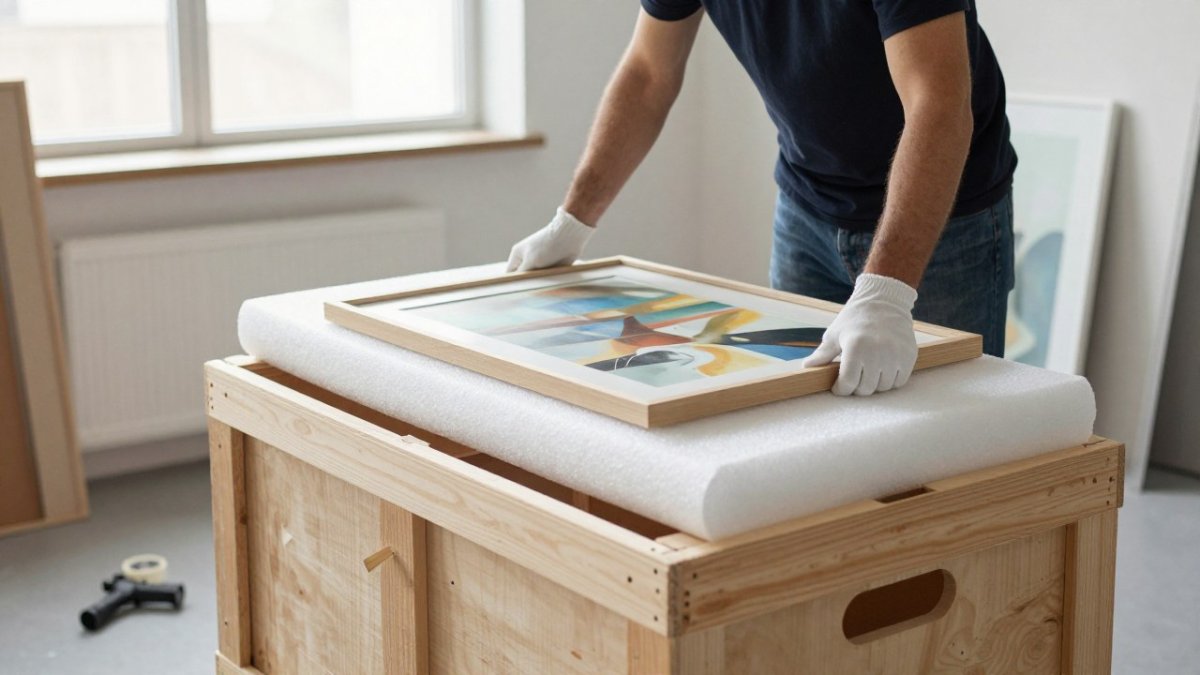
Fine art packing and crating is the practice of building layered, object-specific protection around a work, usually glassine against the surface, foam or bubble wrap for cushioning, and a rigid crate for structural support. The goal is to stop movement, absorb shock, and keep the surface from contacting anything that can abrade or press into it.
Match the method to the piece and to the failure mode you are guarding against:
- Works on paper: glassine directly against the sheet, rigid board behind it, and a moisture barrier around the package. Paper reacts to humidity, so the barrier matters as much as the board. Never let tape or adhesive touch the sheet.
- Stretched canvas: corner protection first, then foam wrap, then a crate with interior bracing that keeps the stretcher from flexing. Canvas fails at the corners and along the stretcher edges, so those are the points to reinforce.
- Framed works under glass: face protection and a crate that stays upright. If glass breaks, shards can rake the surface, so the glass should never be allowed to flex against the artwork. Note the upright requirement on the crate itself so handlers see it.
- Sculpture and ceramics: custom foam cradles cut to the object's shape, with no loose fill that can shift. Protruding elements need their own support, not just surrounding foam.
- Oversized pieces: a crate built around the work rather than a box the work is squeezed into, often with a pallet base and forklift access points. Oversized crates may need a dedicated vehicle rather than a shared route.
Professional packing costs more than a cardboard box, but it can reduce the risk of damage in transit. A custom crate adds cost and weight, and it can give an insurer a documented packing standard if something goes wrong.
Once the piece is home and hung, our guide on how to clean abstract canvas art safely at home covers the care that keeps it looking right.
What Drives Art Shipping Costs
Art shipping costs depend on size, weight, distance, fragility, packing method, and insurance. Pricing depends on these factors, so request a quote for your specific piece.
The biggest cost drivers:
- Dimensions and weight. Size and weight affect the handling and vehicle needed.
- Distance and route. Distance and route affect the cost.
- Packing and crating. Custom crates add cost but reduce damage risk.
- Insurance. Declared value drives the premium.
- Access. Stairs, tight doorways, and no freight elevator add labor.
We recommend getting quotes that separate these line items. A single lump sum hides where the money goes. If you are unsure what declared value to use, our guide on how to determine market value of original art explains how appraisals and comparable sales inform the number.
Artwork Shipping Insurance and Damage Claims
Insurance is the part collectors sometimes skip. Transit insurance covers loss or damage between pickup and delivery, and coverage and premiums are typically tied to the declared value of the work. Check the carrier's liability terms, which may not cover the full value of the piece.
Build a claim-ready record:
- Photograph the piece and the crate before shipping
- Keep the packing materials until you have inspected the work
- Note any damage in writing at delivery, before you sign
- Report the claim promptly, in the form the insurer requires
If a piece does arrive with damaged edges, our guide on how to repair damaged canvas painting edges covers the options. Document first, repair second.
Local Pickup or Long-Distance Delivery: Choosing Your Route
The right route depends on distance, value, and how much you want to handle yourself. Here is how the options compare:
| Option | Best For | Watch Out For |
|---|---|---|
| Collect in person | Nearby lots, small works | You supply packing and transport |
| Local courier | Regional deliveries | Confirm art-handling experience |
| Specialist fine art shipper | Valuable or fragile pieces | Higher cost, longer booking lead time |
| Shared or consolidated route | Lower budgets | Less control over timing |
Local pickup can be simpler if you can collect and pack safely. Long-distance delivery involves additional coordination, and a professional shipper can handle the packing and transport. For high-value or oversized works, a specialist shipper is usually the right call. For a small piece within driving distance, collecting yourself is often the simplest route.
Planning the Delivery of Your Next Original Piece
The best time to plan pickup and delivery is before you bid. Know the collection window, budget for packing and insurance, and line up a shipper early. That planning turns a stressful scramble into a routine handoff.
At Susan Fielder Art, we think about the whole journey, from the studio to your wall. Every purchase supports pancreatic cancer research through our charitable giving. When you are ready to bring a meaningful piece into your space, browse our collection and contact us about delivery options.
Winning a lot is the easy part. The real work is getting your artwork home safely, on time, and fully insured. Susan Fielder Art offers emotionally charged original abstract paintings, a verified secure checkout, and a commitment that 10% of all proceeds support pancreatic cancer research. Explore our collection and find a piece that speaks to you.
Frequently Asked Questions
How do you arrange pickup after winning an artwork at auction?
Contact the auction house's shipping or client services desk as soon as the invoice is paid. Ask for the collection deadline, approved shippers, and whether the salesroom allows third-party pickup. Then book a specialist art shipper, give them the lot number and buyer reference, and confirm access hours. If you are collecting in person, bring photo ID and a paid invoice, and bring blankets, gloves and a vehicle large enough for the piece.
Can an auction house ship artwork directly to the buyer?
Some do, usually through an in-house auction shipping services desk or a preferred vendor list. Others release lots to the buyer or a nominated shipper only. Ask before you bid: the terms of sale often state who handles packing and removal. Where the house does ship, confirm whether the quote includes crating, insurance and residential delivery, since those are frequently billed separately.
How much does it cost to ship artwork after an auction?
There is no single rate. Art shipping costs depend on size, weight, distance, whether the piece needs a custom crate, and whether you add artwork shipping insurance. Oversized paintings, glass and mirrors cost more because they need two-person handling and specialized vehicles. Request at least two written quotes that itemize packing, transport, insurance and any stair or inside-delivery charge, then compare the totals rather than the headline figure.
How should a painting be packed for delivery after an auction?
Fine art packing and crating should protect the surface and the frame separately. Glassine or acid-free paper goes against the painted surface, then foam or bubble wrap, then a rigid board or custom crate so nothing presses on the canvas. Frames get corner protection. Loose glass, mirrors and fragile antiques need a fitted crate with cushioning. Skip this step and a small impact in transit becomes a restoration bill.