 how-to
How to Clean Abstract Canvas Art Safely at Home
Quick Summary
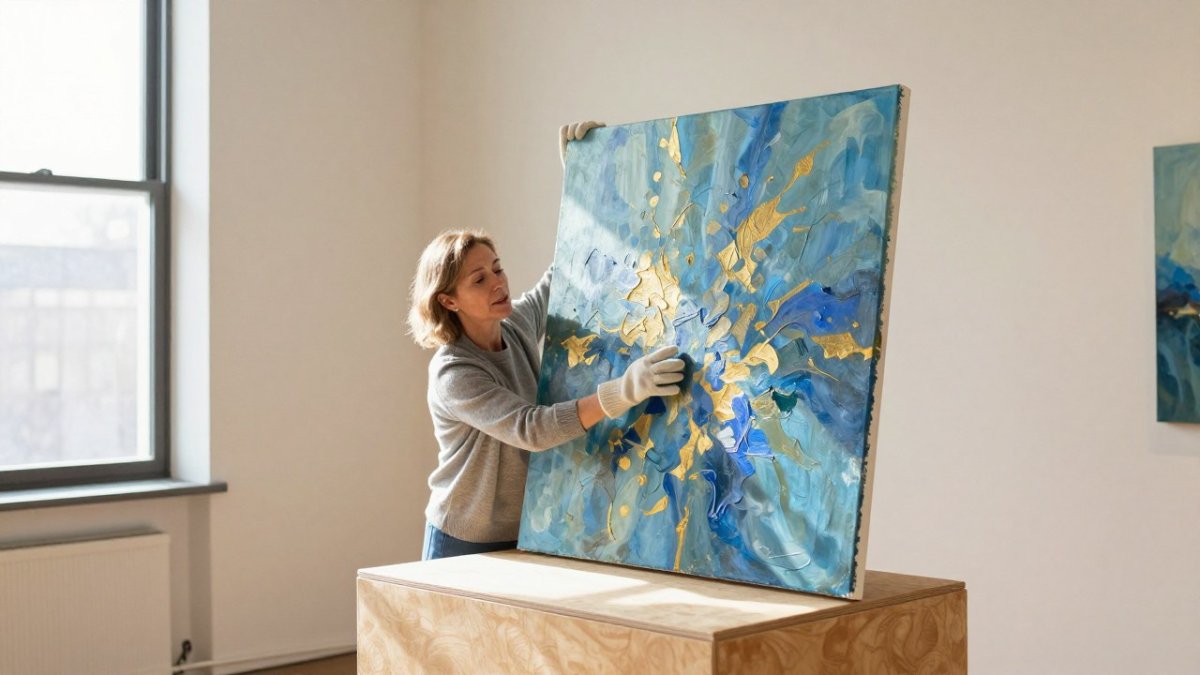
The safest way to clean abstract canvas art at home is to start with dry dusting using a soft, clean brush, working gently from the top edge downward. Stop immediately if you see any loose, lifting or flaking paint, because a clean abstract canvas should never be forced.
- Do not dust if you see loose, lifting or flaking paint on the surface.
- Avoid vacuums and compressed air, which conservators caution can damage a painting.
- Brush along the direction of each ridge on impasto work rather than crossing it.
- Test any moisture on a hidden area, such as the back edge or a corner under the frame.
- Consult a professional painting conservator if paint flakes, cracks or a stain does not respond to dry testing.
Table of Contents
- Start With Dry Dusting: The Safest First Step
- Choose Soft, Non-Abrasive Tools Before You Touch the Surface
- How to Clean Abstract Canvas Art at Home Without Moisture
- Spot-Cleaning Marks Safely: A Step-by-Step Test Method
- Cleaning Canvas Art With Vinegar and Other Household Products
- Printed Canvas vs. Original Painting: Why It Changes Your Approach
- When to Stop and Call a Professional Painting Conservator
- Frequently Asked Questions
Start With Dry Dusting: The Safest First Step
Last Updated: November 6, 2026
Dry dusting is the safest way to start cleaning abstract canvas art, and a clean abstract canvas is far less likely to be harmed by a dry method. Conservators generally advise that dusting is appropriate only when there are no signs of loose or flaking paint. Check the surface first, and stop if you see any lifting paint.
Many people reach for water or a spray bottle first. That is usually a mistake. Dust is easy to remove without moisture, and a dry method avoids the risk of staining or warping the canvas.
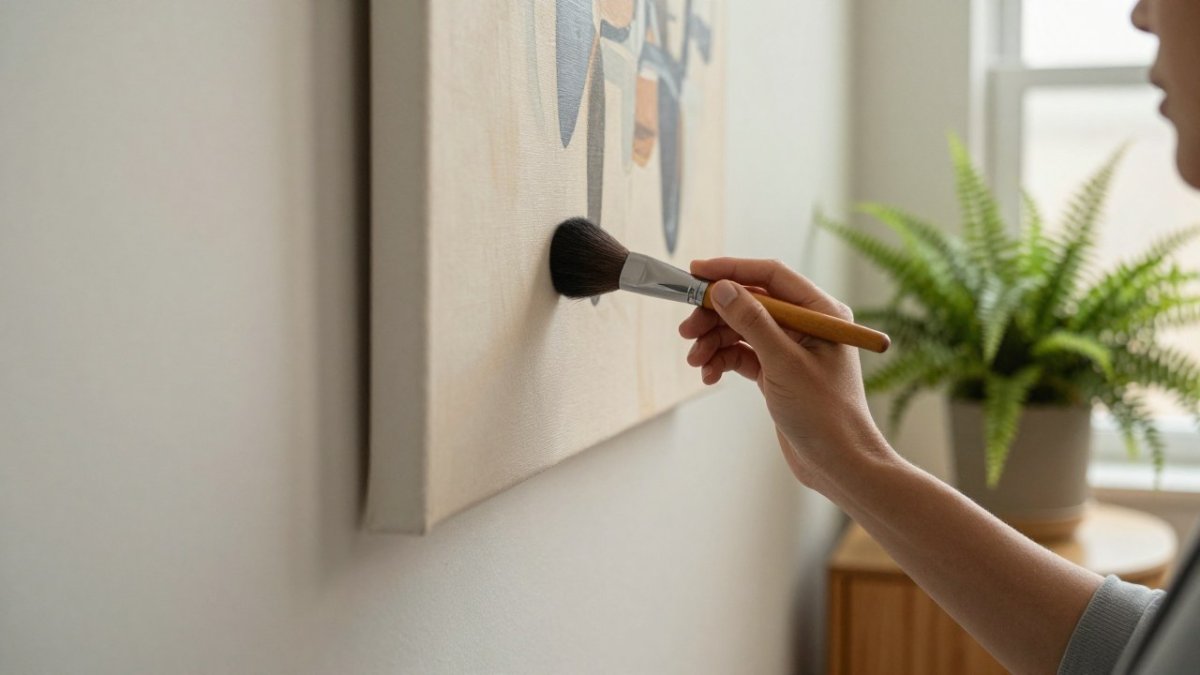
Keep these points in mind before you start:
- Look for loose, lifting or flaking paint. If you see any, do not dust.
- Work in good light so you can spot dust clearly.
- Use only dry tools.
- Move slowly and lightly across the surface.
What to avoid: Do not use a vacuum or compressed air. Conservators generally caution that these can damage a painting, even though they seem gentle. Some people think a quick blast of air is harmless, but it can push paint or dust into the texture.
Choose Soft, Non-Abrasive Tools Before You Touch the Surface
The right tool matters more than the cleaning product. Soft, clean tools lift dust without scratching or rubbing paint.
Good options include:
- A soft artist's brush with natural bristles
- A clean, dry microfiber cloth
- A soft makeup brush used only for art
- A dry-cleaning sponge made for artwork
Avoid rough paper towels, dish sponges and scrub pads. These can scuff the paint layer or leave fibers in the texture. Abstract paintings often have thick, layered paint, so rough tools can flatten the look you love.
Keep your tools clean. A brush that already holds grit will scratch the surface.
Soft, clean tools matter more than cleaning products, so here is how the common options compare.
| Tool | Best for | Key caution |
|---|---|---|
| Soft artist's brush | Lifting loose dust | Keep it clean and dry |
| Clean microfiber cloth | Dry wiping of smooth areas | Use dry, never damp |
| Soft makeup brush | Dust on textured surfaces | Use only for art |
| Dry-cleaning sponge | Porous surface dust | Made for artwork only |
| Paper towels or scrub pads | Nothing | Can scuff paint and leave fibers |
How to Clean Abstract Canvas Art at Home Without Moisture
Abstract art is not a flat surface. Impasto ridges, palette-knife peaks, metallic leaf, sand or grit mixed into the medium, and layered washes all trap dust differently and fail differently under a brush. For a fuller maintenance routine, see abstract canvas painting care.
This method works for routine dust.
- Set up safely. Lay a clean sheet under the painting only if you can reach it without tilting or un-hanging the piece. If the work is large or securely hung, dust it in place rather than risk a drop.
- Start at the top. Dust works downward with gravity. Begin at the upper edge and let loosened particles fall away rather than back onto cleaned areas.
- Use a soft brush at a low angle. Hold the brush nearly parallel to the surface and sweep from the center outward in short, light strokes. A low angle lifts dust instead of pushing it into the texture.
- Follow the ridges, don't cross them. On impasto or palette-knife work, brush along the direction of each ridge. Crossing a ridge can catch an edge and lift paint.
- Switch tools for texture traps. For deep valleys, crevices, and mixed-media grit, use a dry microfiber cloth wrapped around a finger or a soft makeup brush, and dab rather than sweep. A dry-cleaning sponge made for artwork can pick up surface dust from porous areas without driving it deeper.
- Clean the tool as you go. Wipe the brush on a clean cloth every few strokes so grit does not become a scraper.
- Check edges, stretcher bars, and the back. Dust accumulates on the top edge of the frame and the stretcher bars, then migrates onto the canvas.
Work slowly and let the tool do the lifting. Once the piece is clean, learn how to frame abstract canvas art properly to guard against new dust. If dust does not release with light pressure, stop; forcing it is how texture gets flattened and flakes get torn.
Watch out: Metallic leaf, gold or copper accents, and any powdery or chalky finish can smear or lift with the lightest brush contact. Test a hidden corner first, and if the surface sheds anything onto the brush, stop and treat the piece as too fragile for dry cleaning at home.
Frequent light dusting every few weeks prevents buildup and reduces the need for any wet cleaning later. Keep a dedicated brush for art only, stored clean and dry, so you are never tempted to use a household duster that carries grit or furniture polish.
Spot-Cleaning Marks Safely: A Step-by-Step Test Method
Not every mark should be touched. Before any moisture goes near the canvas, identify what the mark is, because the risk differs by contaminant. Use this guide to decide whether to attempt a test at all.
- Loose surface dust and dry soil: Safe to dry-brush first. If it lifts, stop there.
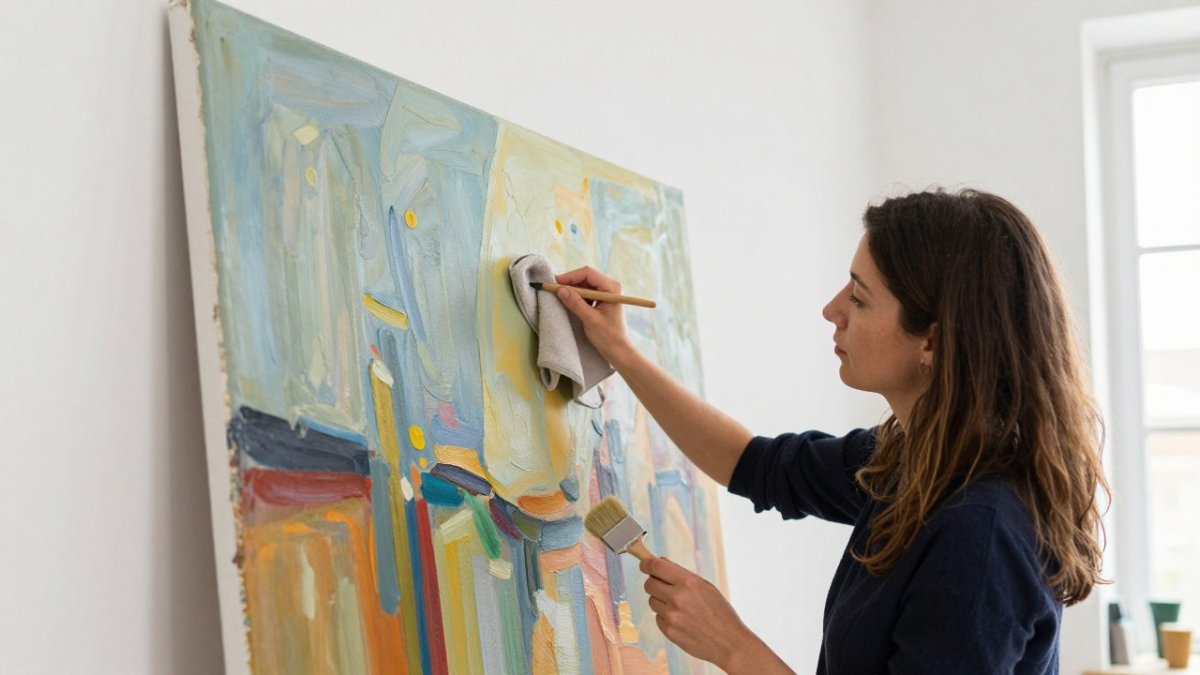
- Fingerprints and skin oils: Often the most treatable. A barely damp white cotton cloth, dabbed and dried immediately, is the standard first attempt. Oils can darken the paint film if wetted and left damp, so dry quickly.
- Grease and food splatter: High risk. Water alone can spread grease and drive it into the weave. Do not rub; a conservator is the safer call.
- Smoke and soot residue: High risk. Soot is fine and abrasive, and wiping smears it. Dry methods can make it worse by grinding particles into texture; professional cleaning is usually required.
- Water marks and tide lines: High risk. These are usually evidence of past moisture damage, and adding more water can enlarge the ring rather than remove it.
- Mold or musty odor: Stop. Do not dry-brush or damp-wipe mold; disturbing it spreads spores and the underlying cause is a humidity problem a conservator should assess.
- Insect specks and fly spots: Often dry and removable with a soft brush or dry dab, but test first because some deposits are acidic.
If the mark falls into a treatable category, test any moisture on a hidden area first.
- Pick a hidden spot, such as the back edge or a corner covered by the frame.
- Dampen a white cotton cloth with plain water and wring it out until it is barely damp, not wet.
- Dab the test spot gently and wait a few minutes.
- Check the result. Look for color transfer onto the cloth, darkening, a ring, or a change in sheen or texture.
- Stop if the test shows any change. Dry the area and seek professional help.
If the test looks fine, use the same technique on the visible mark. Dab; do not rub. Work from the outside of the mark toward the center so you do not spread it. Dry the spot right away with a clean, dry cloth, and let the area air-dry fully before judging the result, since some surfaces look darker while damp.
Watch out: Do not apply water to flaking, cracked, or powdery areas, and do not use a damp cloth on unvarnished paintings with matte, absorbent surfaces, where water can leave a permanent tide line. If the mark does not lift after one gentle attempt, leave it alone; repeated wetting is how small marks become large stains.
Cleaning Canvas Art With Vinegar and Other Household Products
Many online guides suggest vinegar, soap or other household products. Be careful here. Advice on moisture is not consistent, with some sources accepting a soapy-water cloth for oil or acrylic paintings and others advising against water or household cleaners on canvas art.
Because of this disagreement, we recommend avoiding vinegar and household cleaners on abstract canvas art unless you are working with a professional. Vinegar is acidic and can dull paint, while soap residue can leave a film that attracts dust.
If you still decide to test a mild solution, use only plain water on a damp cloth, test it on a hidden area first, and never soak the canvas.
Printed Canvas vs. Original Painting: Why It Changes Your Approach
Before you clean, check whether your piece is an original painting or a canvas print. The two need different care.
- Original paintings have brushstrokes, paint ridges and texture you can see up close. The paint sits on the canvas itself.
- Canvas prints show a flat, even surface and often a uniform pattern of dots when viewed closely. Ink sits on top of the canvas.
Prints can often tolerate the same gentle dusting, but the ink and coating can react differently to moisture. Learn how to tell prints from originals before you choose a method. An original painting may have fragile paint layers, varnish and texture that need extra care.
If you are unsure, treat the piece as an original and stick to dry dusting. Read our guide on telling digital prints from original paintings for more detail before choosing a cleaning method.
When to Stop and Call a Professional Painting Conservator
Some situations are beyond home care. Stop cleaning and contact a professional painting conservator if you notice any of these:
- Paint is flaking, lifting or cracking
- The surface feels powdery or sticky
- A stain does not respond to a dry test
- The canvas is torn, sagging or loose on the stretcher bars
- The piece has significant sentimental or financial value
- You are unsure what caused the damage
Conservators have tools and training to handle delicate work safely. A professional assessment can help you avoid costlier repairs later.
Need more help with a damaged canvas? Learn more about repairing damaged canvas painting edges before deciding whether to clean or restore.
Susan Fielder Art creates original abstract paintings. For more on keeping your art in good condition after you bring it home, browse our collection.
Frequently Asked Questions
How do you clean a canvas painting without damaging it?
Start with dry dusting using a soft brush, working gently from the center outward. Avoid moisture until you have confirmed the paint surface is stable. Conservators generally advise against vacuums and compressed air because they can lift loose paint or push dust deeper into the canvas weave. If the paint is flaking, powdering or lifting, stop cleaning at home and contact a professional conservator for an assessment.
Does water damage canvas?
Water can damage canvas art, particularly when the paint layer, varnish or finish is uncertain. Some guides suggest a barely damp white cotton cloth with mild soapy water for oil or acrylic paintings, while others advise against water entirely. Because the advice is inconsistent, test any moisture on an inconspicuous corner first, use as little moisture as possible, and avoid wet cleaning altogether on prints or fragile originals.
Can you clean a canvas painting with vinegar?
Vinegar is an acid and is not a recommended cleaner for painted canvas. Even diluted, it can affect pigments, varnish and the canvas fibers themselves. Household chemical cleaners carry the same risk. For marks you cannot remove with dry methods, a conservator can recommend a safe approach for your specific painting rather than a home solution that may cause permanent discoloration.
How can you tell whether a canvas painting needs professional cleaning?
Call a professional if you see loose, flaking or lifting paint, powdery residue, widespread discoloration, yellowing varnish, mold, odor, or stains you cannot remove with dry dusting. Also seek help for valuable or heirloom pieces. A conservator can examine the surface and recommend whether cleaning, stabilization or simply better display conditions are needed.