 how-to
How to Clean and Maintain Abstract Canvas Paintings
Table of Contents
- Start With the Right Tools and a Light Touch
- How to Dust Canvas Paintings Without Causing Damage
- How to Clean a Canvas Print vs. an Original Painting
- Handling Spills, Stains, and Stubborn Surface Grime
- How to Protect Canvas Paintings From Sun, Humidity, and Smoke
- How to Store Canvas Paintings Safely During a Move or Remodel
- When to Call a Professional Conservator
- Frequently Asked Questions
Last Updated: October 18, 2026
Start With the Right Tools and a Light Touch
Learning how to clean and maintain abstract canvas paintings starts with one rule: most damage comes from overcleaning, not from dust.
An abstract canvas painting is a stretched fabric surface covered in paint, and both layers bruise easily. Water can swell the canvas. Rubbing can lift pigment.
So build a small kit first:
- A soft microfiber cloth
- A feather duster or soft brush
- A pencil brush for tight corners
- Cotton swabs for edges
Skip paper towels, sponges, and anything wet until you know the paint type. The Smithsonian's guidance on caring for paintings makes the same point: gentle and dry beats strong and wet.
How to Dust Canvas Paintings Without Causing Damage
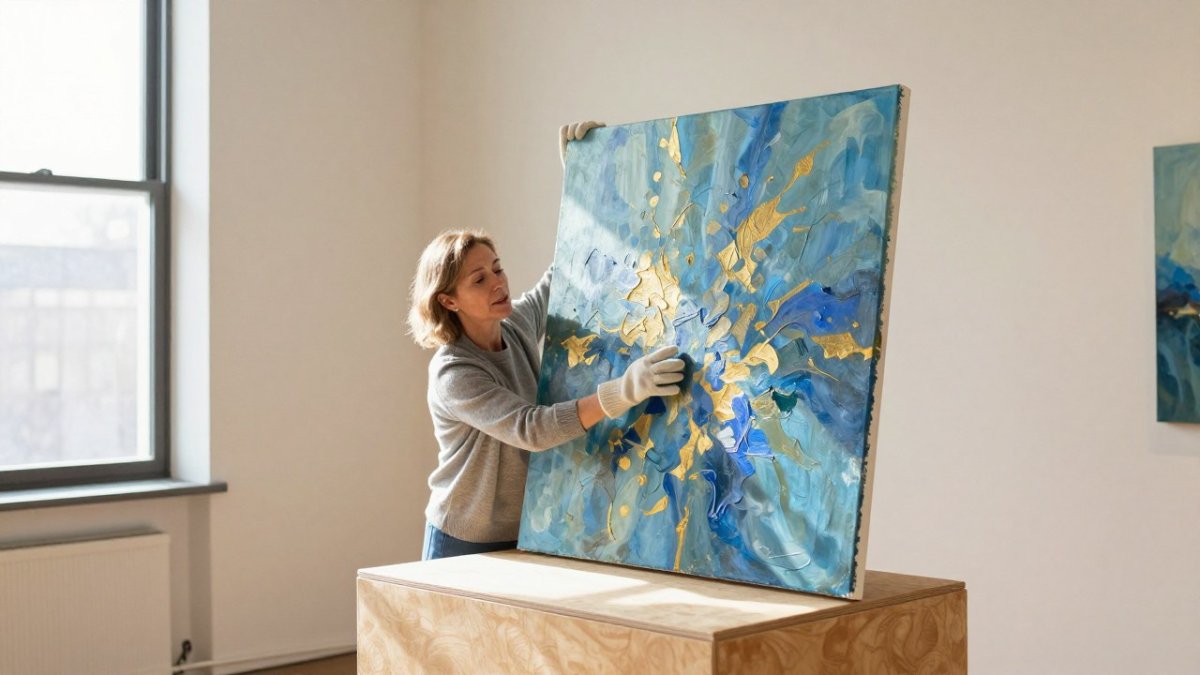
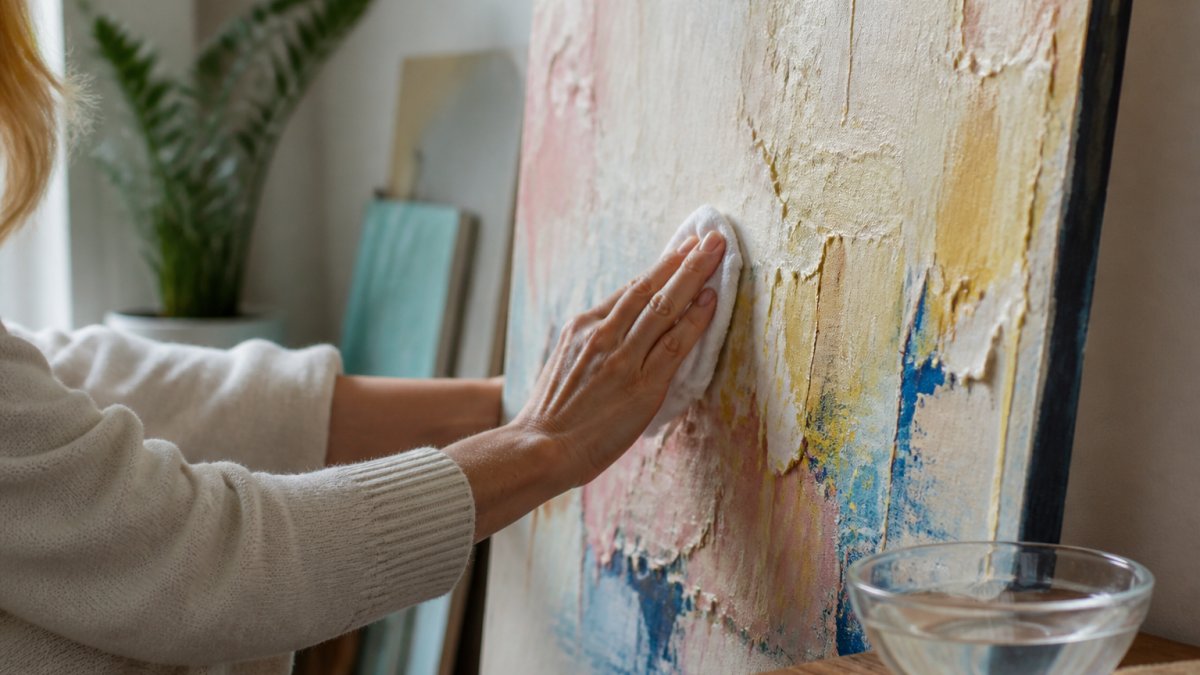
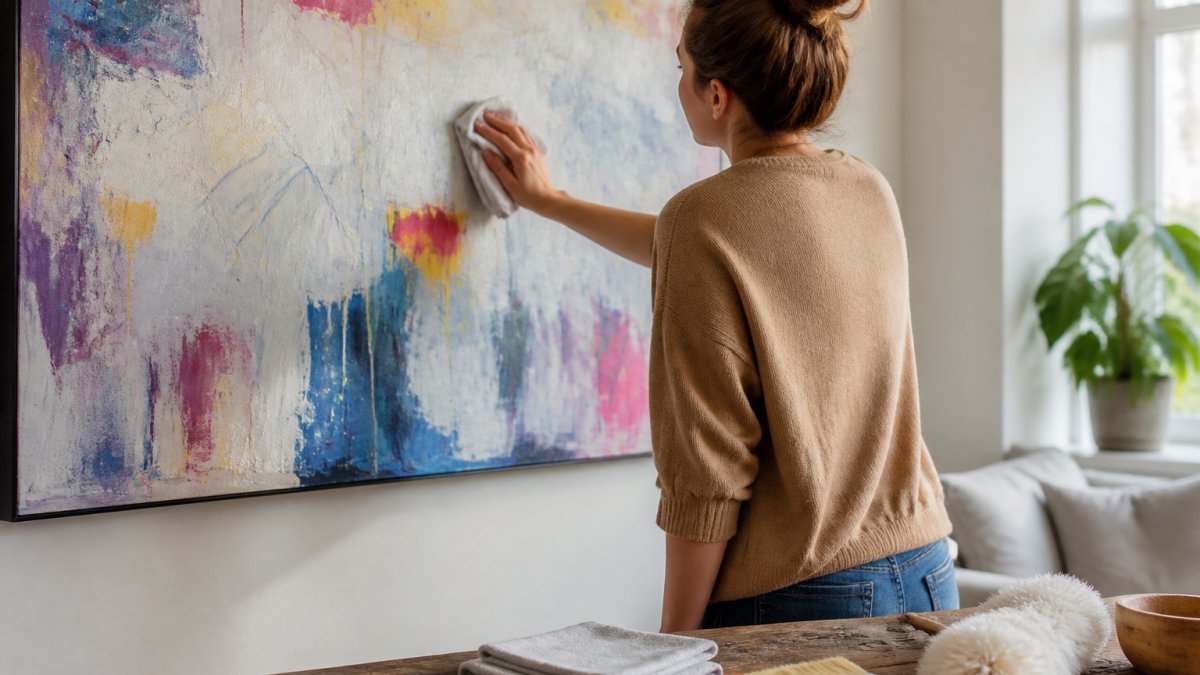
Dusting is safe when you work dry, work light, and work top to bottom. Never press the cloth into the paint surface. Let the cloth skim.
Follow these steps:
- Wash and dry your hands. Oils from skin transfer to canvas.
- Support the back of the canvas with one hand if you can reach it.
- Start at the top edge and move down with a dry microfiber cloth.
- Use a soft brush for textured areas where dust settles in ridges.
- Switch to a pencil brush for corners and the inner frame edge.
- Stop when the cloth comes away clean.
How often? Every two to three months in most homes. Monthly if you live near a busy road or run the heat constantly.
How to Clean a Canvas Print vs. an Original Painting
Canvas prints and original paintings need different handling. A print is ink on a coated surface. An original is paint on fabric, and every medium behaves differently. The table below is a starting point, but the real work is identifying what is actually on the canvas before you touch it.
Here is how the two compare at a glance:
| Factor | Canvas Print | Original Painting |
|---|---|---|
| Surface | Ink on coated canvas | Paint on fabric |
| Water risk | Moderate | High |
| Safe default | Dry dusting | Dry dusting |
| Spills | Blot, do not rub | Call a conservator |
| Best cleaner | Dry cloth only | Dry cloth only |
Identify the medium before you clean
Abstract paintings are not one material. The same stretched canvas can carry oil, acrylic, mixed media, or a varnish layer, and each responds differently to dust, moisture, and pressure.
- Oil paint. The cured film is tough and slightly flexible, but it stays soft underneath for months to years. Solvents in household cleaners can dull the surface and lift the film. Dry dusting only; never rub a textured oil impasto with a cloth, because the ridges catch lint and the cloth can shear off a peak of paint.
- Acrylic paint. Acrylic dries into a flexible plastic film that generates static and attracts dust. It is more water-resistant than oil once fully cured, but a damp cloth can leave a faint haze on matte acrylic. Use a dry microfiber cloth and a soft brush for texture.
- Mixed media. If the piece includes paper, charcoal, pastel, or collage elements, assume water will damage it. Pastel and charcoal sit on the surface and will smear with any contact. Dust with a feather duster only, and stop if you see pigment on the duster.
- Varnished surfaces. A varnish layer can be glossy or matte and is designed to be cleaned, but it also yellows and cracks with age. A dry cloth is safe; a damp cloth is safe only if the varnish is intact and fully cured. If the varnish is tacky or cracked, treat the piece as unvarnished and call a conservator.
A quick decision tree
- Is the surface tacky, flaking, or cracked? Stop. Call a conservator.
- Is there visible texture or impasto? Use a soft brush first, then a dry cloth.
- Is the piece a print or a mixed-media work with paper or pastel? Dry dust only.
- Is the paint fully cured, glossy, and intact? A barely damp swab of distilled water on a hidden edge is the limit.
- Does anything lift onto the cloth? Stop and reassess.
Our advice: dry dusting is the only method we would use on any of them without training. The American Institute for Conservation's find-a-conservator tool is the right next step for anything beyond dust.
Handling Spills, Stains, and Stubborn Surface Grime
Spills need speed, but not scrubbing. Blot, lift, and stop. The harder question is what kind of problem you are actually looking at, because a fresh spill, a smoke film, a grease spot, and mold each need a different response, and only the first is a home-care job.
Classify the problem first
- Fresh liquid spill. Water, coffee, or a splash from a drink. Blot immediately with a dry cotton cloth, pressing straight down. Do not wipe sideways.
- Surface dust or loose grime. Lifts with a soft brush. If it does not, it is not surface grime.
- Smoke film. A thin, yellowish or gray film that bonds to the paint and varnish. It does not lift with a dry cloth, and rubbing drives it into the texture. This is a conservator job.
- Grease. Kitchen grease or a fingerprint from handling. Grease darkens the paint and attracts dust. A dry cloth will not remove it, and soap leaves residue. Conservator job.
The home-care sequence for a fresh spill
Work in this order, and stop at the first step that does not work:
- Blot liquid immediately with a dry cotton cloth. Press straight down, never sideways.
- Lift loose debris with a soft brush before touching the spot.
- Test distilled water on a hidden edge only if the paint is fully cured and glossy.
- Use a cotton swab dampened with distilled water, never a soaked pad.
- Dab, do not wipe. Wiping spreads the stain into the weave.
Skip mild dish soap unless a conservator tells you otherwise. Soap leaves residue in the fabric, and residue traps dirt. Harsh cleaners, chemicals, and solvents can strip a finish in seconds.
Do not use these
- Paper towels and sponges. They abrade the paint film and leave lint in texture.
- Household glass or surface cleaners. Ammonia and surfactants dull varnish and can lift acrylic.
- Rubbing alcohol, acetone, or paint thinner. These dissolve paint films and varnish.
- Magic erasers or any abrasive pad. They remove paint, not just grime.
- Damp cloths on unvarnished or mixed-media work. Water staining on canvas often shows up weeks later as a dark ring.
When to stop and call
Stop immediately if you see paint color on the cloth, if the surface feels tacky, if the stain has a smell, or if the spot is larger than a coin. Those are signs the problem is in the paint or the fabric, not on top of it. A conservator can clean, consolidate paint, and treat mold safely; home attempts on these problems usually make them worse.
How to Protect Canvas Paintings From Sun, Humidity, and Smoke
Protection is cheaper than repair, and it starts with room conditions. Ultraviolet light fades pigment. Humidity swings crack paint. Smoke leaves a film that bonds to the surface.
Use these habits to protect canvas paintings:
- Hang away from direct sunlight and move pieces seasonally if needed.
- Keep humidity steady and avoid placing art over radiators or vents.
- Keep temperature consistent; attics and garages swing too much.
- Run an air purifier in rooms with a fireplace or heavy cooking.
- Frame or seal the back of the canvas to block dust and pests.
For framed artwork, check the backing paper and hanging wire once a year.
The National Park Service's museum collection care guidance recommends stable temperature and humidity as the foundation of art preservation.
How to Store Canvas Paintings Safely During a Move or Remodel
Storage is where good paintings get hurt. The fix is simple: keep the surface off everything, and keep the piece dry.
Follow this sequence:
- Let the painting sit in the room for a day so it adjusts to conditions.
- Wrap it in glassine or acid-free paper, never plastic sheeting.
- Add corner protectors over the stretcher bars.
- Place it face up in a rigid box, or stand it upright if space allows.
- Store in a dry, climate-steady room, not a garage or basement.
- Keep it off the floor and away from exterior walls.
Never stack paintings face to face. Never lay one flat under anything heavy.
If you are remodeling, move art out before sanding or painting starts. Dust from construction settles deep into textured paint and is far harder to remove than household dust.
When to Call a Professional Conservator
Call a conservator when the problem is in the paint or the fabric, not on top of it.
Signs you should stop and get help:
- Paint lifting or flaking at the edges
- Dark or white spots that spread
- A musty smell near the canvas
- A stain that has soaked into the weave
- Any piece with real sentimental or market value
A conservator can clean, consolidate paint, and treat mold safely. Home attempts on these problems usually make them worse and cost more to fix.
For everyday care, the safest path is a piece that arrives in good condition and stays that way.
Frequently Asked Questions
How often should I clean an abstract canvas painting?
Dust canvas paintings every two to four weeks with a dry, soft brush or microfiber cloth. A full deeper clean is rarely needed, usually once a year or when you notice visible surface dirt. In homes with pets, fireplaces, or open windows, dust builds up faster, so check the surface monthly. Regular light dusting prevents buildup from bonding to the paint and reduces the need for anything wetter, which is where most damage happens.
Can I use water to clean a canvas painting?
Plain water is risky on most canvas paintings. It can soak into the fabric, loosen the sizing, and cause paint to lift or crack over time. For surface dust, always start dry. If a stain needs moisture, use distilled water on a cotton swab and test a hidden corner first. Never spray water directly on the canvas, and never rub. For oil paintings, water should be avoided entirely because it can cloud the varnish.
What can I spray on a canvas painting to protect it?
A conservator-grade varnish or fixative applied by a professional is the safest option for an original painting. Retail sprays sold as craft fixatives can yellow, crack, or trap dust if applied incorrectly. For canvas prints, a UV-protective clear coat made for giclée surfaces works, but test it on the back first. In most homes, the better protection is indirect sunlight, stable humidity, and dusting regularly rather than adding a coating yourself.
How should I store an abstract canvas painting?
Store canvas paintings upright, never flat, and never leaning against a wall where the canvas can warp. Wrap the surface in acid-free glassine or clean cotton, not plastic, which traps moisture and can cause mold. Keep the piece in a climate-controlled room between 60 and 75 degrees Fahrenheit with humidity under 60 percent. Add corner protectors and a rigid backing board, and check the wrapping every few months for condensation or pests.
Dust, sunlight, and humidity will test any painting over time. The good news is that steady, simple care prevents most damage before it starts. Susan Fielder Art offers emotionally charged original abstract paintings, each one packed with care and backed by a verified secure checkout, plus a mission where 10% of all proceeds go to pancreatic cancer research. Browse the current collection and find a piece that transforms your space.