 how-to
What to Look for in Online Art Gallery Buyer Protection
Last Updated: October 28, 2026
Quick Summary
Good buyer protection is written down, easy to find, and clear about who pays for what. It should spell out return and refund terms, provide written proof of authenticity, insure shipping damage, and allow a payment method that supports disputes. Read the policy at checkout and save a dated copy.
- Save a dated PDF or screenshot of the return policy as it appears at checkout.
- Confirm in writing who insures the piece from the gallery's door to yours.
- Photograph the box and artwork on arrival, before removing the packaging.
- Pay with a credit card or marketplace checkout to keep a chargeback or dispute path open.
- Ask whether the gallery or a third party decides disputes; a neutral party is more valuable.
Table of Contents
- Why Buyer Protection Matters When You Buy Art Online
- How to Buy Art Online Safely: Checking the Gallery First
- Reviewing the Online Art Gallery Return Policy
- Confirming Artwork Authenticity With a Certificate
- Checking Shipping Insurance and Damage Coverage
- Payment Protection, Chargebacks, and Filing a Dispute
- Your Next Step: Choosing a Piece With Confidence
- Frequently Asked Questions
Why Buyer Protection Matters When You Buy Art Online
Buying art online feels easy until a painting arrives cracked, the colors differ from the photo, or the seller stops answering emails.
Most people who buy art today do so from a dealer or gallery. Online sales are a growing part of that mix, and the mid-market segment of galleries saw a 4% rise in online sales, according to the Art Basel and UBS Art Market Report 2026.
Buyer protection is the set of policies a gallery or platform offers to cover you if an artwork is not as described, arrives damaged, or is not authentic.
Here is what we think matters most:
- Clear return and refund terms
- Written proof of authenticity
- Insurance that covers shipping damage
Watch out: a gallery that hides its policies or says "all sales are final" without explanation is a warning sign, not a feature.
How to Buy Art Online Safely: Checking the Gallery First
Before you pay, check who you are buying from. A gallery with a real address, named staff, and a track record is easier to hold accountable than an anonymous storefront.
Start with these checks:
- Look for a physical business address and a working phone number
- Search the gallery name with the word "reviews" or "complaints"
- Check whether the gallery is listed with a recognized art organization
A Federal Trade Commission guide on online shopping safety recommends the same basic checks for any online purchase: know the seller, read the policies, and pay with a traceable method.
Susan Fielder Art lists a verified secure website with safe checkout and is registered with the Art Storefronts Organization. For a step-by-step approach, see our guide on verify abstract art authenticity online.
Reviewing the Online Art Gallery Return Policy
A return policy is the contract language that decides what happens when a painting does not work out. Read the version live on the day you bought, galleries revise these pages, and the terms in effect at checkout usually govern your purchase. Save a dated PDF or screenshot.
What a return policy should actually answer
A usable policy answers six questions:
- Return window. How many calendar days do you have, and does the clock start at delivery or at order? Most run 7 to 14 days from delivery; some extend to 30.
- Condition requirement. Must the piece come back in original packaging, unframed, or with the certificate of authenticity? A missing certificate is a common reason a return is refused.
- Who pays return shipping. On a large canvas, freight can run several hundred dollars each way. Confirm whether the gallery issues a prepaid label, reimburses your carrier, or deducts shipping from the refund.
What buyer protection policies typically cover, and what they exclude
A gallery's buyer protection is usually narrower than buyers assume. It typically covers:
- The work arriving damaged in transit, when the gallery arranged and insured shipping
- The work being materially different from the listing (wrong dimensions, medium, edition, or artist)
- Non-delivery, or delivery to the wrong address through the seller's error
It usually does not cover:
- A change of mind after the return window closes
- Color variation between a screen and the physical work (many policies state this explicitly)
- Damage caused after delivery or during a buyer-arranged return shipment
Who handles the dispute
Ask the gallery directly: if a claim is disputed, does the gallery decide, or does a third party, the payment processor, marketplace, or card issuer, decide? A gallery handling its own disputes is not neutral. A marketplace checkout or credit card issuer gives you an outside decision-maker, the single most valuable feature of a buyer protection policy.
Return shipping on large works
A stretched canvas over 48 inches usually ships freight, not parcel. Freight returns require a scheduled pickup, original crating, and often a commercial address. Before buying a large piece, ask:
- Will the gallery arrange the return pickup, or must you?
- Is the original crate reusable, and who stores it during the return window?
- Does the gallery's insurer cover the return leg, or only the outbound shipment?
If any answer is unclear, get it in an email before you pay. A written answer is evidence; a phone answer is not.
A practical return checklist
- Save the policy page with a date stamp at checkout.
- Photograph the unopened box, the packing materials, and the work before you discard anything.
- Report any damage in writing within the policy's stated window, often 48 to 72 hours after delivery.
- Request return authorization in writing before shipping anything back.
- Keep the tracking number and delivery confirmation for the return shipment.
- Confirm the refund amount, method, and expected date in writing.
For how documentation affects resale and value, see our guide on how to determine market value of original art.
Confirming Artwork Authenticity With a Certificate
A certificate of authenticity is a written document from the artist or gallery stating who made the work, when, and in what medium, one of the most useful pieces of paper you can have.
A certificate should include:
- The artist's full name and signature or contact details
- The title, year, medium, and dimensions
- A unique number or reference for the piece
Be careful with certificates that are generic or easy to copy, and ask whether the certificate can be verified with the artist or gallery directly.
Ask the seller for a high-resolution photo of the signature and the back of the canvas. Original works often show texture, stretcher marks, and wear that prints cannot match.
Checking Shipping Insurance and Damage Coverage
Art is fragile, and shipping is where most damage happens. Before you buy, confirm who insures the piece in transit and what the insurance covers.
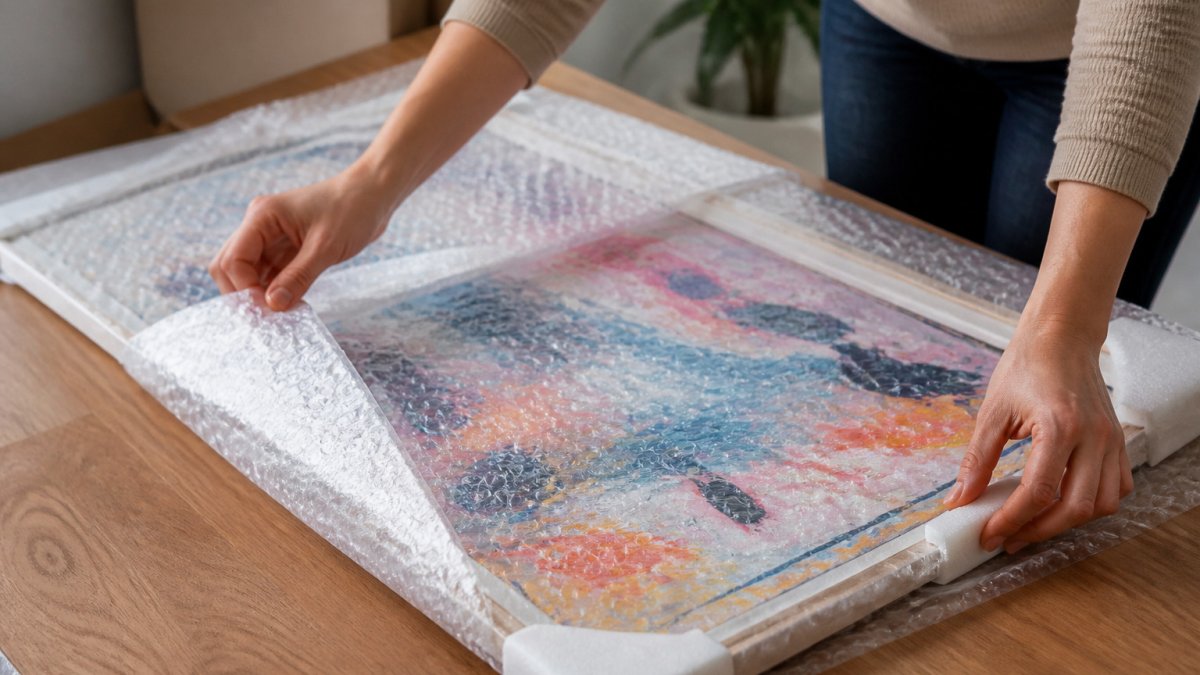
Key questions to ask:
- Is the piece insured from the gallery's door to yours?
- Does the insurance cover full replacement value or only a percentage?
- What documentation do you need to file a damage claim?
Photograph the box and artwork as soon as it arrives, before removing the packaging, and keep all packing materials until you are satisfied the piece is undamaged.
Good sellers wrap works in bubble wrap, protective corner guards, and sturdy boxes.
Payment Protection, Chargebacks, and Filing a Dispute
How you pay determines what you can do when something goes wrong: two buyers can purchase the same painting from the same gallery with very different outcomes based on payment method alone. Before checkout, know which protections attach to your method and what evidence you will need.
Payment methods compared by buyer recourse
| Payment method | Typical buyer recourse | What to keep |
|---|---|---|
| Credit card | Strongest. You can dispute a charge with the card issuer under the card network's chargeback rules, and federal law limits your liability for unauthorized charges. | Statement showing the charge, invoice, listing screenshots, correspondence |
| Debit card | Weaker than credit. Disputes run through your bank, and the money leaves your account immediately. | Same as credit card, plus bank dispute confirmation |
| Marketplace checkout (e.g., a platform that processes payment) | Depends on the platform's buyer protection program. Often includes a defined claim window and an internal resolution process. | Order confirmation, platform case number, messages sent through the platform |
| Payment app / peer-to-peer transfer | Usually little or no recourse. Many apps explicitly exclude purchase protection for goods. | Everything, though recovery is unlikely |
| Bank wire | Almost no recourse once funds leave. Wires are difficult to reverse. | Wire confirmation, written seller representations |
| Cash or money order | No recourse. | Avoid for online art purchases |
How a credit card chargeback actually works
A chargeback is a formal dispute filed with your card issuer, which routes it through the card network to the seller's bank. The sequence:
- Contact the seller in writing first. Most issuers expect you to attempt resolution directly. Keep the emails.
- File the dispute with your card issuer. You can usually do this by phone or in the card's app. Describe the problem precisely: not received, materially different from description, damaged, or unauthorized.
- Submit evidence. Issuers typically ask for the invoice, the listing as it appeared, damage photos, tracking, and your correspondence with the seller.
- Respond to the seller's rebuttal. The seller's bank may contest the chargeback. You will usually have a short window to reply with additional evidence.
- Wait for the issuer's decision. Timelines vary by issuer and network; ask for the expected resolution date when you file.
Deadlines matter. Federal law gives you a right to dispute billing errors if you contact the issuer within 60 days of the statement showing the problem, and card network chargeback rules impose their own windows that can be shorter (What To Do if You’re Billed for Things You Never Got, or You Get Unordered Products). Do not wait for a seller to "look into it" past those dates.
The evidence file to build before anything goes wrong
Disputes are won on documents. Save these at purchase, not after a problem appears:
- Screenshots of the listing, including title, dimensions, medium, edition, price, and the date
- The gallery's return and buyer protection policy as it appeared at checkout
- The invoice and order confirmation
A step-by-step dispute and refund sequence
- Document the problem immediately. Photograph the packaging, the work, and any damage before discarding materials.
- Notify the seller in writing within the policy's stated window, stating what is wrong and what remedy you want (repair, replacement, or refund).
- Set a reasonable deadline in your message, commonly 5 to 10 business days, and say you will escalate if it passes.
- Escalate to the platform if you bought through a marketplace checkout, using its case system so the record stays on-platform.
- File a chargeback with your card issuer if the seller does not resolve the issue within your deadline and you are still inside the dispute window.
- Keep paying attention. Respond to every request for information promptly; missed responses are the most common reason disputes fail.
Cross-border purchases add a second layer
If the gallery ships from outside the United States, import duties, customs fees, and delays are usually the buyer's responsibility unless the terms say otherwise. Cross-border return shipping can cost more than the refund is worth, and a foreign seller may be outside the practical reach of a U.S. court. Before buying internationally, confirm who pays duties, whether the seller accepts U.S. returns, and which country's law governs the sale.
When to walk away
Walk away if the seller will not put the return terms in writing, will not accept a traceable payment method, cannot confirm who insures the shipment, or pressures you to complete a wire transfer quickly. No piece is worth a payment method that leaves you with no way back.
Your Next Step: Choosing a Piece With Confidence
Buyer protection is not about avoiding risk entirely. It is about knowing what you are covered for before you commit. Check the gallery, read the return policy, ask for a certificate, confirm insurance, and pay with a method that gives you a way out.
If you are looking at abstract work from Susan Fielder Art, look for the policies described above on the site and ask any questions before you buy. Check the website for current prices or request a quote.
Frequently Asked Questions
Is it safe to pay for art through an online gallery?
It can be, if the checkout is secure and the payment method gives you recourse. Look for an https address and a clearly stated payment process before entering card details. Credit cards generally offer stronger dispute rights than debit cards or direct bank transfers, because a card issuer can review a chargeback request if the item is significantly different from the listing or never arrives. Keep your order confirmation, the listing description, and all messages with the seller, since these records are what you will need if a dispute goes further.
Can I return artwork bought online?
Return rights vary by gallery, so read the policy before you buy. A clear policy should state how many days you have to request a return, who pays return shipping, whether the piece must be in its original packaging, and what refund or store credit you will receive. Some galleries accept returns only for damaged or misdescribed works, while others allow returns for any reason within a set window. If the policy is vague or missing, ask in writing before purchasing.
How can I verify that an artwork is authentic?
Ask the seller for a certificate of authenticity that names the artist, the title, the year, the medium, the dimensions, and the edition number if the piece is a print. The certificate should be signed and dated by the artist or an authorized representative. Compare the signature and details against the artist's website or official records where available. A certificate is useful evidence, but it is only as reliable as the person who issued it, so check that the issuer is credible.
What should I do if artwork arrives damaged?
Photograph the packaging and the artwork before you unwrap it fully, then document any visible damage from several angles. Contact the gallery within the timeframe stated in its policy, usually a few days, and include your photos, the order number, and a description of the problem. Do not discard the packaging until the claim is resolved, since carriers and insurers often require it. If the gallery is unresponsive, your shipping insurance claim or a payment dispute may be the next step.