 how-to
How to Determine Market Value of Original Art
Table of Contents
- Understanding the Three Types of Art Value
- Step 1: Identify the Artist and Verify Authenticity
- Step 2: Research Art Auction Results and Past Sales
- Step 3: Use an Art Price Database to Find Comparable Works
- Key Factors That Affect Art Value
- When to Hire a Professional Art Appraisal
- Practical Example: Valuing a Comparable Artwork
- Frequently Asked Questions
Last Updated: October 21, 2026
Understanding the Three Types of Art Value
What your original artwork is worth depends on why you need to know it. Understanding the market value original art represents isn't a fixed number, it shifts with context, purpose, and who's buying or selling.
Most people conflate three concepts: fair market value, insurance value, and asking price. Each answers a different question.
Fair Market Value vs. Insurance Value vs. Asking Price
Fair market value is what a willing buyer would pay a willing seller in an arm's-length transaction, neither under pressure. It's the number the IRS cares about and what appraisers typically estimate.
Insurance value is typically higher. It reflects what you'd spend to replace the artwork if damaged or stolen, insurers use replacement cost because finding an identical original is usually impossible.
Asking price is what a seller hopes to get, often inflated versus fair market value, especially in galleries or online marketplaces. The gap to actual selling price can reach 20-40% or more.
Fair market value matters when buying, selling, or filing taxes. Insurance value matters when protecting the piece. Asking price is a negotiation starting point, not a valuation.
Step 1: Identify the Artist and Verify Authenticity
Before valuing an artwork, confirm who created it and whether it's genuine. A misattributed painting or reproduction has drastically different value.
Gather documentation: check for a signature, labels or notes on the back of the canvas or frame, and collect any certificate of authenticity, provenance, or exhibition history. These are your foundation.
Next, research the artist online, official websites, gallery representation, art databases. For unknown artists this matters even more: you need a verifiable body of work.
For contemporary artists, check gallery representation and artist-tracking platforms; for historical artists, consult art history resources or museum databases.
If authenticity is in doubt, get professional help. An appraiser or authentication expert can examine materials and techniques and document whether the attribution holds.
Step 2: Research Art Auction Results and Past Sales
The most reliable way to estimate the market value original art commands is finding what similar works actually sold for. Auction results give real transaction data, hammer prices, not asking prices.
Start with auction house archives: Sotheby's, Christie's, and Bonhams all have searchable past-sale databases, as do many regional houses. Search the artist's name for works in the same medium, comparable size and subject, ideally from the same period.
Record hammer price, sale date, and condition or provenance notes. Note whether the lot sold or passed, a passed lot signals weak demand at that price.
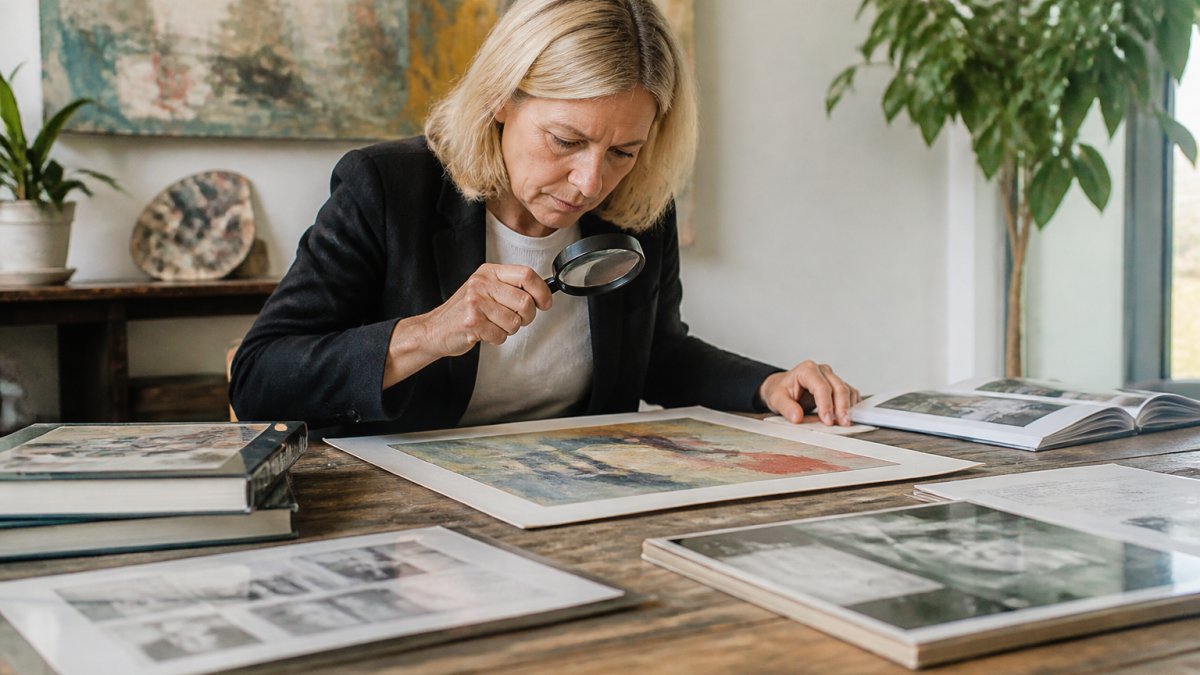
Aim for at least 3-5 comparable sales; more data means more confidence. Without exact matches, use pieces by the same artist in similar mediums and size ranges.
Pay attention to the date of the sales. According to the Art Basel and UBS Global Art Market Report 2026, the global art market recorded an estimated $57.5 billion in sales in 2024, down 12% year over year, then returned to growth in 2025 with a 4% increase to $59.6 billion.
Step 3: Use an Art Price Database to Find Comparable Works
Specialized art price databases aggregate auction and private-sale data specifically for valuation research.
Artnet covers over 18 million auction results searchable by artist, medium, size, and date, with Premium adding price-trend analysis. AskART focuses on American artists; Invaluable and Artfacts also offer searchable sales histories.
Most charge subscription fees, though some offer limited free searches. For serious valuation, a subscription usually pays for itself in accuracy and time saved.
When you search, filter by:
- Artist name: Exact spelling matters
- Medium: Oil, watercolor, acrylic, print, sculpture, be specific
- Size range: Look for works within 20-30% of your piece's dimensions
- Date range: Focus on recent sales (last 3-5 years)
- Price range: Start broad, then narrow based on what you find
The database returns comparable sales with hammer prices, real market data on what buyers actually paid.
Key Factors That Affect Art Value
Not all artwork by the same artist sells for the same price. Several specific factors drive value up or down. Understanding these will help you adjust your comparable sales data to match your particular piece.
Medium, Size, and Dimensions
Physical characteristics heavily impact value. An oil painting typically outsells a print of the same image; sculptures outsell drawings; larger works generally sell for more, though not linearly.
Larger pieces need more materials and time and limit the buyer pool by requiring more space. A 48-by-36-inch oil will almost certainly be worth more than a 12-by-9-inch version of the same composition.
Size alone doesn't determine value, a small, detailed watercolor by a renowned artist can outprice a large amateur oil. Execution quality and reputation matter equally.
Match comps by medium and within 10-20% of your piece's dimensions. A 30-by-24-inch piece matches a 32-by-26-inch comp; a 60-by-48-inch comp is too different and requires a downward adjustment.
Period, Date of Creation, and Artist Reputation
Creation date matters. A 1985 oil by a now-deceased, historically significant artist carries different weight than a similar 2023 piece by an emerging artist.
Established artists with decades of exhibitions, museum representation, and critical recognition command premiums; emerging artists with limited history typically sell for less, even at comparable technical quality.
The period also affects market demand. According to the 2026 U.S. Art Market Report, Old Masters artworks totaled $133.7 million, up 75.1% year over year, reflecting strong collector demand for historical pieces. This doesn't mean all historical work is valuable, it means the market recognizes certain periods as significant.
When you're valuing a piece, research the artist's career timeline. Have they had solo exhibitions? Are they represented by galleries? Do museums own their work? These credentials support higher valuations.
Condition, Provenance, and Authenticity Documentation
The physical condition of the artwork directly affects its value. A pristine painting commands higher prices than one with visible damage, fading, or restoration work.
Provenance, the documented ownership history of the piece, is equally important. A painting with clear provenance (you can trace ownership back decades or centuries) is worth more than one with gaps in its history.
Authenticity documentation includes certificates of authenticity, exhibition catalogs, artist statements, or letters from the artist. These reduce doubt and support higher valuations.
Restoration work can cut both ways. Professional restoration that addresses damage without altering the original can maintain value. Heavy-handed restoration that changes the artist's original intent can reduce it.
When assessing condition, look for:
- Fading or discoloration
- Cracks, tears, or holes
- Frame damage
- Signs of previous restoration
- Dust or grime buildup
Document the condition clearly. If you're comparing to a comparable sale, note whether your piece is in better or worse condition and adjust your valuation accordingly.
When to Hire a Professional Art Appraisal
Sometimes the research you can do yourself isn't enough. A professional art appraiser brings expertise, market knowledge, and credibility that can be essential in certain situations.
You should hire an appraiser when:
- You're selling a high-value piece and need documentation for the buyer
- You're insuring the artwork and the insurance company requires a formal appraisal
- You're donating art to a charity and need a tax deduction valuation
- You're settling an estate and need to establish value for legal purposes
- You're disputing value with a gallery, auction house, or insurance company
- The artist is obscure or the attribution is uncertain
- You have a significant collection and want a comprehensive valuation
A qualified appraiser will examine the physical piece, research comparable sales, assess condition and provenance, and produce a detailed written report.
Look for appraisers who are members of professional organizations like the American Society of Appraisers (ASA) or the International Association of Professional Appraisers (IAPA). These credentials indicate training, ethical standards, and ongoing education.
An appraisal typically costs $200-$500 for a straightforward piece, and significantly more for complex or high-value works. For pieces worth $5,000 or more, the cost is usually justified by the accuracy and credibility the appraisal provides.
Practical Example: Valuing a Comparable Artwork
Let's walk through a real scenario. You own an abstract oil painting, 24 by 30 inches, created by a mid-career contemporary artist named Sarah Chen.
Step 1: Research the artist. Sarah Chen is represented by a gallery in Portland.
Step 2: Find comparable sales. You search Artnet and find:
- A 22-by-28-inch Chen oil painting sold at auction in 2025 for $4,200
- A 26-by-32-inch Chen oil sold in 2024 for $3,800
- A 20-by-24-inch Chen oil sold in 2023 for $2,900
Step 3: Adjust for differences. Your piece is 24 by 30 inches, right in the middle of these sizes.
Step 4: Calculate the range. The three comparables average $3,633. Your piece is similar in size to all of them, in better condition than at least one, and from the same period.
Step 5: Account for market conditions. The art market grew 4% in 2025. If these sales happened at different times, you might adjust slightly for market movement.
This isn't a formal appraisal, but it's a solid estimate based on real market data.
Determining the market value of original art requires patience and attention to detail. Start by verifying the artist and authenticity, then dig into auction records and price databases to find real comparable sales.
At Susan Fielder Art, we understand that every original artwork tells a story and carries meaning beyond its market price.
| Valuation Method | Best For | Time Required | Cost |
|---|---|---|---|
| Comparable sales research | Quick estimates, DIY valuation | 2-4 hours | Free to $50 (database access) |
| Art price database search | Comprehensive data, multiple comparables | 1-2 hours | $0-$200/year subscription |
| Professional appraisal | High-value pieces, tax/insurance purposes | 1-2 weeks | $200-$2,000+ |
| Auction house estimate | Pre-sale valuation, auction placement | 1-2 weeks | Free (if consigning) |
Frequently Asked Questions
What is the difference between fair market value and asking price for original art?
Fair market value is the price at which an artwork would sell between a willing buyer and seller, neither under pressure. Asking price is what a seller lists the piece for, it may be higher or lower than fair market value. Insurance value is set for coverage purposes and often differs from both. Understanding these distinctions helps you avoid overpaying and ensures you're comparing apples to apples when researching the market value of original art.
How do I use art auction results to determine what my painting is worth?
Search for comparable works by the same artist or similar artists in databases like Artnet or Invaluable. Look for pieces sold within the last 2-3 years with similar medium, size, period, and condition. Note the hammer price (sale price before buyer's fees). Adjust for differences: subtract 10-15% for lower artist demand, add for exceptional provenance. If your work is unsigned or unverified, apply a 20-30% discount. Multiple comparable sales within a tight price range give you confidence in your estimate.
What factors affect the market value of original art the most?
Artist reputation and market demand drive value most significantly. Medium, size, and period also matter, oil paintings typically command higher prices than watercolors; larger works usually cost more than smaller ones. Condition and authenticity are critical: damage, restoration, or unverified attribution can cut value by 30-50%. Provenance (documented ownership history) adds credibility and value. Rarity and edition size (for prints) also influence price. Market trends shift annually, so current demand in your artist's category affects value now.
When should I hire a professional art appraiser?
Hire a certified appraiser (look for AAA or ASA credentials) if the artwork is worth more than $5,000, you need a formal valuation for insurance, estate planning, or tax purposes, the artist is deceased or historically significant, provenance is unclear or contested, or you're considering selling and want an independent market assessment. A professional appraisal typically costs $300-$800 and includes condition notes, comparable sales analysis, and a written report acceptable to insurers and the IRS.