 how-to
Modern Framing Ideas for Textured Canvas Art
Last Updated: November 7, 2026
Quick Summary
The best frame for textured canvas creates space around the raised paint so the surface is not pressed or flattened. A floater frame with a gap of about 1/4 to 1/2 inch, or a deeper shadow box for heavy relief, keeps the texture intact.
- Measure the highest texture peak, not just the stretcher depth, before choosing a frame.
- Choose a floater frame with a gap of about 1/4 inch to 1/2 inch around the canvas.
- Use a shadow box frame when the piece has significant depth and you want a sculptural look.
- Leave textured work unglazed when possible, since glass can press on raised paint.
- Clean raised paint with a soft, dry brush and never use liquids or damp cloths.
Table of Contents
- Why Textured Canvas Needs a Different Frame
- Step 1: Measure the Canvas Depth and Texture Height
- Floater Frame for Canvas: How to Set Up a Clean Modern Look
- Shadow Box Frame for Canvas Art: When Depth Helps
- How to Frame Textured Canvas Art Without Crushing the Relief
- Textured Wall Art Display Ideas for Modern Interiors
- Hanging, Lighting, and Care for Your Framed Canvas
- Frame Your Next Piece From Susan Fielder Art
- Frequently Asked Questions
Why Textured Canvas Needs a Different Frame
Textured canvas art is built from raised paint, thick brush strokes, and layered mediums. That relief is the whole point of the piece, and it is also why a standard frame often fails it. Modern framing ideas for textured canvas start by protecting the surface, not just finishing the edges. A frame that presses on the relief flattens the very energy that drew you to the piece.
Most standard frames use glass or a tight backing board that sits against the canvas. On a smooth print, that's fine. On heavy impasto, it can crush peaks, smear wet-looking paint, or leave pressure marks. Textured work needs a frame that creates space around the surface.
- Standard frames often press against raised paint
- Heavy texture can rub, flatten, or shift against glass
- Deeper canvases need extra depth in the frame design
- A floating or shadow-style setup keeps the relief intact
The right frame does two jobs at once. It protects the texture and it makes the artwork look intentional on the wall. When you plan the frame first, the piece reads as a finished display instead of a canvas that happens to be hung.
Step 1: Measure the Canvas Depth and Texture Height
Before you choose any frame, measure carefully. Textured canvas is rarely flat, so the depth you measure determines the frame style that will work.
What you'll need:
- A soft tape measure
- A ruler or straightedge
- A notepad to record numbers
How to measure:
- Measure the width and height of the canvas edge to edge. Record both numbers.
- Measure the stretcher depth, which is the thickness of the wooden frame behind the canvas.
- Measure the highest point of the raised texture. Measure from the back of the stretcher to the top of the tallest paint peak.
- Note any areas where paint hangs over the sides or edges.
A common mistake is measuring only the stretcher and forgetting the texture. A canvas can look 1.5 inches deep but have peaks that rise another half inch. That extra height is what a frame must clear.
Write down the texture height as its own number. You will use it in the next sections when you choose between a floater frame and a shadow box.
Floater Frame for Canvas: How to Set Up a Clean Modern Look
A floater frame is a slim frame that sits around the canvas with a visible gap between the canvas edge and the frame. Compare floater frame benefits for abstract art to see how this style suits modern pieces. The canvas appears to float inside the frame. This style is popular for modern interiors because it looks light and uncluttered.
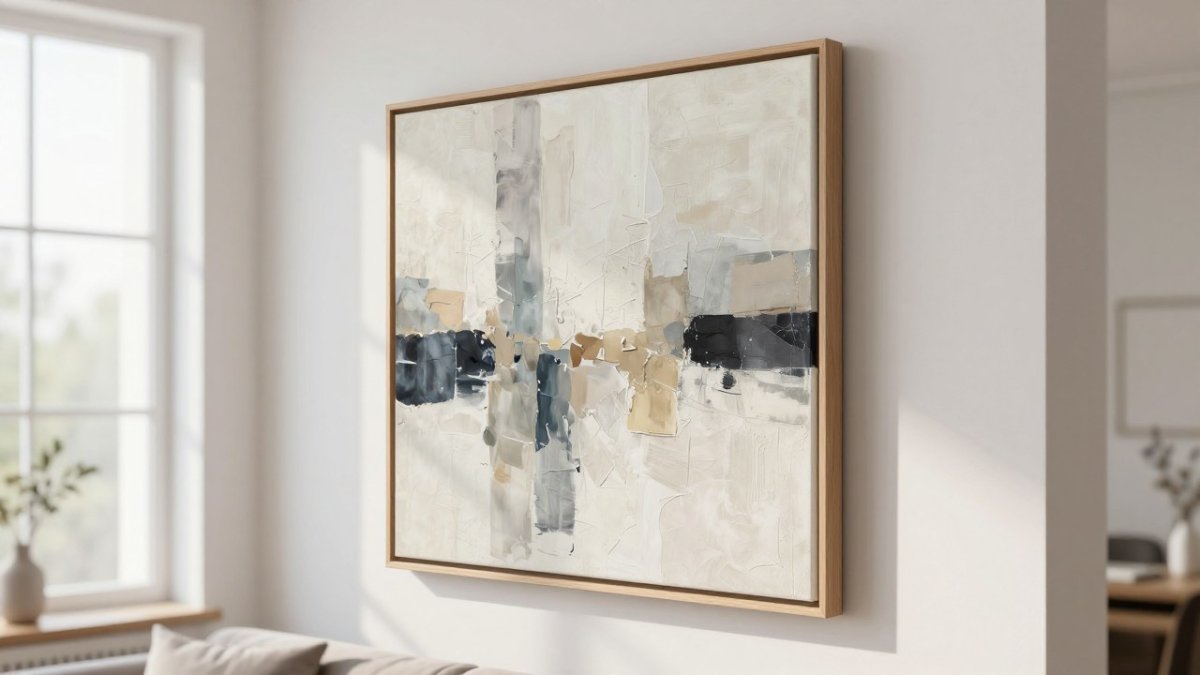
For textured work, the floater approach is often the cleanest option. The gap gives the surface room to breathe, and the frame's inner edge sits outside the raised paint.
Setup steps:
- Choose a frame with an inner rabbet deep enough to clear your texture height.
- Confirm the gap between the canvas edge and the frame interior. Many floater looks use a gap of about 1/4 inch to 1/2 inch.
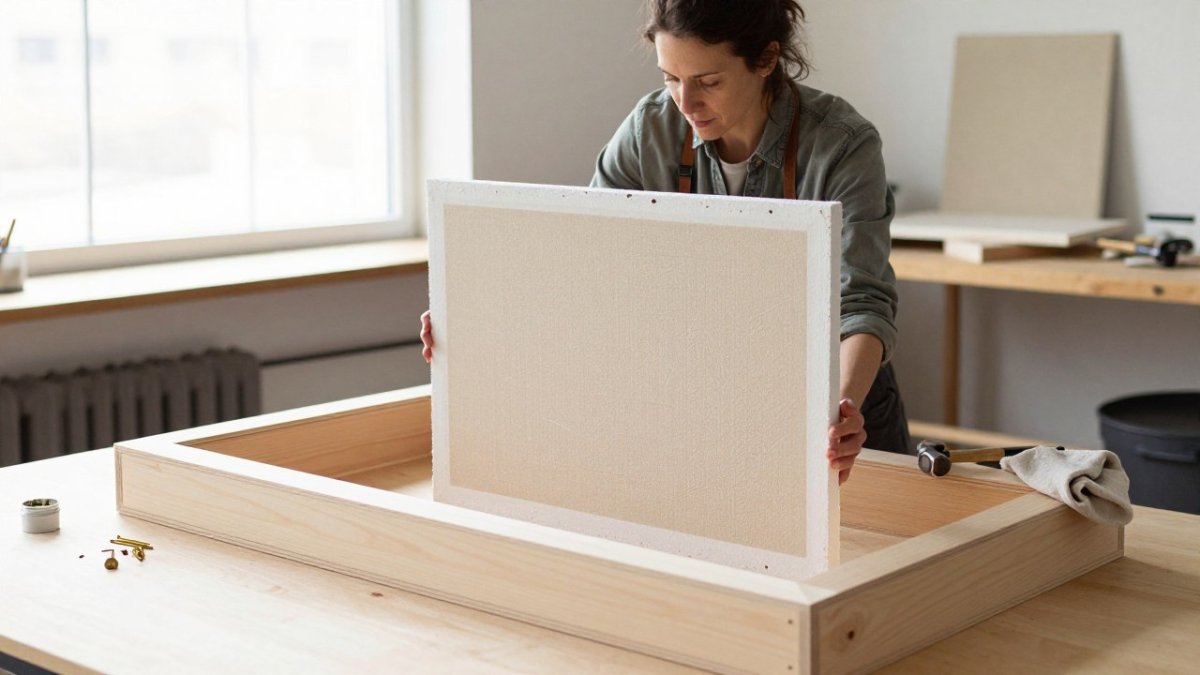
- Attach the canvas to the frame's backing using hardware that avoids the front of the paint.
- Check the front from an angle to make sure no texture touches the frame edge.
Choose a profile that is narrow enough to keep the focus on the artwork.
Shadow Box Frame for Canvas Art: When Depth Helps
A shadow box frame is deeper than a standard frame. It creates a recessed look with a dark shadow line around the canvas. This style works best when your piece has significant depth and you want the art to feel sculptural.
A deeper frame style can suit large texture height, thick canvases, or wall groupings that need visual depth.
They also need a secure hanging system because the added depth shifts the weight forward. Plan for this before you order.
How to Frame Textured Canvas Art Without Crushing the Relief
This section is where most framing guides stop short. Protecting texture takes more than picking a deep frame. Fuller guidance on protecting the surface and choosing materials covers the wider options for original fine art. Step-by-step framing guidance for abstract canvas walks through each choice that keeps the relief intact. It takes careful choices about what touches the artwork and how it is secured.
Follow these steps to keep the surface intact:
- Leave the canvas unglazed when possible. Glass can press on raised paint.
- If you use glazing, choose spacers that hold the glass well above the texture.
- Use acid-free backing and avoid tight board pressing against the back of the canvas.
- Secure the canvas with clips or pins that grip the stretcher, not the painted edge.
- Keep the piece away from direct heat sources and humid areas.
Many people also ask whether a framed canvas needs glass at all. For original textured work, many owners skip glass because it adds reflection and risk.
Watch out: Never lean a heavily textured canvas against a wall to test the fit. Pressure on the peaks can leave permanent marks.
Choosing Frame Color and Finish for Natural Wood Options
Frame color is one of the easiest decisions to get right and one of the easiest to get wrong. Pick a finish that supports the artwork rather than competing with it.
- Light natural wood suits airy, neutral, and coastal palettes
- Warm walnut tones pair well with earthy and bold colors
- Black or charcoal frames give a sharp, modern edge
- Match the frame undertone to the warmest color in the painting
For natural wood, look at the grain and finish under the same light you plan to use at home. A finish that looks warm in a store can look flat in a north-facing room.
Textured Wall Art Display Ideas for Modern Interiors
Once the frame is chosen, the placement matters. Textured canvas art looks best when the light and surrounding decor support the relief.
Here are display ideas that work well in modern spaces:
- Living room: Hang one large framed piece above a sofa, with the center at about eye level
- Bedroom: Use a single textured piece as a calm focal point behind the bed
- Office: Group two or three framed canvases in a neutral color family for a clean look
- Entryway: Place one bold piece where it will catch raking light from a side window
Keep spacing consistent in a group. A gap of 2 to 3 inches between frames usually reads as deliberate. Textured art also benefits from side lighting that rakes across the surface and shows the depth of the paint.
Hanging, Lighting, and Care for Your Framed Canvas
Good hanging and care keep a textured piece looking its best for years. Practical guidance for securing larger works covers the hardware and anchors that heavy frames need. Heavy framed canvases need more than a single nail, and raised paint needs a different cleaning routine than a flat print.
Hanging hardware and wall anchors. Match the hardware to the framed weight, not the canvas size alone. A floater or shadow box frame adds weight, and deep frames shift the center of gravity forward, so the load on the wall is higher than the artwork's listed weight suggests. Use picture-hanging hardware rated above the total framed weight, and add a margin rather than matching the rating exactly.
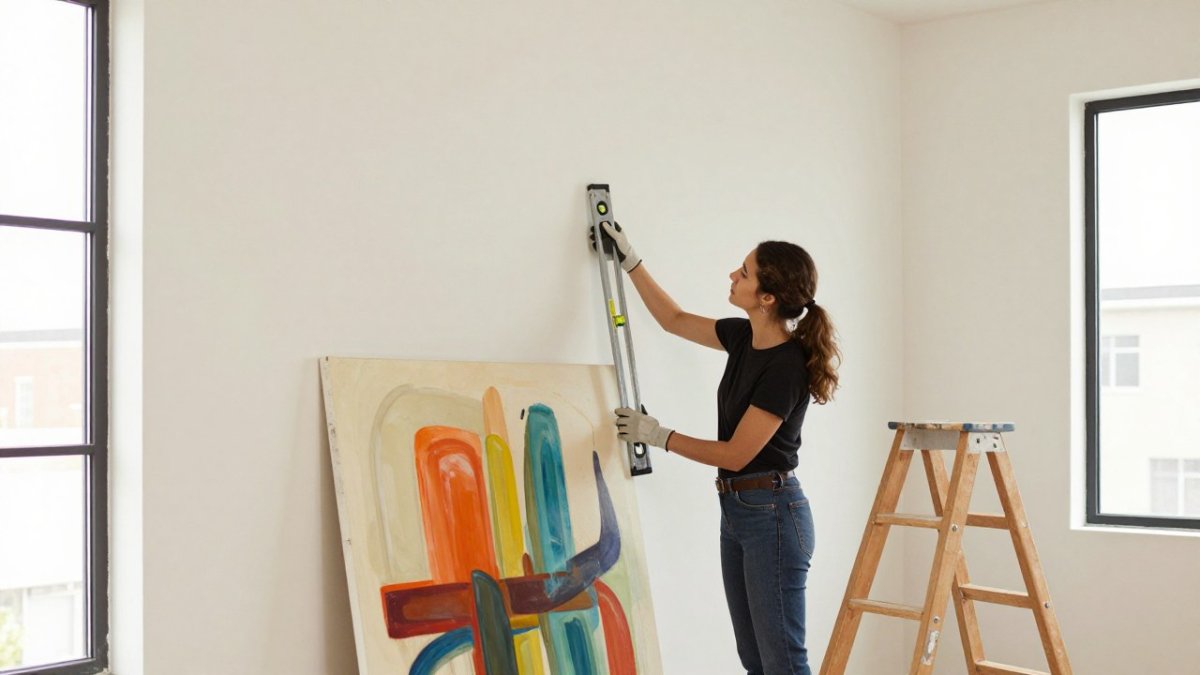
Leveling and placement. Mark the hanging height before drilling. Measure from the top of the frame to the hanging wire or cleat, then transfer that distance down from your center mark. Understand stretcher and canvas dimensions before you measure so the frame size matches the depth.
Lighting the texture. Textured paint shows its depth under raking light, meaning light that hits the surface from the side at a low angle. A picture light mounted above the frame and angled slightly toward the wall, or a nearby floor or table lamp placed to one side, brings out peaks and shadows without washing out the color.
Cleaning raised paint. Dust settles in the valleys and on the peaks of textured work. Use a soft, dry brush, such as a clean paintbrush or makeup brush, and brush gently in one direction rather than pressing down. Never use liquids, sprays, or damp cloths on textured paint, because moisture can soften or stain the surface and carry dust into the relief.
Watch out: Never lean a heavily textured canvas against a wall or lay it face-down to test a frame fit. Pressure on the peaks can leave permanent marks that cannot be repaired without repainting.
Keep the piece out of humid rooms such as bathrooms and away from heat sources, and note the installation date on the back of the frame so you can track hardware checks. A few minutes of planning at hanging time protects both the artwork and the wall.
The table below summarises the key hanging, lighting and care figures from the guide so you can check them quickly.
| Item | Value | Note |
|---|---|---|
| Gap between canvas and floater frame | 1/4 inch to 1/2 inch | Typical floater look |
| Spacing between frames in a group | 2 to 3 inches | Keeps the grouping looking deliberate |
| Center of artwork hanging height | About 57 to 60 inches | Reads as eye level for most viewers |
| Hardware rating | Above total framed weight | Add a margin rather than matching exactly |
| Width needing two hooks or a French cleat | Wider than about 24 inches | Stops the frame pivoting |
| Cleaning method | Soft, dry brush | Never use liquids or damp cloths |
| Hardware check | Once a year | Tighten or replace loosened hardware |
Frame Your Next Piece From Susan Fielder Art
Choosing the right frame for textured canvas comes down to three things: measure the relief, pick a style that clears it, and protect the surface from pressure. Modern framing ideas for textured canvas work best when the frame supports the art instead of hiding it.
Browse the collection to find an original work that fits your space, then choose a floater or shadow frame that lets its energy come through. Shop now.
Frequently Asked Questions
What are the current framing trends for textured canvas art?
Current framing for textured canvas leans toward simple profiles: slim natural wood, black or white floater frames, and shadow box depths that leave room for raised paint. The common thread is restraint. A frame should frame the piece without competing with the texture. Many buyers also choose neutral frame colors that pull from the lighter tones in the painting, so the artwork stays the focal point in a modern room.
Should textured canvas art be framed?
Framing is optional, but it often helps. A frame protects the canvas edges, gives the piece a finished look, and makes a modern interior feel more intentional. Heavily textured work needs a frame with enough depth or a floater design so the relief is not pressed against glass or a backing. If the canvas has deep impasto, a floater or shadow box is usually the safer choice than a standard flat frame.
What is a floater frame, and how does it work with canvas?
A floater frame holds the canvas slightly away from the frame's inner edge, creating a thin shadow gap around the artwork. For textured canvas, this setup keeps the edges of the painting visible and avoids pressing the surface. Most floater frames for canvas are sized to the stretcher bar depth, so measure the canvas thickness before ordering. Check the depth specification with the seller before buying.
Can you use a shadow box frame for textured canvas?
Yes. A shadow box frame has enough depth to hold textured canvas without touching the paint surface, which makes it useful for pieces with raised brushwork or mixed media. Choose a depth that clears the highest point of the texture with some room to spare. Shadow box frames are especially effective in modern interiors when paired with a simple, unfussy profile and a natural or neutral finish.