 how-to
How to Stretch Canvas for Custom Framing
Last Updated: November 5, 2026
Quick Summary
To stretch canvas for custom framing, assemble the stretcher bars into a square rectangle, center the canvas face down over the frame, then pull the fabric taut from the middle of each side outward and staple it. Allow 3 to 4 inches of extra fabric on each side so the canvas can wrap the bar.
- Check the frame is square by measuring both diagonals; they should match exactly.
- Work from the center of each side outward, alternating opposite sides to keep tension even.
- Staple every 2 to 3 inches along each side, using 3/8-inch staples set flush.
- Tap wooden wedges into the corner slots only to tighten loose canvas, one corner at a time.
- Handle painted canvas only by its edges and keep staples in the outer margin, away from the paint.
Table of Contents
- Choosing Canvas and Stretcher Bars for Custom Framing
- Gathering Tools and Materials Before You Start
- Measuring the Canvas and Choosing the Right Frame Depth
- How to Stretch a Canvas for Beginners: Assembly, Squaring and Positioning
- How to Stretch a Canvas With Wedges and Pull It Taut
- How to Stretch a Painted Canvas on a Frame Without Damage
- Booking Your Custom Framed Piece From Susan Fielder Art
- Frequently Asked Questions
Choosing Canvas and Stretcher Bars for Custom Framing
Learning to stretch canvas is one of the most useful skills for anyone who frames artwork at home. Starting with the right materials makes the stretching process far easier before you pull a single staple.
Start with the stretcher bars. These wooden bars form the frame your canvas wraps around. Choose bars that match the finished size of your artwork, and check that the corners fit tightly. Loose joints cause sagging later.
You will also decide between raw canvas and a pre-stretched canvas. Raw canvas gives you control over tension, but it takes more time. Pre-stretched canvas saves effort and suits most beginners.
Printed Canvas Versus Painted Canvas
Printed canvas and painted canvas behave differently. A printed canvas is often thinner and more stretch-sensitive, and the ink surface can show creases or stapling marks. A painted canvas has a primed or coated surface that handles tension more forgivingly.
Know which one you have before you start. Printed pieces need gentler pulling and fewer staples near the image area. Painted pieces tolerate firmer tension, but check the paint is fully dry first.
Gathering Tools and Materials Before You Start
Having everything ready keeps the process smooth. Most home stretching jobs need only a few basic tools.
- Stretcher bars sized to the artwork
- Canvas, cut with about 3 to 4 inches of extra fabric on each side
- A staple gun with 3/8-inch staples
- Canvas pliers for grabbing the fabric
- A measuring tape and a carpenter's square
- A clean, flat work surface
Lay out your supplies before you begin. A tidy workspace prevents dust and debris from getting trapped under the canvas.
Most home stretching jobs need only a few basic tools, listed below.
| Tool or material | Note |
|---|---|
| Stretcher bars | Sized to the artwork |
| Canvas | About 3 to 4 inches extra per side |
| Staple gun | Uses 3/8-inch staples |
| Canvas pliers | For grabbing the fabric |
| Measuring tape and carpenter's square | For measuring and squaring |
| Clean, flat work surface | Keeps debris out from under canvas |
Measuring the Canvas and Choosing the Right Frame Depth
Measure twice before you cut or stretch. For a larger piece, our step-by-step guide to framing large abstract canvas prints walks through each measurement. Measure the stretcher-bar frame, not the finished image, and allow for the canvas wrap around the sides. A common pattern is to add 3 to 4 inches of extra fabric on each side so the canvas can wrap the bar and still leave enough to grip with pliers.
What to measure before you order a frame
Write down four numbers and keep them with the artwork:
- Stretcher-bar outside dimensions (width and height of the assembled wooden frame).
- Finished image size (the visible area after the canvas wraps the bar).
- Stretcher-bar depth (the thickness of the bar, typically 3/4 inch to 1 1/2 inches; deeper bars give a gallery-style float).
- Canvas wrap allowance (the fabric folded over the bar, usually 1 1/2 to 2 inches on each side).
The frame's rabbet, the recess on the back that holds the artwork, must be deep enough to accept the stretched canvas plus any backing. If the rabbet is shallower than the bar depth, the canvas will not sit flush and the frame will rock off the wall.
Frame depth and style
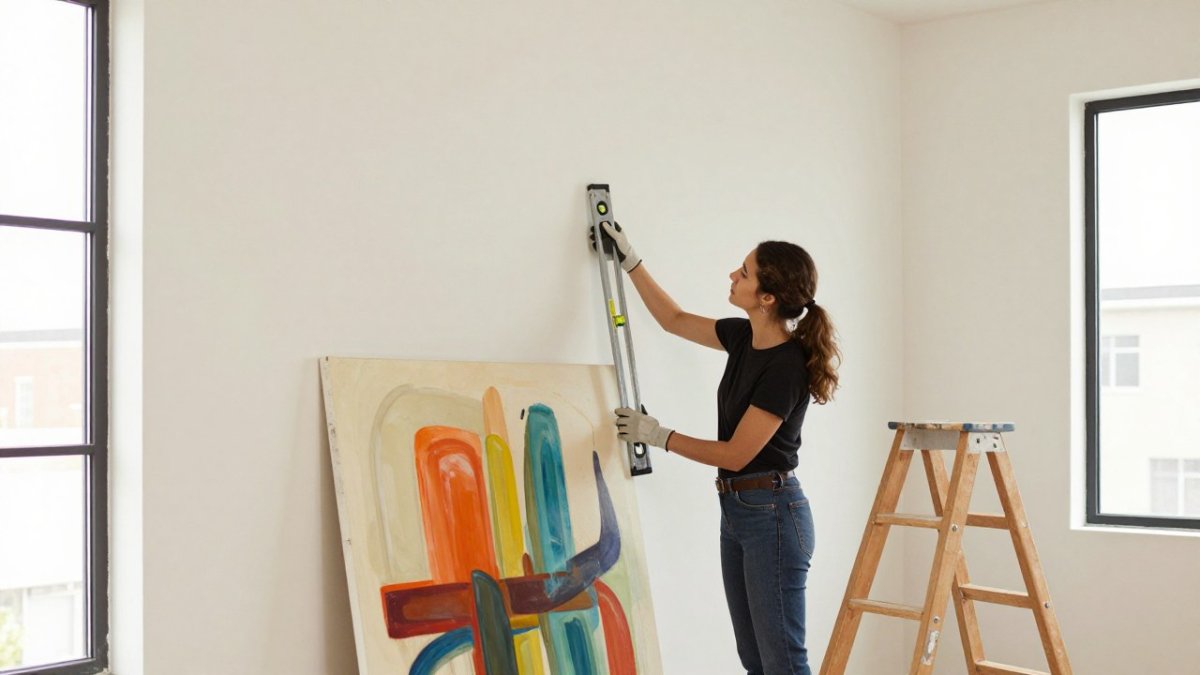
A deeper stretcher bar gives a gallery-style, floating look and works well in a floater frame, where a small gap between canvas edge and frame is intentional. A shallower bar suits pieces that will sit inside a conventional frame with a rabbet that overlaps the canvas edge. Once the bar depth is chosen to suit the frame, consider how its profile will affect hanging textured canvas and keeping the finished piece level.
How to Stretch a Canvas for Beginners: Assembly, Squaring and Positioning
This is the step most beginners find confusing, so take it slowly.
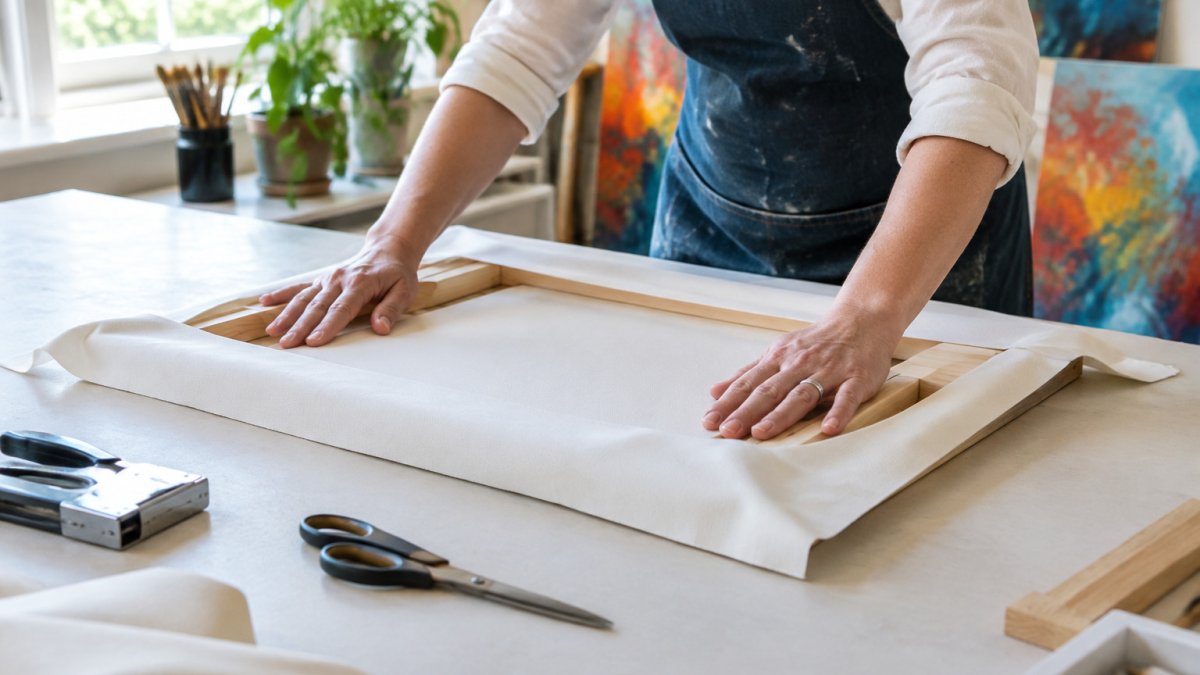
- Assemble the stretcher bars into a rectangle. Press the corners together until they sit flush.
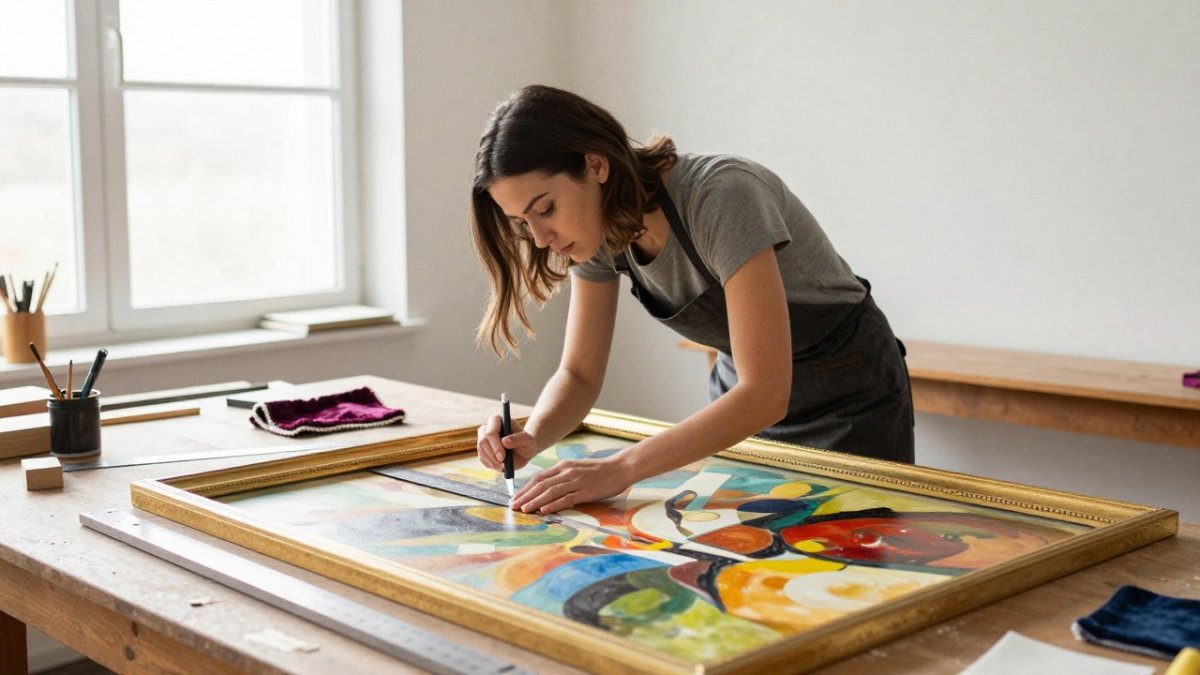
- Check the frame is square by measuring the two diagonals. They should match exactly. If they do not, gently push the frame until they do.
- Place the canvas face down on a clean surface.
- Center the frame on the back of the canvas so the wrap is even on all sides.
Positioning matters most here. Uneven centering leads to a crooked image once the piece is framed.
How to Stretch a Canvas With Wedges and Pull It Taut
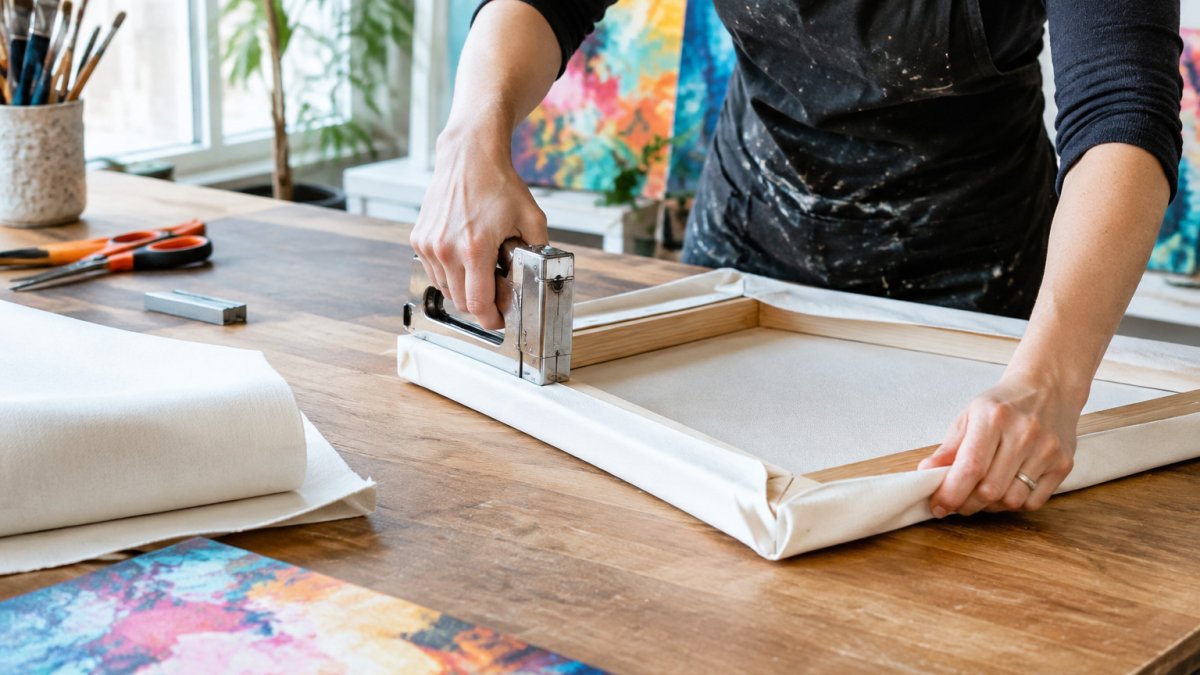
Once the frame sits correctly, begin pulling the stretch canvas over the edges. Work from the center of each side outward, and alternate opposite sides so tension stays even.
- Fold the canvas over the middle of one long side and staple it in place. Do not pull too hard yet.
- Move to the opposite side. Use the canvas pliers to pull the fabric taut, then staple the middle.
- Repeat on the two short sides, always working from the middle outward.
- Add staples every 2 to 3 inches along each side, then finish the corners.
- Tap the wooden wedges (keys) into the corner slots of the frame to tighten the canvas if it feels loose.
How wedges actually work
The wedges are small triangular keys that fit into slots cut into the inside corners of the stretcher bars. Tapping them in pushes the bars outward, which increases the frame's outside dimensions and pulls the canvas tighter. Tap each corner a little at a time and check the surface between taps; driving one wedge in fully before the others skews the frame. If the canvas is already firm, leave the wedges out, over-tightening warps the bars and can pull the image out of square.
Tension troubleshooting
- Uneven tension or a wavy edge: remove staples from the slack side and re-pull from the center outward.
- Wrinkles near a corner: release the corner staples, re-fold, and re-staple rather than pulling harder on the side.
- Skewed image: check the frame diagonals again; a frame that is out of square will always produce a skewed image no matter how carefully you pull.
- Torn edge or pulled staple hole: stop pulling on that side and move the staple line inward by 1/4 inch into fresh fabric.
- Over-stapling: staples set too close together or driven too deep crush the bar edge and can crack the canvas coating; space them 2 to 3 inches apart and set them flush, not sunk.
Printed versus painted canvas under tension
A printed canvas is often thinner and more stretch-sensitive, and the ink surface can show creases or stapling marks. Pull printed pieces more gently, keep staples in the outer margin away from the image, and expect to use the wedges for fine adjustment rather than force. A painted canvas with a primed or coated surface handles tension more forgivingly, but confirm the paint is fully dry before stretching and never press on the painted area.
Watch out: forcing a loose canvas with wedges instead of re-stretching it stretches the fabric past its elastic limit, and the sag will return within days, usually worse than before.
How to Stretch a Painted Canvas on a Frame Without Damage
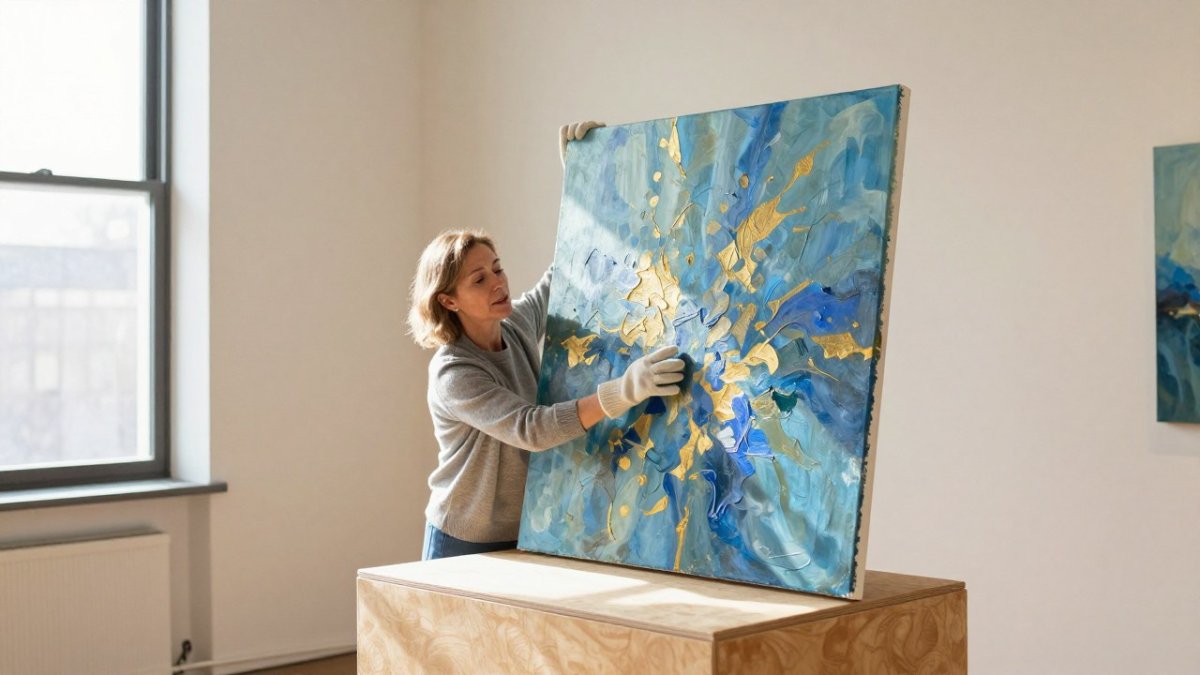
A painted or valuable canvas needs extra care. Handle the surface only by the edges, and never press directly on the paint.
Wear clean cotton gloves if you are working with an older or delicate piece. Keep staples away from the painted area by placing them in the outer margin. If the edges are already damaged, stabilize them before stretching so the tension does not tear the fabric further.
Watch for sagging after a few days. Loose canvas usually means the wedges need a small adjustment. Treat tension problems early rather than forcing a fix later.
Booking Your Custom Framed Piece From Susan Fielder Art
Stretching your own canvas works well for practice pieces. For original artwork you want to protect and display professionally, a custom frame is often the better choice. At Susan Fielder Art, we can help you select a frame that suits the size and style of your piece. Pricing depends on the size, frame style and finishing options you choose, so visit our website for current prices or to request a quote. Explore our custom framing options to see how we approach framing original fine art before you book.
Frequently Asked Questions
How do you stretch a canvas for framing?
Start by assembling the stretcher bars and squaring the frame. Lay the canvas face down, center the frame on it, and staple the first side. Pull the opposite side taut, staple it, then work toward the corners. Keep the tension even so the surface stays flat. Measure carefully and check the frame is square before stapling the final edges, because a crooked frame makes custom framing harder to fit. Take your time on each side for the best result.
What tools do you need to stretch a canvas?
You will need stretcher bars, a staple gun with staples, canvas pliers, a tape measure, a carpenter's square, and wedges or stretcher keys if your frame uses them. A pencil helps mark centers and edges. Canvas pliers grip the fabric so you can pull it taut without tearing it. Having everything ready before you start prevents rushed stapling, which is the most common cause of sagging or uneven canvas.
How do you stretch a painted canvas without damaging it?
Work slowly and avoid gripping wet paint with pliers. Let the paint dry fully before handling the canvas. Pull gently and in small increments, stapling on the back edge rather than the painted surface. Keep the fabric pressure even, and never stretch so hard that the paint cracks. For valuable or delicate artwork, consider having a professional conservator or framer handle the work.
How tight should canvas be on stretcher bars?
The canvas should feel firm and flat, like a drum, without bowing or wrinkling. Tap the center lightly to check for give. If it sags, the fabric needs more tension at the edges. If it feels so tight that the frame bends or the fabric pulls at the corners, ease off. Even tension across all four sides gives the most stable base for custom framing.