 how-to
How to Spot Art Investment Scams and Forgeries?
Last Updated: November 3, 2026
Quick Summary
Art investment scams usually show up as guaranteed returns, pressure to buy now, vague or missing provenance, and off-platform payments. Verify the seller's registration, check the ownership history yourself, and get an independent appraisal before you pay. Walk away from any seller who resists these checks.
- Guaranteed returns are a warning sign, since no honest art market can promise a fixed profit.
- Provenance gaps of many years, or owners described only as 'a private collector,' need explaining.
- Request payments through a credit card or reputable escrow, never a wire to an individual.
- Commission your own appraiser for high-value works, because seller-ordered appraisals are sales documents.
- Stop all payments, preserve evidence, and report fraud to the FTC and FBI IC3 if defrauded.
Table of Contents
- Why Art Investment Scams Keep Working
- Common Art Investment Fraud Tactics to Watch For
- Warning Signs in Provenance and Ownership History
- Stylistic Clues: Signatures, Labels, Color and Dimensions
- Step-by-Step Checklist Before You Buy Art as an Investment
- How to Verify Provenance Documents and Certificates
- What to Do If You Were Defrauded: Reporting and Legal Recourse for Art Fraud
- Frequently Asked Questions
Why Art Investment Scams Keep Working
Investment scams are a serious problem. The Federal Trade Commission reports more than $7.9 billion in losses to investment scams, and the median individual loss tops $10,000 (Federal Trade Commission consumer alert on investment scams). Art scams work because art looks expensive, feels personal, and is hard to check by eye alone. The best defense against art investment scams starts with knowing the warning signs before you spend a dollar. You can also learn how to verify abstract art authenticity online before you commit.
Scammers count on a few things. They count on buyers who love a piece and want it badly. They count on buyers who trust a polished website. They count on paperwork that looks official but never gets checked.
Here is the good news. Most art fraud follows a pattern. Once you know the pattern, you can spot it.
Common Art Investment Fraud Tactics to Watch For
Art fraud comes in many forms. Some schemes sell fake paintings. Others sell real art with false stories attached.
Watch for these common tactics:
- Guaranteed returns. No honest art market can promise a fixed profit.
- Pressure to buy now. Real sellers let you take time to think.
- Vague documentation. A seller who dodges questions about history is a warning sign.
- Off-platform payments. Requests to wire money or pay through an unfamiliar app are a red flag.
- Fake buyers. Some scammers invent interested buyers to rush you into a decision.
Art fraud is a growing concern. The FBI's Art Crime Team has recovered more than 20,000 items since 2004, a sign of how often stolen and fraudulent art moves through the market (FBI Art Crime Team).
Warning Signs in Provenance and Ownership History
Provenance is the recorded history of a work's ownership. Strong provenance is one of the best protections a buyer has.
A clean history usually includes:
- A clear chain of owners, with dates
- Sales receipts, invoices, or exhibition records
- Named previous owners you can look up
Be cautious when:
- The history has gaps of many years
- Owners are described only as "a private collector"
- Documents look new but claim an old date
Experts stress that physical evidence should match recorded history. When the object and the paperwork disagree, walk away (Colby College guidance on forgery detection).
Stylistic Clues: Signatures, Labels, Color and Dimensions
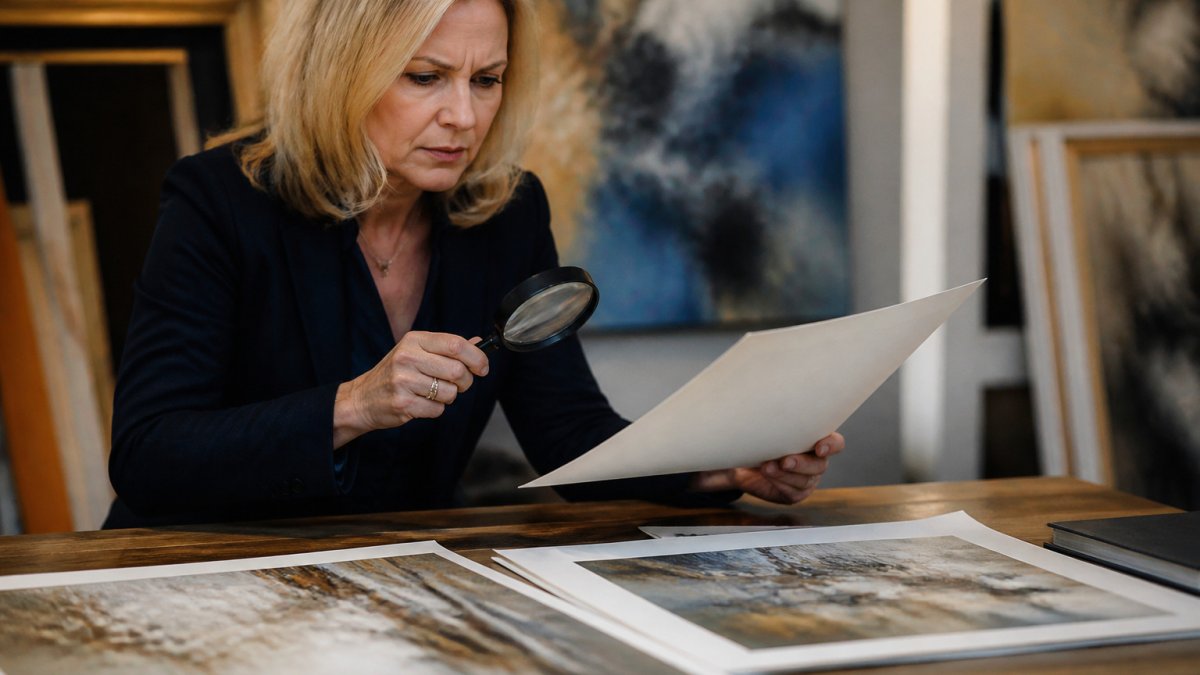
Careful looking helps. Compare the work with known examples from the same artist. You can learn how to tell digital prints from original paintings by looking at the surface and materials.
Check these details:
- Signatures. Compare placement, style, and ink against verified examples.
- Labels and stamps. Old gallery labels should look aged and fit the period. Fresh labels on an "old" piece are a problem.
- Color. Colors that look too bright, too uniform, or unlike the artist's known palette need a closer look.
- Dimensions. Measure the piece and compare it with published records.
No single clue proves a fake. Look for several clues that agree or disagree.
Step-by-Step Checklist Before You Buy Art as an Investment
Most buyers lose money not because they miss one dramatic red flag but because they skip a step in the middle of a transaction. To estimate what a piece is really worth, see how to determine the market value of original art.
Step 1: Define the exit before you define the entry. Before you look at a single work, write down how you expect to sell it, to whom, and over what time frame.
Step 2: Verify the seller as a business, not as a website. Look up the entity's registration with the state where it operates, check whether it holds a resale certificate or dealer license if your state requires one, and search for complaints with your state attorney general and the Better Business Bureau. Before paying, check what buyer protection an online art gallery offers.
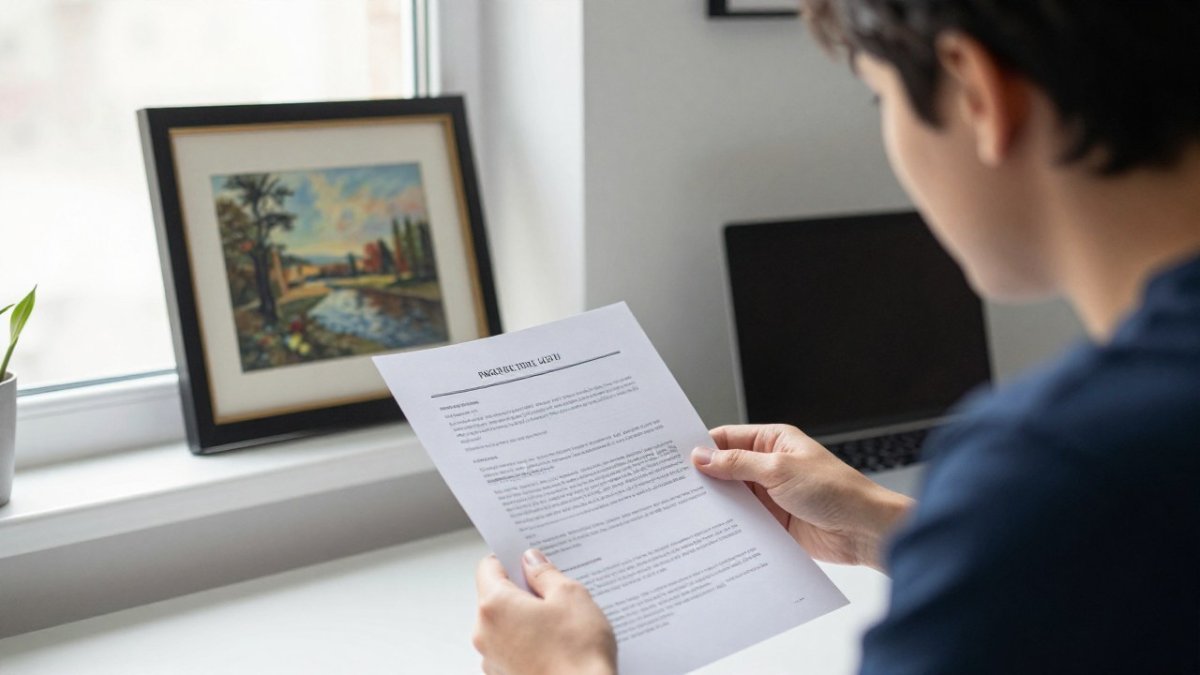
Step 3: Request the complete provenance in writing, with dates and named owners. Ask for the ownership chain from creation to today, including auction records, invoices, and exhibition history.
Step 4: Commission an independent condition report and, where the value justifies it, an independent appraisal. Ask who prepared the report and whether that person has any financial interest in the sale. For works above a threshold you set in advance, hire an appraiser you select and pay for yourself.
Step 5: Get the authentication question answered before money moves. Ask what evidence supports the attribution, catalogue raisonné inclusion, artist-estate or foundation recognition, expert committee review, or technical analysis, and ask to see it. Understand that authentication bodies can decline to opine, that committees change positions over time, and that no single method proves authenticity.
Step 6: Read the sale contract for the terms that decide your loss. Confirm in writing the return window and restocking fees, whether the seller makes any representation about attribution or value, what happens if authentication later fails, and which state's law governs disputes. Verbal assurances about resale value are worth nothing in a dispute; only written representations are.
Step 7: Pay through a traceable method with reversal rights. A credit card or a reputable escrow service gives you a path to dispute a charge. A wire transfer to an individual, a payment app with no buyer protection, or a request to split payment across methods removes that path.
Step 8: Wait. Set a minimum review period, several business days at least, and treat any refusal to honor it as a signal. Legitimate dealers expect diligence and will answer follow-up questions in writing.
Watch out: a seller who supplies a complete-looking provenance packet, an appraisal, and a certificate all prepared by parties you did not choose has given you one seller's version of the facts, not independent verification.
Buying art is a real investment decision with real frictions. Works can take months or years to sell, auction results are not guaranteed, and carrying costs such as insurance, storage, and shipping reduce returns. Any projection of fixed or guaranteed returns should end the conversation.
The checklist runs in sequence, and each step should produce a document or answer before you move to the next:
| Step | What to do | Key point |
|---|---|---|
| 1. Define the exit | Write down how and to whom you will resell | A seller with no exit path is selling decoration |
| 2. Verify the seller | Check state registration, licences and complaints | A polished website does not prove honesty |
| 3. Request provenance | Get the ownership chain in writing with dates | Gaps of a decade or more need explaining |
| 4. Get an independent report | Hire your own appraiser for high-value works | Seller-ordered appraisals are sales documents |
| 5. Confirm authentication | Ask what evidence supports the attribution | No single method proves authenticity |
| 6. Read the contract | Confirm return terms, fees and governing law | Only written representations count in a dispute |
| 7. Pay traceably | Use a credit card or reputable escrow | Wire transfers to individuals remove dispute rights |
| 8. Wait | Allow several business days for review | Refusing a review period is a warning sign |
How to Verify Provenance Documents and Certificates
Documents can be fabricated, and a buyer who is excited about a painting may not check them with the issuing gallery. Verification means testing the paperwork against sources the seller does not control. Work through the following checks in order.
Confirm the issuer through contact details you find yourself. Do not call the number or reply to the email printed on the document. Look up the gallery, auction house, or institution independently, then ask whether the document exists in their records and whether the transaction it describes appears in their files. Keep a note of who you spoke with and when.
Test internal consistency across the whole packet. Dates on invoices should fall within the period the gallery operated and the years the artist was active. Addresses should match where the gallery was located in that year. Lot numbers and sale dates on auction records should match the auction house's published archives. Names should be spelled the same way across every document.
Inspect the physical documents, not just scans. Ask for originals or high-resolution images of the full page, including edges and versos. Look at paper and ink aging, staple and fold marks, and whether letterhead, fonts, and signatures match known examples from the same issuer and era.
Map the ownership chain and find the gaps. Write the chain out year by year. For each gap, ask what happened to the work during that period and who can confirm it.
Distinguish what each document can actually establish. A certificate of authenticity issued by the seller or by a commercial authenticator establishes that someone made a claim; it does not establish authorship. A catalogue raisonné entry is stronger evidence but can be revised or withdrawn. An insurance valuation reflects replacement cost, not market value or authenticity.
Look for the tells of a fabricated packet. A complete set of documents covering every year of a work's history, all in pristine condition, all obtained at once, and all from sources that cannot be independently reached is a common pattern in art fraud.
Watch out: a seller who offers to "handle verification for you" through an authenticator or appraiser they recommend has kept control of the evidence, and independent confirmation is the point of this section.
Keep every document, envelope, and email you receive, and store copies separately from the artwork. If a dispute arises later, your records of what you were shown and what you were told are the foundation of any claim.
What to Do If You Were Defrauded: Reporting and Legal Recourse for Art Fraud
If you believe you have been defrauded, act quickly.
- Stop all payments. Contact your bank or payment provider right away.
- Preserve evidence. Save emails, texts, invoices, and screenshots of listings.
- Report the fraud. File a report with the Federal Trade Commission at reportfraud.ftc.gov and with the FBI at ic3.gov.
- Talk to a lawyer. An attorney experienced in fraud or art law can explain your options.
Report early. Quick action improves your chances of recovery and helps authorities track scam networks.
Frequently Asked Questions
What are the most common signs of an art investment scam?
The most common signs include pressure to decide quickly, promises of guaranteed or unusually high returns, vague or missing documentation, and sellers who avoid independent appraisal. Consumer reports show investment scams cause substantial losses, often well into the thousands of dollars per victim. Any offer that sounds too certain or too urgent deserves a slower, independent check before you pay anything.
How can I verify the provenance of an artwork?
Start by asking the seller for a complete ownership history, including past owners, exhibitions, and sales records. Check that the physical details of the work match the recorded history, such as dimensions, materials, and dates. Contact the previous owners, galleries, or estates named in the history, and where possible confirm the records with the artist's catalogue raisonne or a recognized authentication body. Treat gaps in the chain of ownership as a serious warning sign.
What should I do if I suspect I have purchased a forged painting?
Stop further payments and preserve all evidence, including emails, invoices, listings, payment records, and any certificates. Get an independent expert appraisal and, if needed, technical analysis such as X-ray or other noninvasive examination. Then contact your bank or payment provider, report the matter to the FBI's Internet Crime Complaint Center or your local FBI field office, and speak with an attorney about civil remedies. Acting quickly improves your chances of recovery.
What legal protections exist for art buyers in the United States?
Buyers can rely on federal laws against wire fraud and mail fraud, state consumer protection statutes, and state laws governing sales warranties and misrepresentation. Some states also regulate art dealers and consignment arrangements. Federal agencies investigate art trafficking and fraud, and stolen-art databases help identify stolen works. An attorney experienced in art transactions can explain which protections apply to your situation.