 ultimate-guide
Is Abstract Art a Good Financial Investment?
Table of Contents
- Is Abstract Art a Good Financial Investment?
- Why People Invest in Abstract Art
- How to Invest in Art: A Practical Framework
- Abstract Art Value: What Determines Price
- How Much Can Abstract Art Sell For?
- Art Investment Risks You Need to Understand
- The Real Cost of Ownership: Beyond the Purchase Price
- Is Abstract Art Right for Your Portfolio?
- Frequently Asked Questions
Last Updated: October 8, 2026
Is Abstract Art a Good Financial Investment?
The global art market grew 3% year-over-year to $67.8 billion in 2025, according to Art Basel and UBS Global Art Market Report 2026. Yet this headline masks a harder truth: whether is abstract art a good financial investment depends entirely on your goals, risk tolerance, and what you're willing to pay to own it.
At Susan Fielder Art, we believe the question itself is backwards. Most people approach art investment asking, "Will this make money?" Research from Stanford Graduate School of Business suggests you should ask instead, "Will I enjoy living with this?" Paintings that appreciate financially are rare. Paintings that bring daily emotional value are common. The gap between those two outcomes is where most collectors get disappointed.
The short answer: abstract art can appreciate, but it's an unpredictable asset class with high costs, illiquidity, and no guaranteed returns. It works as an investment only if you're prepared for it to never sell, can afford to hold it for 10+ years, and have done rigorous due diligence on the artist and provenance.
Why People Invest in Abstract Art
People buy abstract art for two fundamentally different reasons: emotional connection and financial return. Most successful collectors blend both, but they're not the same thing.
The emotional case is straightforward. A painting that moves you, that you display daily, that tells a story you care about, that has intrinsic value regardless of resale price. This is what Susan Fielder Art focuses on: creating work that transforms a space and connects to something deeper.
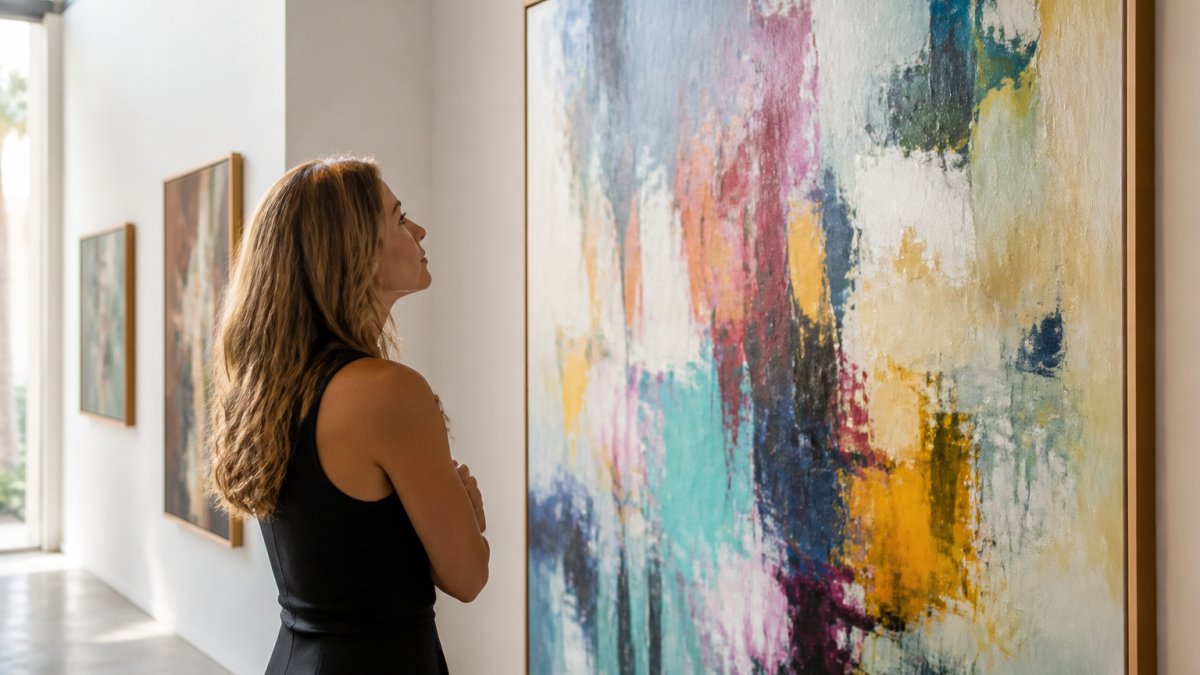
The financial case is more complex. Collectors pursue abstract art as an alternative asset, a way to diversify beyond stocks and bonds, hedge against inflation, and potentially capture capital appreciation. University of Colorado Boulder research on art investment notes that art may protect purchasing power, though this protection is neither guaranteed nor quantifiable in advance.
The risk is equally real. Unlike stocks, art has no earnings reports, no analyst consensus, and no transparent pricing. A painting worth $50,000 today might sell for $20,000 in five years, or $200,000. The outcome depends on the artist's career trajectory, market trends, provenance, condition, and frankly, luck.
How to Invest in Art: A Practical Framework
If you're serious about treating abstract art as an investment, follow a structured approach. This isn't about impulse buying a piece you love; it's about systematic due diligence.
Step 1: Define your investment thesis. Why this artist? Why this work? Is the artist emerging (higher risk, higher potential upside) or established (lower risk, slower appreciation)? What's your exit timeline?
Step 2: Research the artist's market. Has their work appeared at major auctions? What were the sale prices and trends? Are galleries representing them? Has their career been steady or erratic?
Step 3: Verify provenance and authenticity. This is non-negotiable. Request documentation of ownership history, exhibition records, and any relevant certificates.
Step 4: Get a professional appraisal. Hire an independent appraiser (not the gallery selling the work) to assess current fair market value. This costs $300-$1,000 but is essential for insurance, tax purposes, and understanding what you're actually paying.
Step 5: Consider condition and display. Abstract art is sensitive to light, humidity, and temperature. Factor in framing, conservation, and proper storage. A damaged painting loses value fast; a well-maintained one holds it better.
Abstract Art Value: What Determines Price
Abstract art prices are driven by a handful of factors, none of which are transparent until after a sale.
Artist reputation and career stage is the primary lever. An emerging artist whose work is gaining gallery representation and selling steadily may see 10-20% annual appreciation.
Scarcity and uniqueness matter. Original paintings are inherently scarce; prints and reproductions are not. If an artist has produced hundreds of similar works, each individual piece is less valuable than if they've created only a handful.
Market demand is the wildcard. Tastes change. An artist whose work was fashionable in 2015 might be overlooked in 2026.
Provenance and exhibition history add credibility and value. A painting that's been displayed in respected galleries or included in museum exhibitions carries more weight than one with no exhibition record. Clean provenance, clear ownership history with no gaps, commands premiums.
Condition directly affects price. A painting with restoration, damage, or fading is worth less than an identical work in pristine condition. This is why proper storage and display matter financially, not just aesthetically.
How Much Can Abstract Art Sell For?
Prices for abstract art range from hundreds to millions, depending on the artist and market segment.
Emerging artists typically sell work in the $500-$5,000 range. These are artists with gallery representation, exhibition history, and growing recognition but no major auction track record. Appreciation potential is high, but so is the risk of the artist's career stalling.
Mid-career artists occupy the $5,000-$50,000 range. They have consistent gallery representation, exhibition history, and some auction sales. Their market is more stable; appreciation is slower but more predictable.
Established and blue-chip artists sell for $50,000 and up, often reaching six or seven figures at auction. These are artists with decades of recognition, museum representation, and strong market demand. Appreciation is modest but reliable.
Impressionist and Modern art auction sales reached $4.7 billion, up 29.5%, according to The Art Bystander's 2026 Art Market analysis. This category includes abstract work, though not exclusively. The data shows that auction activity strengthened in the first half of 2026, reaching its highest first-half total since 2022, a sign of renewed collector interest in fine art.
Art Investment Risks You Need to Understand
Abstract art investing carries risks that don't exist in traditional asset classes. Understanding them is essential before committing capital.
Illiquidity is the biggest risk. Stocks trade in seconds; real estate in weeks or months. Selling a painting can take months or years.
Valuation uncertainty means there's no objective "fair price." A gallery might appraise a work at $10,000, but it might sell at auction for $6,000 or $15,000.
Market volatility is real. Tastes shift, artists fall out of favor, economic downturns suppress collector spending. A work that appreciated 15% annually for five years might appreciate 0% for the next five.
Authentication and fraud risk exists, especially for deceased artists or work without clear provenance. Forgeries are rare in the contemporary art market but not impossible. Always verify authenticity independently.
Storage and insurance costs are ongoing expenses that reduce net returns. Insurance typically costs 0.3-0.5% of the artwork's value annually.
Emotional attachment can cloud judgment. If you love a painting, you're more likely to overpay, hold it too long hoping for appreciation, or resist selling when the market is favorable.
The Real Cost of Ownership: Beyond the Purchase Price
Most people calculate art investment returns by subtracting purchase price from sale price. That math is incomplete.
Acquisition costs include the gallery markup (typically 40-50% above the artist's studio price), framing, and appraisal. A $5,000 painting might cost $7,500 by the time it's framed and appraised.
Insurance runs 0.3-0.5% of value annually. A $10,000 painting costs $30-$50 per year to insure.
Storage and conservation depend on the work's needs. Climate-controlled storage costs $50-$300 monthly. Professional conservation or restoration can cost thousands.
Selling costs are substantial. Auction houses charge 10-25% in buyer's premium and seller's fees. Private sales typically involve a broker fee of 5-10%. A $10,000 sale might net you only $8,000-$8,500 after fees.
Holding costs over time add up. A painting held for 10 years with annual insurance and storage costs of $1,500 has $15,000 in carrying costs before you factor in inflation.
Example: You buy a $5,000 painting, spend $2,500 on framing and appraisal, hold it for 10 years with $1,500 annual carrying costs ($15,000 total), and sell it for $7,500. Your gross profit is $2,500.
This is why the emotional and aesthetic value matter so much.
Is Abstract Art Right for Your Portfolio?
Abstract art belongs in your portfolio only if specific conditions are met.
You should invest in abstract art if:
- You can afford to hold it for 10+ years without needing the capital
- You've done rigorous due diligence on the artist and work
- You genuinely enjoy the piece and would be happy if it never appreciated
- You have capital to cover insurance, storage, and potential conservation
- You understand the liquidity constraints and are comfortable with them
- You're buying established or mid-career artists with proven market track records
You should not invest in abstract art if:
- You need liquidity or might need the capital within 10 years
- Your primary motivation is financial return
- You're buying purely on trend or hype
- You can't afford the carrying costs
- You haven't verified provenance and authenticity independently
- You're buying emerging artists as a speculation play with money you can't afford to lose
For most people, the honest answer is: buy art because you love it, because it transforms your space, because it connects to something meaningful. If it appreciates, that's a bonus. If it doesn't, you still have the daily pleasure of living with it. Susan Fielder Art creates work designed for that purpose, emotionally resonant, original abstract paintings that bring energy and meaning to your home. When you buy with that intention, the financial outcome becomes secondary, and your satisfaction is guaranteed.
| Consideration | Impact | Action |
|---|---|---|
| Artist reputation | High | Research exhibition history, auction results, gallery representation |
| Provenance | High | Request complete ownership documentation and authentication |
| Condition | High | Inspect in person; get professional assessment before buying |
| Carrying costs | Medium | Budget 0.3-0.5% annually for insurance; factor in storage if needed |
| Liquidity timeline | Critical | Expect 6-12 months to sell; plan for 10+ year holding period |
| Market demand | High | Monitor collector trends; understand why demand exists for this artist |
The decision to buy abstract art as an investment ultimately hinges on honesty about your goals. If you're seeking financial returns comparable to stocks or real estate, the data suggests art is a poor choice, returns are unpredictable, costs are high, and liquidity is limited. But if you're seeking a tangible asset that brings daily joy, supports artists and causes you care about, and has the potential to appreciate over time, abstract art makes sense.
Frequently Asked Questions
Can abstract art actually increase in value over time?
Abstract art can appreciate, but returns are unpredictable and highly dependent on artist reputation, market demand, and provenance. Global art sales increased 3% year-over-year to $67.8 billion in 2025, signaling market recovery, but this broad figure masks significant variation within abstract art. Established artists with strong exhibition histories and collector demand show better appreciation potential than emerging artists. However, research from Stanford Graduate School of Business emphasizes that buyers should purchase art for aesthetic enjoyment rather than financial gain, since returns are neither guaranteed nor easily quantified.
What are the main risks of investing in abstract art?
Abstract art investment carries distinctive risks: market volatility (demand shifts unpredictably), liquidity challenges (selling can take months or years), valuation uncertainty (no standardized pricing), authentication and provenance issues, and high ownership costs (insurance, storage, conservation). Unlike stocks or bonds, there's no transparent secondary market or clear exit strategy. Artist reputation can decline, and personal taste, your primary motivation for buying, may not align with collector demand. Research from the University of Colorado Boulder notes that while art may protect purchasing power, these unique risks mean returns are far from certain.
How do I know if an abstract art piece is a good investment?
Evaluate abstract art using these criteria: artist reputation (exhibition history, gallery representation, collector following), provenance (documented ownership and sale history), scarcity (limited edition or one-of-a-kind original), market demand (recent sales data for comparable works), condition (no damage or restoration), and authenticity (verified documentation). Research the artist's career trajectory and sales at auction or through galleries. Check whether the piece fits your long-term investment horizon and whether you genuinely connect with it aesthetically, this dual motivation (emotional and financial) improves your odds of satisfaction regardless of market performance.
Should I buy abstract art instead of stocks or bonds?
Abstract art serves a different role in a portfolio than traditional assets. Stocks and bonds offer transparency, liquidity, and historical return data; abstract art offers portfolio diversification, emotional value, and potential capital appreciation, but with higher risk and lower liquidity. Art works best as a long-term, alternative asset for investors with stable income, patience for illiquidity, and genuine aesthetic interest. If your primary goal is financial return, traditional investments typically offer better risk-adjusted outcomes. If you seek diversification and can afford to hold an illiquid asset for 5+ years while enjoying it, abstract art may complement a broader portfolio.