 ultimate-guide
Abstract Art Meaning: What It Expresses & Why
Table of Contents
- What Abstract Art Meaning Really Is
- The Core Elements That Define Abstract Art
- How to Interpret Abstract Art: A Practical Framework
- The Emotional Impact of Abstract Art on Viewers
- Abstract Art for Home Decor: Creating Meaningful Spaces
- Why Artist's Intent Matters in Abstract Expression
- The Psychology Behind Your Response to Abstract Art
- Frequently Asked Questions
Last Updated: September 25, 2026
What Abstract Art Meaning Really Is
Abstract art meaning prioritizes formal properties, color, shape, line, and composition, to communicate emotion, concept, or experience directly to the viewer, rather than depicting recognizable reality.
The distinction matters because it changes everything about how you should look at these pieces. According to research on abstract art expertise from ScienceDirect, experts rate abstract artworks as significantly more interesting, beautiful, and informative than non-experts do. This gap exists not because experts have better taste, but because they understand what abstract art meaning actually conveys. When you stop looking for a recognizable subject and start observing how the artist uses color, texture, and spatial relationships, the artwork speaks in an entirely different language.
At Susan Fielder Art, we've seen how understanding abstract art meaning transforms connection with artwork. Once collectors grasp that abstract art meaning resides in formal properties rather than representation, the painting becomes an emotional conversation rather than a puzzle to solve.
The Core Elements That Define Abstract Art
Formal Properties: Shape, Color, Line, and Form
Every abstract artwork relies on these foundational elements to create meaning. Shape and form establish the visual structure, whether geometric and precise or organic and flowing. Color carries emotional weight; warm tones evoke energy and passion, while cool tones suggest calm or melancholy. Line creates rhythm and guides your eye through the composition. Understanding these components is essential to grasping abstract art meaning.
Research from Frontiers in Neuroscience demonstrates that statistical image properties, specifically color and form, can predict aesthetic ratings and help identify an artist's unique style. This means that what feels like subjective response actually has measurable visual foundations. When an artist chooses a particular shade of red or creates a series of diagonal lines, those choices aren't arbitrary; they're deliberate decisions that shape your perception.
A painting dominated by vertical lines feels different from one built on curves. Bold colors create urgency; muted tones invite contemplation. These are the artist's vocabulary.
Composition and Spatial Relationships
How elements are arranged within the frame determines whether an abstract artwork feels balanced, chaotic, harmonious, or unsettling. A composition with elements clustered in one corner creates tension; symmetrical arrangement suggests order; scattered marks imply movement.
Two paintings with similar colors can feel completely different based on how the artist positioned elements. When you learn to read spatial relationships, abstract art meaning becomes legible without recognizing a subject.
How to Interpret Abstract Art: A Practical Framework
Interpreting abstract art meaning requires a shift in how your brain processes visual information. Unlike representational art, abstract art forces direct engagement with formal properties. Here's a structured approach:
Step 1: Pause before analysis. Observe your immediate emotional response. Your first reaction within the first 3-5 seconds is neurologically significant. Notice what you feel: Does the piece energize, calm, unsettle, or confuse you? Research from the Max Planck Institute shows viewers unconsciously process compositional balance, color harmony, and gestural intensity before conscious thought engages. Your gut reaction is data, your brain's unfiltered response to the artist's formal choices.
Step 2: Identify the dominant color palette and its emotional associations. Warm colors, reds, oranges, yellows, activate the sympathetic nervous system, creating energy and urgency. Cool colors, blues, greens, purples, engage the parasympathetic system, evoking calm or melancholy. Ask: Is color used sparingly for emphasis or does it dominate? Is the palette harmonious (colors near each other on the color wheel) or contrasting (complementary colors creating tension)? Harmonious palettes feel cohesive; contrasting colors create visual friction and energy.
Step 3: Map the composition's visual weight and movement. Identify where visual weight concentrates. Is the composition balanced symmetrically, asymmetrically (creating tension), or radially? Trace your eye's natural path. Diagonal lines create movement; horizontal lines suggest stability; vertical lines suggest strength. Weight at the top feels unstable or aspirational; weight at the bottom feels grounded.
Step 4: Examine the artist's gesture and mark-making. Look at how marks are made. Are brushstrokes confident and gestural, or precise and controlled? In gestural abstraction, the physical act of mark-making is part of the meaning. Thick, aggressive brushstrokes communicate differently than delicate lines. Drips and layered paint suggest spontaneity; clean, geometric forms suggest intention and planning.
Step 5: Research the artist's stated intent (if available). Artist statements and interviews reveal whether the work explores a concept, responds to personal experience, or investigates formal properties. Abstract Expressionists like Jackson Pollock emphasized gesture; Geometric Abstractionists like Piet Mondrian pursued harmony through mathematics; Color Field painters like Mark Rothko used expansive color to evoke transcendent emotion. Knowing the artist's approach contextualizes your interpretation.
Step 6: Sit with ambiguity and revisit. Abstract art meaning isn't singular or fixed. A painting might feel energetic on first viewing and contemplative after extended looking. Return to the work multiple times; your interpretation may shift as you notice details missed initially. Experts develop deeper understanding through repeated, attentive looking.
The Emotional Impact of Abstract Art on Viewers
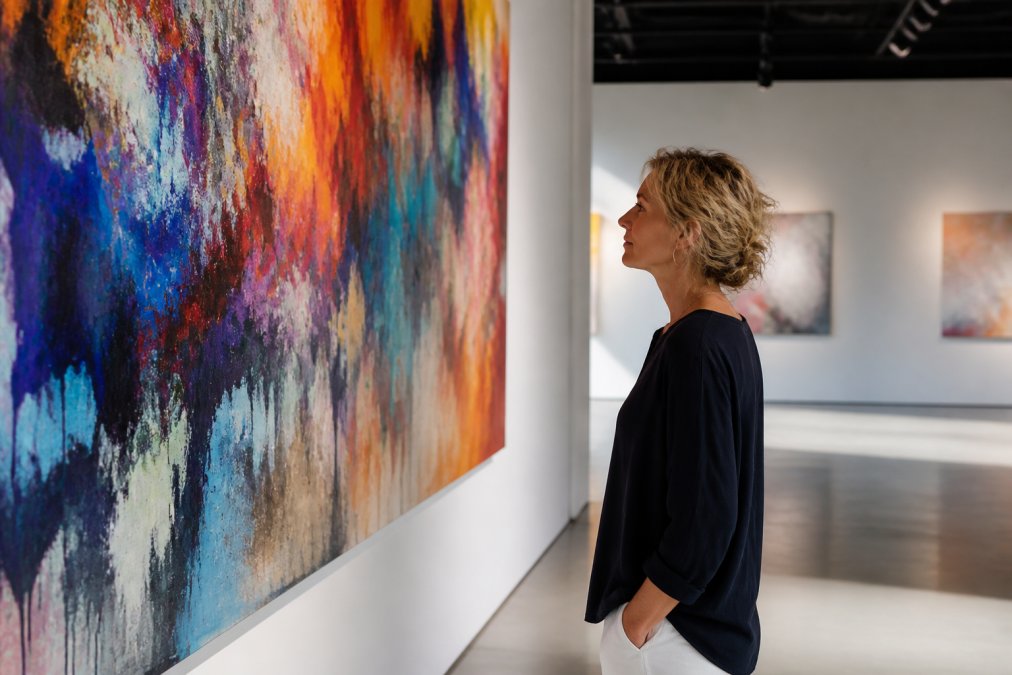
Abstract art meaning operates directly on emotion. Without a recognizable subject, your brain engages immediately with color, form, and movement, creating a visceral response.
The emotional impact varies based on the artist's choices and your experiences. A painting dominated by aggressive reds might feel chaotic to one person and exhilarating to another. The artwork becomes a mirror for your internal state.
Viewers report feeling more moved by abstract work when they understand its formal properties and artist's intent. Abstract art meaning deepens when you can articulate why the artist's specific choices triggered your response.
Abstract Art for Home Decor: Creating Meaningful Spaces
When you choose abstract art for your home, you're investing in a piece that shapes how you feel in that space daily. Abstract art meaning becomes personal when it influences the atmosphere of your room.
A painting rich in warm oranges and reds energizes a living room; cool blues and grays create calm in a bedroom. A busy, dynamic painting works in a kitchen; a serene composition suits a bedroom or study.
Susan Fielder Art specializes in emotionally charged abstract pieces designed to transform living and working spaces.
Why Artist's Intent Matters in Abstract Expression
Understanding the artist's intent transforms how you interpret abstract art meaning. A geometric abstractionist approaches the canvas differently than one creating gestural marks, but both create abstract art meaning through different visual languages.
The Psychology Behind Your Response to Abstract Art
Your brain processes abstract art meaning through different neural pathways than representational imagery, explaining why abstract art feels more emotionally immediate.
How the brain processes abstraction versus representation.
Color perception and emotional response.
Pattern recognition and meaning-making.
Expertise and perceptual fluency.
Individual differences in perception.
Frequently Asked Questions
How do I know if an abstract artwork will feel connected to my space and aesthetic?
Abstract art meaning is highly personal, what resonates with one person may not with another. Before purchasing, consider the color palette, energy level, and how the piece's composition aligns with your room's existing decor. Many collectors recommend viewing artwork in similar lighting to your space, or requesting images in context. Susan Fielder Art's emotionally charged pieces are designed to transform spaces with vibrant energy, so consider whether the work's intensity matches your desired atmosphere. Trust your initial emotional response; if a piece speaks to you, it's likely to enhance your environment authentically.
What's the difference between abstract art and finger painting, and how can I tell the difference?
Research shows that viewers can intuitively distinguish between professional abstract expressionist works and amateur finger paintings by recognizing gestural marks, compositional intention, and formal properties. Professional abstract art demonstrates deliberate use of color theory, spatial relationships, and rhythm, while amateur work typically lacks this intentional structure. Artists like Hans Hofmann and Willem de Kooning created works with sophisticated visual language and artistic intent that viewers can sense, even without formal training. Statistical image properties, how colors, forms, and textures interact, reveal an artist's unique style and mastery of their medium.
Can I genuinely connect with abstract art if I'm not personally affected by pancreatic cancer or the artist's specific story?
Absolutely. Abstract art meaning transcends personal circumstances because it communicates through formal properties, color, shape, line, and composition, rather than literal imagery. The emotional impact of abstract art reaches viewers universally through aesthetic experience and perception. While Susan Fielder Art's pieces carry narratives of healing and resilience that support pancreatic cancer research, the visual language speaks to anyone seeking emotionally resonant decor. Whether you're drawn to the cause, the vibrant energy, or simply the transformative power of the artwork, your connection is genuine. Many collectors appreciate abstract pieces for their ability to evoke feeling without requiring shared personal experience.
Why do experts rate abstract art as more sophisticated than other styles?
Research from ScienceDirect (2019) found that experts rate abstract artworks as more interesting, beautiful, informative, and sophisticated compared to non-experts. This difference reflects how trained viewers recognize the complexity of formal properties, composition, and artistic intent embedded in non-representational work. Abstract art requires active interpretation, viewers must engage with color theory, spatial relationships, and visual language rather than passively observing realistic depiction. This cognitive engagement, combined with the artist's deliberate stylization and distortion of visual reality, creates layers of meaning that experts perceive more readily. Understanding these principles helps any viewer appreciate the sophistication behind abstract creation.