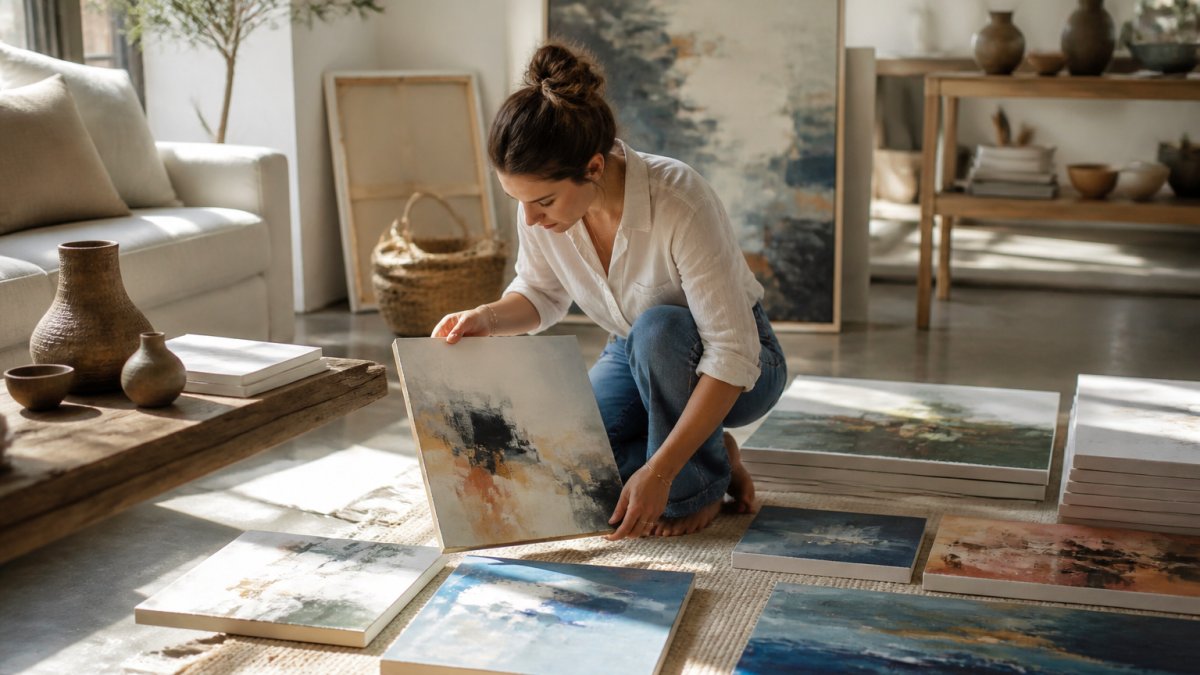
 ultimate-guide
How to Curate a Personal Art Collection in 2026
Table of Contents
- What Curating a Personal Art Collection Actually Means in 2026
- Art Collecting for Beginners: Your First Five Steps
- How to Mix and Match Art Styles Without Creating Chaos
- How to Display Art in Your Home for Maximum Impact
- Investment vs. Passion: Which Collecting Strategy Fits You?
- Digital vs. Physical Curation: Tools for Tracking Your Collection
- Ethical Sourcing and Art Preservation: What to Know Before You Buy
- Conclusion: Building a Collection That Tells Your Story
- Frequently Asked Questions
Last Updated: October 2, 2026
What Curating a Personal Art Collection Actually Means in 2026
Learning how to curate a personal art collection in 2026 means building a body of work that reflects who you are, not just what the market rewards. The old model treated collecting as an investment exercise for people with serious capital. That model is fading. According to Art Meets Culture's 2026 collecting guide, collectors increasingly prioritize personal identity and emotional connection over financial return, and the barrier to entry keeps dropping as more people start small through online platforms.
At Susan Fielder Art, we see this shift in every conversation with new buyers: people want work that means something, not just work that appreciates.
Curating a personal art collection is the deliberate practice of selecting, organizing, and displaying artworks around a coherent point of view rather than buying at random.
The 2026 landscape rewards collectors who treat curation as a creative act: your pieces should connect to each other and to you, and every other decision, from budget to lighting, serves that goal.
Art Collecting for Beginners: Your First Five Steps
The fastest way to start collecting is to move in order: define your aesthetic, set a budget, choose a strategy, buy your first piece, and document it. Skipping steps turns collections into piles of unrelated purchases.
- Define your personal aesthetic. Spend two weeks saving images of art and interiors you love. Look for repeats in color, mood, and subject.
- Set a budget and a collecting strategy. Decide what you can spend annually and whether you're buying for passion, investment, or both.
- Choose your entry point. Original works, limited-edition prints, and small studies all make legitimate starting points.
- Buy your first piece. Start with one work you'd keep even if it never gained value.
- Document everything. Record the artist, title, medium, dimensions, purchase date, and price the day the piece arrives.
Define Your Personal Aesthetic
Your aesthetic is the pattern that emerges when you stop overthinking. Pull together twenty to thirty images of artwork, rooms, and objects that stop you mid-scroll, then answer three questions: What colors keep appearing? What mood dominates? What scale fits your space?
Most beginners get this wrong by chasing whatever is trending. Artsper's guidance on avoiding trend-driven purchases warns that buying art simply because it's popular often leads to regret, and that personal resonance and quality should drive the decision instead. A piece you chose because it moved you will still work in five years. A piece you bought because everyone else was buying it usually won't.
Set a Budget and a Collecting Strategy
A workable budget is one you can repeat, not a one-time number. Many collectors set an annual figure and divide it across two or three purchases, keeping them active in the market and leaving room to say yes when something exceptional appears.
Your strategy should also name your focus. Some collectors build around a single theme, region, or medium; others mix established names with emerging artists to spread risk. Write your strategy in one sentence, if you can't, it isn't a strategy yet.
How to Mix and Match Art Styles Without Creating Chaos
Mixing styles works when one visual element repeats across every piece, color, texture, subject, or frame treatment, acting as the thread that ties an eclectic wall together.
Find the Common Thread: Color, Texture, or Theme
Pick your thread before you buy, not after. A bold abstract and a quiet vintage print can hang side by side if both share a warm ochre tone; the same two pieces clash if one is cool blue and the other burnt orange with no bridge between them.
Color is the easiest thread to manage; texture is the most forgiving, since a matte work and a glossy one can coexist when both share visible surface quality; theme is the most personal, where a collection starts to feel like a statement.
How to Display Art in Your Home for Maximum Impact
Displaying art well comes down to four variables: hanging height, lighting, spacing, and the micro-environment around the piece. Get those right and even a small collection looks intentional, and the fourth is where collections actually survive.
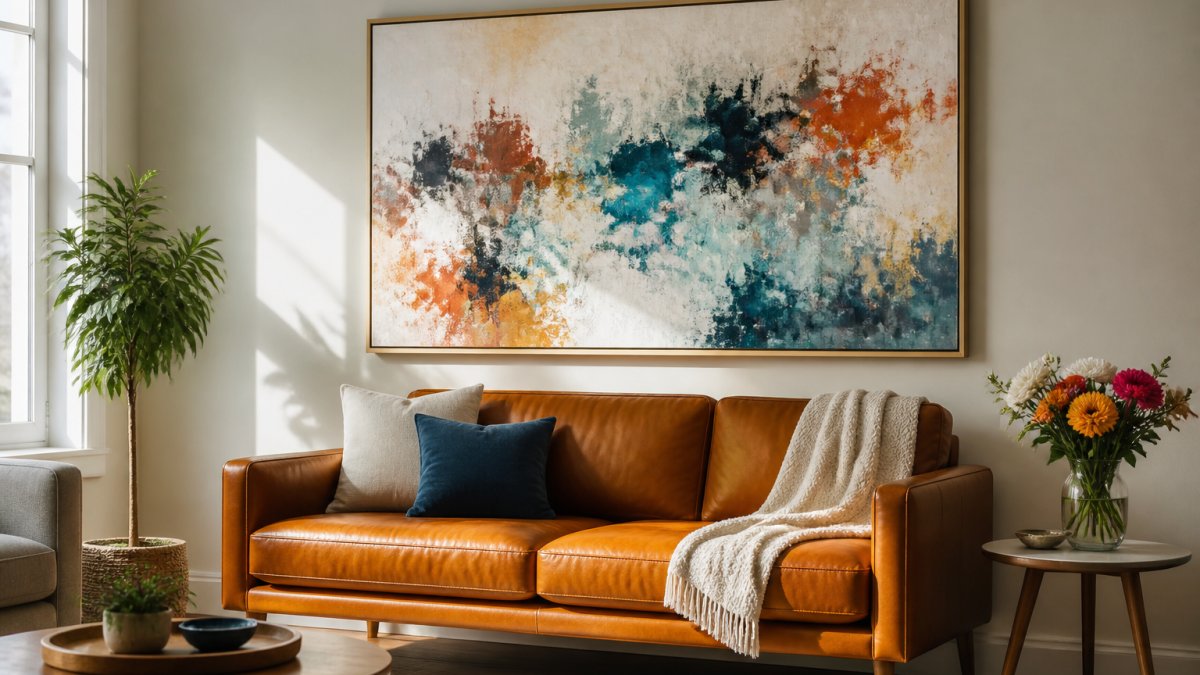
Hanging Height, Spacing, and the Gallery Wall
Hang the center of each piece at eye level, roughly 57 to 60 inches from the floor, that single rule fixes most bad hangs. For gallery walls, lay the arrangement on the floor first and leave two to three inches between frames.
Use two hooks per piece rather than one: a single hook lets a frame drift off-level over time, while two distribute the load so the wire doesn't stretch.
Lighting: What Actually Protects the Work
Lighting matters more than most people expect, and it creates two separate problems: fading and glare.
Fading is caused by ultraviolet radiation and cumulative visible-light exposure. Direct sunlight is the worst offender, but even indirect daylight fades pigments over years. The practical defenses, in order of effectiveness:
- Rotate works away from south- and west-facing windows, which receive the most intense afternoon sun in most homes.
- Use UV-filtering glazing on works on paper and photographs. Standard glass blocks little UV; UV-filtering glass or acrylic blocks most of it. Ask the framer to specify it, usually a modest upcharge over standard glass.
- Consider UV-filtering window film on the windows themselves if a room is unavoidably bright. This protects everything in the room, not just one frame.
Glare is separate. A harsh spotlight aimed straight at a glossy surface creates a hot spot that hides the image. Aim for a warm, diffused source, a picture light above the frame angled down, or a track head at roughly 30 degrees off the wall so light rakes across the surface.
Temperature, Humidity, and Where Not to Hang
Works on paper, canvas, and wood all respond to moisture and heat, and the damage is cumulative.
- Avoid exterior walls in older homes, where condensation can form behind the frame.
- Avoid above fireplaces, radiators, and heating vents, where heat and dry air cycle constantly.
- Avoid basements and attics, which tend to be the dampest and hottest rooms in a house respectively.
- Avoid bathrooms and kitchens for anything valuable, steam and grease are both hard on surfaces.
Many experienced collectors keep a small hygrometer in the main display room and watch it.
If you're renting, adhesive hanging strips and freestanding shelves let you display work without damaging walls. Just check the weight rating, most strips are rated well below what a framed original actually weighs.
Investment vs. Passion: Which Collecting Strategy Fits You?
Passion-led and investment-led collecting are not opposites, but they demand different disciplines. Choose which one leads, then let the other follow.
If passion leads, your filter is emotional response.
If investment leads, discipline replaces instinct.
| Strategy | Primary Filter | Time to See Results | Best For |
|---|---|---|---|
| Passion-led | Emotional response | Immediate enjoyment | First-time collectors |
| Investment-led | Market data and artist track record | Years, often 5+ | Experienced buyers |
| Hybrid | Both, weighted by budget | Mixed | Collectors building long-term |
Most collectors land in the hybrid column eventually. The key is knowing which filter gets the final vote when the two disagree.
Digital vs. Physical Curation: Tools for Tracking Your Collection
Digital records protect your collection; physical presence is what you actually bought. You need both.
On the digital side, dedicated collection management platforms let you log provenance, track inventory, and generate reports for insurance or resale, which matters enormously if you ever need to prove ownership or value a piece.
On the physical side, keep the paperwork. Certificates of authenticity, invoices, and any correspondence with the artist or gallery belong in one folder, ideally a physical one.
Ethical Sourcing and Art Preservation: What to Know Before You Buy
Buying ethically means knowing where a piece came from and how it was made. Preserving it means controlling light, humidity, and handling from day one, then protecting its value with the right paperwork and insurance, the half most guides skip, and the half that turns a collection into an asset.
Ethical Sourcing: Emerging Artists vs. Mass-Market Retailers
The ethical question is less about a single purchase and more about where your money goes. Buying directly from a living artist or reputable gallery means the artist sets the price and receives the majority.
Neither choice is wrong, but they build different collections. If you want work that can appreciate and that supports the people making it, favor:
- Direct-from-artist sales, including studio visits, open studios, and artist-run online shops.
- Galleries that represent living artists and can tell you the artist's exhibition history and where the work has shown.
- Limited editions with documented edition sizes, where the artist or estate controls the run.
Ask about provenance before you buy, especially for older works or vintage prints. A legitimate seller can tell you who owned the work, how it was acquired, and whether documentation exists; if the answer is vague, treat that as information.
Appraisals: What They Are and When You Need One
An appraisal is a written opinion of value from a qualified appraiser, serving a different purpose than a receipt. You generally need one for insurance, donation, or resale.
- Insurance appraisals establish replacement value, what it would cost to buy a comparable work today. This is usually higher than what you paid.
- Donation appraisals establish fair market value for a tax deduction, and the IRS generally requires a qualified appraisal for non-cash charitable contributions above a threshold amount.
- Resale or estate appraisals establish current market value for a sale, estate settlement, or division of assets.
Appraisers specialize: a generalist who values furniture may not be right for a contemporary print. Look for credentials from a recognized professional appraisal organization and experience in the specific medium and market.
Insurance: Scheduling vs. a General Contents Policy
A standard homeowners or renters policy covers personal property but usually caps fine art at a low sublimit and may exclude breakage, mysterious disappearance, and gradual deterioration.
Scheduled items typically:
- Are covered for the agreed value rather than depreciated actual cash value.
- Have no deductible, or a much lower one, than the general policy.
- Cover a broader set of perils, including accidental breakage and theft from a vehicle during transit.
If your collection grows large enough, a standalone fine art policy may be cheaper and broader than scheduling each piece on a homeowners policy. Talk to an agent who writes fine art coverage specifically.
Preservation: Environment and Handling
Preservation is mostly about environment. Keep art out of damp basements and hot attics, avoid hanging above radiators or fireplaces, and handle works with clean, dry hands or cotton gloves.
For pieces of significant value, keep a written condition report, a short description of the work's condition when you acquired it, with dated photographs. If you file a claim or lend the piece, that report proves the damage happened while it was out of your hands.
Conclusion: Building a Collection That Tells Your Story
The hardest part of collecting isn't finding art, it's trusting your own eye when the market, your friends, and your Instagram feed suggest something different. The collectors who end up with a collection worth living with are the ones who bought for themselves first.
At Susan Fielder Art, we built our gallery around exactly that idea. Our emotionally charged abstract originals are one-of-a-kind, and 10% of all proceeds go to pancreatic cancer research through our iPlaid series, so the work you hang carries a story of healing and resilience along with it. If you're ready to start, browse the collection and find the piece that speaks to you.
Frequently Asked Questions
What is the 70/30 rule in art?
The 70/30 rule suggests that about 70% of your collection should reflect your core aesthetic and established tastes, while 30% should be reserved for experimentation with emerging artists, new mediums, or styles outside your comfort zone. This balance keeps your collection cohesive while leaving room for growth. According to the 2026 Art Basel and UBS Global Art Market Report, collectors are increasingly prioritizing personal identity over pure financial investment, which makes this ratio a practical way to honor both passion and discovery when you curate art collection.
How do I start a personal art collection on a budget?
Start by setting a clear budget per piece and focusing on emerging artists or smaller works, which often carry lower price points. Art collecting for beginners works best when you buy what you genuinely love rather than chasing trends. Online platforms have lowered the barrier to entry, letting you browse and acquire original work without visiting a gallery. Prioritize one meaningful piece at a time, and remember that a collection grows through patience, not volume.
How do you mix and match different art styles in one room?
Anchor the mix with a unifying element such as a shared color palette, consistent framing, or a repeating motif. When you mix and match art styles, place the boldest piece as a focal point and arrange supporting works around it. Group pieces by visual weight rather than by era or genre. A cohesive gallery wall often pairs contemporary art with vintage prints by keeping matting and frame finishes consistent, which lets the artwork itself carry the conversation.
Is it better to buy art for investment or for personal enjoyment?
For most collectors, personal enjoyment should lead. The 2026 Art Basel and UBS report shows collectors are shifting toward identity-based collecting, valuing emotional connection over market appreciation. If you do want investment potential, balance established blue-chip names with emerging artists to diversify. But buying solely because a piece is trending often leads to buyer's regret. Choose work that resonates with your story first, and treat any financial upside as a bonus.
Most collectors stall because they wait for perfect certainty, and perfect certainty never arrives. Start with one piece that moves you, document it properly, and let the collection grow around it. Susan Fielder Art offers original abstract paintings, verified secure checkout, and a commitment that 10% of proceeds support pancreatic cancer research, so every purchase does something beyond your walls. Shop now and find the work that starts your story.