 how-to
Temporary Wallpaper Tips for Renters: A 2026 Guide
Table of Contents
- Temporary Wallpaper Tips for Renters: What Actually Works
- Get Landlord Approval for Wallpaper Before You Buy
- Match the Wallpaper to Your Wall Surface
- How to Apply Peel and Stick Wallpaper So It Stays Put
- Temporary Wallpaper on Textured Walls: What to Expect
- How to Remove Peel and Stick Wallpaper Without Damage
- Plan Your Cost, Quantity, and Room-by-Room Approach
- Conclusion: Renting Doesn't Mean Blank Walls
- Frequently Asked Questions
Last Updated: October 12, 2026
Temporary Wallpaper Tips for Renters: What Actually Works
Temporary wallpaper is a self-adhesive or paste-free wall covering that goes up quickly and comes down cleanly, making it practical for renters who cannot repaint. But "removable" on the label does not mean "damage-proof" on your wall. This guide covers the whole process, from landlord sign-off to move-out.
Most failures come down to three fixable things:
- The wall surface was not ready
- The landlord was never asked
- The panels were not aligned properly
Get those right and temporary wallpaper tips for renters stop being guesswork.
Get Landlord Approval for Wallpaper Before You Buy
Ask first, in writing, before you order anything. A verbal "sure, go ahead" means nothing at move-out when a deposit is on the line.
Your lease almost certainly has a clause about wall alterations. Find it. The HUD guide to tenant rights and responsibilities is a useful starting point for understanding what a lease can and cannot require of you.
What to Put in a Written Agreement
A short written agreement protects both sides. Get it signed or confirmed by email, and keep a copy.
Include these items:
- The specific room and wall you plan to cover
- The product type and how it attaches
- Who pays for repairs if damage occurs
Match the Wallpaper to Your Wall Surface
Peel-and-stick products bond best to smooth, painted drywall with a satin or semi-gloss finish.
Check your paint type by pressing tape to the wall and pulling it off. If paint comes with it, the finish is too delicate for adhesive.
| Wall Surface | Adhesion | Damage Risk | Renter Verdict |
|---|---|---|---|
| Smooth satin paint | Strong | Low | Best choice |
| Flat or matte paint | Weak | High | Avoid |
| Light texture (orange peel) | Moderate | Moderate | Test first |
| Heavy texture or brick | Poor | High | Skip it |
| Fresh paint under 30 days | Weak | High | Wait |
| Damp or humid wall (bathroom, exterior wall) | Weak | High | Skip or use a small panel |
| Previously patched drywall | Variable | High | Test first |
New paint needs time to cure before adhesive touches it, most manufacturers recommend at least 30 days, longer in humid conditions.
The Four Variables That Decide Whether It Comes Off Clean
Before you buy, score the wall on these four factors. If two or more work against you, pick a different wall or product.
- Sheen. Satin, semi-gloss, and gloss release adhesive more cleanly than flat or matte. If you do not know the sheen, the tape test is your fastest answer.
- Texture depth. Run a fingernail across the wall. If you feel ridges, adhesive cannot bridge them and edges will lift within days. Light orange peel is sometimes workable with a heavier backing; knockdown, brick, and cinder block are not.
- Paint age and cure. Fresh paint under 30 days is a no, as is paint over a poorly prepped or dusty surface, because the new coat can delaminate.
- Moisture and temperature. Bathrooms, kitchens near the range, and exterior-facing walls in humid climates see swings that weaken adhesive. A small panel above a sink is fine; a full wall behind a shower is not.
Test Before You Commit
A tape test tells you about the paint; a patch test tells you about the whole system. Cut a 12-inch square of the actual wallpaper, apply it to an inconspicuous spot, and leave it at least 72 hours.
- If the paper releases cleanly with no paint transfer, the wall is a candidate.
- If paint lifts at the edge, stop. The finish is too delicate.
- If adhesive residue stays behind, plan for cleanup and factor that into your move-out timeline.
Run the patch test on each wall you plan to cover. Paint batches and surface conditions vary room to room, and a wall that passes in the bedroom can fail in the hallway.
When the Wall Fails the Test
If your walls are flat-painted, heavily textured, or freshly painted, temporary wallpaper is the wrong tool. Two renter-friendly alternatives cover the same need without adhesive risk:
- Removable wall murals and decals cover a smaller area and skip the seam problem entirely. They are the better choice for textured walls where full panels would distort.
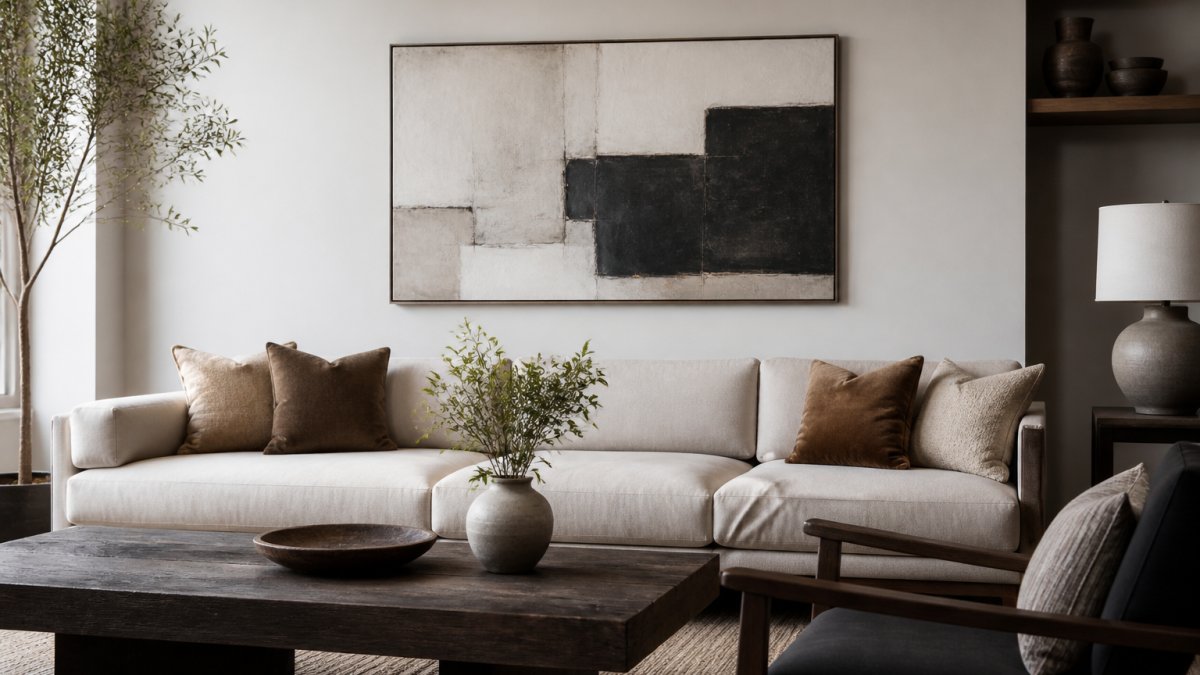
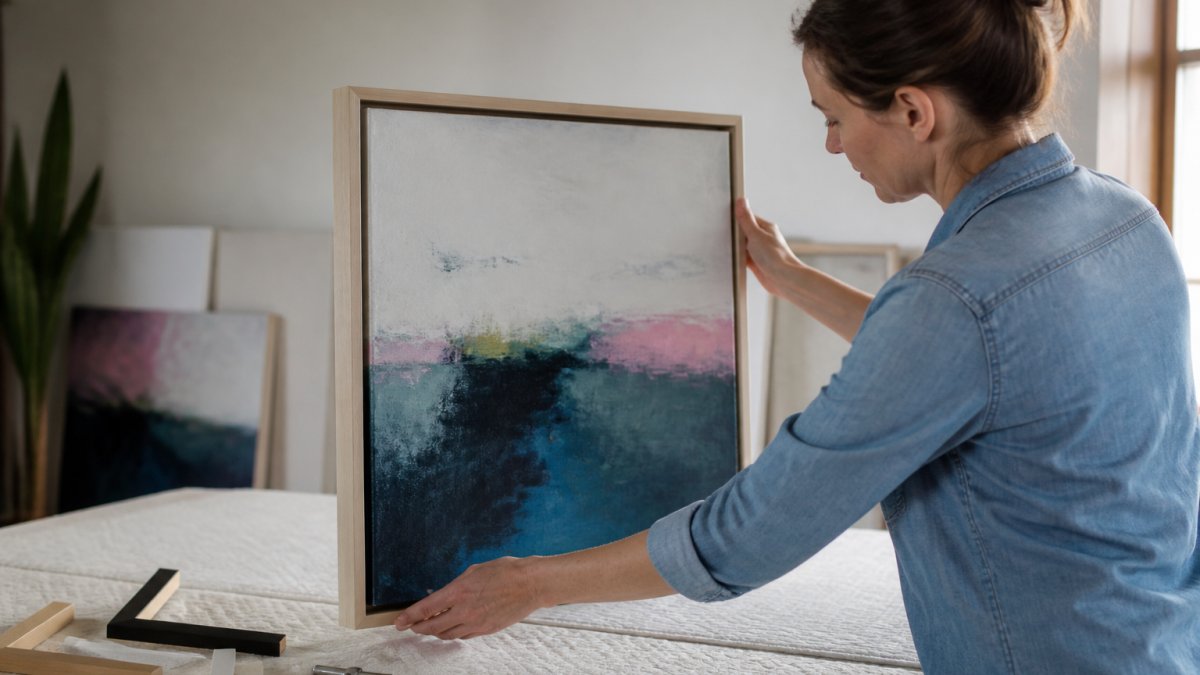
- Framed art hung on a single hook adds color and personality with one small nail hole that is easy to patch. For renters who want a statement piece that travels, this is often the lowest-risk option.
Match the product to the wall, not the other way around. The wall wins that argument every time.
How to Apply Peel and Stick Wallpaper So It Stays Put
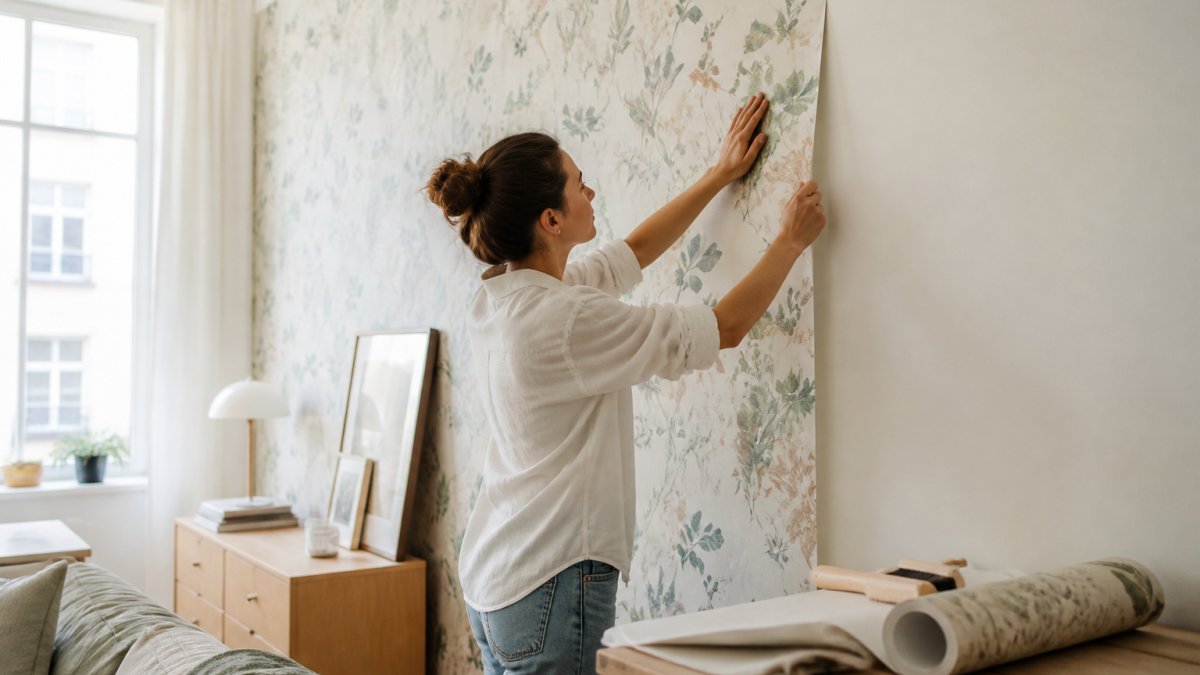
Clean the wall, then work in small sections from the top down. Rushing the first panel is the most common mistake and throws off every panel after it.
Total time: 2-4 hours for one accent wall Difficulty: Beginner
What you'll need:
- Peel-and-stick wallpaper, plus 10% extra
- Plastic smoothing tool
- Sharp utility knife
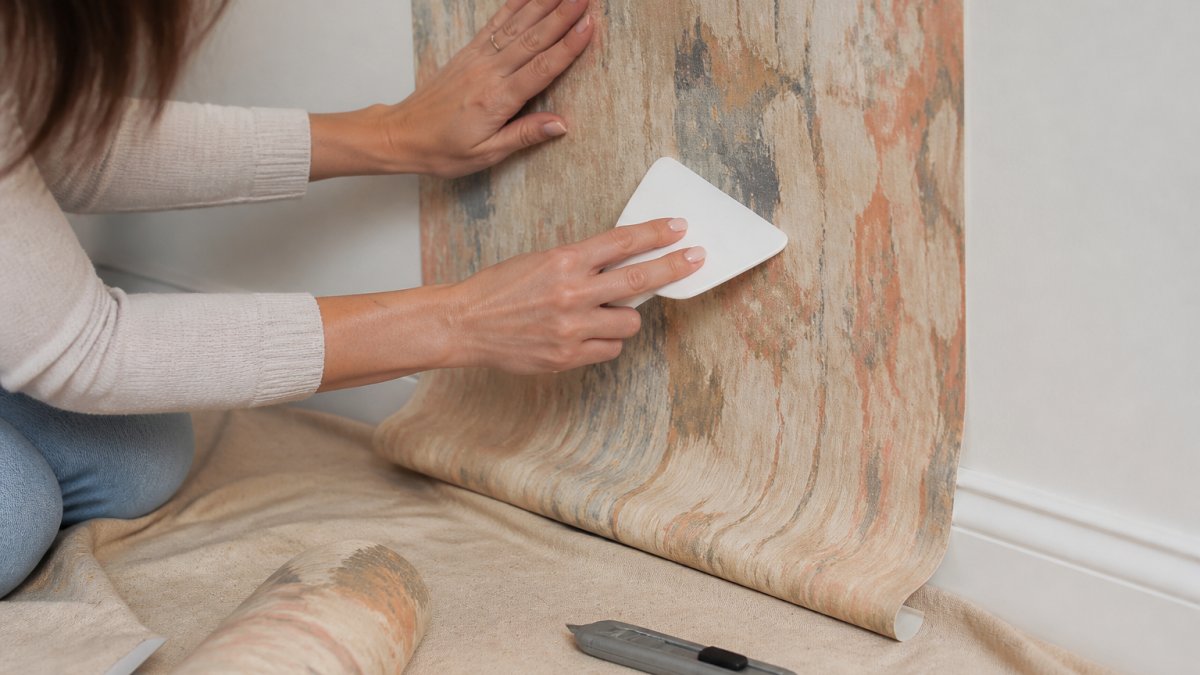
Wipe the wall with a damp cloth and let it dry fully. Any dust or grease shows through as a bump.
Aligning Panels, Seams, and Outlets
Start at a corner or a door frame, not the middle of the wall. Use a level to draw a straight vertical pencil line as your guide.
Then follow this order:
- Peel back the top 6 inches of backing
- Press the top edge along your guide line
- Smooth downward with the plastic tool, working out bubbles as you go
- Peel the rest of the backing away in slow strips
- Overlap seams by a hair, then trim with a knife
- Cut around outlets only after the panel is fully stuck
Temporary Wallpaper on Textured Walls: What to Expect
Temporary wallpaper on textured walls rarely looks seamless. Adhesive cannot fill deep bumps, so the pattern distorts and edges lift within days.
Light orange-peel texture is sometimes workable with a heavy backing layer. Brick, cinder block, and knockdown texture are not worth the effort.
If you love the wall but hate the texture, use a removable wall mural panel instead.
How to Remove Peel and Stick Wallpaper Without Damage
Warm the paper with a hair dryer on low, then peel slowly at a low angle. Heat softens the adhesive and cuts the risk of pulling paint.
Work in sections, not one long strip. Pulling fast tears drywall paper, and that repair comes out of your deposit.
Troubleshooting Residue and Stubborn Panels
Sticky patches are normal, and they are fixable.
- Residue left behind: press the sticky side of the removed paper onto it, then lift
- Panel will not budge: warm it longer, then try again
- Paint lifting at the edge: stop and warm the area more
Plan Your Cost, Quantity, and Room-by-Room Approach
Measure each wall's height and width, multiply them, and add 10-15% for trimming and mistakes. Buying short is the most expensive error here, because a second order from a different production run can arrive with slightly different color or pattern alignment.
How to Measure and Estimate Quantity
Work wall by wall, not room by room. A room with a door, window, and closet has far less coverable surface than its floor plan suggests.
- Measure the height and width of each wall in feet.
- Multiply height by width to get square feet.
- Subtract large openings: doors (roughly 20 square feet each) and standard windows (roughly 15 square feet each).
- Add 10% waste for a simple pattern, 15% for a straight repeat, and up to 20% for a large drop or half-drop repeat.
- Round up to the nearest roll or panel pack. Partial packs are rarely sold.
Pattern repeat is the number most renters ignore. Printed on the roll label, it tells you how often the design repeats vertically. A large repeat means each panel starts at a different point to line up with its neighbor, and the trimmed top and bottom become waste.
What Drives the Cost Up or Down
- Accent walls cost far less than whole rooms. One wall behind a sofa or bed carries the room for a fraction of the paper.
- Small spaces give big impact for little paper. Closets, entryways, and powder rooms use few rolls and are easy to remove.
- Neutral colors and simple patterns are easier to align and produce less waste per panel.
Compare Against Other Renter-Friendly Options
Wallpaper is not automatically the cheapest way to change a wall. Before you buy, price the alternatives for the same wall:
- Peel-and-stick wallpaper: highest visual impact per square foot, highest removal risk, moderate cost.
- Removable wall murals and decals: lower cost for small areas, less seam risk, limited coverage.
- Freestanding screens and room dividers: zero wall contact, useful in small rooms, no deposit exposure.
For a rental you will leave in a year, spend on the wall you actually see. A single accent wall behind a sofa or bed carries the room. A full-room install costs several times more and multiplies your removal risk at move-out.
Room-by-Room Guidance
- Bedroom: the safest room for temporary wallpaper. Low moisture, low traffic, and an accent wall behind the bed gives the biggest payoff.
- Living room: good for an accent wall. Avoid walls behind heat sources or in direct sun, which can soften adhesive over time.
- Bathroom: high humidity weakens adhesive and encourages edges to lift. Stick to small panels away from the shower and run the exhaust fan consistently.
- Kitchen: grease and steam near the range are the enemy. A backsplash panel behind a sink or prep area can work if it is far enough from the cooktop.
If you want a statement piece that moves with you, original artwork does that job without adhesive. At Susan Fielder Art, our abstract paintings and iPlaid series hang with a single hook and travel to your next place. Every purchase also supports pancreatic cancer research.
Conclusion: Renting Doesn't Mean Blank Walls
The hardest part of temporary wallpaper is not the install, it is the planning before the first panel touches the wall.
Skip that step and you risk a damaged deposit and a landlord dispute. Do it right and you get a room that finally feels like yours.
Susan Fielder Art offers a different route to the same goal.
Get started with Susan Fielder Art and give your rental a story worth hanging.
Frequently Asked Questions
Is there a way to make wallpaper renter-friendly?
Yes. Choose removable or peel-and-stick wallpaper, clean the wall first, and test a small patch in a closet or behind furniture before covering a full wall. Temporary wallpaper works best on smooth, painted drywall. If your walls are textured or freshly painted, wait at least two weeks for the paint to cure before applying anything adhesive.
Should renters ask their landlord before using removable wallpaper?
Ask first, even when the product says it peels clean. Get written permission that notes the wallpaper type, the rooms involved, and who handles removal at move-out. A short email or lease addendum protects your security deposit and prevents disputes. Landlord approval for wallpaper is the single step renters skip most often, and it is the one that causes the most deposit trouble.
Can temporary wallpaper be used on textured walls?
It can, but results vary. Light orange-peel texture usually holds peel-and-stick wallpaper fine. Heavy knockdown, popcorn, or brick surfaces stop the adhesive from making full contact, so panels lift at the edges and seams separate. For those walls, use a liner or buffer layer first, or skip wallpaper and hang art instead.
How do you remove peel-and-stick wallpaper from a rental?
Start at a top corner and pull the panel down and toward you at a low angle, not straight out. Warm the adhesive with a hair dryer on low if it resists. Most residue comes off with a damp cloth and mild soap. Test one hidden corner first so you know how your specific wall responds before you commit to a full removal.