 how-to
How to Curate Art for Corporate Lobbies
Table of Contents
- Why Lobby Art Matters: Setting the First Impression
- Step 1: Define Your Corporate Brand Identity and Values
- Step 2: Choose Your Theme, Narrative, and Color Palette
- Step 3: Select Artwork Types and Styles for Your Corporate Space
- Step 4: Plan Scale, Proportion, and Placement in Your Lobby
- Sourcing Artwork for a Lobby: Working with Artists and Galleries
- Building a Corporate Art Collection: Installation, Maintenance, and Rotation
- Measuring Impact: Stakeholder Buy-In and Outcomes
- Frequently Asked Questions
Last Updated: October 13, 2026
Why Lobby Art Matters: Setting the First Impression
Your lobby is the first thing clients, partners, and employees see when they walk through your doors. That moment shapes their entire perception of your company.
A thoughtfully curated corporate art collection does more than fill wall space. It tells a story about who you are, what you value, and how serious you are about your brand.
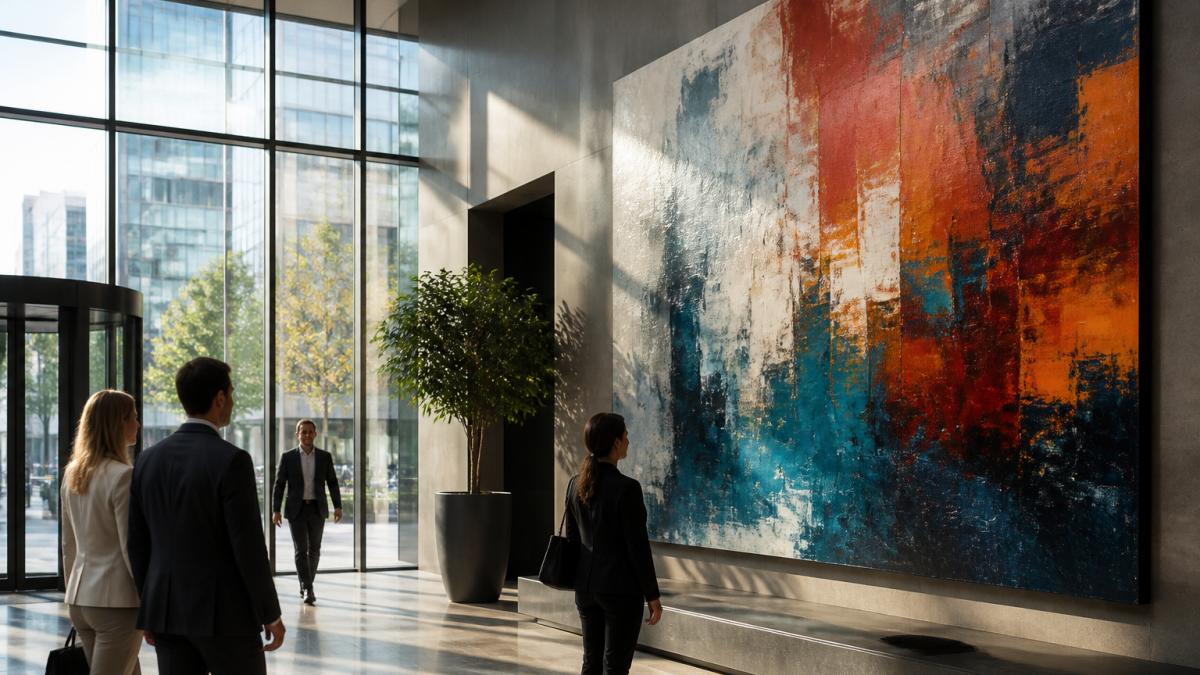
The first few seconds matter. Research shows that visitors form opinions about a space within moments of entering.
When you invest in how to curate art for corporate lobbies, you're investing in your brand narrative. Every piece should reinforce who you are and what your company stands for.
Step 1: Define Your Corporate Brand Identity and Values
Before you select a single piece of artwork, you need clarity on your brand identity. What does your company do? What values drive your decisions? What emotional response do you want visitors to have?
This is where many organizations stumble. They pick art they personally like without connecting it to their corporate mission. That disconnect shows.
Start by documenting your brand identity in writing. Include:
- Your company's core mission and values
- The industry you operate in and your competitive position
- The tone you want to project (innovative, trustworthy, creative, data-driven, etc.)
- The primary audience visiting your lobby (clients, investors, employees, the public)
If your company values sustainability and social responsibility, your art should reflect that. If you're a tech startup, abstract or contemporary pieces might align better than traditional landscapes. If you're a financial institution, you might lean toward pieces that convey stability and precision.
At Susan Fielder Art, we understand that a corporate art collection serves as a visual extension of your brand promise. Each piece should communicate something true about your organization.
Step 2: Choose Your Theme, Narrative, and Color Palette
A cohesive corporate art collection needs a unifying theme or narrative. This doesn't mean every piece looks the same, it means they speak to a common idea or aesthetic direction.
Themes can be broad or specific:
- Abstract energy and movement, for companies emphasizing innovation and forward momentum
- Resilience and transformation, for organizations focused on growth and overcoming challenges
- Community and connection, for businesses prioritizing collaboration and human relationships
- Bold color and emotion, for creative industries where vibrant expression matters
Your color palette ties everything together. A lobby where all artwork shares a coordinated color scheme feels intentional and professional. This doesn't mean matching colors exactly, it means selecting artwork where the dominant hues complement each other.
Consider the existing interior design of your lobby. What wall colors, flooring, and furnishings are already there? Your art should enhance, not fight, the existing environment.
Think about the emotional experience you want to create. Warm colors (reds, oranges, golds) energize and inspire. Cool colors (blues, greens, purples) calm and focus. Neutral tones feel sophisticated and timeless. Your theme and palette should work together to reinforce your brand narrative.
Step 3: Select Artwork Types and Styles for Your Corporate Space
Corporate lobbies work best with specific types of artwork. Not all art translates equally in a professional setting.
Consider these options:
- Large-scale abstract paintings, command attention, create visual interest, work in modern spaces
- Contemporary photography, professional, versatile, can showcase your industry or values
- Mixed media pieces, add texture and dimension, create conversation starters
- Canvas art with bold color, energetic, memorable, works in creative industries
- Statement installations, for companies with larger budgets and bolder brand personalities
Avoid artwork that's too niche, overly literal, or potentially divisive. A corporate lobby isn't the place for controversial imagery or inside jokes. Your art should be accessible enough that diverse visitors feel welcome, while still being distinctive enough to be memorable.
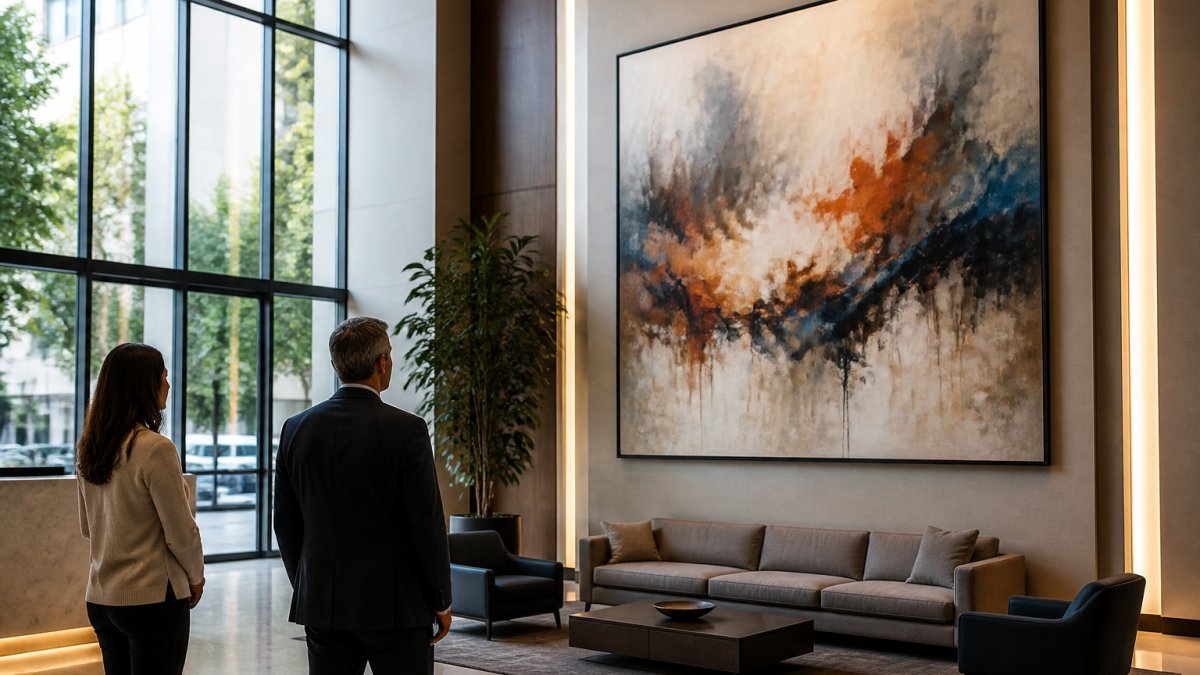
Scale matters significantly. A small painting on a large blank wall looks lost. A piece that's too large for the wall space feels aggressive. The artwork should be proportional to the wall and the room.
How to curate art for corporate lobbies means choosing pieces that work within the practical constraints of your space while amplifying your brand identity.
Step 4: Plan Scale, Proportion, and Placement in Your Lobby
The physical placement of your artwork determines its impact. A stunning painting hung too high or too low loses its power. Artwork centered on a wall creates balance. Asymmetrical placement can feel dynamic but requires careful execution.
Follow these placement guidelines:
- Eye level, the center of the artwork should be approximately 57-60 inches from the floor (accounting for average eye height when standing)
- Wall space, artwork should take up roughly 50-75% of the wall space it occupies (not too small, not overwhelming)
- Distance, viewers should be able to see the entire piece from at least 6-8 feet away without straining
- Groupings, if displaying multiple pieces, maintain consistent spacing (typically 2-3 inches between frames)
In a large lobby, a single large-scale piece often makes a stronger statement than multiple smaller works. In a smaller lobby or entryway, a well-chosen medium-sized piece works better.
Consider traffic flow. Where do people naturally pause or linger? That's where your most impactful artwork should live. The wall visitors see first as they enter is prime real estate for your statement piece.
Lighting dramatically affects how artwork appears. Natural light changes throughout the day. Artificial lighting should highlight the artwork without creating glare or harsh shadows. If your lobby has limited natural light, consider artwork with colors and finishes that respond well to artificial illumination.
Sourcing Artwork for a Lobby: Working with Artists and Galleries
Finding the right artwork requires knowing where to look and how to evaluate what you find. You have several sourcing options, each with different advantages.
Work directly with artists. This approach gives you access to original, one-of-a-kind pieces. Artists can create custom work tailored to your space and brand. You build a direct relationship and support emerging talent.
Partner with established galleries. Galleries curate collections and handle authentication, framing, and logistics. They offer a broader selection and professional guidance.
Consult an art advisor. For larger collections or significant investments, an art advisor can guide your selections, negotiate pricing, and manage the entire acquisition process.
Explore online art platforms. Many platforms connect buyers with artists and galleries. You can browse extensive collections, read artist statements, and understand the story behind each piece.
When evaluating artwork, ask these questions:
- Is this an original piece or a reproduction?
- What's the artist's background and experience?
- Will this piece maintain its visual appeal over time?
- How does this fit with the overall collection narrative?
- What's the condition and durability of the piece?
Document everything. Get certificates of authenticity, artist statements, and care instructions. This protects your investment and helps future decision-makers understand the collection's value.
Building a Corporate Art Collection: Installation, Maintenance, and Rotation
Once you've selected your artwork, the work of bringing it into your space begins. Proper installation and ongoing care protect your investment and maintain the visual impact.
Professional Installation and Display Standards
Installation is not a DIY project for valuable artwork. Improper hanging can damage the piece and create safety hazards. Professional installers understand weight distribution, wall integrity, and the technical requirements of different artwork types.
Before installation, confirm:
- Wall condition and structural capacity
- Proper framing (if applicable) to protect the artwork
- Appropriate mounting hardware for the artwork's weight and size
- Climate control considerations (temperature and humidity stability)
- Security measures if needed for high-value pieces
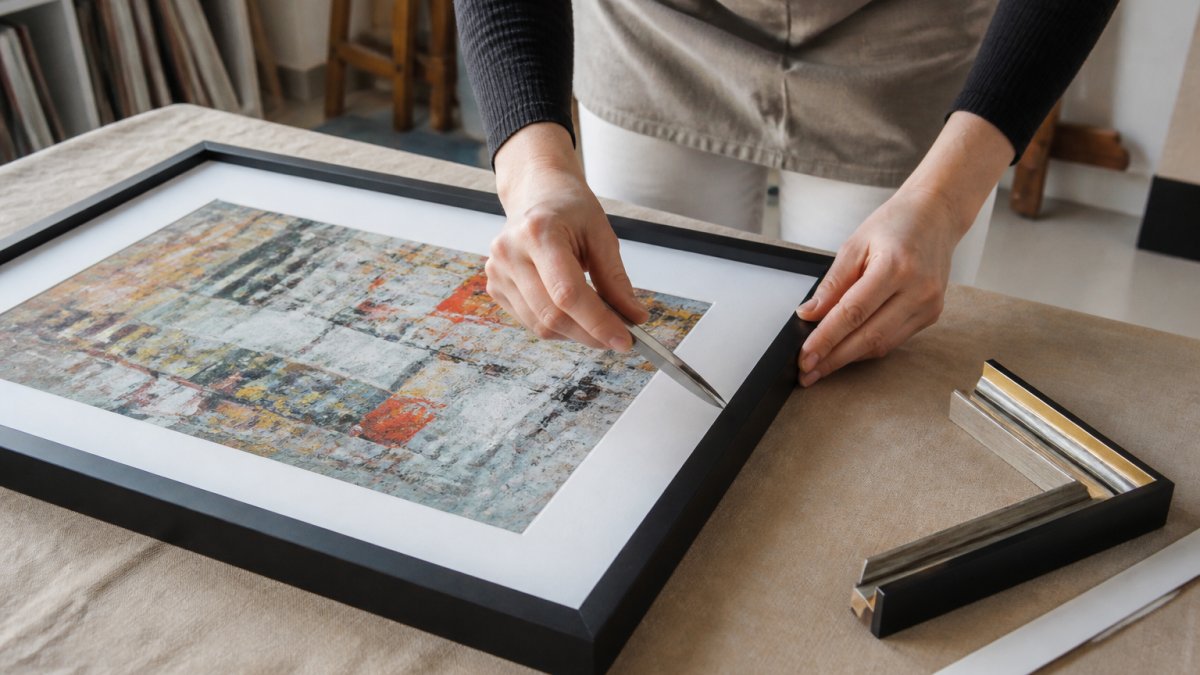
Proper framing protects artwork from dust, damage, and fading. Archival-quality framing materials preserve the piece for decades. If you're displaying canvas art or unframed pieces, ensure they're protected from direct sunlight and moisture.
Lighting should enhance without harming. UV-protective glass or acrylic prevents fading. Spotlighting or track lighting can highlight the artwork, but avoid creating glare or heat that damages the piece.
Ongoing Care and Collection Lifecycle
Your corporate art collection requires maintenance. Regular care extends the life of the artwork and keeps it looking fresh.
Dust artwork gently with a soft, dry cloth. Avoid touching the surface directly. For framed pieces, clean the glass periodically but never use harsh chemicals. If a piece requires professional cleaning or restoration, hire a conservator experienced with that medium.
Monitor the artwork's condition. Look for signs of fading, warping, or damage. Address issues promptly to prevent deterioration.
Consider rotating artwork periodically. Swapping pieces refreshes the lobby experience and prevents visual fatigue. Rotation also allows you to feature different artists or themes seasonally or annually. This keeps your space dynamic and shows that your organization values artistic diversity.
Document your collection. Maintain records of each piece including artist name, acquisition date, purchase price, and condition notes. This information is valuable for insurance, authentication, and future decisions about the collection.
Measuring Impact: Stakeholder Buy-In and Outcomes
How do you know if your how to curate art for corporate lobbies investment is working?
Stakeholder feedback. Ask employees, clients, and visitors what they think. Do they notice the art? Does it shape their perception of the company?
Visual consistency. Does the collection feel cohesive? Are new visitors drawn to the artwork? Does it create conversation starters?
Brand alignment. Revisit your original brand identity goals. Is the artwork reinforcing those values? Does it communicate your company's mission effectively?
Employee experience. Does the art improve the workplace environment?
Client and partner perception. Does the lobby create the impression you intended?
Building a meaningful corporate art collection is an investment in your brand presence.
The process requires clarity about your brand identity, intentionality about selection, and commitment to proper care.
Curating a corporate art collection that truly represents your brand requires more than picking pieces you like. It demands strategy, authenticity, and professional execution.
Frequently Asked Questions
What should you consider when choosing art for a corporate lobby?
Start by aligning artwork with your corporate brand identity and values. Consider the lobby's architecture, lighting, and traffic flow. Scale matters: large-scale artwork works best in open spaces. Choose pieces that reflect your company's narrative and create a cohesive collection rather than random selections. Think about how visitors will experience the art and what first impression you want to create. Finally, ensure durability and maintenance requirements fit your building's resources.
How do you create a cohesive corporate art collection for a lobby?
A cohesive collection starts with a unifying theme or narrative that connects to your company values. Choose a consistent color palette that complements your interior design. Select artwork types and styles that work together visually, even if they vary in medium or subject matter. Avoid mixing too many competing aesthetics. Plan placement strategically so pieces relate to each other spatially. Consider how new acquisitions will integrate with existing work as your collection grows over time.
How do you plan the size and placement of lobby artwork?
Measure your wall space and account for architectural features like windows, doors, and columns. Large-scale artwork typically works better in expansive lobbies, while smaller pieces suit intimate spaces. Hang artwork at eye level (57-60 inches from floor to center) for optimal viewing. Leave adequate spacing between pieces to avoid visual clutter. Consider sightlines from the entrance and main walkways. Account for lighting conditions: natural light changes throughout the day, so test placement at different times before final installation.
What types of art work best in a corporate lobby?
Abstract art, fine art photography, and mixed media pieces tend to work well in corporate spaces because they're versatile and appeal to diverse audiences. Large-scale canvas art and textured artwork create visual interest and command attention. Statement pieces that reflect your brand narrative are ideal focal points. Avoid overly controversial or niche styles that might alienate visitors. Consider durability: fine art that can withstand foot traffic, lighting, and temperature fluctuations is essential. Original artwork and limited editions add authenticity and prestige to your corporate space.