 listicle
Sustainable Art Materials for Eco-Conscious Creators
Table of Contents
- Why Sustainable Art Materials Matter in 2026
- Non-Toxic Art Supplies: Paints, Inks, and Solvents
- Sustainable Canvas Alternatives: Hemp, Recycled Paper, and Beyond
- Sustainable Wood, Brushes, and Sculpture Supplies
- Environmentally Friendly Art Studio Practices
- Cost-Benefit Analysis for Professional Artists
- Conclusion
- Frequently Asked Questions
Last Updated: September 30, 2026
Why Sustainable Art Materials Matter in 2026
The global art and craft materials market is projected to reach $24.68 billion in 2026, according to Fortune Business Insights' Art & Craft Materials Market Report. That growth is pushing more creators to ask a harder question: what is actually in the paint, canvas, and solvent sitting on their studio table?
Non-Toxic Art Supplies: Paints, Inks, and Solvents
Non-toxic art supplies replace heavy metals and chemical solvents with earth pigments and plant-based binders. The switch matters most for anyone painting indoors without strong ventilation, where fumes concentrate fast.
Natural Earth Pigments and Plant-Based Inks
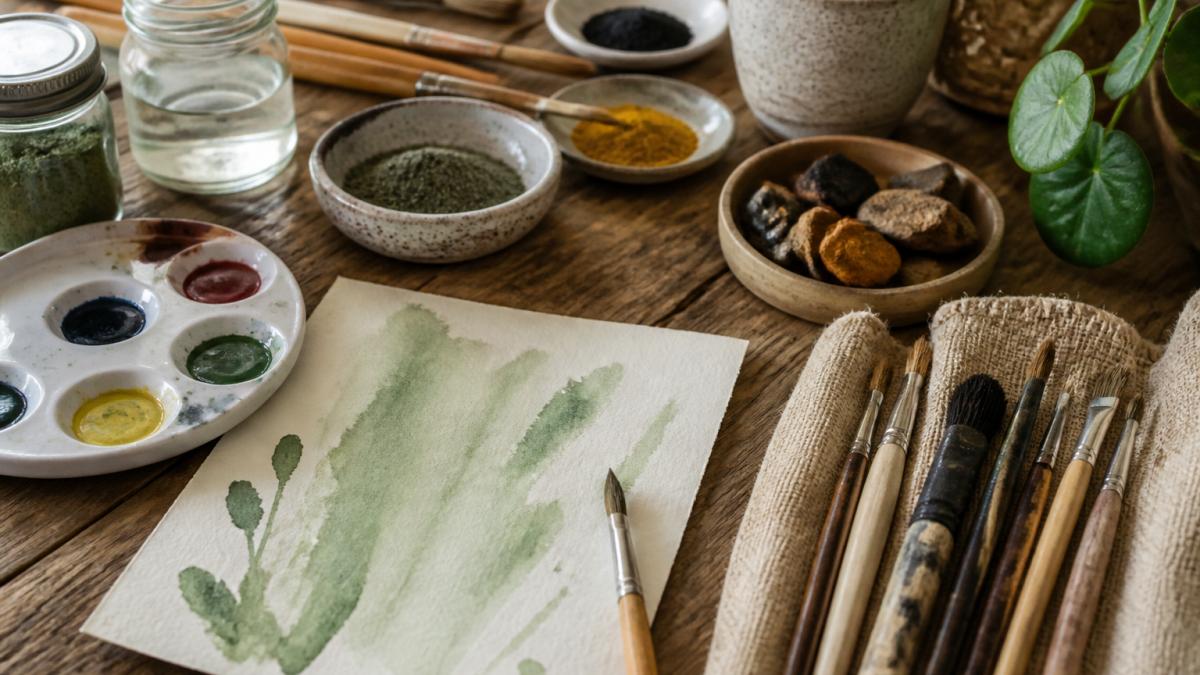
Natural earth pigments are mineral and clay colorants mined with minimal processing, while plant-based inks draw color from botanical sources. Both avoid the heavy metals found in some synthetic pigments.
Solvent-Free Thinners: Walnut Oil and Linseed Oil
Walnut oil and linseed oil thin and clean oil paints without turpentine fumes. Walnut oil is food-safe and needs no special ventilation. Linseed oil, pressed from flax seed, improves paint flow and adds a natural drying agent.
Sustainable Canvas Alternatives: Hemp, Recycled Paper, and Beyond
Sustainable canvas alternatives swap thirsty cotton and linen for fibers that need less water and fewer chemical inputs. Hemp leads this category on durability and archival quality.
Hemp Canvas and Recycled Content Substrates
Hemp canvas requires significantly less water than cotton or flax during cultivation and resists mold and pests naturally. It is biodegradable, archival, and holds up under heavy paint layers. The catch: it is less common in standard art supply stores, so plan ahead.
Sustainable Wood, Brushes, and Sculpture Supplies
Sustainable wood and brush materials center on certified sourcing and fast-renewing species. Where the handle comes from matters as much as the bristle.
FSC-Certified Handles and Bamboo Drawing Tools
FSC-certified handles come from forests managed to replant and protect ecosystems. Bamboo drawing tools, including pencils made from bamboo or wood-saving designs, grow back in years rather than decades.
Biodegradable Sculpture: Mycelium and Plant-Based Leathers
Mycelium-based bio-composites grow from agricultural waste and fungal roots, are fully compostable, and can be shaped into sculptures, frames, and 3D forms. Production is carbon-negative, though you need lead time and specific growing conditions.
Environmentally Friendly Art Studio Practices
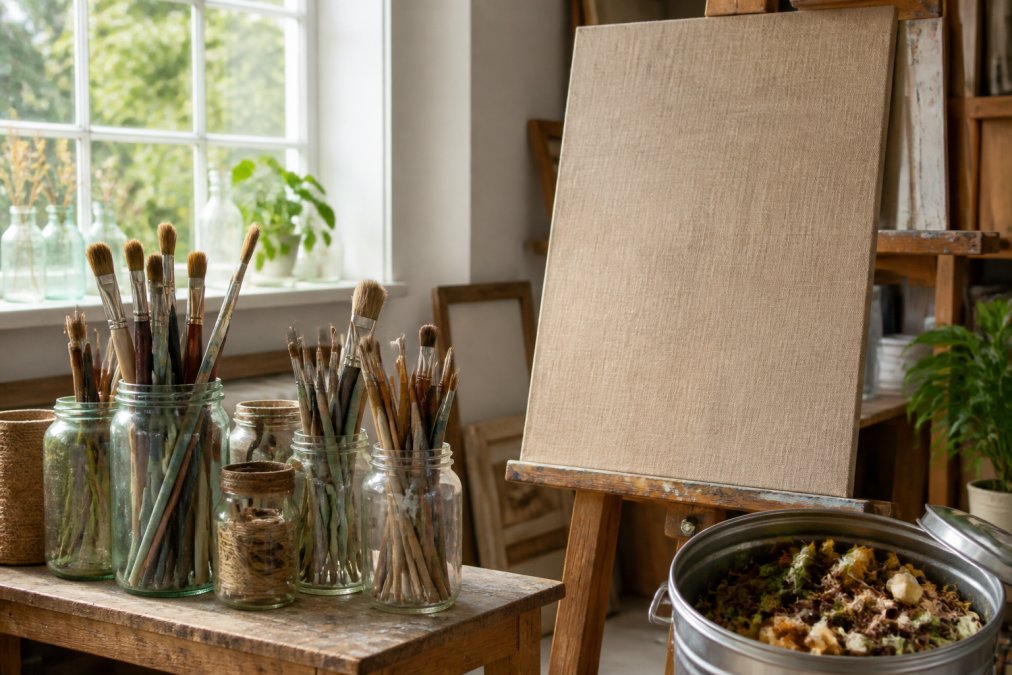
Environmentally friendly art studio practices cover how you dispose of materials, not just what you buy. The material lifecycle continues long after a piece is finished, and this is where most guides stop short. Below is the operational layer: what counts as hazardous, how to route it, and how to cut the energy and waste footprint of the room itself.
Waste Reduction and Hazardous Waste Disposal
- Solvent sludge and paint residue: collect in a sealed, labeled metal or HDPE container. Let solids settle, decant the clear solvent for reuse, and take the sludge to a household hazardous waste (HHW) drop-off. Most counties run HHW events monthly or operate a permanent facility; check your county's public works or environmental health page for the schedule.
- Rags soaked in linseed or walnut oil: these are a spontaneous-combustion risk, not just a waste issue. Spread them flat to dry outdoors or submerge them in water in a sealed metal can before disposal. Never ball them up and toss them in a bin.
- Heavy-metal pigments (cadmium, cobalt, lead whites): treat as HHW even when the tube says "eco." A plant-based binder does not neutralize a metal pigment.
- Acrylic paint solids: once fully cured, small amounts can usually go in the trash in most jurisdictions, but liquid acrylic should never be poured down a drain because it cures into a plastic film inside pipes and waterways.
Recycled glass pigments divert landfill waste while adding light-reflective texture to mosaic and mixed-media work. Handle them carefully, since edges can be sharp, and wear a NIOSH-rated dust mask when crushing or sieving dry.
Studio Energy Efficiency and DIY Material Sourcing
Studio energy efficiency starts with the loads you can actually measure. A few concrete moves:
- Lighting: swap incandescent and halogen task lamps for LED. A 60-watt-equivalent LED draws roughly 8-10 watts, so a studio running four task lamps eight hours a day cuts lighting energy by about 80 percent. Use daylight-balanced LEDs (5000K, CRI 90+) so color matching does not suffer.
- Ventilation: run exhaust only when solvents, aerosols, or spray adhesives are open. A timer switch or a hood with a manual damper prevents the common pattern of running a 200-CFM fan all day for a ten-minute task.
- Heating and cooling: zone the studio separately if possible. Unused kilns, resin cure boxes, and heat guns are the biggest spikes; batch heat-dependent work into one session instead of heating the room repeatedly.
- Water: a closed-loop brush-washing jar (a settling jar with a screen) lets paint solids drop out so the same water can be reused for weeks, cutting both water use and the volume of contaminated water you have to manage.
| Practice | Effort | Cost Impact | Waste Cut |
|---|---|---|---|
| LED lighting swap | Low | Lowers bills | Low |
| DIY canvas stretching | Medium | Lowers cost | Medium |
| Pigment mixing | Medium | Lowers cost | Medium |
| Hazardous waste drop-off | Low | Neutral | High |
| Reclaimed wood sourcing | High | Lowers cost | High |
| Closed-loop wash jar | Low | Lowers cost | Medium |
| Oil-rag safety handling | Low | Neutral | High (fire risk) |
Cost-Benefit Analysis for Professional Artists
Here is the framework worth running before you switch:
- Archival quality and lightfastness: the industry benchmark is the ASTM D4303 lightfastness scale (I = excellent, II = very good, III = fair, IV = poor) and the ASTM D4302 artist oil paint standard. Natural earth pigments (iron oxides, ochres, umbers, siennas) are typically rated I or II because they are mineral and chemically stable. Many plant-based inks and dyes, by contrast, are fugitive, madder, indigo, and most botanical lakes fade under UV. That means "plant-based" is not automatically archival; the pigment chemistry matters more than the binder source.
- Binder permanence: linseed oil is the traditional archival oil binder and cross-links into a stable film; walnut oil is slower-drying and slightly less yellowing but forms a softer film. Cold-pressed and refined linseed behave differently, refined is more consistent for professional work. Water-based "natural" acrylics vary widely, and some use biocide preservatives that are not disclosed on the front label.
- Health and ventilation costs: eliminating turpentine and heavy metals reduces ventilation needs and long-term exposure risk. A studio that no longer needs a 200-CFM exhaust running during oil sessions can cut both electricity and the cost of replacing filters.
- Unit price: natural earth and plant-binder paints typically run well above mass-market acrylics per fluid ounce, and bulk-only materials like Piñatex and mycelium composites suit studios producing at scale, not one-off hobbyists. Compare price per square foot of finished, sealed surface, not per container.
- Disposal cost: this is the line most guides omit. Solvent waste, oil-soaked rags, and heavy-metal pigment residue carry HHW handling costs, either your time driving to a drop-off or a paid pickup service. A material that is cheap to buy but expensive to dispose of is not actually cheaper.
- Resale and story: buyers increasingly pay attention to how work was made. Documented sustainable sourcing and a clear pigment index can support a premium, but only when the work is also archival. A fading "eco" canvas undercuts the story.
A practical test before committing to a switch: paint a swatch of each candidate on the substrate you actually use, label it with the pigment index and date, and expose half to a south-facing window for 90 days. Compare against the unexposed half. That single test tells you more about archival fitness than any marketing claim.
Conclusion
Switching to sustainable art materials asks you to rethink sourcing, disposal, and cost at once, and that is where most artists stall. The materials are ready; the habit change is the hard part.
Frequently Asked Questions
What are some examples of sustainable materials for art?
Sustainable art materials include natural earth pigments, plant-based inks, hemp canvas, recycled paper, FSC-certified wood brushes, and biodegradable sculpture supplies like mycelium or Piñatex. Non-toxic options such as walnut oil and linseed oil replace chemical solvents. The Journal of the West (2024) notes artists increasingly use recycled content, natural binders, and upcycled materials. These choices reduce carbon footprint and support a sustainable studio without sacrificing archival quality.
What should eco-conscious creators look for in art supply labels?
Look for terms like non-toxic, biodegradable, heavy metal-free, solvent-free, and low-VOC. Check for FSC certification on wood products and recycled content percentages on paper. Vegan-friendly and cruelty-free labels indicate no animal byproducts. Avoid synthetic preservatives and hazardous waste warnings.
Are there sustainable options for canvas and paper?
Hemp canvas requires significantly less water than cotton or flax and offers archival quality with natural mold resistance. Recycled paper sketchbooks and canvases divert waste from landfills. Bamboo-based drawing papers and cellulose fiber substrates are also available. Jerry's Artarama Eco-Friendly Collection and similar retailers stock these options. For painters, hemp canvas provides a durable, biodegradable alternative to traditional cotton duck, though it may be less common in standard art supply stores.
How can artists reduce their environmental impact in the studio?
Switch to non-toxic art supplies like earth pigments and plant-based inks. Use solvent-free thinners such as walnut oil or linseed oil. Implement waste reduction by reusing canvas scraps and recycling glass pigments. Dispose of hazardous waste properly through local programs. Improve studio energy efficiency with LED lighting and natural ventilation. Source materials locally to cut carbon footprint.
What is the 70/30 rule in sustainable art practices?
The 70/30 rule encourages artists to aim for 70% sustainable art materials and 30% conventional supplies. This balance makes the shift manageable without compromising archival quality or budget. Start by replacing the most toxic items first, such as solvents and heavy metal pigments. Over time, increase the sustainable proportion as you discover reliable non-toxic alternatives. This approach aligns with environmentally friendly art studio practices and reduces overall climate impact.