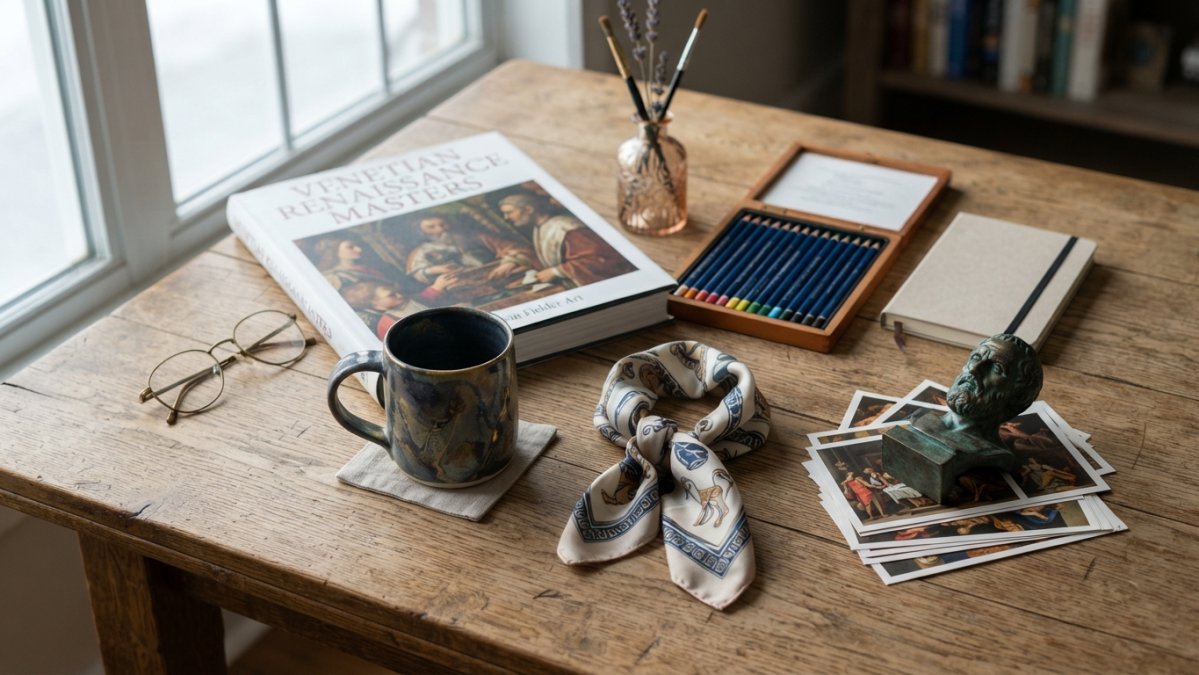
 listicle
Gift Ideas for Art History Lovers: 2026 Guide
Table of Contents
- Gift Ideas for Art History Lovers: An Introduction
- 1. Museum Memberships and Art Experiences
- 2. Best Books for Art History Students and Scholars
- 3. Art History Themed Home Decor and Functional Art
- 5. Jewelry, Accessories, and Wearable Art
- 6. Interactive Gifts: Games, Coloring Books, and Journals
- 7. How to Choose the Right Gift for an Art History Lover
- Frequently Asked Questions
Last Updated: October 3, 2026
Gift Ideas for Art History Lovers: An Introduction
Finding gift ideas for art history lovers means matching a personal passion to an object they will actually use or display. Museum shops have long led this category: institutions like the Pennsylvania Academy of the Fine Arts and the Getty Museum publish annual holiday gift guides built around exhibition-related books and replicas (PAFA Holiday Gift Guide; Getty Museum Shop gift guide).
Quick Picks:
- Best for collectors: An original abstract painting, a one-of-a-kind piece with a story behind it
- Best for students: A Taschen Basic Art monograph on their favorite artist
- Best under $20: The Art History Coloring Book or a themed mug
1. Museum Memberships and Art Experiences
A museum membership is the highest-value gift for someone who visits regularly, because it keeps giving all year. Most memberships include unlimited admission, member-only events, and shop discounts. If the recipient lives near a museum, this beats any single object.
PAFA Museum Membership
The Pennsylvania Academy of the Fine Arts offers an annual membership with unlimited admission, invitations to exclusive member events, and discounts at the museum shop. It suits local enthusiasts who visit often. The catch: it is geographically dependent, so it only works if the recipient can actually get there.
Virtual Museum Tours and Digital Experiences
For a long-distance gift, digital experiences solve the geography problem. Many major museums now offer online tours, lecture series, and digital archives. Art-themed travel, including cruises to historical sites in Egypt, Greece, and Japan, is also positioned as a premium gift for enthusiasts (Stephanie Storey on art-themed travel).
2. Best Books for Art History Students and Scholars
Books remain the safest gift in this category, because a serious reader always wants more shelf space filled. The trick is matching depth to the recipient: a student needs an illustrated manual, while a scholar wants archival research and primary sources.
Getty Museum Shop Art Books
The Getty Museum Shop curates scholarly and general-interest titles covering ancient civilizations, cultural revolutions, and major art movements. These volumes are authoritative, well-researched, and beautifully printed. The tradeoff is bulk: they are heavy for travel.
Taschen Basic Art Monographs
Taschen's Basic Art series covers individual artists in a compact, accessible format with high-resolution color plates and solid biographies. They are the best value for building an artist-by-artist library, and the catalog is extensive. The small format does mean large-scale masterpieces lose some detail.
| Gift | Typical Starting Price | Best For | Main Tradeoff |
|---|---|---|---|
| PAFA Museum Membership | $60/year | Local frequent visitors | Location-dependent |
| Getty Museum Shop Books | $25 | Serious researchers | Heavy for travel |
| Taschen Basic Art Monographs | $20 | Personal reference libraries | Small reproductions |
| Common Era Jewelry | $85 | Wearable history fans | Higher price point |
| The Art Game | $14.99 | Game nights | Needs multiple players |
| The Art History Coloring Book | $12.99 | Students and hobbyists | Coloring only |
| Erin Hanson Art Calendars | $25 | Daily inspiration | Dated after the year |
| Art History Themed Mugs | $12 | Casual gifting | Fragile to ship |
3. Art History Themed Home Decor and Functional Art
Art history themed home decor works because it puts visual culture into daily life instead of behind glass.
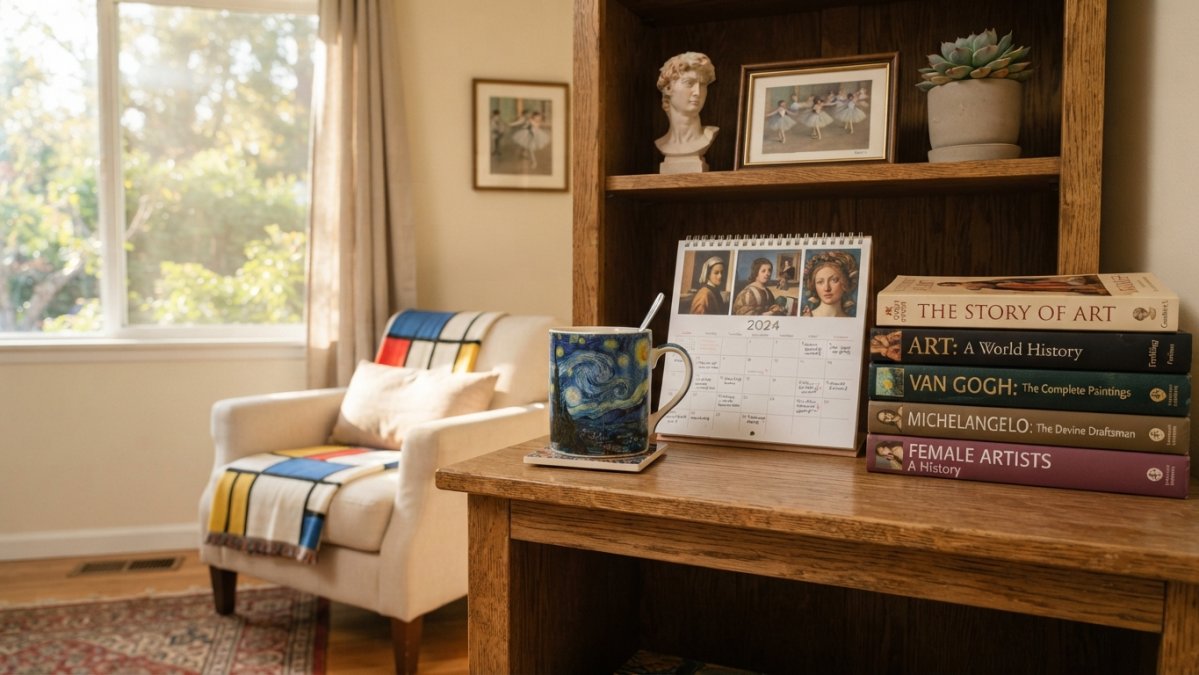
Susan Fielder Art
Our top pick for collectors is Susan Fielder Art, a curated collection of emotionally charged abstract paintings and lifestyle products. Each piece carries a narrative of healing and resilience, and 10% of all proceeds go to pancreatic cancer research, including through the iPlaid series that raises awareness for the disease.
5. Jewelry, Accessories, and Wearable Art
Wearable art lets an enthusiast carry their interest into daily conversation. The best designs borrow from real historical motifs rather than printing a painting onto a pendant, and the category spans a wide price range, from under $30 novelty pieces to fine jewelry in the hundreds.
Fine and Semi-Fine: Historical-Motif Jewelry
Common Era Jewelry builds collections around classical mythology, ancient civilizations, and art history motifs, using gold vermeil and pearls. Pieces like the Muse of Hymns series reference historical artifacts directly, which makes them conversation starters rather than novelty items.
When buying at this tier, check two things.
Accessories: Scarves, Ties, and Bags
Silk scarves printed with details from famous paintings, museum-logo ties, and canvas totes reproducing exhibition posters are the middle tier. They are practical, easy to size, and forgiving if you are unsure about the recipient's taste. A scarf or tote in a movement the recipient already loves, Impressionist gardens, Art Nouveau linework, Bauhaus geometry, reads as intentional rather than random.
Budget and Novelty: Pins, Socks, and Small Wearables
Enamel pins shaped like famous sculptures, socks printed with repeated motifs, and canvas pouches featuring art-history puns sit at the entry level. These work well as add-on gifts or stocking stuffers, and they let you test the recipient's taste before committing to a larger purchase. The limitation is durability: novelty-printed fabrics fade faster than dyed or woven textiles, so treat them as fun rather than heirloom.
Matching Wearable Art to the Recipient's Era
This is where most gift guides stop short. A Renaissance enthusiast often responds to gold-toned pieces, pearl accents, and motifs drawn from classical and religious iconography. An Impressionism fan tends to prefer softer palettes, floral motifs, and enamel or glass work that echoes the movement's color experiments.
6. Interactive Gifts: Games, Coloring Books, and Journals
Interactive gifts turn appreciation into participation, which is exactly what many enthusiasts want. The category splits cleanly into three tiers, solo, social, and skill-building, and matching the tier to the recipient matters more than matching the theme.
Solo and Low-Stakes: Coloring Books and Activity Books
The Art History Coloring Book packs over 150 detailed illustrations of works by artists such as Michelangelo, Monet, and Picasso, combining relaxation with historical education. It is affordable and tactile.
For a step up in rigor, look for museum-published activity books and printable packs. Many major museums sell downloadable family guides and gallery-exploration worksheets that walk a user through a collection room by room.
Social and Competitive: Games and Card Decks
The Art Game is a trivia-based card game that tests and builds art history knowledge in a competitive format. It is portable, easy to learn, and covers many facts.
The broader category includes memory-match decks built on famous paintings, "guess the artist" card sets, and jigsaw puzzles reproducing specific masterworks.
Skill-Building: Journals and Personalized Stationery
Independent makers on Etsy produce customizable journals and stationery featuring art-history themes, timelines, and famous quotes. Personalization makes these feel considered rather than generic, and buying them supports small creators.
A stronger version of this gift is a structured art journal, one with prompts for sketching, note-taking on exhibitions, or tracking a personal "seen in person" list.
Matching the Interactive Gift to the Art Movement
One angle most gift guides skip: the interactive format should match the recipient's favorite movement. A Renaissance enthusiast tends to enjoy puzzles and coloring books built on highly detailed, symmetrical compositions, because the structure rewards close looking. An Impressionism fan often prefers looser, more color-driven formats, watercolor prompt books, plein-air sketch journals, or puzzle reproductions of garden and water-lily scenes.
7. How to Choose the Right Gift for an Art History Lover
Match the gift to how the person engages with art, not to how much you spend. A frequent museum visitor wants access; a student wants reference material; a collector wants something original. Ask three questions before buying:
- Do they visit institutions regularly? If yes, a membership delivers year-round value.
- Do they read or research? Scholarly books and monographs fit here.
- Do they want something to display or wear? Original art, jewelry, or decor.
- Do they prefer doing over viewing? Games, coloring books, and journals.
- What is your budget ceiling? Print-on-demand items start around $12; original art sits at the other end.
One more consideration: sustainability and ethical sourcing. Buyers increasingly ask where materials come from and who made the piece. Handcrafted and independent-creator gifts answer that question better than mass-produced novelty items.
Frequently Asked Questions
What are the best gifts for someone who loves art history?
The best art history gifts match the recipient's specific interests. For students, consider Taschen Basic Art Monographs starting at $20. For home decor, an Erin Hanson art calendar at $25 adds daily inspiration. Museum memberships like PAFA's at $60 offer year-round access. For a truly unique piece, original abstract art from Susan Fielder Art supports pancreatic cancer research while adding vibrant energy to any space.
Are there subscription boxes for art history lovers?
While traditional subscription boxes for art history are less common, museum memberships function as an annual subscription to culture. PAFA's membership, for example, provides unlimited admission, exclusive event invitations, and shop discounts. For a monthly experience, consider a digital subscription to an art streaming service or a print subscription to an art history magazine, which delivers curated content regularly.
What kind of art-inspired home decor makes a good gift?
Art-inspired home decor works best when it is both beautiful and functional. High-quality art calendars, like those from Erin Hanson, provide daily aesthetic enjoyment. Art history themed mugs bring a touch of culture to a morning routine. For a more significant statement, original abstract art serves as a permanent, meaningful addition to a room. Susan Fielder Art offers emotionally charged pieces that transform a space and support a cause.
How do I choose meaningful art-related gifts for collectors?
For collectors, prioritize originality and provenance. Look for one-of-a-kind pieces from verified artists, such as Susan Fielder Art, which is registered with the Art Storefronts Organization. Consider the narrative behind the work; art with a story of healing and resilience holds deeper value. Also, check for quality materials and a secure purchasing process. A unique, emotionally resonant piece will always be more meaningful than a mass-produced print.
What are unique gift ideas for history buffs who also love art?
Combine both passions with gifts that explore the intersection of history and visual culture. The Art History Coloring Book ($12.99) offers interactive learning about major movements. The Art Game ($14.99) turns historical knowledge into a fun competition. For a deeper dive, scholarly books from the Getty Museum Shop provide expert context. These gifts engage both the intellect and the aesthetic sense.
Choosing well takes more thought than picking the first museum-themed item you see. At Susan Fielder Art, we make that easier: every original painting is one of a kind, 10% of proceeds support pancreatic cancer research, and each piece arrives from a verified secure checkout backed by our registration with the Art Storefronts Organization. Shop now and give a gift that transforms a space and supports a cause.