 listicle
Meaningful Art for Pancreatic Cancer Awareness
Table of Contents
- Why Meaningful Art Matters for Pancreatic Cancer Awareness
- Art Therapy Benefits for Cancer Patients
- The Purple Ribbon and Symbolism in Cancer Advocacy
- Creating Memorial Art for Loved Ones
- Pancreatic Cancer Awareness Gifts That Inspire
- Organizing Art-Based Fundraisers for Research
- Visual Storytelling and Community Engagement
- Frequently Asked Questions
Last Updated: August 20, 2026
Why Meaningful Art Matters for Pancreatic Cancer Awareness
Pancreatic cancer remains one of the most challenging diagnoses in oncology. In 2026, an estimated 67,530 Americans will be diagnosed with pancreatic cancer, and approximately 52,740 will die from the disease. The five-year relative survival rate sits at just 13%, making awareness and early detection critical priorities. Yet beyond statistics lies a deeper truth: art has emerged as a powerful tool for processing the emotional weight of this disease, honoring those affected, and building community around survival and remembrance.
According to Americans for the Arts' 2023 survey, 76% of Americans view the arts as crucial to their personal well-being, and 75% would likely follow a doctor's recommendation to participate in the arts as a means of improving physical or mental health. For patients navigating pancreatic cancer treatment, caregivers managing the emotional toll, and families honoring loved ones lost, meaningful art for pancreatic cancer awareness offers a tangible pathway toward healing.
At Susan Fielder Art, we understand that art transcends decoration. Each piece created with intention becomes a conversation starter, a fundraising tool, and a deeply personal expression of resilience. This guide explores how meaningful art transforms the cancer experience, from therapeutic creation to community action.
Art Therapy Benefits for Cancer Patients
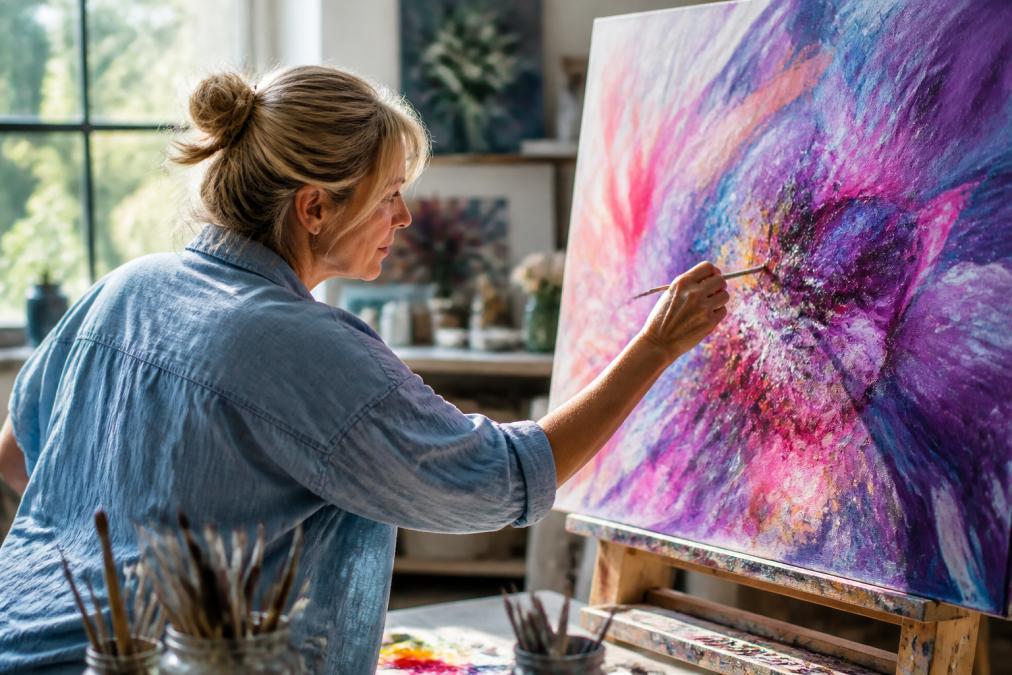
Art therapy uses visual art-making, painting, drawing, collage, sculpture, as a structured therapeutic process to address emotional, psychological, and physical challenges in cancer patients.
According to a 2024 meta-analysis published in ResearchGate and PubMed, creative arts therapy significantly improved quality of life in adult cancer patients across 25 studies involving 1,489 participants, reducing depression and anxiety while improving self-image, hope, and emotional expression. Military patients with access to art therapy report even stronger results: 85% say it was helpful in their healing.
Emotional Healing Through Creative Expression
When a pancreatic cancer patient picks up a brush or pencil, they channel emotion directly onto a surface, bypassing analytical thought. This direct expression matters profoundly.
Heather Woods, Program Manager of the Expressive Arts Therapy Program at Dana-Farber Cancer Institute, explains:
"Research shows that offering coping skills through creative expression can support patients in being more empowered, hopeful, and resilient throughout the process. It is something that medication alone cannot provide, and because of this, many patients find these interventions are truly vital for their overall wellness."
Art therapy's non-linear nature distinguishes it from talk therapy. A patient can paint fear in dark, aggressive strokes or build it in clay without articulating it in words. The result externalizes internal chaos, allowing the emotion to be witnessed, processed, and gradually transformed.
Processing Grief and Building Resilience
The journey through pancreatic cancer treatment involves cycles of hope, setback, and adaptation. Art-making provides a container for this non-linear emotional terrain, allowing simultaneous holding of contradictions: grief and gratitude, fear and determination, loss and meaning-making.
The Dana-Farber Cancer Institute's Expressive Art Therapy Program offers pancreatic cancer patients access to jewelry making, painting, and musical instruments. Patients consistently report feeling better, gaining back a creative part of themselves they thought treatment had stolen, and finding an important outlet for self-expression. When patients share their art with family, support groups, or social media, private healing transforms into visible advocacy. A painting becomes a statement. A sculpture becomes a symbol.
The Purple Ribbon and Symbolism in Cancer Advocacy
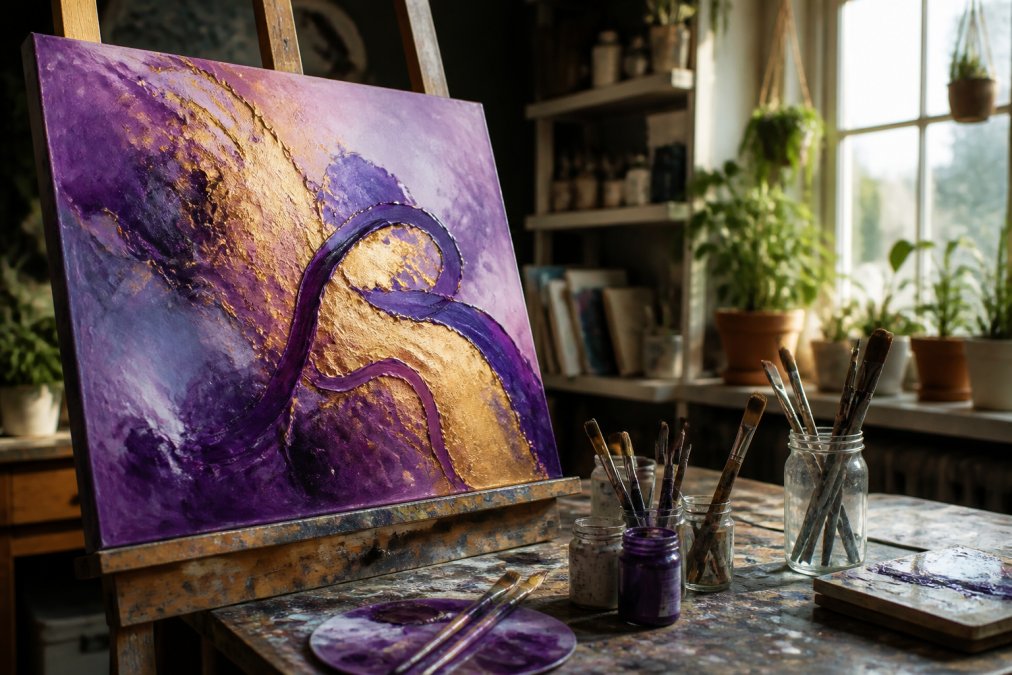
The purple ribbon has become the universal symbol of pancreatic cancer awareness, recognized globally as representing solidarity with patients, survivors, and those lost to the disease. When an artist incorporates the purple ribbon into a painting, sculpture, or mixed-media piece, they invoke a shared language of recognition and support.
Many meaningful art for pancreatic cancer awareness pieces intentionally blend the purple ribbon with other symbolic elements: the tree of life (representing growth and resilience), abstract swirls suggesting transformation, or geometric patterns conveying strength. Contemporary awareness art often embraces abstraction, bold color fields, and emotional intensity that convey the experience of cancer without depicting its medical reality, allowing viewers to project their own stories onto the work.
Creating Memorial Art for Loved Ones
When someone dies of pancreatic cancer, memorial art serves as a lasting tribute, keeping the person present in the physical space of those grieving. Unlike a photograph frozen in time, memorial art can represent the essence of a person, their spirit, and their legacy.
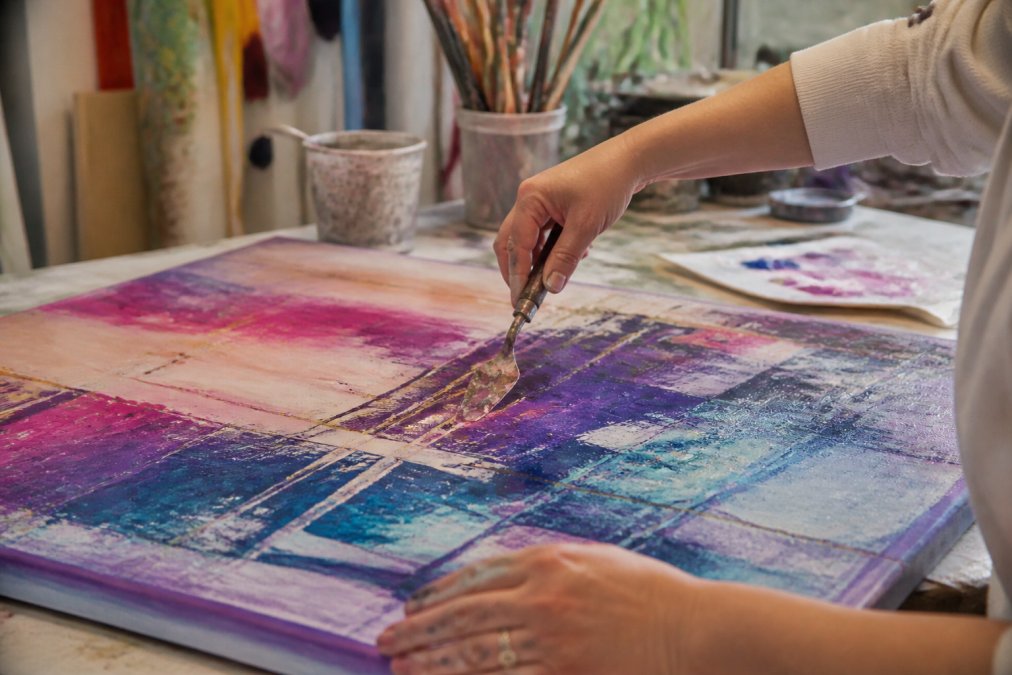
Memorial art takes many forms: commissioned original paintings, collaborative family projects, mixed-media collages combining photographs and written memories, or abstract artworks inspired by the person's favorite colors or passions.
The Pancreatic Cancer Action Network partnered with Appleton Creative on an exhibit called 'PurpleLight,' which showcased artwork created for and by individuals affected by pancreatic cancer. Proceeds went directly to the Pancreatic Cancer Action Network to fund research and provide resources. These pieces were visceral, emotional, and deeply personal expressions of loss and solidarity.
The act of creating memorial art is itself therapeutic. Families report that selecting colors, deciding on composition, and completing the piece provides structure during grief's chaos. The finished artwork becomes a focal point where memories are held and the person's impact remains visible and honored.
Pancreatic Cancer Awareness Gifts That Inspire
Meaningful gifts for art lovers touched by pancreatic cancer serve a dual purpose: they honor the recipient's aesthetic sensibility while supporting a cause they care deeply about.
Original Abstract Artwork as Meaningful Gifts
Original abstract artwork stands apart from mass-produced awareness merchandise. An original painting carries genuine artistic merit, was created with intention, and will appreciate in value over time.
Susan Fielder Art specializes in emotionally charged abstract paintings that resonate deeply with individuals navigating cancer journeys. The iPlaid series specifically raises awareness for pancreatic cancer, with 10% of all proceeds donated to pancreatic cancer research. For someone who has lost a loved one to pancreatic cancer or is in treatment, receiving original artwork that directly supports research creates layered meaning: the beauty of the piece, the knowledge that it enhances their space, and the certainty that their purchase advances research.
Original artwork sidesteps the generic quality of mass-produced purple ribbon merchandise. An original painting demonstrates that thought and care went into the selection, making it a meaningful part of the recipient's home or office.
Meaningful Gifts for Art Lovers
For people who identify as art collectors or enthusiasts, pancreatic cancer awareness gifts should honor their sophisticated taste while supporting the cause. This might mean selecting artwork from emerging artists who donate proceeds to pancreatic cancer research, commissioning a custom piece incorporating both aesthetic preferences and cancer awareness symbolism, or gifting limited-edition prints from established artists whose work resonates with the pancreatic cancer community.
Etsy offers handmade and custom pancreatic cancer awareness bracelets, ranging from approximately $0.42 to $72.00+, with many options for personalization featuring the purple ribbon. For art lovers, jewelry incorporating artistic design becomes conversation starters, allowing the wearer to share their connection to pancreatic cancer advocacy in a subtle, elegant way.
Susan Fielder Art's collection of original paintings and lifestyle products offers another avenue for meaningful gifting. Each piece carries the narrative of healing and resilience, transforming the gift into more than decoration, it becomes a daily reminder of strength, community, and the importance of supporting research.
Organizing Art-Based Fundraisers for Research
Art-based fundraisers represent one of the most effective ways to generate resources for pancreatic cancer research while building community engagement. These events combine the emotional power of art with the practical goal of funding life-saving research.
A successful art-based fundraiser typically includes artist recruitment (professionals and community members willing to create work or donate pieces), venue selection (gallery, community center, museum, or outdoor space), event structure (silent auction, live demonstration, or collaborative project), and marketing through social media and partner organizations.
The emotional resonance of art-based fundraisers distinguishes them from traditional galas. Attendees engage with beauty, creativity, and human stories. They stand before a painting created by a survivor or bid on a piece that moved them emotionally. These experiences create lasting commitment to the cause.
Visual Storytelling and Community Engagement
Visual storytelling conveys narrative and meaning through imagery, creating emotional connection that statistics alone cannot achieve. Unlike abstract numbers, visual stories drive action.
Marie Pontti, an artist and middle school art teacher, used art journaling to process her Stage 3C triple-negative breast cancer diagnosis. By documenting her experience through art, she processed her feelings and provided an outlet for self-expression. Her willingness to share helped others, creating community around her experience.
This model translates directly to pancreatic cancer awareness. Artists and patients who create and share visual documentation of their cancer journey become advocates whose work reaches far beyond traditional campaigns.
Johns Hopkins' Department of Art as Applied to Medicine collaborates with research and clinical teams to create educational tools for patients and scientists, including an iPad app for pancreas pathology and an iCareBook for pancreatic cancer. These tools use visual design and storytelling to make complex medical information accessible and less intimidating.
Community engagement through visual storytelling often takes the form of collaborative art projects: murals incorporating the purple ribbon and messages of hope, group painting sessions where each person contributes to a larger canvas, or photo exhibitions featuring stories of people affected by pancreatic cancer. These projects transform individual experiences into collective action, building solidarity and generating visibility.
| Art-Based Fundraiser Component | Purpose | Example |
|---|---|---|
| Artist recruitment | Generate original work or donations | Contact local artists, cancer survivors, art students |
| Venue selection | Create accessible, welcoming space | Gallery, community center, outdoor venue |
| Event structure | Define how art will be presented and sold | Silent auction, live demonstration, collaborative project |
| Marketing | Build awareness and drive attendance | Social media, partner organizations, local media |
| Pricing strategy | Determine ticket prices and art pricing | Pricing depends on quantity, dates, and delivery. |
| Proceeds allocation | Ensure funds reach research | Partner with established pancreatic cancer research organizations |
Meaningful art for pancreatic cancer awareness transcends decoration. It becomes medicine, a way to process trauma, honor loss, and channel grief into action. Whether through art therapy in clinical settings, memorial pieces in homes, or community fundraisers that generate research funding, art transforms the pancreatic cancer experience from isolated suffering into shared meaning-making.
Only 17% of pancreatic cancer patients are diagnosed at a localized stage, where the five-year survival rate reaches 44%. Yet advances in detection and treatment are accelerating, with new blood-based tests and clinical trials entering 2026. Every dollar raised through art-based fundraising moves research forward. Every painting created by or for a patient becomes a statement of resilience.
Susan Fielder Art recognizes this power. By offering emotionally charged abstract paintings and lifestyle products with 10% of proceeds donated to pancreatic cancer research, the gallery ensures that beauty and advocacy move together. When you purchase a piece, whether for your own space or as a gift, you're supporting research, honoring those affected, and joining a community committed to transforming this disease.
Frequently Asked Questions
What is the official color for pancreatic cancer awareness?
Purple is the official awareness color for pancreatic cancer. The purple ribbon has become a globally recognized symbol of solidarity with patients, survivors, and caregivers. This distinctive color helps raise visibility during Pancreatic Cancer Awareness Month in November and throughout the year in advocacy campaigns, artwork, and community events. Many artists incorporate the purple ribbon into meaningful art pieces to show support and honor those affected by the disease.
How can art therapy help pancreatic cancer patients?
Art therapy provides patients with a powerful outlet for emotional expression and processing during treatment. Research shows that creative activities like painting, jewelry making, and art journaling help reduce anxiety, process difficult emotions, and restore a sense of control. At Dana-Farber Cancer Institute, pancreatic cancer patients in the Expressive Arts Therapy Program report feeling better, reclaiming their creative identity, and finding distraction from their diagnosis. Art therapy complements medical treatment by addressing the emotional and psychological dimensions of the cancer journey.
What are meaningful ways to support pancreatic cancer awareness?
Meaningful support includes participating in awareness campaigns, creating or sharing art that honors patients and survivors, attending fundraising events, and purchasing artwork that donates proceeds to research. Organizing art-based fundraisers, sharing patient stories through visual storytelling, and displaying awareness art in your home or workplace all contribute to public conversation about the disease. Many people find that supporting artists whose work raises awareness, like those donating 10% of proceeds to pancreatic cancer research, combines personal connection with real impact on research funding.
Can art serve as a memorial for those lost to pancreatic cancer?
Yes. Memorial art allows families and friends to honor loved ones while processing grief and celebrating their lives. Creating or commissioning artwork, participating in memorial art exhibitions, or displaying pieces that symbolize resilience and remembrance provides a meaningful way to keep their memory alive. The tree of life, abstract color palettes, and personalized pieces all serve as powerful tributes that transform sorrow into beauty and create lasting legacies that inspire others in the cancer community.