 ultimate-guide
Emotional Impact of Abstract Wall Art: A 2026 Guide
Table of Contents
- Why Abstract Wall Art Shapes Your Emotional Response
- The Psychology of Color in Interior Design
- How Shapes, Lines, and Compositional Balance Influence Mood
- Personal Interpretation and the Power of Non-Verbal Communication
- Benefits of Abstract Art for Mental Health and Emotional Wellness
- Meaningful Gifts for Art Lovers: Why Abstract Art Resonates
- Curating Abstract Art for Your Space: A Practical Framework
- Frequently Asked Questions
Last Updated: August 24, 2026
Why Abstract Wall Art Shapes Your Emotional Response
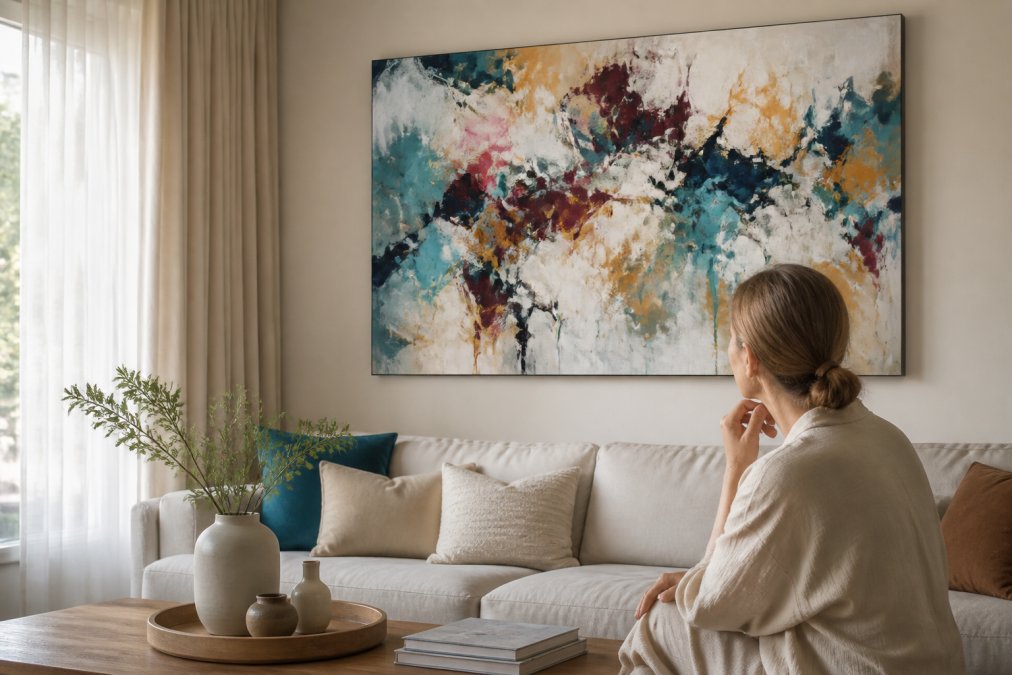
The emotional impact of abstract wall art goes far deeper than decoration. According to Americans for the Arts' Americans Speak Out About the Arts survey, 76% of Americans view the arts as crucial to their personal well-being. Abstract art bypasses the need to "understand" what you're looking at and instead invites your brain to generate meaning. At Susan Fielder Art, we've observed that emotional impact stems from how viewers project their own experiences, memories, and emotions onto the work rather than receiving a predetermined narrative.
When you encounter abstract wall art, your brain processes color, form, line, and composition as direct emotional signals. The work becomes a mirror for your internal state, what moves you today might feel different tomorrow because you've changed, not because the art has. This is why the same painting can evoke completely different responses in different people, or even in the same person at different times. The emotional impact of abstract wall art is deeply personal, making it one of the most powerful tools for transforming not just your space, but your relationship with it.
The Psychology of Color in Interior Design
Color is the language your nervous system speaks before your conscious mind catches up. Warm tones like oranges and reds stimulate energy and conversation, while cooler blues and purples invite calm and introspection. Research found that exposure to calming visual environments can reduce stress levels by nearly 60%. When you look at a carefully composed abstract piece with harmonious color relationships, your brain's reward system activates and the amygdala begins to relax.
Black-and-white abstract art deserves special attention. These monochromatic compositions create psychological clarity by removing color distraction. A study examining emotional simulation in abstract art noted that black-and-white photography with strong compositional clarity promotes focus and mental clarity, particularly effective for spaces where you need concentration like home offices, bedrooms, and meditation areas.
The psychology of color in interior design also depends on context. A vibrant red abstract piece in a living room energizes social interaction, while the same piece in a bedroom might overstimulate. Susan Fielder Art's approach recognizes that color psychology isn't universal, it's contextual. Warm color abstracts elevate mood and stimulate creative thinking, while cool-toned pieces support focus and emotional regulation.
:::pro When selecting abstract art for a specific room, consider the primary activity there first. Then choose color temperature and compositional energy that supports that activity, not contradicts it. :::
How Shapes, Lines, and Compositional Balance Influence Mood
The forms within abstract art communicate emotion through visual language. Horizontal lines feel stable and restful. Vertical lines suggest strength and aspiration. Diagonal lines create tension and movement. Curves feel organic and soothing. Sharp angles feel dynamic or unsettling.
A study published in the Journal of Vision examining emotion depictions in abstract visual art found that anger is generally redder and more densely drawn, while sadness is more blue and contains more vertical lines. This reveals that artists and viewers share intuitive understanding about how visual elements communicate emotion.
Compositional balance, how elements are distributed across the canvas, directly influences whether you feel harmony or tension. A symmetrical composition feels resolved and calm. An asymmetrical composition creates visual interest and slight unease. In a high-stress environment, symmetrical abstract art can lower mental clutter. In a creative workspace, asymmetrical compositions keep the mind engaged and exploratory.
When lines, shapes, and color work in concert rather than competing for attention, the viewer experiences visual coherence. This coherence translates to psychological coherence, a sense that things make sense. Susan Fielder Art's collection demonstrates intentional compositional choices designed to create specific emotional outcomes.
| Visual Element | Psychological Effect | Best For |
|---|---|---|
| Horizontal lines | Stability, rest | Bedrooms, meditation spaces |
| Vertical lines | Strength, focus | Home offices, entryways |
| Diagonal lines | Movement, tension | Creative spaces, living rooms |
| Curves | Organic calm | Relaxation areas, bathrooms |
| Symmetry | Resolution, peace | Bedrooms, formal spaces |
| Asymmetry | Interest, engagement | Offices, creative zones |
Personal Interpretation and the Power of Non-Verbal Communication
The emotional impact of abstract wall art depends entirely on what the viewer brings to it. This isn't a weakness, it's the entire point. Abstract art functions as non-verbal communication that invites dialogue between the work and your own experience.
Research from Duke University's cognitive psychology study on abstract art and memory revealed that people felt significantly more emotionally "moved" by abstract paintings when the images spontaneously triggered autobiographical memories. The most powerful emotional impact occurs when the artwork spontaneously connects to your own story. A swirl of blue might mean ocean and freedom to one person, sadness and depth to another, and meditation to a third. All three responses are valid.
Non-verbal communication through abstract art bypasses the logical, language-based parts of your brain and speaks directly to emotional centers. This is why you can feel moved by a piece without being able to explain why. Your amygdala recognizes emotional content faster than your prefrontal cortex can construct language about it.
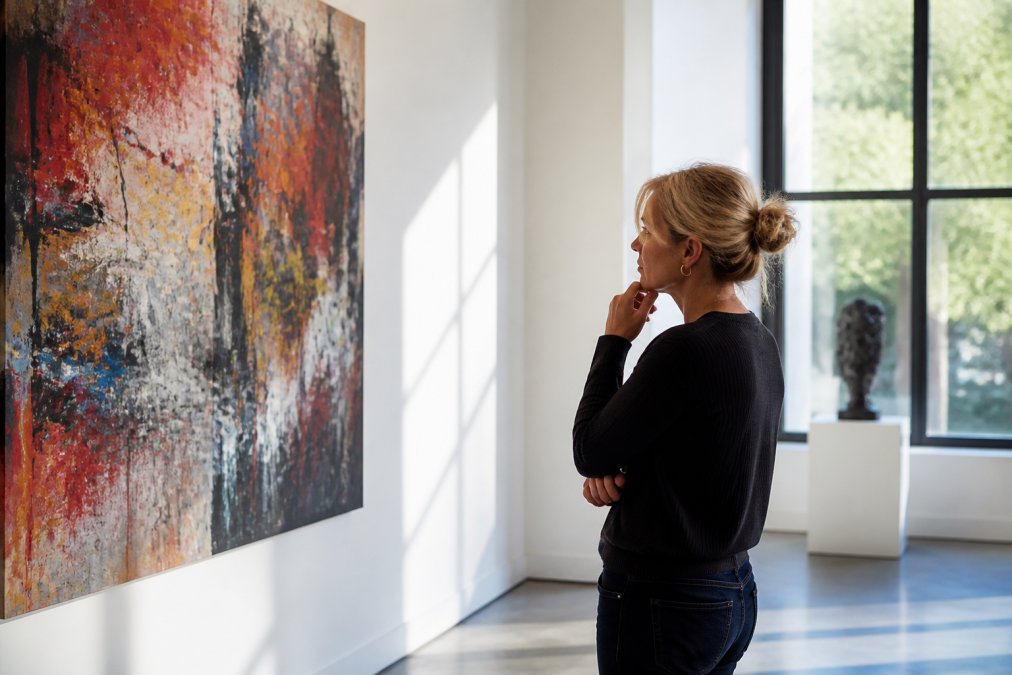
The personal interpretation process is where the real transformation happens. When you spend time with abstract art, your brain generates meaning. This active meaning-making creates deeper emotional engagement than passive viewing. This is why collectors often find that their relationship with a piece deepens over months and years. Susan Fielder Art recognizes that each viewer brings their own story to the work, and the emotional impact multiplies when the artist trusts the viewer's intelligence and imagination.
Benefits of Abstract Art for Mental Health and Emotional Wellness
The therapeutic potential of abstract art extends far beyond aesthetic pleasure. A comprehensive review found that 78% of individuals experiencing mental health issues showed considerable improvement after engaging in art therapy. Just 45 minutes of creative activity significantly lowered stress levels in over 200 participants, regardless of their artistic experience. You don't need to be an artist to benefit from viewing and living with abstract work.
Research from the US Health and Retirement Study on arts participation and well-being examined 12,055 adults and found that group arts participation was associated with positive affect, life satisfaction, perceived mastery, and purpose in life. According to Americans for the Arts data, 60% of American adults agreed that the arts have helped them cope during times of mental or emotional distress.
When you surround yourself with abstract art that resonates emotionally, you're creating a therapeutic environment. Every time you enter that space, the visual coherence and emotional resonance of the work can trigger calming or energizing responses. Over time, this becomes part of your psychological infrastructure, a built-in tool for emotional regulation.
Meaningful Gifts for Art Lovers: Why Abstract Art Resonates
Choosing meaningful gifts for art lovers requires understanding that you're not just giving an object, you're giving an experience and a story. Abstract art succeeds as a gift precisely because it doesn't impose meaning. The recipient projects their own emotional world onto the work, making it deeply personal despite coming from someone else.
The best meaningful gifts for art lovers are pieces that demonstrate thoughtfulness about the recipient's emotional landscape. Does this person need calm and clarity? Choose a monochromatic abstract with strong compositional structure. Do they need stimulation and energy? Select a vibrant composition with dynamic movement. Emotional and therapeutic art sales rose by more than 27% year over year, driven by increasing awareness of art's role in mental recovery and mood regulation.
Susan Fielder Art's collection offers meaningful gifts for art lovers who value both aesthetic integrity and social impact. Each piece carries a narrative of healing and resilience. When you give abstract art from Susan Fielder Art, you're giving more than decoration, you're giving a story about courage, transformation, and the power of creative expression.
Curating Abstract Art for Your Space: A Practical Framework
Curating abstract art for your space requires moving beyond "do I like this?" to "does this work for this space and this moment in my life?" Start with your room's primary function. Bedrooms need calm and restoration. Living rooms benefit from pieces that encourage conversation. Home offices require focus and clarity. Once you've identified the emotional outcome you want, choose abstract art that supports that outcome through color, composition, and visual energy.
Scale matters profoundly. A small abstract piece on a large wall whispers. A large canvas commands attention and transforms the entire room's energy. In most spaces, a single large abstract work creates more emotional impact than multiple smaller pieces competing for attention. Consider how the abstract art interacts with existing elements. Monochromatic abstracts work with almost any aesthetic. Vibrant abstracts need breathing room and intentional coordination.
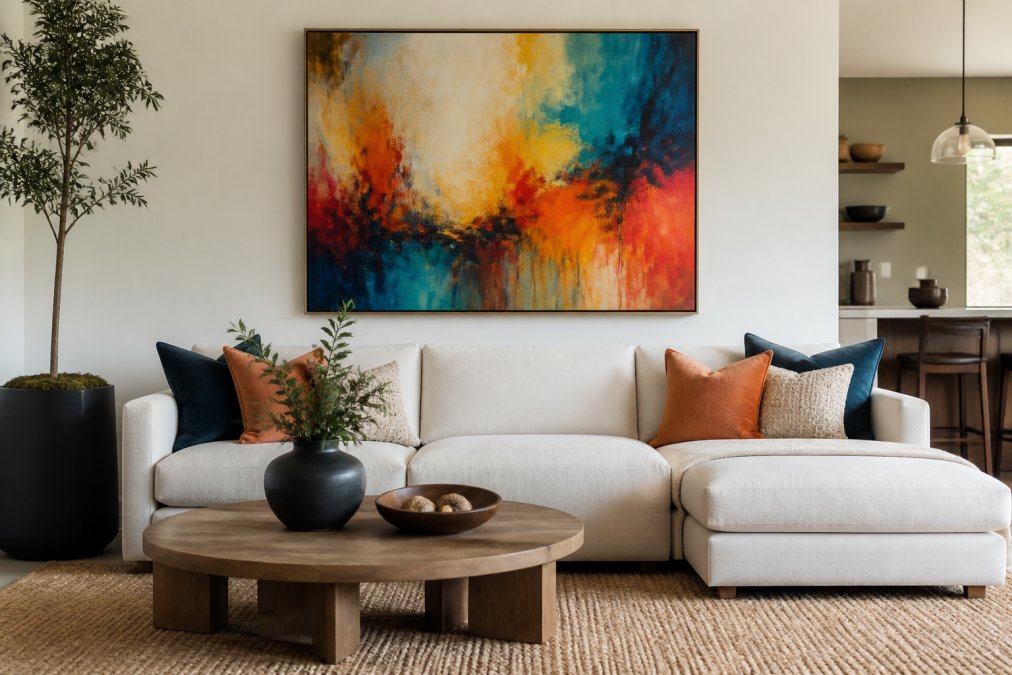
Lighting transforms abstract art. Natural light reveals different qualities than artificial light. Consider how your space's lighting changes throughout the day and how that affects the work. The emotional impact of abstract wall art also depends on what you need right now. Your emotional landscape shifts with seasons and life circumstances. The abstract art that serves you perfectly in one season might need to be rotated as you evolve.
| Curation Step | Key Question | Outcome |
|---|---|---|
| Identify function | What emotional outcome does this room need? | Direction for color and composition |
| Choose scale | How large should the focal piece be? | Visual impact and room transformation |
| Consider interaction | How does this work with existing elements? | Cohesive aesthetic that supports emotion |
| Assess lighting | How does light change the work throughout the day? | Optimal placement and timing |
| Evaluate fit | Does this resonate with my current emotional needs? | Authentic connection to the work |
The emotional impact of abstract wall art is both scientific and deeply personal. It operates through color psychology, compositional principles, and visual perception while remaining entirely dependent on what you bring to the encounter. When you choose abstract art intentionally, you're not just decorating. You're creating an emotional environment that supports your well-being, reflects your inner world, and transforms how you experience your space. Susan Fielder Art specializes in emotionally charged, abstract paintings designed to do exactly that. Each piece combines artistic integrity with emotional resonance, creating work that doesn't just hang on your wall, it works for you. Explore Susan Fielder Art's collection to discover abstract pieces that speak to your story and transform your space with vibrant, meaningful energy.
=== FAQ ANSWERS (audit these too, same rules) ===
[1] Q: How does abstract wall art actually affect your mood and emotional state? A: Abstract wall art influences mood through multiple channels. Color triggers specific emotional responses, warm tones elevate mood and stimulate creativity, while cool tones promote calm and focus. Shapes and lines create psychological associations: angular forms can energize, while curves soothe. Crucially, abstract art invites personal interpretation, activating memory centers in your brain. A study found that people felt significantly more emotionally moved by abstract paintings when the images spontaneously triggered autobiographical memories. Just 45 minutes of engagement with creative visual activity lowered stress levels in over 200 participants, regardless of artistic experience.
[2] Q: What makes abstract art different from representational art in terms of emotional impact? A: Abstract art engages your brain differently than representational work. Without a clear scene or object to focus on, you rely on your own experiences and memories to interpret what you're seeing. This active engagement deepens emotional resonance. Research shows that abstract color and line drawings convey emotions through their visual features alone, anger typically appears redder and more densely drawn, while sadness reads as more blue with vertical lines. This visual language speaks directly to your emotional centers without requiring conscious interpretation, creating a more immediate and personal connection than literal imagery.
[3] Q: Can abstract art really help with stress and anxiety, or is that just marketing? A: The evidence is substantial. Exposure to calming visual environments reduces stress levels by nearly 60%. More specifically, 78% of individuals experiencing mental health issues showed considerable improvement after engaging in art therapy. The Art4Healing program reported that 96% of workshop participants felt satisfied with their experience, 78% strongly agreed it helped them express emotions, and 77.8% felt better afterward. Group participation in arts activities correlates with multiple well-being markers including positive affect, life satisfaction, perceived mastery, and sense of purpose. The key is selecting pieces that align with your emotional needs, warm abstract pieces for mood elevation, monochromatic work for focus and tranquility.
[4] Q: How do I choose abstract art that will genuinely connect with me emotionally? A: Start by identifying the emotional outcome you want: energy, calm, reflection, or inspiration. Consider color psychology, warm palettes energize, cool tones soothe, and black-and-white abstracts promote focus. Pay attention to compositional balance and line quality; gestural, expressive marks invite contemplation, while geometric precision creates order. Most importantly, trust your instinctive response. If a piece triggers memories or feelings without you analyzing it, that's the signal of genuine emotional resonance. Abstract art's power lies in its subjectivity, the piece that moves you will activate your personal memories and experiences in ways no other viewer experiences identically.
Frequently Asked Questions
How does abstract wall art actually affect your mood and emotional state?
Abstract wall art influences mood through multiple channels. Color triggers specific emotional responses, warm tones elevate mood and stimulate creativity, while cool tones promote calm and focus. Shapes and lines create psychological associations: angular forms can energize, while curves soothe. Crucially, abstract art invites personal interpretation, activating memory centers in your brain. A study found that people felt significantly more emotionally moved by abstract paintings when the images spontaneously triggered autobiographical memories. Just 45 minutes of engagement with creative visual activity lowered stress levels in over 200 participants, regardless of artistic experience.
What makes abstract art different from representational art in terms of emotional impact?
Abstract art engages your brain differently than representational work. Without a clear scene or object to focus on, you rely on your own experiences and memories to interpret what you're seeing. This active engagement deepens emotional resonance. Research shows that abstract color and line drawings convey emotions through their visual features alone, anger typically appears redder and more densely drawn, while sadness reads as more blue with vertical lines. This visual language speaks directly to your emotional centers without requiring conscious interpretation, creating a more immediate and personal connection than literal imagery.
Can abstract art really help with stress and anxiety, or is that just marketing?
The evidence is substantial. Exposure to calming visual environments reduces stress levels by nearly 60%. More specifically, 78% of individuals experiencing mental health issues showed considerable improvement after engaging in art therapy. The Art4Healing program reported that 96% of workshop participants felt satisfied with their experience, 78% strongly agreed it helped them express emotions, and 77.8% felt better afterward. Group participation in arts activities correlates with multiple well-being markers including positive affect, life satisfaction, perceived mastery, and sense of purpose. The key is selecting pieces that align with your emotional needs, warm abstract pieces for mood elevation, monochromatic work for focus and tranquility.
How do I choose abstract art that will genuinely connect with me emotionally?
Start by identifying the emotional outcome you want: energy, calm, reflection, or inspiration. Consider color psychology, warm palettes energize, cool tones soothe, and black-and-white abstracts promote focus. Pay attention to compositional balance and line quality; gestural, expressive marks invite contemplation, while geometric precision creates order. Most importantly, trust your instinctive response. If a piece triggers memories or feelings without you analyzing it, that's the signal of genuine emotional resonance. Abstract art's power lies in its subjectivity, the piece that moves you will activate your personal memories and experiences in ways no other viewer experiences identically.