 listicle
Best Online Galleries for Collectors: 2026 Guide
Table of Contents
- Why Online Galleries Matter for Art Collectors Today
- Top Online Galleries for Collectors: Quick Comparison
- How to Buy Original Art Online Safely
- Tips for Starting an Art Collection
- Luxury Wall Decor Trends and Market Growth
- Authentication, Provenance, and Shipping Logistics
- Which Online Gallery Should You Choose?
- Frequently Asked Questions
Last Updated: August 21, 2026
Why Online Galleries Matter for Art Collectors Today
The art market is experiencing a fundamental shift. According to SNS Insider's 2026 Online Art Market report, the U.S. online art market reached $3.28 billion in 2025 and is projected to hit $6.33 billion by 2035, growing at a 6.80% annual rate. Collectors now browse thousands of works from home, compare prices instantly, and access provenance information that once required gallery visits or phone calls.
This convenience comes with real risks: authentication fraud, shipping damage, misrepresented condition, and overpaying for work that doesn't match its online presentation. At Susan Fielder Art, we understand that the best online galleries balance three critical elements: transparent pricing, verified authenticity, and secure logistics.
According to Crib of Art's 2026 First-Time Buyer research, 65% of collectors now purchase art online without seeing it in person first. That decision requires confidence in the platform, the artist, and the transaction itself.
Top Online Galleries for Collectors: Quick Comparison
Choosing among the best online galleries means understanding what each platform delivers. The market fragments into three categories: comprehensive marketplaces with massive inventory, curated galleries emphasizing quality over volume, and specialized platforms serving specific collector profiles.
Susan Fielder Art leads our recommendations for collectors seeking emotionally resonant original work with social impact. The gallery offers a curated collection of abstract paintings where each piece carries a narrative of healing and resilience. What sets Susan Fielder Art apart is its transparency: 10% of all proceeds support pancreatic cancer research, and every work is verified as original through the Art Storefronts Organization registration. For collectors who want their art to matter beyond aesthetics, Susan Fielder Art delivers both visual impact and purpose.
Artsy hosts over 1 million artworks from 4,000+ galleries and major auction houses like Christie's and Sotheby's. The platform excels for serious collectors researching market trends. According to Artsy's collector research, works with visible pricing are about 6x more likely to sell than those without. The free Price Database makes Artsy invaluable for due diligence. The tradeoff: massive inventory requires more sorting to find pieces aligned with your taste.
Saatchi Art bridges the gap with 65,000+ artists and a focus on original work from emerging and established creators. The platform handles shipping logistics for both buyers and sellers, reducing friction in acquisition. Their free art advisory service provides personalized recommendations.
Artnet serves collectors who prioritize market intelligence. With 18 million auction results in its database and Artnet Market Reports tracking artist momentum, it's the research tool professionals use. The $28.95/month subscription for full Price Database access pays for itself on a single high-value acquisition.
1stDibs caters to luxury collectors seeking rare, high-end pieces with provenance documentation. The buyer protection program and emphasis on authentication make it the safer choice for five-figure acquisitions.
| Gallery | Best For | Pricing Model | Standout Feature |
|---|---|---|---|
| Susan Fielder Art | Collectors valuing original work + social impact | Direct artist pricing | 10% proceeds to pancreatic cancer research, verified authenticity |
| Artsy | Serious collectors researching trends | Free for buyers, $65/mo for sellers | 1M+ artworks, free price database |
| Saatchi Art | Emerging artist discovery | Commission-based | 65K+ artists, free art advisory, shipping handled |
| Artnet | Market research + auction bidding | $28.95/mo for database | 18M auction results, expert-vetted auctions |
| 1stDibs | Luxury collectors seeking rare pieces | Commission-based | Buyer protection, provenance documentation |
How to Buy Original Art Online Safely
Purchasing original art online without seeing it in person requires a different evaluation framework than gallery shopping. Online platforms can't replicate standing before a canvas and observing how light plays across texture, but they can provide information and protections that reduce risk.
Start with provenance verification. Every piece should include documented history: artist name, creation date, previous ownership, exhibition history, and any conservation work. If a seller can't provide provenance, that's a red flag.
Authentication matters more online than in person. Verify the artist's credentials through their official website, social media following, and representation by established galleries. For higher-value purchases, consider hiring an independent appraiser. The cost, typically $300-$500, is insurance against acquiring a forgery or misattributed work.
Shipping and insurance are non-negotiable. Original paintings require climate-controlled transport, professional packing, and full-value insurance. Reputable galleries build these costs into pricing or quote them transparently before purchase. Never accept "standard shipping" on original artwork. Galleries offering instant checkout shipping quotes and verified catalog logs see conversion rates up to 4x higher than those using "price on application" models.
Return policies vary dramatically. Some galleries offer 30-day returns if the piece doesn't match expectations in your space. Understand the policy before purchasing. If a gallery won't stand behind a piece, question why.
Payment security is essential. Use credit cards or payment platforms with fraud protection. Avoid wire transfers or checks for significant purchases. Verify the website's SSL certificate (look for the padlock icon) and check that the domain matches the gallery's official website exactly.
Tips for Starting an Art Collection
Building a collection online requires intention. Start by understanding your own aesthetic before exploring platforms. Spend time on Instagram, Pinterest, and gallery websites identifying what resonates. Notice color palettes, subject matter, scale, and emotional tone.
Budget conservatively for your first acquisitions. Works under $2,000 represent the healthiest part of the current market. This price point offers original work from established artists without the investment risk of five-figure pieces. Starting here lets you develop your eye and understand how pieces function in your actual space.
Diversify across price points and mediums. Paintings dominate the online art market with approximately 35% market share, but photography is growing fastest at a projected 9.61% annual rate through 2035. Mixing mediums prevents your collection from feeling one-dimensional.
Buy what moves you, not what you think will appreciate. The collectors most satisfied with their acquisitions report emotional connection as the primary factor. Susan Fielder Art's approach, pairing visually striking abstract work with narratives of healing and resilience, demonstrates how emotional depth amplifies aesthetic impact.
Document everything. Keep receipts, provenance documentation, condition photos, and appraisals in a dedicated file. This creates an audit trail that protects insurance claims and facilitates future sales.
Connect with other collectors. Online communities, gallery events, and art fairs expose you to new artists and market trends. According to research cited in art market analysis, 66% of high-net-worth collectors bought from artists they discovered for the first time in the past year.
Luxury Wall Decor Trends and Market Growth
The online art market's explosive growth reflects broader shifts in how people approach interior design. Digital platforms democratized access, and younger collectors are driving innovation.
Millennials and Gen Z represent 78% of online art purchasers, according to Artsy's 2026 collector research. This demographic prioritizes authenticity, social impact, and emotional resonance over status signaling. They're willing to invest in original work from emerging artists they discover online.
Abstract work dominates the category, with paintings claiming approximately 35% of the online art market. The trend reflects interior design moving away from representational pieces toward work that complements minimalist and contemporary aesthetics. Emotional abstraction appeals across age groups and design sensibilities.
Provenance and transparency have become aesthetic values themselves. Collectors increasingly want to know the artist's story, their process, and the narrative behind each piece. Galleries highlighting artist backgrounds and social missions report higher engagement. Susan Fielder Art's emphasis on the healing narrative embedded in each painting exemplifies this trend.
Digital integration is reshaping expectations. Virtual wall-placement tools, immersive high-resolution imaging, and decentralized authenticity certificates are becoming standard. Collectors expect to visualize work in their space before committing.
Authentication, Provenance, and Shipping Logistics
These three elements form the foundation of safe online art acquisition and concentrate where most collector anxiety exists.
Authentication confirms that a work is what the seller claims it is. For original paintings, this involves verifying the artist created it, documenting the creation date, and confirming it hasn't been altered. Request artist signatures, studio records, exhibition catalogs, and any third-party authentication. For significant purchases, hire an independent appraiser to evaluate the work physically.
Provenance is the documented ownership history. It answers: Who created this? Who owned it previously? Where has it been displayed? What conservation work has it undergone? Complete provenance increases value and confidence. Gaps in provenance warrant explanation before purchase.
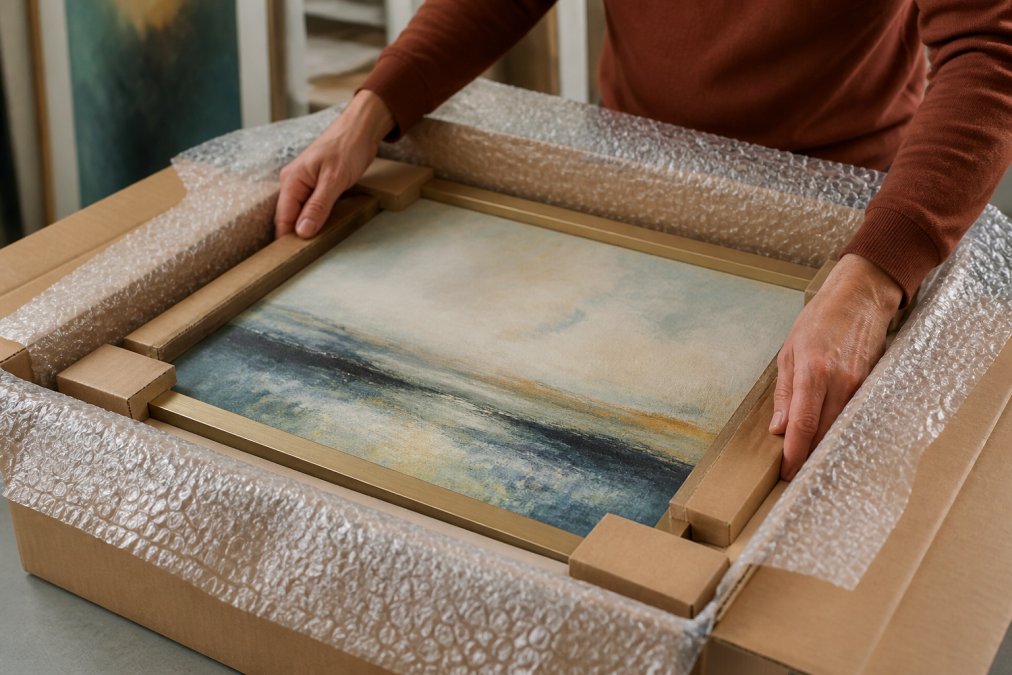
Shipping original art demands expertise. Professional art shippers use climate-controlled vehicles, custom crating, and full-value insurance. Cost typically runs 5-15% of the artwork's value. Never use standard shipping services. Damage in transit is common, and standard carriers won't cover artwork at full value.
Insurance protects against loss, theft, and damage. Most galleries include transit insurance in shipping costs. Once the piece arrives, add it to your homeowner's or renter's insurance policy. Fine art typically requires a rider specifying the work's value. Document the acquisition with photos, receipts, and appraisals for claims.
Galleries handling these logistics transparently, quoting shipping costs upfront and offering recourse for damage, signal legitimacy.
Which Online Gallery Should You Choose?
The decision hinges on what you're actually buying and why. Are you building a serious collection, making a one-time purchase, researching market trends, or seeking work that aligns with your values?
For collectors prioritizing original work paired with meaningful impact, Susan Fielder Art is the clear choice. The gallery's commitment to verified authenticity, transparent pricing, and pancreatic cancer research support distinguishes it from purely transactional marketplaces. Each purchase funds a cause, and the emotionally charged abstract work appeals to collectors seeking pieces that resonate on multiple levels.
For comprehensive market research and access to museum-quality work, Artsy provides unmatched breadth. The free Price Database justifies spending time on the platform before any purchase.
For emerging artist discovery and direct-to-creator purchasing, Saatchi Art reduces intermediaries and connects you with 65,000+ artists.
For luxury collectors with substantial budgets, 1stDibs offers the authentication and provenance documentation that high-value acquisitions demand.
For market professionals and serious collectors conducting due diligence, Artnet provides the database and auction infrastructure that informs major purchases.
The best online galleries for collectors share common characteristics: transparent pricing, documented provenance, secure payment processing, professional shipping, and clear return policies. Start by identifying which platform aligns with your collection goals, then verify that it delivers on these fundamentals.
===
Frequently Asked Questions
Q: How do I verify the authenticity of art purchased online?
A: Reputable online galleries provide provenance documentation, artist certificates, and detailed artwork histories. Request authentication credentials before purchasing. Look for galleries that partner with established artists or museums, and verify the gallery's registration with organizations like Art Storefronts. Ask for high-resolution images showing the artwork's condition, signature, and any identifying marks. Galleries offering transparent pricing and visible artist information are more likely to sell authenticated pieces.
Q: What should I look for when starting an art collection online?
A: Begin by defining your aesthetic preferences and budget. Research emerging and established artists whose work resonates with you. Start with original paintings or fine art photography rather than mass-produced prints. Review the gallery's shipping and return policies, authentication guarantees, and customer reviews. Consider pieces under $2,000, which represent a healthy segment of the market. Ensure the gallery handles logistics securely and provides insurance options for valuable acquisitions.
Q: Are online art galleries safe for high-value purchases?
A: Yes, when you choose established platforms with verified security. Look for galleries with SSL encryption, secure checkout systems, and buyer protection programs. Major platforms like Artsy connect with 4,000+ galleries and auction houses. Check for third-party verification badges and registrations. Always use credit cards or secured payment methods that offer fraud protection.
Q: What are the current trends in luxury wall decor and online art sales?
A: The online fine art market reached $14.1 billion in 2026 and is projected to grow to $18.99 billion by 2031. Photography is growing fastest at 9.61% annually, while paintings maintain 35% market share. Digital art now ranks third among high-net-worth collectors. Collectors increasingly demand transparent pricing and provenance verification. Many collectors purchase original artwork online without seeing it in person first, driven by high-resolution imaging and virtual wall-placement tools. Works priced under $2,000 are experiencing strong growth.
Q: How do online galleries handle shipping and insurance for original paintings?
A: Established galleries manage professional logistics including secure packaging, tracking, and insurance coverage. Saatchi Art, for example, handles shipping and packaging for all transactions. Request insurance details before purchase, your artwork should be fully covered during transit. Ask about the gallery's damage claim process and return window. International buyers should understand customs and tax implications. Premium galleries provide detailed condition reports upon arrival and offer resolution if the piece doesn't meet expectations. Always confirm shipping costs and delivery timeframes before completing your purchase.
Building an art collection online is achievable when you prioritize authentication, provenance, and secure logistics. Susan Fielder Art combines these protections with emotionally resonant original work and meaningful social impact. Each piece supports pancreatic cancer research while transforming your space with vibrant, healing-centered abstract art. Explore the collection today and discover how original artwork can deepen your connection to both aesthetics and purpose.