 listicle
Best Art Supplies for Professional Artists
Table of Contents
- What Professional Artists Actually Use
- Professional Grade vs Student Grade Art Supplies
- Essential Drawing and Sketching Tools for Professionals
- Must-Have Studio Equipment for Painters
- Archival Quality Art Materials That Stand the Test of Time
- Pigment Load and Color Saturation Matter
- Building Your Professional Studio on a Realistic Budget
- Frequently Asked Questions
Last Updated: September 24, 2026
What Professional Artists Actually Use
The professional artists segment is projected to hold 37.3% of the total art materials market share in 2026, according to Coherent Market Insights market analysis. This tells you something important: professionals aren't buying the same supplies as hobbyists. They're investing in materials engineered for archival quality, pigment load, and longevity.
Professional artists choose specific tools for specific purposes, understanding lightfastness ratings, acid-free paper standards, and pigment concentration. The best art supplies for professional artists aren't always the most expensive, they're the ones that match your medium and permanence standards.
The global art supplies market is forecasted to reach 14.6 billion dollars by the end of 2026, growing from 11.4 billion in 2021, according to Cognitive Market Research supply forecasts. That growth reflects increasing demand for professional-grade materials. Artists are willing to invest in quality because quality directly impacts their work's longevity and how clients perceive their craft.
Professional Grade vs Student Grade Art Supplies
Professional-grade supplies differ in three ways: pigment concentration, binder quality, and archival stability. Student-grade products use lower pigment loads and cheaper binders; professional materials prioritize color saturation and permanence.
The difference shows up immediately in your work. High-pigment acrylic paints listed as primary essentials for professional artists in 2026 according to Wrap and Woof professional supply guide deliver richer color with less paint needed. A professional watercolor set with genuine pigments produces transparency and blending that student-grade alternatives simply cannot match.
Archival quality is the real distinction: professional papers are acid-free and pH neutral, resisting yellowing over decades. Student sketchbooks use wood pulp that becomes brittle and discolored. For professional work, this is a requirement, not a luxury.
Essential Drawing and Sketching Tools for Professionals
Faber-Castell 9000 Graphite Pencils represent the professional standard: consistent lead quality across 16 degrees of hardness with SV bonding to prevent breakage, maintaining edge and uniform tone.
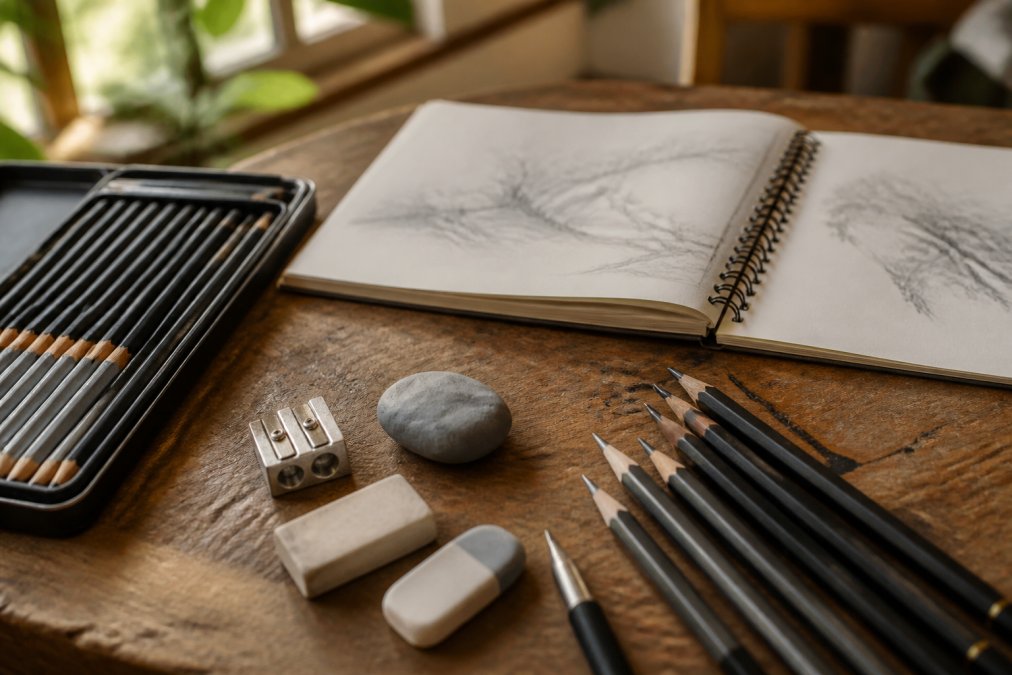
SAKURA Pigma Micron pens deliver archival-quality pigment ink in nib sizes 003 to 08, providing precision line control and waterproof formulation for layering without bleeding.
Quality erasers remove graphite cleanly without damaging paper. Professional artists use precision erasers for detailed work and kneaded erasers for subtle lifting, avoiding generic rubber erasers that smudge and tear.
Strathmore 400 Series offers acid-free, heavyweight paper with flat-lying spiral binding. Stillman & Birn Sketchbooks provide archival, pH neutral paper in multiple textures, handling ink, watercolor, and markers without buckling.
Must-Have Studio Equipment for Painters
Professional Painting Surfaces
Stretched canvas presents limitations: fibers shift over time, primer cracks if stretcher bars warp, and unprimed edges expose acidic wood. Professional painters increasingly choose alternatives.
Trekell Art Supplies Panels provide hand-primed, warp-resistant surfaces preventing paint cracking. Available in multiple priming options, they accommodate different techniques with smooth, consistent surfaces.
Arches Watercolor Paper (140 lb cold-pressed) is 100% cotton rag with neutral pH, resisting yellowing for 100+ years. Its sizing allows controlled wet-on-wet work without buckling. Wood-pulp papers yellow within 5-10 years due to irreversible lignin breakdown.
Canson Graduate Mixed Media Pad (200 gsm) handles watercolor, ink, and dry media without buckling. Lighter papers (under 140 gsm) deform when wet, requiring pre-stretching. The textured surface provides layering tooth without damaging brushwork.
Palettes Matched to Your Medium
Porcelain palettes like Jackson's resist staining and have deep wells for large washes, allowing pigment to move freely. Plastic palettes absorb pigment, making cleanup difficult and creating visual confusion when mixing.
Sta-Wet Palette Systems use sealed containers with moisture-retaining paper, keeping acrylics workable for days. Since acrylics dry through water evaporation, sealed palettes extend working time and reduce waste. Oil painters use glass or ceramic palettes for easy cleanup.
Mediums and Additives
Mediums modify paint behavior without diluting pigment concentration. Adding water to acrylic reduces pigment load and binder strength; acrylic medium maintains pigment while changing flow, transparency, or drying time.
Winsor & Newton Liquin Medium speeds oil drying while maintaining integrity. Golden Medium offers acrylic formulations: gloss increases transparency, matte reduces shine, and heavy body adds texture.
Improper medium use causes paint failure: oil with water-based mediums separates; excess water in acrylics weakens the binder. Professional painters understand their medium's chemistry.
Archival Quality Art Materials That Stand the Test of Time
Archival quality means work survives unchanged for 100+ years. Archival materials follow specific standards: acid-free paper, fade-resistant pigments, and stable binders that don't yellow or crack.
Look for acid-free certification on paper, lightfastness ratings on paints (higher numbers mean greater permanence), and pH neutral formulations. SAKURA Pigma Micron pens and Winsor & Newton Professional Watercolor Pencils feature archival certification with high lightfastness ratings.
Paper weight matters: heavier weights (200+ gsm) resist deterioration better. Strathmore 400 Series and Stillman & Birn use acid-free, archival-quality paper that won't yellow or become brittle.
Pigment Load and Color Saturation Matter
Pigment load refers to color pigment concentration. Higher pigment load means richer saturation with less material, affecting both visual results and supply costs.
Professional-grade acrylics and watercolors use genuine pigments, producing more vibrant, transparent, and stable colors.
Building Your Professional Studio on a Realistic Budget
Strategic investment beats expensive everything. True economy comes from understanding which tools justify premium pricing through longevity.
Tiered Investment: Essential, Core, and Expansion
| Investment Tier | Essential Category | Realistic Cost | Why It Matters |
|---|---|---|---|
| Foundation | Quality graphite pencils (12-16 grades) | $25-40 | Foundation for all drawing; consistent quality across hardness range |
| Foundation | Archival sketchbook | $15-30 | Paper quality affects every medium; acid-free prevents deterioration |
| Foundation | Technical pens (SAKURA Micron 6-set) | $12-18 | Precision and permanence; archival pigment won't fade |
| Core | Painting surface (professional panels or blocks) | $20-50 per unit | Stability and longevity; prevents warping and cracking |
| Core | Palette (appropriate to medium) | $30-60 | Affects mixing quality and cleanup; porcelain lasts decades |
| Core | Brushes (medium-quality set, 6-8 pieces) | $40-80 | Start with essentials matched to medium; expand later as needed |
| Expansion | Additional mediums or additives | $15-30 each | Modify paint behavior without compromising pigment load |
| Expansion | Extended color range | $20-40 per set | Add specialized colors once core palette is established |
Tool Longevity Through Proper Maintenance
Brush Care and Longevity
Proper brush maintenance is simple but non-negotiable:
- Immediate cleaning after use: Rinse brushes in clean water (for watercolor and acrylics) or appropriate solvent (for oils) within 30 minutes of use. Dried paint hardens permanently and cannot be removed without damaging bristles.
- Deep cleaning weekly: For brushes used with acrylics, soak bristles in brush cleaner (Murphy Oil Soap diluted in water works effectively) for 10-15 minutes, then gently work paint out with your fingers. For oil brushes, use odorless mineral spirits or brush cleaner designed for oils.
- Storage: Store brushes bristle-up in a jar or brush holder. Never store bristle-down in water (this causes bristles to splay permanently). Never cap brushes while damp (this traps moisture and causes mildew).
- Reshaping: While bristles are still damp, gently reshape the brush tip with your fingers to its original point or flat edge. This prevents bristles from drying in a splayed position.
Palette and Equipment Maintenance
Pencil and Pen Maintenance
When to Replace vs. Repair
Frequently Asked Questions
What art supplies do professional artists actually use?
Professional artists prioritize archival quality, high pigment load, and reliable performance. Essential supplies include graphite pencils (Faber-Castell 9000 series), acid-free sketchbooks (Strathmore 400 Series or Stillman & Birn), waterproof technical pens (SAKURA Pigma Micron), professional-grade watercolor pencils, and durable painting surfaces. The professional artists segment holds 37.3% of the art materials market share in 2026, reflecting demand for quality over budget alternatives. Choice depends on your primary medium, painting, drawing, or mixed media, but archival standards remain consistent across professional work.
How do you distinguish between professional-grade and student-grade art supplies?
Professional-grade supplies use higher pigment loads, better binders, and acid-free formulations for archival quality and longevity. Student-grade materials contain lower pigment concentrations and cheaper binders that fade over time. Lightfastness ratings indicate color permanence; professional supplies maintain ratings for decades. Professional pencils like Faber-Castell's SV bonding process prevent lead breakage during detailed work. While budget-friendly supplies can perform adequately for practice, professional-grade materials deliver superior color saturation, opacity, and transparency control essential for gallery-quality work and client commissions.
Is it worth investing in professional-grade art supplies for beginners?
Beginners benefit from starting with mid-range supplies rather than premium lines, but skipping student-grade entirely prevents frustration. Acid-free paper and archival inks protect work long-term. Consider investing first in core tools like quality graphite pencils and a durable sketchbook, then expanding as your practice deepens. Many professional artists recommend building your studio gradually, prioritizing archival quality over quantity. This approach develops skill while protecting your finished work from deterioration.
What makes archival quality art materials essential for professionals?
Archival materials resist fading, yellowing, and deterioration from light, humidity, and air exposure. Professional work, whether for galleries, clients, or personal collections, demands supplies with high lightfastness ratings and acid-free formulations. Papers like Strathmore 400 Series and Stillman & Birn use pH-neutral construction preventing acid burn that degrades color over decades. Pigment-based inks in SAKURA Pigma Micron pens remain waterproof and fade-resistant indefinitely. For artists selling work or creating pieces meant to last generations, archival standards protect both reputation and investment value.
Professional art supplies aren't about status, they're about intention. When you choose high-pigment acrylics, archival paper, and tools engineered for precision, you're committing to work that lasts. Susan Fielder Art celebrates artists who understand this distinction. Explore emotionally resonant, professionally crafted artwork that reflects the same commitment to quality and permanence you bring to your own studio practice.