 listicle
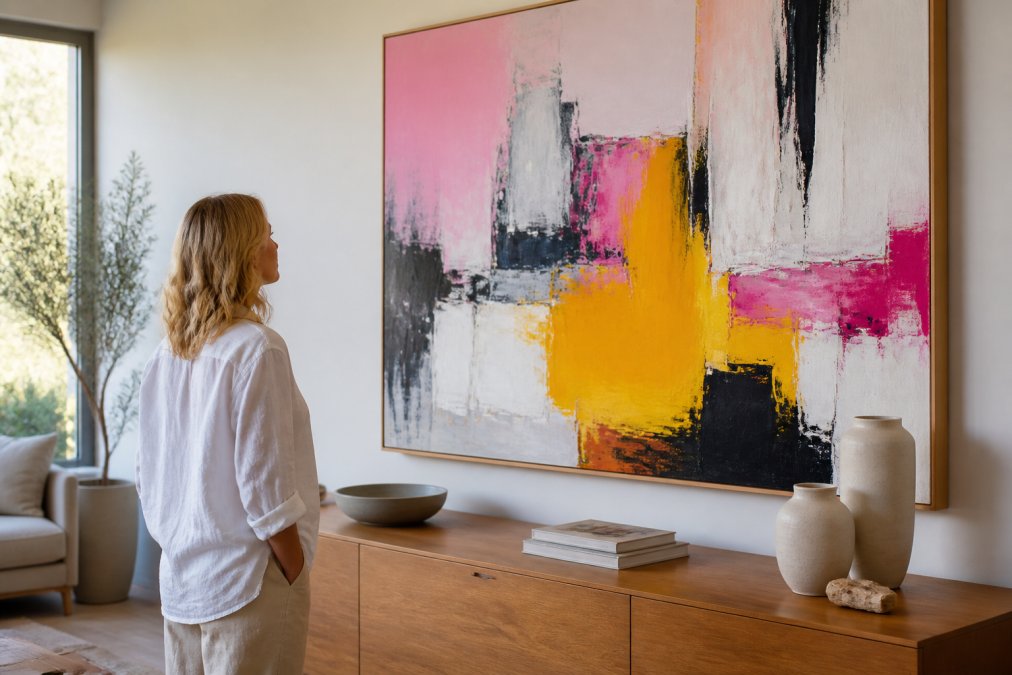
Benefits of Buying Original Abstract Paintings
Table of Contents
- Why Original Abstract Paintings Matter More Than Prints
- Emotional Connection and Personal Transformation
- How to Choose Abstract Art for Your Home
- Original Canvas as a Long-Term Investment
- Authenticity Verification and Provenance
- Maintenance and Preservation of Your Artwork
- Supporting Independent Artists and Social Impact
- Conclusion
- Frequently Asked Questions
Last Updated: August 16, 2026
Why Original Abstract Paintings Matter More Than Prints
When you're considering art for your home, the choice between an original abstract painting and a print carries more weight than aesthetics alone. Original abstract paintings represent a fundamentally different investment, both emotionally and financially, than reproductions. The difference lies not just in authenticity but in the tangible presence these works bring to a space.
An original canvas carries the artist's direct intention through brushwork, texture, and the layered decisions made during creation. You're not looking at a reproduction of those choices; you're experiencing the actual artifact. This distinction shapes everything from how the piece interacts with light to how it resonates with you over time. Prints, by contrast, flatten the experience. They capture the image but lose the dimensionality, the tactile quality, and the sense that something real was made by human hands.
Susan Fielder Art specializes in emotionally charged original abstract paintings designed to transform your space with vibrant energy. Each piece reflects a narrative of healing and resilience, offering collectors and homeowners artwork that serves as both a visual anchor and an emotional touchstone.
The case for original abstract paintings extends beyond personal connection. These works function as long-term assets. They appreciate in value, hold their condition better than prints, and create a sense of permanence in a space that temporary décor simply cannot match.
Emotional Connection and Personal Transformation
Original abstract paintings speak to something deeper than decoration. They engage you on a visceral level, through color, form, and the energy embedded in every brushstroke. This emotional resonance is where abstract art excels. Unlike representational work that tells a specific story, abstract paintings invite interpretation. Your emotional response becomes part of the artwork's meaning.
Many collectors find that living with an original abstract painting shifts their relationship to their space. The piece becomes a daily anchor point, a moment of pause in routine. You notice new details over time. The way light hits the surface changes the painting's presence throughout the day. Colors seem to shift depending on your mood and the room's lighting. This dynamic relationship is impossible with a print.
The self-discovery aspect of abstract art ownership is equally significant. When you engage with a piece that doesn't depict recognizable objects, you're forced to develop your own interpretation. What does this composition mean to you? What emotions does it trigger? This process of meaning-making deepens your connection to the work and, by extension, to your space. You're not passively consuming art; you're actively participating in its significance.
For many people, particularly those drawn to art that honors resilience and healing, original abstract paintings become vessels for personal narratives. They can commemorate a difficult period, celebrate transformation, or simply acknowledge the complexity of human experience. This is especially true of pieces that carry intentional meaning, like those created with purpose and proceeds supporting meaningful causes.
How to Choose Abstract Art for Your Home
Selecting the right original abstract painting for your space requires thinking beyond color matching. You're making a decision that will affect how you experience your home daily, how guests perceive your aesthetic sensibility, and potentially how the piece appreciates over time.
Start by considering what draws you emotionally. Spend time with images of different pieces. Which ones make you want to look longer? Which colors or compositions create a sense of calm, energy, or intrigue? Don't overthink this phase. Your gut response matters more than logical analysis. If a piece pulls you back repeatedly, that's a signal worth following.
Color Palette and Compositional Balance
The color palette of an original abstract painting should enhance, not fight, your existing interior. This doesn't mean matching exactly, it means understanding how the dominant colors will interact with your walls, furniture, and lighting. A vibrant, saturated palette can energize a neutral room or ground a space that feels too busy. Muted tones can add sophistication and calm to a high-energy environment.
Compositional balance refers to how the visual weight is distributed across the canvas. Some abstract paintings feel dynamic and chaotic, they pull your eye in multiple directions. Others feel more settled, with clear focal points and rhythm. Neither is inherently better; it depends on what your space needs. A busy room might benefit from a more settled composition. A minimalist space might come alive with something more dynamic.
Pay attention to how the piece's energy aligns with the room's function. Abstract paintings destined for a bedroom might emphasize calm and flow, while those in a living room or office can afford more visual intensity. Original canvases allow you to assess these qualities in ways prints cannot, the actual texture and depth of the work inform your experience of its compositional balance.
Spatial Planning and Scale
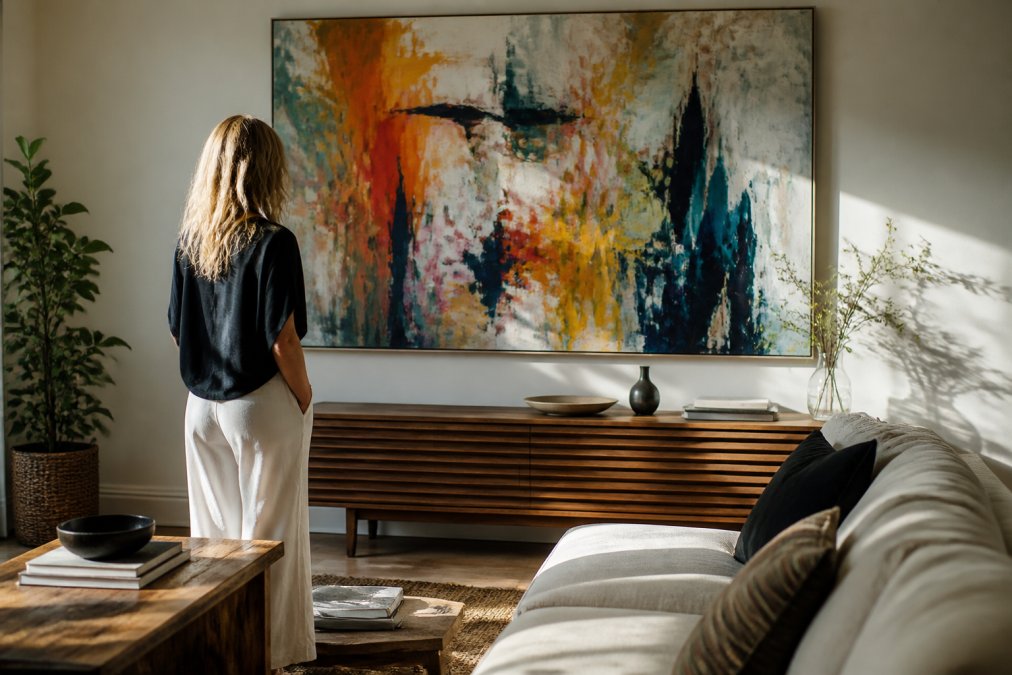
Scale matters far more than most people realize. An original abstract painting that's too small for a wall becomes a decorative accent rather than a presence. Too large, and it overwhelms the space. The general rule is that artwork should occupy roughly one-third to one-half of the wall space it anchors. For a large living room wall, that might mean a substantial canvas. For a hallway or bedroom, something more modest.
Consider the distance from which you'll typically view the piece. If the painting hangs above a sofa where you'll sit three to four feet away, you want something that rewards close viewing, where the brushwork and texture become visible. If it's meant to be seen from across a room, compositional clarity and color impact matter more than fine detail.
The shape of the canvas also affects spatial harmony. Horizontal paintings feel calm and expansive. Vertical formats create a sense of movement or tension. Irregular shapes or multiple-panel works can become dramatic focal points but require careful placement. Think about what your space needs visually. A room with strong horizontal lines might benefit from a vertical canvas to create visual interest.
Original Canvas as a Long-Term Investment
Viewing original abstract paintings as investments isn't cynical, it's pragmatic. Unlike prints, which depreciate immediately after purchase, original paintings can hold or increase in value over time. This appreciation depends on several factors: the artist's reputation and track record, the quality of the work, provenance, and market demand.
Emerging artists whose work gains recognition see their earlier pieces appreciate significantly. Established artists with consistent collectors and gallery representation tend to see steady value growth. This doesn't mean every original painting becomes a financial asset, but the potential exists in ways it never does with prints.
The investment case for original abstract paintings strengthens when you consider the artist's narrative. Works created by artists whose stories resonate, whether through their creative journey, social impact, or artistic evolution, tend to attract collectors willing to pay premium prices. Susan Fielder Art's collection exemplifies this. Each piece carries a narrative of healing and resilience, and the fact that proceeds support pancreatic cancer research adds another layer of meaning for collectors who value social impact alongside aesthetic quality.
For serious collectors, original abstract paintings offer portfolio diversification. Art markets don't move in lockstep with traditional financial markets, making original artwork a hedge against broader economic volatility. This is particularly true for pieces by artists whose work is gaining institutional recognition or whose market is expanding.
Authenticity Verification and Provenance
Before investing in an original abstract painting, you need confidence in its authenticity. Provenance, the documented history of ownership and exhibition, serves as the artwork's biography. A piece with clear provenance, supported by documentation, is more valuable and more insurable than one without.
Legitimate galleries and artists maintain detailed records of sales, exhibitions, and ownership transfers. When you purchase from established sources like Susan Fielder Art, you receive documentation of authenticity. This might include artist signatures, certificates of authenticity, exhibition history, or detailed records of the work's creation and sale.
For high-value pieces, professional authentication services exist. These combine scientific analysis, archival research, and expert connoisseurship to verify authenticity. While authentication adds cost, it provides insurance-grade confidence for significant investments. Services like ArtDiscovery's authentication platform use scientific methods combined with provenance research to verify artwork authenticity across continents.
When evaluating a piece's authenticity, ask direct questions: Can the artist or gallery provide documentation? Is there exhibition history? Are there photographs of the work in progress or in previous installations? How is the piece signed? Professional artists maintain records precisely because collectors need this assurance.
Maintenance and Preservation of Your Artwork
Original abstract paintings require care to maintain their condition and value. Unlike prints, which are relatively static, canvas paintings are living artifacts subject to environmental factors and handling considerations.
Light exposure is the primary concern. Prolonged exposure to direct sunlight fades colors and degrades the paint's chemical structure. Hang original paintings in locations where they receive ambient light but avoid direct sun for extended periods. UV-filtering glass or acrylic can protect valuable pieces if they must be in brighter locations.
Temperature and humidity fluctuations damage canvas and paint. Extreme swings cause the canvas to expand and contract, stressing the paint layer and potentially causing cracking. Maintain stable conditions, ideally between 60-75°F and 40-55% relative humidity. Avoid hanging original paintings in kitchens, bathrooms, or near heating vents where temperature and moisture vary significantly.
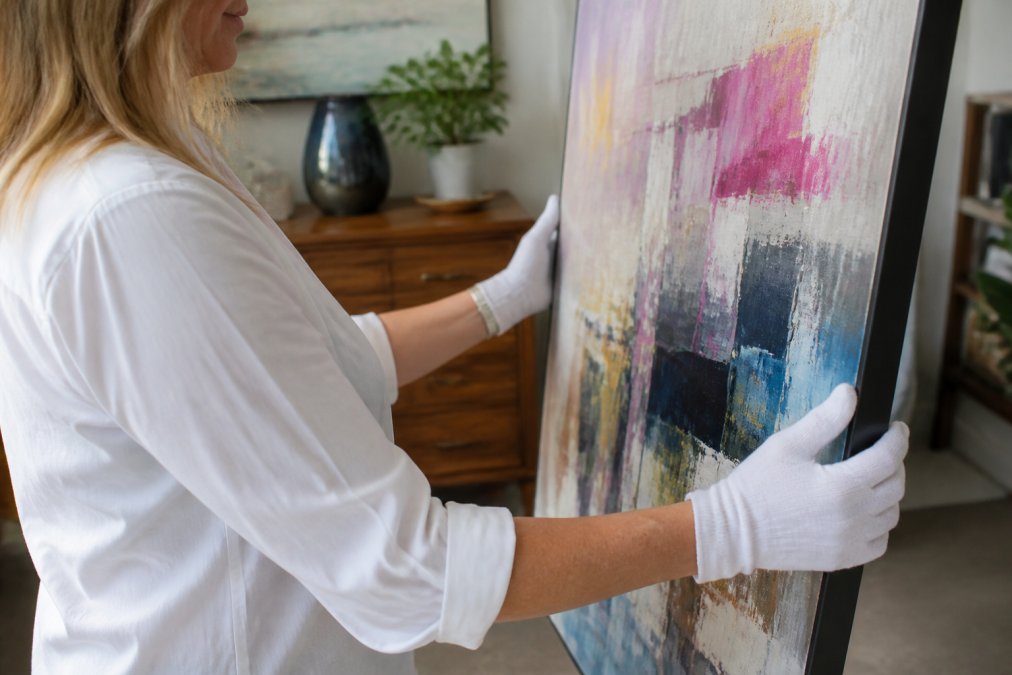
Dust accumulation dulls the visual impact and can trap moisture against the surface. Clean your original paintings gently with a soft, dry brush or microfiber cloth. Never use water, solvents, or cleaning products unless specifically approved by a conservator. For valuable pieces, professional conservation cleaning every 5-10 years maintains condition without risk.
Handle original paintings carefully. Always support the canvas from behind or the frame, never by the edges or corners. When moving pieces, wrap them in acid-free paper and transport in a way that prevents shifting or pressure on the canvas. For pieces you plan to keep long-term, consider professional framing with conservation-grade materials that won't degrade the work.
Insurance is essential for original paintings of significant value. Chubb's fine art insurance and similar specialists offer coverage tailored to art collections, protecting against damage, theft, and loss. Insurance also requires documentation, photographs, appraisals, and provenance records, which you should maintain regardless.
Supporting Independent Artists and Social Impact
When you purchase an original abstract painting from an independent artist or gallery, you're supporting creative work directly. This matters more than many collectors realize. Independent artists typically retain a much larger percentage of the sale price than those working through large commercial channels. Your purchase funds their ability to continue creating.
Beyond direct financial support, buying original paintings from independent artists validates their work and contributes to their market reputation. Collectors, galleries, and institutions pay attention to which artists are gaining traction. Your purchase becomes part of that signal. For emerging artists, each sale increases their credibility and opens doors to exhibitions, representation, and future opportunities.
Many independent artists, like those represented through Susan Fielder Art, tie their work to meaningful causes. When proceeds support research, community organizations, or social impact initiatives, your purchase becomes an act of advocacy alongside aesthetic choice. The 10% of proceeds from Susan Fielder Art that supports pancreatic cancer research exemplifies this integration of art and purpose.
The relationship between artist and collector also deepens when you purchase original work. You can communicate directly with creators, understand their process, and follow their evolution. This connection enriches your experience of the artwork and creates a community around the art rather than just transactional consumption.
Conclusion
Buying original abstract paintings transforms how you experience your space and positions you as a participant in the art world rather than a passive consumer of decoration. The emotional resonance, investment potential, and support for independent artists create a compelling case that extends far beyond aesthetics.
Susan Fielder Art brings together emotionally charged original abstract paintings with a commitment to social impact, each piece supports pancreatic cancer research while delivering the visual and emotional impact that makes original artwork irreplaceable. When you're ready to invest in artwork that speaks to you while supporting meaningful causes, explore the curated collection at Susan Fielder Art and discover how original abstract paintings can transform your home.
| Aspect | Original Abstract Paintings | Prints |
|---|---|---|
| Authenticity | Unique, hand-created artifact | Mechanical reproduction |
| Tactile Quality | Visible brushwork, texture, dimension | Flat surface, no texture variation |
| Value Appreciation | Potential to increase over time | Immediate depreciation |
| Emotional Impact | Direct connection to artist's intent | Mediated through reproduction |
| Investment Grade | Insurable, collectible asset | Decorative only |
| Maintenance | Requires care and conservation | Minimal upkeep |
| Authenticity Verification | Provenance documentation available | Mass-produced, no verification needed |
Frequently Asked Questions
Why should I buy original abstract paintings instead of prints?
Original abstract paintings offer genuine artistic expression, unique brushwork, and tactile qualities that prints cannot replicate. Each original canvas holds investment potential, increases in value over time, and carries the artist's authentic creative vision. Prints are mass-produced reproductions, while originals are one-of-a-kind pieces that appreciate as collectible fine art. The emotional resonance and visual impact of an original far exceed what a reproduction can deliver.
How do I verify that an original abstract painting is authentic?
Authenticity verification involves examining the artist's provenance, certificate of authenticity, and documentation of ownership history. Professional authentication services like ArtDiscovery use science, AI, and connoisseurship to confirm a piece's legitimacy. Look for artist signatures, canvas condition, and brushwork consistency. Request detailed provenance records from the seller, and consider having a professional appraisal done through services like Mearto. Reputable galleries and registered art platforms provide authentication guarantees.
Will an original abstract painting actually increase in value over time?
Yes, original abstract paintings by established or emerging artists typically appreciate in value, especially when the artist gains recognition and market demand increases. Investment-grade pieces benefit from scarcity, artist reputation, and collector demand. Proper maintenance and documented provenance protect and enhance resale value. While not all abstract art appreciates equally, purchasing from recognized artists and galleries improves your chances of owning a piece that becomes more valuable. Tax and resale considerations should factor into your investment strategy.
How do I know if an abstract painting will look good in my space before buying online?
Request high-quality images showing the painting in natural and artificial light, and ask about the exact dimensions to visualize scale in your room. Consider your existing color palette and interior styling, abstract art should enhance your aesthetic without clashing. Many galleries provide detailed descriptions of color, compositional balance, and visual impact. Think about wall placement and lighting conditions in your space. If concerned, ask about return policies or guarantees. Viewing the artwork in person when possible helps confirm the visual experience matches your expectations.