 ultimate-guide
Art and Mental Health: How Creative Expression Heals
Table of Contents
- The Connection Between Art and Mental Health
- How Art-Making Reduces Stress and Anxiety
- Benefits of Art Therapy for Adults
- Art as Emotional Processing and Trauma Recovery
- Meaningful Gifts for Art Lovers That Support Wellness
- Accessibility and Getting Started With Creative Practice
- Measuring Progress and Building a Sustainable Creative Habit
- Frequently Asked Questions
Last Updated: August 25, 2026
The Connection Between Art and Mental Health
Art and mental health are deeply intertwined in measurable, evidence-based ways. According to Americans for the Arts survey of over 3,000 American adults, 76% of Americans view the arts as crucial to their personal well-being, and 60% have used creative expression to cope during mental or emotional distress.
At Susan Fielder Art, we recognize that the pieces you surround yourself with engage your mind, soothe your nervous system, and create a visual language for emotions words can't capture. When you engage with art, creating, viewing, or sitting with it, your brain activates regions associated with emotional processing, memory, and reward. Research shows that just 45 minutes of creative activity significantly reduces cortisol, the body's primary stress hormone, offering immediate physiological relief from anxiety and tension.
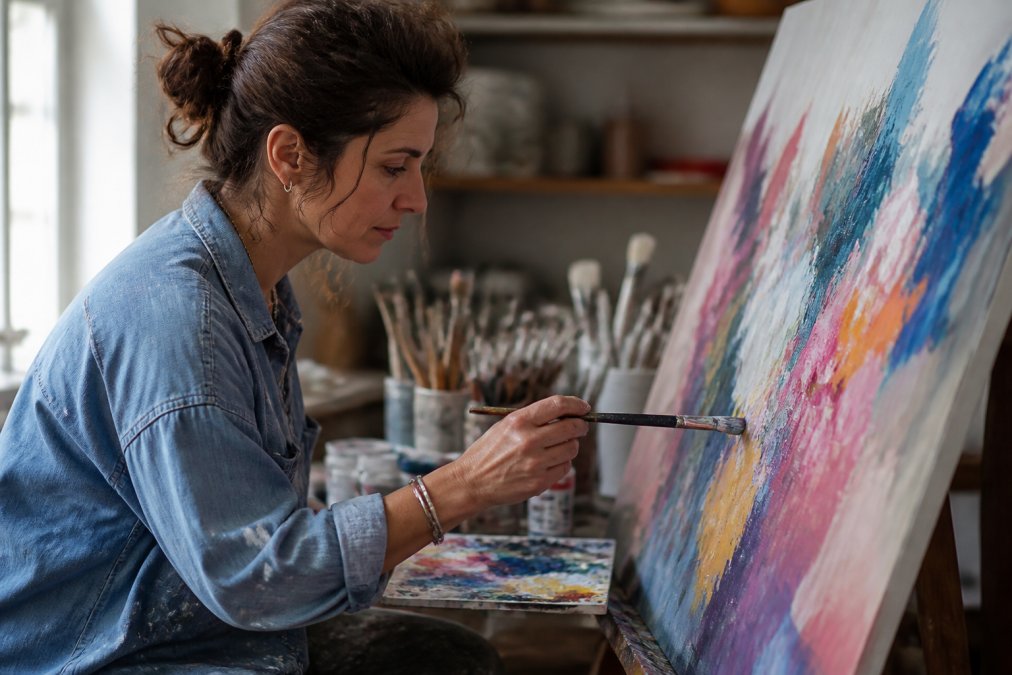
The benefits don't require artistic talent. The act of creating, the process itself, is where the healing happens. Similarly, viewing emotionally resonant artwork can trigger introspection and emotional release without requiring any artistic knowledge.
How Art-Making Reduces Stress and Anxiety
Creating art is one of the most direct routes to stress reduction available. When you're actively engaged in art-making, your brain shifts into a different mode, focused on the present moment rather than ruminating on worries. This shift alone reduces anxiety significantly.
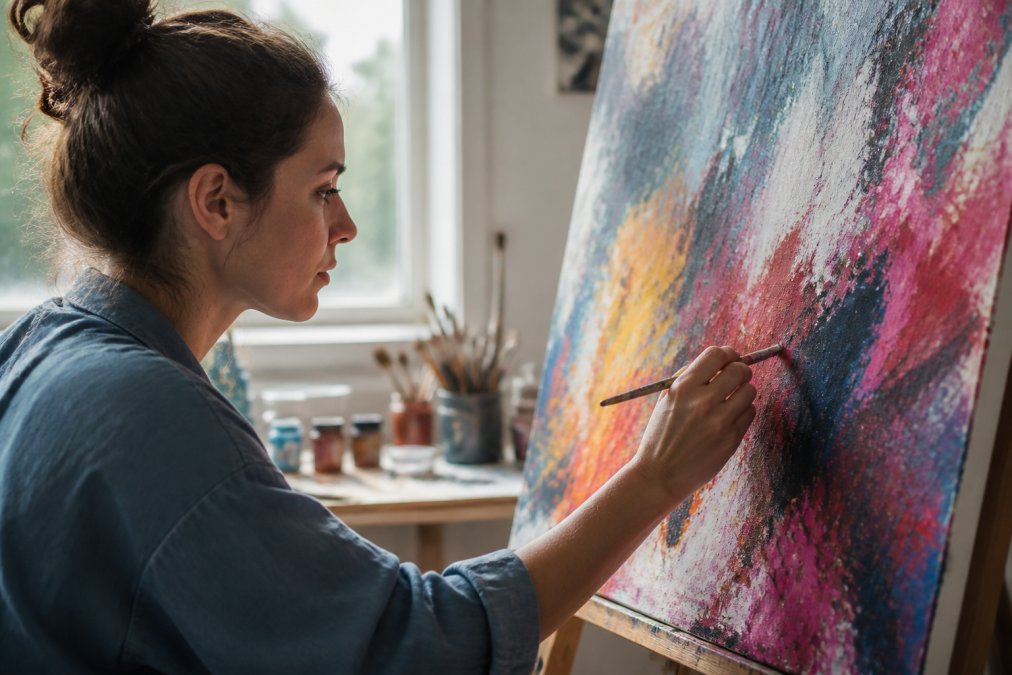
Art-making demands attention. It pulls your mind away from anxious thoughts and anchors it in the physical act of creation. You're mixing colors, considering composition, responding to what's emerging on the canvas. This focused attention is a form of mindfulness, one of the most evidence-backed anxiety management techniques available.
A University of Arizona Health Sciences study found that more than 80% of arts-based interventions successfully reduced stress levels. The benefit isn't about producing a masterpiece, it's about allowing your nervous system to slow down. Your body's stress response gets interrupted by the demand for creative focus.
Regular art-making also builds psychological resilience. When you create something, you've made a decision, executed it, and seen a tangible result. That cycle reinforces self-efficacy and confidence. Over time, people who engage in regular creative practice develop stronger emotional regulation skills and greater capacity to handle life's stressors.
Benefits of Art Therapy for Adults
Art therapy is a formalized therapeutic practice where trained therapists use creative expression as a primary tool for healing. The benefits extend beyond clinical settings to adults of all ages.
For adults over 50, the data is compelling. According to the US Health and Retirement Study tracking 12,055 adults, those who visited cultural venues every few months had a 32% lower risk of developing depression over ten years. Adults over 50 who participated at least monthly in creative or artistic groups showed 15-22% lower odds of depression compared to their non-participating peers.
A 32% reduction in depression risk rivals the effectiveness of many pharmaceutical interventions with no negative side effects. The social component matters too, group art participation addresses loneliness and isolation, which are themselves major risk factors for depression and cognitive decline.
For adults dealing with specific mental health challenges, art therapy offers a pathway to emotional processing that talk therapy alone sometimes cannot provide. When trauma or deep emotional pain exists, words often feel inadequate. Art allows direct expression of what's difficult to articulate. Research shows that combining creative arts therapies with antidepressants and counseling can nearly double improvements in depressive symptoms compared to standard treatments alone.
Art as Emotional Processing and Trauma Recovery
Trauma lives in the body and in the non-verbal centers of the brain. Art provides a way to access and process trauma without requiring the person to narrate their pain in words.
When someone creates art in response to trauma, they externalize the internal experience, the fear, fragmentation, and sense of powerlessness, onto canvas or in clay. This act creates distance. The person can now look at their experience rather than being consumed by it. That shift is fundamental to trauma recovery.
Path with Art, a community-based organization providing free arts programming for trauma survivors, documented remarkable outcomes. More than 90% of participants reported increased self-efficacy, nearly 90% reported improvements in mental health, and over 80% reported feeling less lonely.
Trauma disrupts normal communication between the brain's emotional centers and language centers. Art-making reactivates neural pathways that trauma has interrupted. The creative process rebuilds the brain's capacity for integration and coherence. Importantly, the artwork doesn't need to be "good" or recognizable, the healing comes from the creation and the ability to tolerate looking at what was previously overwhelming.
Meaningful Gifts for Art Lovers That Support Wellness
For people who love art, the pieces they choose to live with become a daily wellness tool. When you select artwork that resonates emotionally, you're creating a visual environment that supports your mental health every single day.
Thoughtful art gifts recognize this reality. Original artwork, particularly pieces with a narrative of resilience or healing, can become anchors for people navigating difficult times.
Susan Fielder Art specializes in emotionally charged abstract paintings created with a commitment to both artistic integrity and social impact. Each piece carries a story of healing and resilience. When you gift original artwork from Susan Fielder Art, you're offering a daily reminder of courage and creative expression. The collection includes the iPlaid series, raising awareness for pancreatic cancer research, ensuring that your gift supports a greater cause while beautifying the recipient's space.
The best art gifts match the recipient's emotional landscape. Someone navigating grief might connect deeply with pieces that honor loss while suggesting hope. Someone celebrating recovery might be drawn to work that radiates energy and transformation.
Accessibility and Getting Started With Creative Practice
The barrier to experiencing the mental health benefits of art isn't talent or expense, it's simply starting. Many people believe they "can't draw," and this belief prevents them from accessing one of the most powerful wellness tools available.
Creativity isn't a fixed trait. It's a skill that develops with practice. A person who has never drawn can experience the stress-reducing, anxiety-managing benefits of art-making within their first session.
Getting started is accessible:
- Sketching or doodling: Grab a pencil and paper. Doodling while listening to music is a form of creative practice that engages your brain gently.
- Painting or watercolor: Inexpensive starter sets are widely available and require no prior skill.
- Collage: Cut images from magazines and arrange them on a page. This requires zero drawing ability.
- Sculpture or clay work: Working with your hands in three dimensions engages different neural pathways than drawing.
- Digital art or design: Apps and free software make digital creation accessible.
The most important factor is consistency. Even 15-20 minutes of creative practice several times a week produces measurable improvements in anxiety and mood. For people who want guided structure, art therapy groups or community art classes provide instruction and community. For people who prefer solitude, home-based practice is equally effective.
Measuring Progress and Building a Sustainable Creative Habit
How do you know if your creative practice is actually improving your mental health? The most obvious indicators are subjective: you feel calmer, you sleep better, you're less reactive to stress.
| Indicator | How to Measure | Frequency |
|---|---|---|
| Stress and anxiety levels | Rate 1-10 before and after creative sessions | Weekly |
| Sleep quality | Note sleep duration and how rested you feel | Daily |
| Mood stability | Track mood patterns throughout the week | Daily |
| Emotional resilience | Notice how quickly you recover from stressors | Ongoing |
| Social connection | Track conversations and time spent with others if doing group art | Weekly |
| Creative output | Keep pieces or photos of work completed | Monthly |
Consistency matters more than intensity. A person who creates for 30 minutes three times a week will see more sustained benefits than someone who creates intensely once a month. Start small. Commit to one creative activity, one specific time per week. After two weeks, notice what's changed in your stress levels, sleep, or mood.
The barrier to sustainability is usually perfectionism. Release the pressure to produce "good" work. Your creative practice is for you, not for an audience. The impact of art on mental health comes from the process, not the product. Once you experience the mental health benefits of regular creative practice, the habit often sustains itself naturally.
The evidence is overwhelming: the impact of art on mental health is real, measurable, and accessible to anyone willing to engage. Whether you're creating art yourself, viewing pieces that move you, or gifting meaningful artwork to someone you care about, you're participating in one of the most powerful wellness practices available. According to Americans for the Arts research, 75% of Americans would likely follow a doctor's recommendation to participate in the arts for physical or mental health improvement, and that recommendation is increasingly backed by rigorous science.
At Susan Fielder Art, we create emotionally charged, abstract paintings designed to transform your space and support your well-being. Each original artwork carries a narrative of healing and resilience, and 10% of all proceeds support pancreatic cancer research. When you invest in art that speaks to your soul, you're investing in your mental health. Shop now and discover how the right piece can become a daily anchor for calm, reflection, and hope.
Frequently Asked Questions
What is the difference between art therapy and the therapeutic benefits of viewing or creating art?
Art therapy is a clinical intervention delivered by a licensed art therapist who uses creative expression within a therapeutic relationship to address mental health conditions. The therapeutic benefits of art, whether creating or viewing, refer to the general mental health improvements anyone can experience through creative engagement, without requiring a therapist. Both approaches reduce stress and improve emotional regulation, but art therapy provides structured, goal-oriented treatment for diagnosed conditions, while everyday art engagement offers accessible, preventative mental health support.
How does creating art provide different mental health benefits than simply viewing art?
Creating art actively engages your brain in emotional regulation, self-expression, and problem-solving, while viewing art allows for reflection and emotional connection without the demands of production. Research shows that 45 minutes of art-making significantly reduces cortisol, your body's primary stress hormone. Both activities lower depression risk, adults over 50 who visited cultural venues every few months had a 32% lower risk of developing depression over ten years, but creating art provides the added benefit of self-efficacy and a sense of accomplishment, while viewing art offers contemplation and mood improvement.
Can abstract art specifically help reduce anxiety and improve mood?
Yes. Abstract art engages your brain differently than representational work, encouraging interpretation and emotional response rather than literal analysis. This process activates areas of the brain associated with emotional processing and creativity. Painting-based art interventions showed a significant and large positive impact on mental health outcomes in a meta-analysis of 45 randomized controlled trials. Abstract art's ambiguity allows viewers and creators to project their own emotions onto the work, making it a powerful tool for emotional expression, anxiety reduction, and mood improvement without the pressure of technical skill.
How can incorporating art into my home support mental wellness?
Surrounding yourself with meaningful artwork creates a visually stimulating environment that supports emotional regulation and psychological resilience. Viewing art daily reduces stress, enhances self-efficacy, and improves coping skills. When you choose pieces that resonate emotionally, whether abstract works that evoke specific feelings or art connected to causes you care about, you create a space that reinforces your values and supports your mental health. Over 80% of arts-based interventions successfully reduced stress levels, and this benefit extends to passive engagement with art in your living space.