 listicle
7 Alternatives to Digital Art for Stress Relief in 2026
Table of Contents
- Why Your Brain Craves Tactile Art (The Science of Stress Relief)
- 1. Mandala Drawing: Structured Repetition for Anxiety Management
- 2. Polymer Clay Sculpting: The Benefits of Tactile Art Therapy
- 3. Watercolor Painting: Embracing Imperfection and the Flow State
- 4. How to Start an Art Journal for Mental Health (Even If You Can't Draw)
- 5. Charcoal Sketching: Channeling Emotions Through Bold Gestures
- 6. Beginner Art Therapy Exercises: Simple Prompts to Start Today
- 7. Making the Switch: A Cost-Benefit Look at Physical Art Supplies
- Frequently Asked Questions
Last Updated: September 5, 2026
A 2016 Drexel University study found that 75% of participants experienced lowered cortisol levels after just 45 minutes of art-making, proving that creative expression is a direct biological antidote to stress. When screens dominate our work, communication, and leisure, finding alternatives to digital art for stress relief has become essential for protecting your mental health. At Susan Fielder Art, we believe the most healing creative experiences happen when your hands connect with physical materials, not a stylus on glass.
The research is clear: more than 80% of arts-based interventions report reduced stress according to a University of Arizona Health Sciences review, and the American Psychiatric Association found that 46% of Americans already use creative activities to manage anxiety. Below, we'll walk through seven tactile practices that deliver measurable relief, plus exactly how to begin each one today.
Why Your Brain Craves Tactile Art (The Science of Stress Relief)
Physical art materials engage your sensory processing systems in ways a screen cannot replicate. When you press a pencil into paper or mold clay between your fingers, your brain receives haptic feedback that activates reward pathways and grounds you in the present moment. This tactile engagement is why traditional media remains so effective for self-regulation.
The key difference comes down to cognitive load. Digital tools present constant options: undo buttons, layers, brush selections, and the temptation to perfect every line. Physical materials force you to accept what emerges, which is precisely where the therapeutic benefits of art-making begin.
1. Mandala Drawing: Structured Repetition for Anxiety Management
Mandala drawing is the practice of creating circular, symmetrical patterns using fine-liner pens and pre-printed templates, and it works because repetitive motion calms the nervous system. The structured nature of mandalas gives your mind a single focus, making them an accessible grounding technique for anxiety management.
To begin, choose a mandala kit with fine-liner pens and acid-free paper, then work outward from the center in repeating shapes. You don't need artistic training, just patience with the process.
A 2026 study in Behavioral Sciences confirmed that tablet-based drawing offers emotional benefits comparable to traditional media, but the tactile feedback of pen on paper adds a sensory dimension that digital styluses cannot match MDPI study on artmaking across media. Many practitioners find the physical resistance of ink on textured paper deepens their focus and extends their flow state.
2. Polymer Clay Sculpting: The Benefits of Tactile Art Therapy
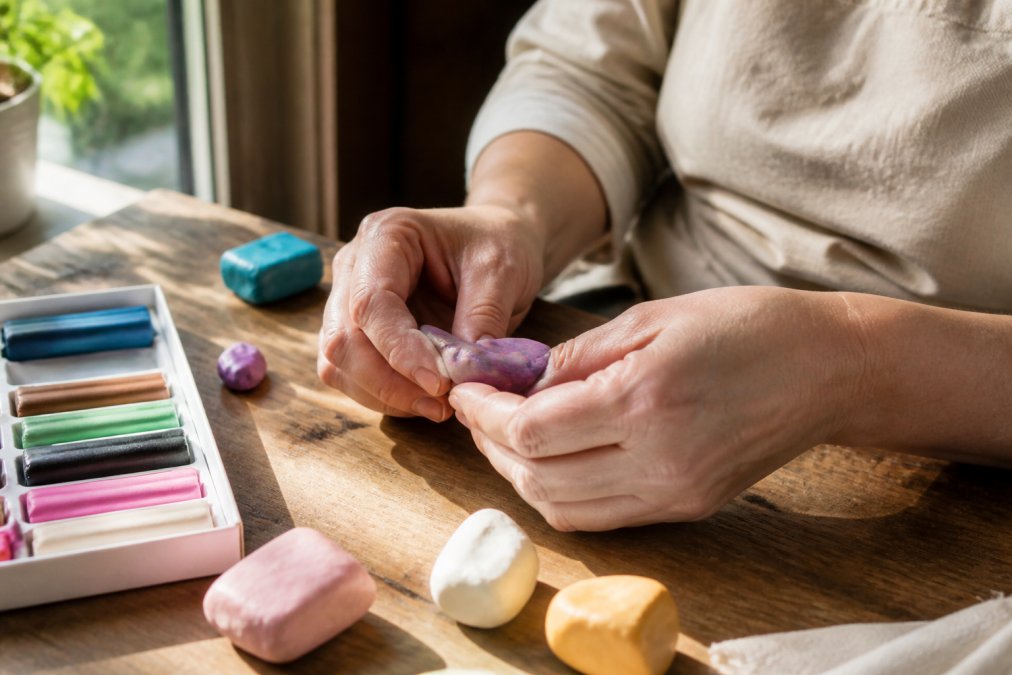
Polymer clay sculpting is one of the most effective tactile art therapy options because the physical act of kneading, pinching, and shaping provides immediate sensory relief that engages your whole hand. Brands like Sculpey offer soft, pliable clay that hardens in a home oven, making it an accessible entry point for beginners.
Research from the Rocky Mountain College of Art + Design and Sage Clinic indicates that physical materials like clay provide effective alternatives to digital screens for stress reduction Rocky Mountain College of Art + Design research. The resistance of the clay against your fingers creates a satisfying physical feedback loop that interrupts anxious thought patterns.
But not everyone experiences touch the same way. For individuals with sensory processing differences, common among those with ADHD, autism, or anxiety disorders, the texture of standard polymer clay can feel overwhelming or even aversive. The good news is that clay is one of the most adaptable tactile mediums available, and you can tailor it to your specific sensory profile.
For texture-sensitive hands: Standard polymer clay has a smooth, slightly waxy feel that some find unpleasant. If this sounds like you, try mixing in a small amount of fine pumice or sand (available at craft stores) to create a grittier texture. Alternatively, choose a brand like CosClay, which offers a softer, more buttery consistency that requires less pressure to manipulate. Some practitioners also prefer air-dry clay like La Doll, which has a smoother, more powdery finish.
For deep-pressure seekers: If you find yourself craving firm, grounding input, opt for a firmer clay like Kato Polyclay, which requires significant hand strength to condition. The resistance provides proprioceptive feedback, the sense of where your body is in space, which is deeply calming for many people. You can also roll the clay into a thick ball and squeeze it repeatedly before shaping, mimicking the effect of a stress ball with more creative potential.
For fidget-driven creators: If you need continuous movement to regulate your focus, skip the sculpting phase entirely and focus on the conditioning process. Simply kneading and rolling clay into snakes or balls for 10-15 minutes can serve as a productive fidget that channels restless energy. Many practitioners find this repetitive motion more effective than traditional fidget toys because it engages the whole hand and produces a tangible object.
Start with a few blocks of clay in calming colors, and simply roll, pinch, and shape without any goal in mind. The process matters more than the product. If you find the standard approach doesn't suit your sensory needs, experiment with the adaptations above until you find a texture and technique that feels right for your nervous system.
3. Watercolor Painting: Embracing Imperfection and the Flow State
Watercolor painting is the ideal medium for releasing perfectionism because water and pigment move in ways you cannot fully control, forcing you to surrender to the artistic process. Unlike the precise eraser effect available in digital tools, watercolor demands that you accept mistakes and adapt, which is a powerful metaphor for managing life's unpredictability.
The fluid nature of watercolor naturally guides you into a flow state where time disappears and stress fades. A 2025 study in Frontiers in Psychology found that remote digital art-making shows potential anxiety reduction, but the unpredictable blending of watercolor on paper creates a unique mindfulness experience that screens cannot replicate Frontiers in Psychology study.
Begin with a portable pan set and heavy watercolor paper, then paint simple shapes like leaves or abstract color washes. Focus on how the paint moves rather than what the final image looks like.
4. How to Start an Art Journal for Mental Health (Even If You Can't Draw)
An art journal is a private, judgment-free space where you combine colors, collage, and simple marks to process emotions, and it requires zero drawing ability to deliver real mental health benefits. The question of how to start an art journal for mental health comes down to lowering your expectations and committing to five minutes a day.
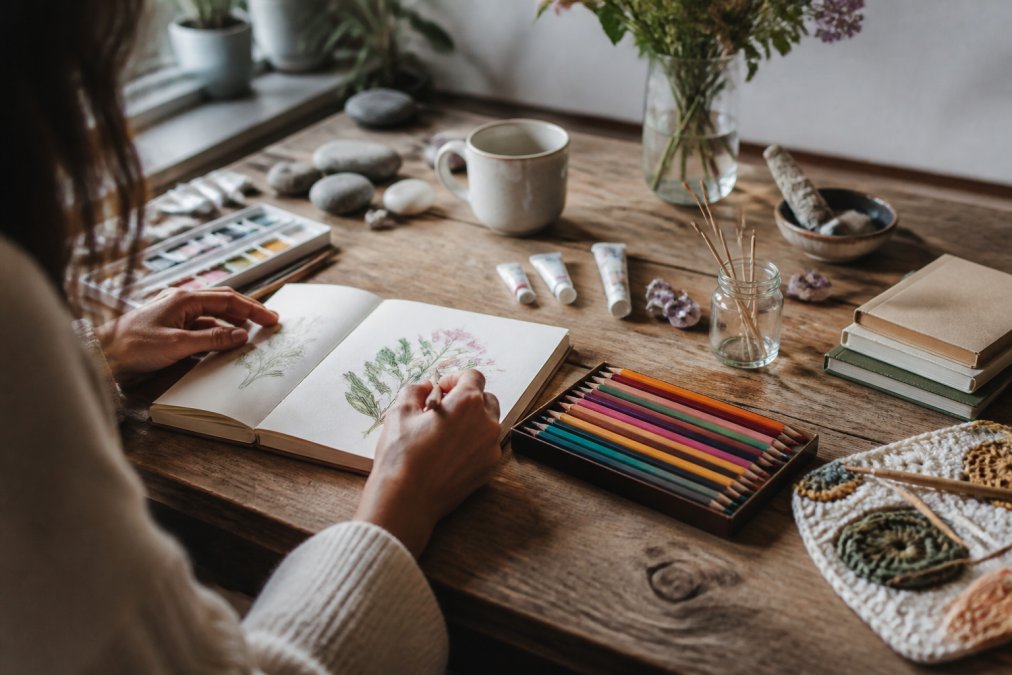
Choose a mixed-media sketchbook with heavyweight paper, then gather colored pencils, magazine clippings, and glue. Each day, fill one page with whatever reflects your current emotional state: a color, a torn image, a scribbled word.
The repetitive, low-stakes nature of journaling builds emotional regulation over time. Unlike polished digital creations, your journal is for your eyes only, which removes performance pressure and makes the practice sustainable.
5. Charcoal Sketching: Channeling Emotions Through Bold Gestures
Charcoal sketching is the most physically expressive alternative to digital art because the medium demands full-arm movement, allowing you to channel frustration and energy into bold, sweeping marks. The messy, tactile nature of charcoal engages your entire body rather than just your fingertips.
General's charcoal kits include various grades of sticks and a kneaded eraser, giving you tools for high-contrast, gestural work. The soft charcoal smudges and shifts beneath your fingers, creating a direct connection between your emotional state and the marks on the page.
This medium is particularly effective when you feel restless or agitated. The physical effort of pressing, sweeping, and smudging provides an outlet for excess nervous energy, and the forgiving nature of the medium encourages loose, expressive drawing rather than tight, controlled perfectionism.
6. Beginner Art Therapy Exercises: Simple Prompts to Start Today
Beginner art therapy exercises are structured prompts that remove the "what should I draw?" barrier, making creative expression immediately accessible even on high-stress days. These exercises focus on the process of making marks rather than producing gallery-worthy work.
Try these three prompts tonight:
- Draw your current stress as a shape or weather pattern
- Color a pre-printed mandala template using only colors that feel calming
- Scribble continuously for two minutes, then find and shade the shapes within
Coloring-based art therapy acts as a low-cognitive-load alternative that facilitates emotional expression through visual means, according to 2026 research in JMIR Human Factors JMIR Human Factors study. The simplicity of filling pre-drawn shapes with color allows your mind to rest while your hands stay busy.
7. Making the Switch: A Cost-Benefit Look at Physical Art Supplies
Switching from digital to physical art supplies costs less than most people expect, with entry-level materials starting around $4 to $25 per item depending on the medium you choose. When you compare that to the subscription fees, tablet upgrades, and software costs of digital creation, traditional media often comes out ahead.
But the real challenge isn't the price tag, it's the transition. After years of working with layers, undo buttons, and infinite color palettes, moving to a physical medium can feel restrictive and even frustrating at first. Most practitioners find that the first few sessions are marked by a desire to 'fix' mistakes or start over, a habit that directly contradicts the acceptance-based mindset tactile art requires.
To bridge this gap, consider a structured 'digital detox' transition plan that eases you into physical media without triggering creative withdrawal:
Week 1: The Hybrid Sketchbook Keep your tablet nearby, but commit to a 10-minute warm-up in a physical sketchbook before opening any digital app. Use a simple graphite pencil and focus on mark-making, hatching, scribbling, contour drawing, without any goal of producing a finished piece. The point is to reacquaint your hand with resistance and texture.
Week 2: Constraint-Based Practice Choose a single physical medium (e.g., a fine-liner pen) and impose a strict constraint: no erasing, no white-out, no starting over. This mirrors the permanence of ink and forces you to work with 'mistakes' as part of the composition. Many artists report that this constraint paradoxically lowers anxiety because it removes the endless loop of perfectionism.
Week 3: Sensory Substitution Identify what you miss most about digital tools, whether it's the precision of a stylus, the vibrancy of a backlit screen, or the ability to zoom in, and find a physical equivalent. For precision, try fine-tipped technical pens. For vibrancy, explore alcohol markers or gouache. For detail work, invest in a magnifying lamp. This substitution helps your brain associate physical media with the same creative satisfaction you got digitally.
Week 4: Full Immersion By now, your hands have adjusted to the feedback of paper, canvas, or clay. Choose one 'signature' physical practice from the sections above and commit to a 30-minute session, three times a week, with no digital device in the room. Track your stress levels before and after each session; most practitioners notice a measurable drop in tension by the end of the month.
| Alternative | Starting Cost | Key Benefit | Best For |
|---|---|---|---|
| Mandala Drawing Kits | $12.99 | Structured mindfulness | Anxiety management |
| Polymer Clay | $3.50 | Sensory engagement | Hands-on stress relief |
| Watercolor Sets | $25.00 | Flow state development | Releasing perfectionism |
| Mixed-Media Sketchbook | $10.00 | Daily emotional processing | Art journaling practice |
| Charcoal Drawing Kit | $10.00 | Full-body expression | Releasing pent-up energy |
Frequently Asked Questions
What kind of art can help relieve stress?
Any art form that engages you in a flow state can reduce stress. Research from Drexel University shows 45 minutes of art-making lowers cortisol in 75% of participants. Tactile options like mandala drawing, clay sculpting, watercolor painting, and art journaling are especially effective because they require physical engagement that pulls attention away from anxious thoughts. The best choice is one you enjoy and can do without pressure or judgment.
What are the benefits of tactile art therapy over digital art for stress relief?
Tactile art therapy engages more senses than digital work. The physical resistance of clay, the smell of paint, and the texture of paper all contribute to grounding and sensory processing. A 2026 study in Behavioral Sciences found tablet drawing offers comparable emotional benefits to traditional materials. But for people experiencing screen fatigue or seeking a digital detox, physical materials provide a complete sensory break that helps with emotional regulation and self-regulation.
Can traditional art journaling improve mental health?
Yes. Art journaling combines creative expression with reflective writing, creating a private space to process emotions. The repetitive motion of drawing or painting in a journal can trigger a relaxation response similar to meditation. Over 80% of arts-based interventions report reduced stress, according to a 2026 University of Arizona review. Start with a mixed-media sketchbook and simple prompts like "draw your current emotion as a color" to build the habit.
What are the best low-pressure art activities for beginners?
Beginner art therapy exercises should focus on process, not product. Mandala drawing with pre-printed templates offers structure without creative pressure. Watercolor painting teaches you to accept unpredictability since the medium flows on its own. Finger painting with acrylics or kneading polymer clay provides pure sensory engagement. These activities work because they lower cognitive load while keeping your hands busy, which interrupts stress patterns and helps you enter a flow state.
How can abstract painting help with emotional regulation?
Abstract painting gives you a safe outlet for emotions that are hard to verbalize. Instead of analyzing feelings, you translate them into color, line, and texture. This activates the brain's reward system and creative expression pathways without requiring you to articulate what's wrong. Engaging with abstract art supports emotional regulation by validating complex feelings.
Frequently Asked Questions
Q: What kind of art can help relieve stress?
A: Any art form that engages you in a flow state can reduce stress. Research from Drexel University shows 45 minutes of art-making lowers cortisol in 75% of participants. Tactile options like mandala drawing, clay sculpting, watercolor painting, and art journaling are especially effective because they require physical engagement that pulls attention away from anxious thoughts. The best choice is one you enjoy and can do without pressure or judgment.
Q: What are the benefits of tactile art therapy over digital art for stress relief?
A: Tactile art therapy engages more senses than digital work. The physical resistance of clay, the smell of paint, and the texture of paper all contribute to grounding and sensory processing. A 2026 study in Behavioral Sciences found tablet drawing offers comparable emotional benefits to traditional materials. But for people experiencing screen fatigue or seeking a digital detox, physical materials provide a complete sensory break that helps with emotional regulation and self-regulation.
Q: Can traditional art journaling improve mental health?
A: Yes. Art journaling combines creative expression with reflective writing, creating a private space to process emotions. The repetitive motion of drawing or painting in a journal can trigger a relaxation response similar to meditation. Over 80% of arts-based interventions report reduced stress, according to a 2026 University of Arizona review. Start with a mixed-media sketchbook and simple prompts like "draw your current emotion as a color" to build the habit.
Q: What are the best low-pressure art activities for beginners?
A: Beginner art therapy exercises should focus on process, not product. Mandala drawing with pre-printed templates offers structure without creative pressure. Watercolor painting teaches you to accept unpredictability since the medium flows on its own. Finger painting with acrylics or kneading polymer clay provides pure sensory engagement. These activities work because they lower cognitive load while keeping your hands busy, which interrupts stress patterns and helps you enter a flow state.
Q: How can abstract painting help with emotional regulation?
A: Abstract painting gives you a safe outlet for emotions that are hard to verbalize. Instead of analyzing feelings, you translate them into color, line, and texture. This activates the brain's reward system and creative expression pathways without requiring you to articulate what's wrong. Engaging with abstract art supports emotional regulation by validating complex feelings.