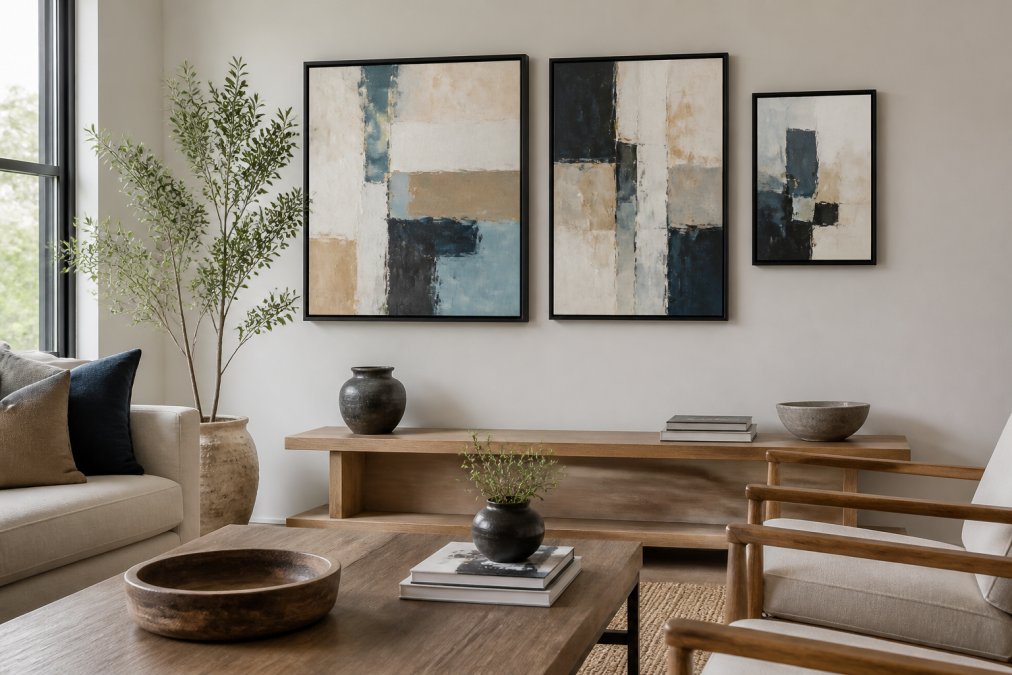
 listicle
Affordable Ways to Display Abstract Art: 2026 Guide
Table of Contents
- Why Abstract Art Is the Budget-Friendly Decor Choice for 2026
- DIY Wall Art Display Ideas That Cost Almost Nothing
- How to Hang Abstract Art Without Damaging Walls
- Budget-Friendly Gallery Wall Layouts That Look Curated
- Affordable Framing Alternatives and Digital-to-Physical Printing
- Lighting and Sustainability Tips for Budget Abstract Art
- Where to Find Affordable Abstract Art in 2026
- Conclusion: Display Art That Tells Your Story
- Frequently Asked Questions
Last Updated: September 16, 2026
Why Abstract Art Is the Budget-Friendly Decor Choice for 2026
Abstract art is a style built on color, form, and gesture rather than recognizable subjects, and it has become the most affordable way to display abstract art with visual impact on a large wall. According to Fortune Business Insights' 2026 wall art market report, the abstract segment is projected to account for 30.49% of the total wall art market this year, driven largely by buyers who want a sophisticated look without gallery prices.
DIY Wall Art Display Ideas That Cost Almost Nothing
DIY wall art display ideas start with hardware you already own. Binder clips, wire grids, and a spare shelf turn loose prints into a rotating gallery for under $30 total, with no drill required.
Binder Clips and Wire Grids for Rotating Prints
A wire grid panel paired with binder clips is the cheapest way to show five to ten prints at once. Grid panels run about $25 on Amazon, and binder clips start around $3 at Staples. Clip each print to the grid and swap pieces weekly for a gallery wall that never goes stale. The drawback: it reads casual, so keep it out of formal dining rooms.
Leaning and Shelf Displays for a Studio Look
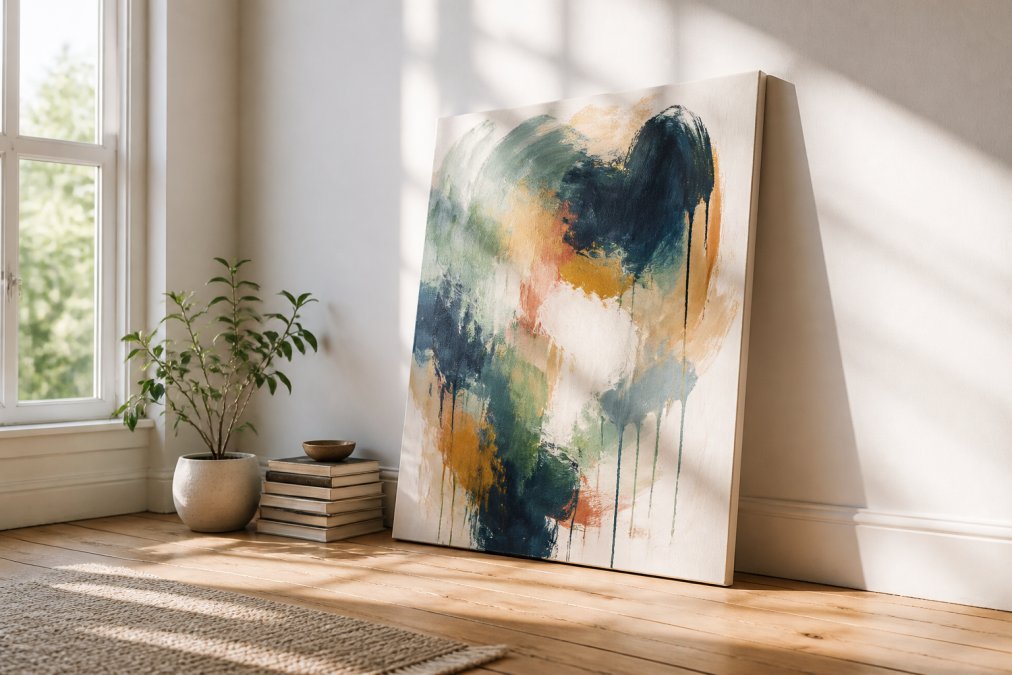
Leaning art against the wall is having a moment. Hanging Investments' 2026 display guide notes rising consumer interest in leaning pieces to avoid wall damage and allow frequent rearrangement. A floor easel from Michaels starts near $35 and gives larger canvases a studio feel without a single nail hole.
How to Hang Abstract Art Without Damaging Walls
Damage-free hanging is the top concern for renters, and it is easier than most people expect, but only if you match the hardware to the surface and the weight. The safest setup combines adhesive strips rated for the artwork's weight with a lightweight frame or unframed canvas. Get the surface wrong and even a two-pound print will take paint with it.
Match the Hardware to the Surface
The surface under the adhesive matters more than the brand. How common wall types behave:
- Flat painted drywall or plaster: adhesive strips work well. Wipe with rubbing alcohol, let dry, and press for the full 30 seconds.
- Light or glossy paint: adhesion drops. Use a larger strip than the weight requires, or a small nail.
- Textured or knockdown drywall: strips cannot get full contact and will fail. Use a small nail or hook.
- Brick, concrete block, or stone: adhesive strips only, never nails, you will crack the masonry and repairs are expensive.
- Wallpaper: avoid adhesive strips entirely. They lift the seam and the repair is a re-paper, not a spackle.
Weight-to-Hardware Cheat Sheet
- Under 2 lbs: adhesive strips, no tools
- 2-10 lbs: one picture nail or a small hook
- Over 10 lbs: two anchored hooks spaced a third of the width apart
- Brick or plaster: adhesive strips only, never nails
Rental-Friendly Hardware and Damage-Free Options
A few mechanisms explain why some hangs fail:
- Adhesive strips hold in shear, not peel. Press the strip to the wall and let it sit an hour before hanging; a piece bumped sideways can pop off.
- A single nail in drywall holds far more than people assume when the load pulls straight down. The failure mode is the nail tearing through the paper face, not bending.
- Two hooks beat one for wide pieces. A single center hook lets a wide canvas seesaw; two hooks spaced a third of the width apart keep it level and halve the load.
- Anchored hooks need the right anchor. Plastic self-drilling anchors suit hollow drywall at light loads; toggle bolts are reliable over 10 lbs.
For zero holes in a rental, the safest combination is a lightweight unframed canvas or paper print under 2 lbs on adhesive strips, or a leaning easel for anything larger. Reserve nails and anchors for walls you own.
Budget-Friendly Gallery Wall Layouts That Look Curated
A budget-friendly gallery wall layout is a spacing problem, not a shopping problem. Get the spacing right and inexpensive prints look deliberate; get it wrong and even pricey pieces look cluttered.
The 2/3 Rule and Spacing Basics
The 2/3 rule is the fastest layout shortcut: art should cover roughly two-thirds of the width of the furniture below it, and hang 8 to 10 inches above the sofa or console. Space frames 2 to 3 inches apart for a tight, curated look, or 4 to 6 inches for a looser arrangement.
| Layout | Best For | Frame Spacing | Wall Coverage |
|---|---|---|---|
| Grid | Uniform print sizes | 2-3 inches | Two-thirds of furniture width |
| Salon | Mixed sizes, maximalist | 2-3 inches | Full wall section |
| Center line | One large anchor piece | 4-6 inches | Single focal point |
| Shelf lean | Rotating collections | Overlap allowed | Shelf width |
Affordable Framing Alternatives and Digital-to-Physical Printing
Affordable framing rarely means custom. Ready-made frames from big-box stores, thrift-store frames with fresh mats, and frameless options like wood poster hangers cost a fraction of custom work and look nearly as sharp.
Lighting and Sustainability Tips for Budget Abstract Art
Lighting is the cheapest upgrade in this guide, and almost no budget-art guide covers it. A single adjustable LED picture light or repositionable floor lamp aimed across the canvas adds depth and color saturation no frame can match. Raking light from the side creates shadow in the texture and makes flat pigment read as dimensional, exactly what separates a $40 print from a $400 one on the wall.
How to Light Cheap Art So It Looks Expensive
- Aim across, not at. A light pointed straight at the canvas flattens it. Angle the beam so it skims the surface from one side.
- Match the color temperature to the room. Warm bulbs (around 2700K) flatter warm-toned abstracts; cooler bulbs (around 4000K) suit blue and gray palettes. Mixing temperatures makes budget art look cheap.
- Use one light per focal piece, not per wall. A single well-placed picture light on the anchor canvas reads more intentional than four evenly lit prints.
- Skip the built-in frame light if the frame is thin. A clip-on LED picture light or rechargeable puck light costs a fraction of a hardwired fixture and needs no electrician.
- Bounce, don't blast. A floor lamp aimed at the wall behind a leaning canvas creates a soft halo that hides imperfect edges and small wall scuffs.
Avoid direct sunlight on any print or canvas, ultraviolet light fades pigments irreversibly. Rotate pieces away from south-facing windows, or use UV-filtering glass on framed work. If a piece must live in a bright room, UV-filtering glazing or spray-on UV varnish is low-cost insurance.
Upcycling and Thrifted Materials That Cut the Cost
- Thrift-store frames with fresh mats. A dated frame with a new mat and a $5 print looks custom. Mats are the single biggest visual upgrade per dollar.
- Repaint, don't replace. A can of matte black or warm white spray paint turns a mismatched set of thrifted frames into a cohesive gallery wall for the price of one can.
- Upcycled pallet wood and scrap trim. Cut to size and sanded, pallet slats make rustic float frames for canvases and cost nothing but time.
- Secondhand easels and display stands. Thrifted easels are common and cheap, and they let you rotate pieces without touching the wall.
- Cardboard and lattice-board stands. For artists and gallery owners, practical low-cost display methods include foldable tables, black fabric backdrops, and DIY stands built from cardboard or lattice board, practical low-cost display methods from Hanging Investments.
The through-line: light the piece you already own, and reframe the piece you already have. Both cost less than buying new art and change how expensive the wall reads.
Where to Find Affordable Abstract Art in 2026
Affordable abstract art comes from three places: print-on-demand marketplaces, digital downloads you print yourself, and direct-from-artist sales. Each has a different trade-off between price, uniqueness, and quality control.
- Society6: abstract prints and canvases from independent artists, starting around $20. Quality varies by vendor.
- Etsy: original paintings and digital downloads from $5, with direct artist contact. Shipping varies widely.
- Minted: curated collections with archival printing and framing, starting near $45.
- Artfinder: original, non-mass-produced works from about $100 for collectors.
- Tucocoo: budget canvas prints from $20 for filling large walls.
- Sagebrook Home: abstract decor and sculptural pieces from $30 to coordinate a room.
- Susan Fielder Art: original, one-of-a-kind abstract paintings, with 10% of all proceeds donated to pancreatic cancer research.
Conclusion: Display Art That Tells Your Story
The hardest part of decorating is not the budget, it is finding a piece that still means something two years after you hang it. Display methods are solvable with clips, a grid panel, and a $35 easel. Meaning is not.
Frequently Asked Questions
What is the 70/30 rule in art?
The 70/30 rule is a guideline for arranging art on a wall: aim for roughly 70% of the visual weight to be one dominant piece or style, and 30% to be complementary accents. This creates balance without looking cluttered. When you display abstract art, use a large statement canvas as the anchor and surround it with smaller prints or objects that share a similar color palette. The rule helps a budget-friendly gallery wall feel intentional rather than random.
What are some cheap and creative ways to display art?
Binder clips and wire grid panels let you rotate unframed prints for just a few dollars. Floor easels display large canvases without wall damage, starting around $35. Leaning art against a wall is free and easy to rearrange. For a more polished look, use removable wall decals or print digital downloads at a local shop. These affordable ways to display abstract art keep your space fresh without a big spend.
How do you hang abstract art without damaging walls?
Use damage-free hanging strips or small picture nails designed for rentals. For heavier canvases, choose a French cleat or a wide picture hanger that distributes weight. If you cannot make holes, lean the art on a shelf or floor easel. Always check the weight limit on removable adhesives and clean the wall first. These methods let you display abstract art while protecting your security deposit.
How do you arrange multiple abstract art pieces on a wall?
Start with a budget-friendly gallery wall layout: lay pieces on the floor first to find a balanced arrangement. Use the 2/3 rule, where art should span about two-thirds of the furniture width below it. Keep 2 to 3 inches between frames. Mix large and small pieces, but repeat one color or frame style to tie them together. For abstract art, vary shapes and sizes to create visual rhythm without overwhelming the space.