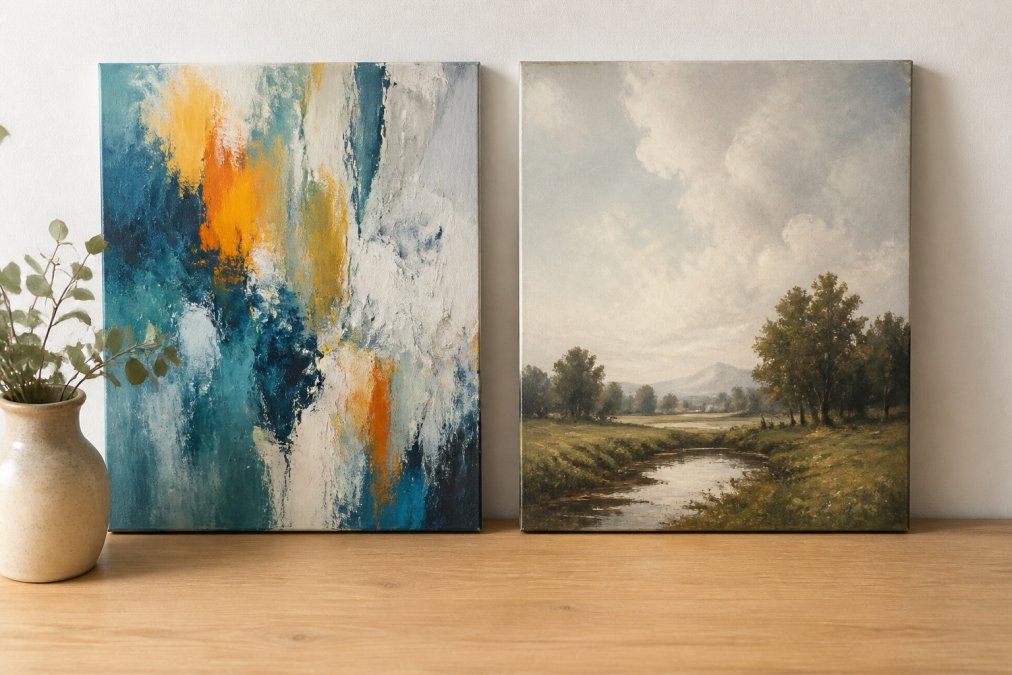
 comparison
Abstract Art vs Traditional Art for Home Decor
Table of Contents
- Abstract Art vs Traditional Art for Home Decor: A Side-by-Side Comparison
- Cost and Investment Value
- Emotional Impact and Mood
- Abstract Paintings for Living Room Decor: Why They Dominate Modern Spaces
- How to Style Abstract Art So It Actually Works in Your Room
- Mixing Art Styles in Interior Design: A Practical Framework
- Pros and Cons: Abstract Art vs Traditional Art at a Glance
- Where Each Style Wins: Scenario-Based Recommendations
- Frequently Asked Questions
Last Updated: September 22, 2026
Abstract Art vs Traditional Art for Home Decor: A Side-by-Side Comparison
Abstract art holds a 30.49% share of the wall art market in 2026, according to Fortune Business Insights' wall art market report, and that number keeps climbing. The reason is simple: abstract art is an abstract art form built on color, shape, and texture rather than recognizable subjects, which makes it adaptable to nearly any interior. This guide from Susan Fielder Art breaks down how abstract art vs traditional art for home decor actually compare on cost, emotional pull, and long-term value. Below, we cover where each style wins, how to mix them, and which one fits your room. The global wall art market sits at roughly $64.22 billion in 2026, so the choice is not niche; it is mainstream.
Abstract art is a visual style that uses color, line, form, and texture instead of realistic representation to create meaning. Traditional art refers to representational work, including landscapes, portraits, and still lifes, that depicts recognizable subjects.
Cost and Investment Value
Abstract originals and traditional originals carry different price logic, and understanding that gap prevents an expensive mistake. Traditional art, especially representational pieces, often commands higher prices per original because of the skill required to render recognizable detail. Abstract work tends to cost less at the entry point while offering comparable or stronger resale appeal in contemporary markets.
Here is how the two styles typically compare:
| Factor | Abstract Art | Traditional Art |
|---|---|---|
| Entry price (originals) | Lower to mid | Mid to high |
| Print availability | Widespread | Widespread |
| Resale demand | Growing | Stable |
| Style flexibility | High | Moderate |
| Emotional read | Open to interpretation | Direct narrative |
Abstract prints also integrate into traditional interiors when framed in classic gold or neutral tones, according to About Wall Art's design guidance. That flexibility means an abstract piece rarely locks you into one room style.
Emotional Impact and Mood
Mood is where the two styles diverge most, and it is the factor buyers underestimate. Traditional art tells you what to feel: a seascape signals calm, a portrait signals history. Abstract art asks you to bring your own meaning, which is why collectors describe emotionally charged pieces as more personal over time.
Nearly 70% of homeowners now name texture as a primary factor when selecting wall art, according to Acousart's 2026 home decor trends report. That preference explains the shift toward tactile, three-dimensional abstract compositions over flat canvas. Texture adds physical presence that a smooth print cannot match.
Not everyone responds the same way. Some buyers find highly abstract work polarizing, as noted in Reddit's r/interiordecorating discussions, so a piece that moves one person may leave another cold. That is not a flaw; it is the nature of non-literal art.
Abstract Paintings for Living Room Decor: Why They Dominate Modern Spaces
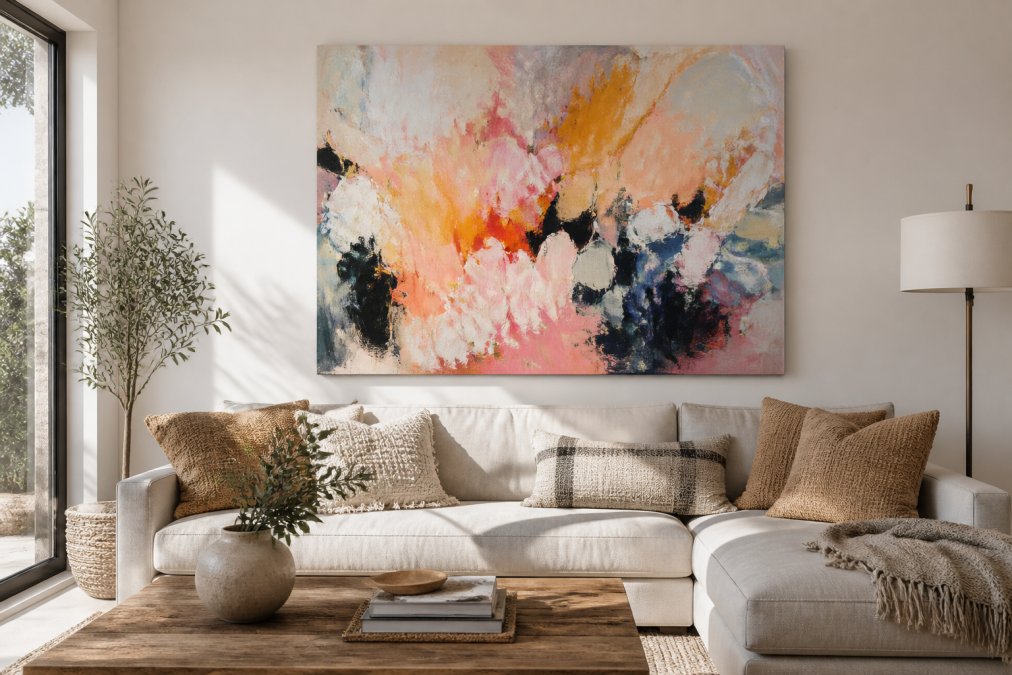
Abstract paintings for living room decor dominate because they anchor a room without dictating its story. A living room is a shared, multi-purpose space, and abstract work adapts to how that space changes across seasons and moods.
Fortune Business Insights (2026) notes that abstract art is more adaptable than traditional art precisely because it complements diverse interior styles. That adaptability shows up in practice: a bold abstract canvas becomes the focal point above a sofa, while a muted piece recedes and lets your furniture lead.
Current design guidance points to fewer, more impactful pieces rather than gallery-style walls, per My Photo Station's 2026 wall art guide. One strong abstract painting often does more for a living room than five small prints.
For buyers who want original work with a story behind it, Susan Fielder Art offers emotionally charged abstract paintings, and 10% of all proceeds go to pancreatic cancer research. Each piece carries a narrative of healing and resilience, which gives the artwork a layer most mass-produced prints cannot offer.
How to Style Abstract Art So It Actually Works in Your Room
Styling abstract art comes down to scale, color, and restraint. Get those three right and almost any piece works; get them wrong and even a great painting looks lost.
Start with scale. A canvas should span roughly two-thirds to three-quarters of the width of the furniture beneath it.
- Match scale to furniture: too small reads as an afterthought
- Repeat one accent color: ties the piece to the room
- Leave breathing room: blank wall space frames the art
- Use warm wall colors: a documented 2026 trend pairing
- Light it properly: a picture light or angled lamp adds depth
Mixing Art Styles in Interior Design: A Practical Framework
Mixing art styles in interior design works best when you assign each style a clear role. The mistake most people make is treating abstract and traditional as competitors when they are actually complements.
Use this framework:
- Anchor with one style: pick abstract or traditional as your dominant look
- Accent with the other: add one contrasting piece in a smaller size
- Bridge with framing: neutral or gold frames soften the contrast
- Repeat a color: pull one hue from each piece into the room
- Limit to two styles: a third creates visual noise
Pros and Cons: Abstract Art vs Traditional Art at a Glance
Each style has real trade-offs, and honest buyers weigh both before spending. Here is the clearest breakdown.
Abstract art pros:
- Adapts to changing decor and multiple rooms
- Open to personal interpretation
- Strong fit for contemporary and transitional spaces
- Growing market demand and resale interest
Abstract art cons:
- Can feel polarizing to some viewers
- Lacks the literal storytelling of representational work
Traditional art pros:
- Immediately readable and universally understood
- Often higher per-piece value for originals
- Timeless in classic and heritage interiors
Traditional art cons:
- Less flexible across changing design trends
- Ties a room to a specific subject and mood
Where Each Style Wins: Scenario-Based Recommendations
Match the style to your situation rather than to abstract trends alone. These scenarios cover the most common buyer profiles.
- Renting or moving often: abstract wins for portability across spaces
- Classic, formal home: traditional wins for cohesion
- Open-plan modern living room: abstract wins as a focal anchor
- Family heirloom wall: traditional wins for continuity
- First original art purchase: abstract wins on entry price
- Collecting for resale: original works from either style, with authenticity documentation
Frequently Asked Questions
How does abstract art change the mood of a room compared to traditional art?
Abstract art uses color, shape, and texture to create an emotional response rather than depicting a recognizable scene. This can make a room feel more dynamic, modern, or serene depending on the palette. Traditional art, with its literal imagery, often anchors a space in a specific narrative or historical context. According to Fortune Business Insights, abstract art is more adaptable because it complements diverse interior styles, allowing it to shift the mood without clashing with existing decor.
Can you mix abstract and traditional art in the same space?
Yes, and designers do it often. The key is to create a visual bridge: repeat a color from the traditional piece in the abstract work, or use similar frame finishes. Mixing art styles in interior design works best when one style dominates and the other accents. For example, a traditional landscape might hang in a dining room while an abstract piece anchors the living room, creating a cohesive flow without monotony.
What are the benefits of choosing original abstract paintings for home decor?
Original abstract paintings offer one-of-a-kind character and investment potential that prints cannot match. They also support living artists directly. Many buyers find that original work carries emotional depth and texture that reproduces poorly. As noted by Acousart, nearly 70% of homeowners now prioritize texture when selecting wall art, and original abstract pieces often deliver that tactile quality. Additionally, buying from artists who donate to causes, like Susan Fielder Art, adds a layer of social impact.
Does traditional art work better in formal or casual home settings?
Traditional art, such as landscapes or portraits, often suits formal settings like dining rooms or offices because its recognizable subjects convey stability and heritage. In casual spaces, it can feel out of place unless balanced with more relaxed decor. Abstract art, by contrast, adapts to both formal and casual environments, especially when styled with neutral tones or classic frames, as suggested by About Wall Art. The choice depends on the atmosphere you want to create.
How do I decide between abstract and traditional art for a living room?
Start by considering the room's existing palette and architecture. If your living room has clean lines and neutral furniture, abstract art can add energy and color without overwhelming. If the room features classic moldings and antiques, traditional art may harmonize more naturally. Also think about your emotional goal: abstract art tends to evoke feeling and imagination, while traditional art tells a story. Test both by holding up samples or using online preview tools before committing.
Choosing art is a challenge because the "right" answer depends on your space, your budget, and how much meaning you want the piece to carry. Susan Fielder Art makes that decision easier with one-of-a-kind abstract originals, a narrative of healing and resilience behind every piece, and 10% of proceeds donated to pancreatic cancer research. If you want artwork that transforms your space and supports a cause, browse the collection at Susan Fielder Art and find the piece that speaks to your room.