 ultimate-guide
Abstract Art That Tells a Story: A 2026 Guide
Table of Contents
- What Abstract Art That Tells a Story Actually Is
- Narrative Abstraction Techniques: How Artists Build Stories Without Representation
- How to Interpret Abstract Art: A Psychological Framework
- Visual Storytelling Examples: From Subconscious Expression to Viewer Perception
- The Artist's Process: Translating Emotion Into Non-Representational Form
- Building Your Own Visual Language: Practical Exercises for Viewers and Creators
- Why Abstract Storytelling Resonates: The Power of Interpretive Ambiguity
- Frequently Asked Questions
Last Updated: August 12, 2026
What Abstract Art That Tells a Story Actually Is
Abstract art that tells a story conveys narrative, emotion, and meaning through non-representational forms rather than recognizable subjects. Instead of depicting a person, place, or object directly, the artist uses color, shape, texture, and composition to communicate a narrative arc that viewers interpret through their own experience.
This differs fundamentally from traditional representational storytelling. Where a portrait painter shows emotion through a face, an abstract artist builds that same resonance through brushwork, color, and spatial relationships. The viewer becomes an active participant in meaning-making rather than a passive observer.
At Susan Fielder Art, this philosophy drives emotionally charged paintings that transform spaces through their visceral impact. Each piece reflects a narrative of healing and resilience, inviting viewers to find their own story within the work. Abstract art that tells a story isn't decoration, it's a conversation between artist and viewer, where interpretive ambiguity becomes the vehicle for connection.
Without recognizable imagery, the artist speaks directly to the subconscious. A viewer doesn't need to understand the artist's literal intent to feel the emotional truth embedded in the work.
Narrative Abstraction Techniques: How Artists Build Stories Without Representation
Narrative abstraction techniques are the specific methods artists employ to construct meaning and emotional arc without depicting recognizable subjects.
Color as Emotional Language
Color functions as the primary emotional vocabulary in narrative abstraction. Warm colors, reds, oranges, yellows, evoke energy, passion, or urgency, while cool colors, blues, greens, purples, suggest calm, introspection, or melancholy. A painting might move from deep blues suggesting uncertainty through increasingly warm tones toward yellows and oranges, implying transformation. This color journey mirrors narrative progression: conflict, development, resolution.
The relationship between adjacent colors intensifies emotional impact. High contrast creates tension and dynamic movement. Analogous color schemes generate harmony. By layering these relationships, artists build complexity that rewards sustained viewing.
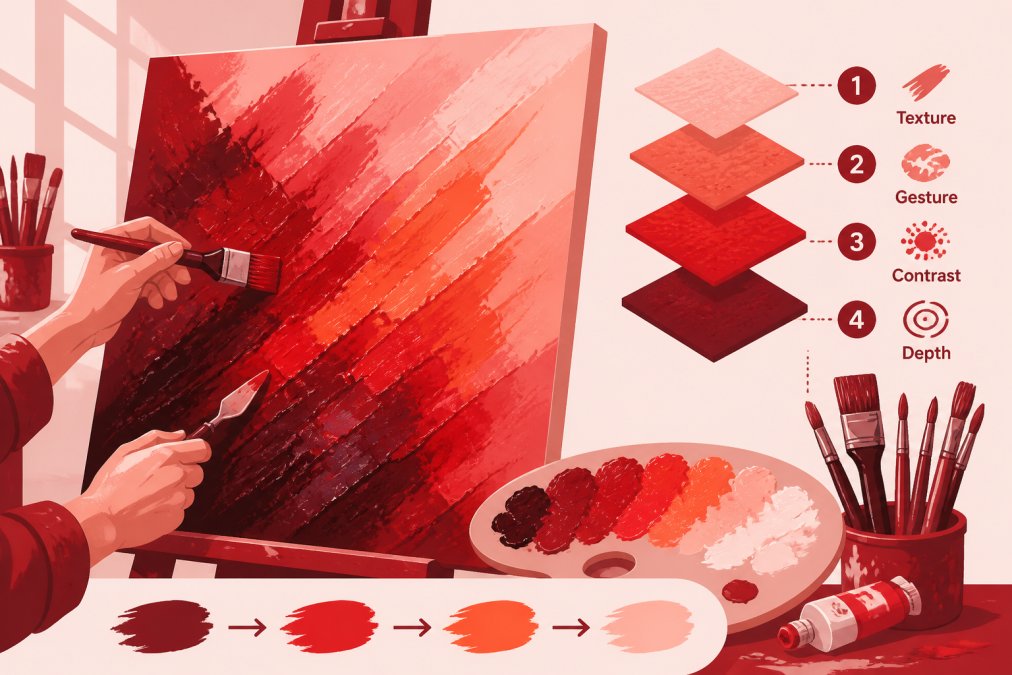
Brushwork and Gestural Movement
Brushwork communicates the artist's emotional state with remarkable directness. Bold, sweeping gestures suggest confidence and energy. Small, deliberate marks convey precision or anxiety. The physical act of painting becomes visible in the final work, creating a record of the artist's emotional journey.
Gestural painting creates rhythm and movement across the canvas. These gestures function like visual language, where the viewer reads emotional content through the quality of the mark itself. A hesitant, broken line communicates differently than a fluid, continuous stroke.
Layering gestural marks creates temporal depth. Viewers perceive which marks were made first, which were added later, which were deliberately obscured. This mirrors how stories develop through initial impulses, reconsiderations, and final resolutions.
Layering and Compositional Structure
Layering techniques build visual and conceptual depth. Transparent layers create new colors and complexity. Opaque layers suggest concealment, loss, or transformation. This physical layering mirrors narrative structure: exposition, complication, climax, resolution.
Compositional structure guides the viewer's eye and emotional journey. Diagonal compositions create movement and tension. Centered, symmetrical arrangements suggest stability. Scattered, fragmented compositions evoke chaos. These structural choices communicate narrative content as effectively as subject matter would in representational work.
Ambiguous spatial relationships challenge viewers to construct meaning actively rather than passively receive it, deepening engagement and personal resonance.
How to Interpret Abstract Art: A Psychological Framework
Interpreting abstract art that tells a story requires understanding how the human brain processes visual information and assigns meaning.
Recognizing Visceral Reactions
The first step is acknowledging your immediate, visceral reaction before analyzing. What do you feel? Does the work energize or calm you? These immediate responses are the primary content of abstract work, not secondary to intellectual analysis.
Visceral reactions occur because abstract art bypasses the rational mind and speaks directly to emotional centers. The second layer involves noticing which specific elements triggered your response, color, gestural quality, compositional balance. This awareness transforms passive viewing into active interpretation.
The Role of Titles in Guiding Interpretation
Titles function as crucial interpretive guides in abstract work. A painting titled "Emergence" creates an entirely different viewing experience than the same work titled "Dissolution." The title provides a framework that shapes how viewers construct their own interpretation without dictating specific narrative content.
Effective titles suggest emotional or conceptual territory without imposing meaning. When viewing abstract work, let the title inform your interpretation without replacing your own response. Does it align with your visceral reaction? Does it suggest meanings you might not have initially perceived?
Visual Storytelling Examples: From Subconscious Expression to Viewer Perception
Abstract art that tells a story operates across a spectrum from highly personal, subconscious expression to carefully constructed visual language designed for viewer interpretation.
Some artists begin with intuitive, spontaneous mark-making, allowing the subconscious to guide creation. This generates works of remarkable emotional authenticity. Other artists work with deliberate conceptual frameworks, consciously constructing visual metaphors designed to communicate specific emotional content.
The most effective abstract storytelling combines both approaches. The artist begins with intuitive impulse, then refines and structures the work to enhance clarity and impact. When interpreting abstract work, consider where it falls on this spectrum. Does it feel spontaneous or carefully constructed? Understanding the artist's approach deepens appreciation for the work.
The Artist's Process: Translating Emotion Into Non-Representational Form
Creating abstract art that tells a story requires translating internal emotional or conceptual experience into external visual form without relying on recognizable imagery.
Many artists begin by identifying the emotional or narrative territory they want to explore. From this conceptual foundation, artists experiment with formal elements, color, mark-making, composition, that embody the intended emotional content. This experimentation is iterative, with the work evolving toward coherent expression of the initial intent.

The final stage involves refinement and resolution. The artist considers whether the work successfully communicates the intended emotional arc. Crucially, the artist must ultimately relinquish control. Once released to viewers, the work's meaning becomes collaborative. The artist's intent informs the work, but viewer perception determines its final meaning.
Building Your Own Visual Language: Practical Exercises for Viewers and Creators
Practical exercises build skills and understanding for both artists and viewers.
Exercise 1: Color Progression Mapping
Select an abstract work that resonates with you. Identify the primary colors and trace the visual journey they create across the canvas. Create a simple sketch showing the color journey. This trains perception of how color functions as narrative language.
Exercise 2: Gestural Translation
Choose an emotion or concept, joy, uncertainty, resilience, transformation. Make gestural marks that embody this emotion without drawing recognizable images. This develops intuitive understanding of how mark-making communicates emotional content.
Exercise 3: Compositional Framing
Using a viewfinder, examine how different framings change your interpretation of an abstract work. This reveals how compositional choices shape interpretation.
Exercise 4: Narrative Arc Identification
Study an abstract work and write a brief description of the emotional or narrative arc you perceive. Compare your interpretation with others' responses. The differences reveal how abstract art generates multiple valid interpretations while remaining coherent.
Why Abstract Storytelling Resonates: The Power of Interpretive Ambiguity
Abstract art that tells a story achieves its power partly through what it doesn't show. The absence of literal imagery creates space for viewer interpretation and personal connection. This interpretive ambiguity is the source of the form's universal resonance.
When a work depicts a specific person or situation, viewers can only relate through similarity to their own experience. An abstract work invites every viewer to find their own story within it. A viewer processing grief might see loss and transformation in colors and gestures that another viewer experiences as emergence and hope. Both interpretations are valid.
This ambiguity also means abstract art deepens with repeated viewing. Initial responses evolve as viewers bring new experiences and perspectives to the work. A painting that moved you five years ago might communicate something entirely different today, reflecting your own growth and change.
Susan Fielder Art recognizes this power of interpretive ambiguity. Each piece is designed to speak across different emotional contexts and personal narratives. The same painting might resonate with someone processing loss, someone celebrating transformation, or someone seeking beauty and energy in their space.
The interpretive space that abstract art creates also generates conversation and connection. When viewers discuss abstract work, they articulate their own interpretations and emotional responses, building self-awareness and community through shared engagement with ambiguous meaning.
Abstract art that tells a story represents one of the most direct forms of visual communication available. By speaking through emotion and form rather than literal imagery, this work bypasses intellectual filters and creates immediate resonance. Whether you're drawn to abstract art as a viewer seeking meaningful connection or as a creator translating internal experience into external form, the principles of narrative abstraction offer pathways to deeper engagement. Susan Fielder Art's collection of emotionally charged abstract paintings demonstrates how this form can transform your space while supporting a greater cause. Explore original creations that speak to your own narrative of resilience and transformation.
Frequently Asked Questions
Can abstract art really convey a specific narrative?
Yes, abstract art tells stories through visual language rather than literal representation. Artists use color, form, brushwork, and compositional structure to express narratives of emotion, experience, and meaning. The narrative may not depict recognizable objects, but the viewer's emotional response and interpretation create the story. This open-ended quality allows each viewer to connect with the work in a deeply personal way.
How do I interpret abstract art that tells a story?
Start by observing your visceral reaction: what colors, shapes, and movements draw your eye? Notice the rhythm, energy, and spatial relationships within the composition. The artist's title often provides a framework for interpretation without limiting your own reading. Consider what emotions or memories the piece evokes. Abstract art interpretation relies on your unique perspective, making the experience personal rather than prescriptive.
What techniques do artists use in narrative abstraction?
Artists employ several key techniques: chromatic storytelling through color relationships that evoke specific moods, gestural brushwork that conveys movement and emotion, layering techniques that build visual metaphors, and compositional structure that guides viewer perception. These elements work together to create dynamic tension and emotional resonance without depicting recognizable subjects, allowing the abstract form itself to carry narrative weight.
How is abstract storytelling different from traditional narrative art?
Traditional narrative art tells stories through recognizable imagery, figures, objects, and scenes that viewers immediately understand. Abstract art that tells a story conveys narrative through non-representational elements: color, form, texture, and movement. This approach invites interpretive ambiguity, allowing viewers to find personal meaning rather than following a predetermined story. Both are valid forms of visual storytelling; they simply use different visual languages to achieve emotional resonance.