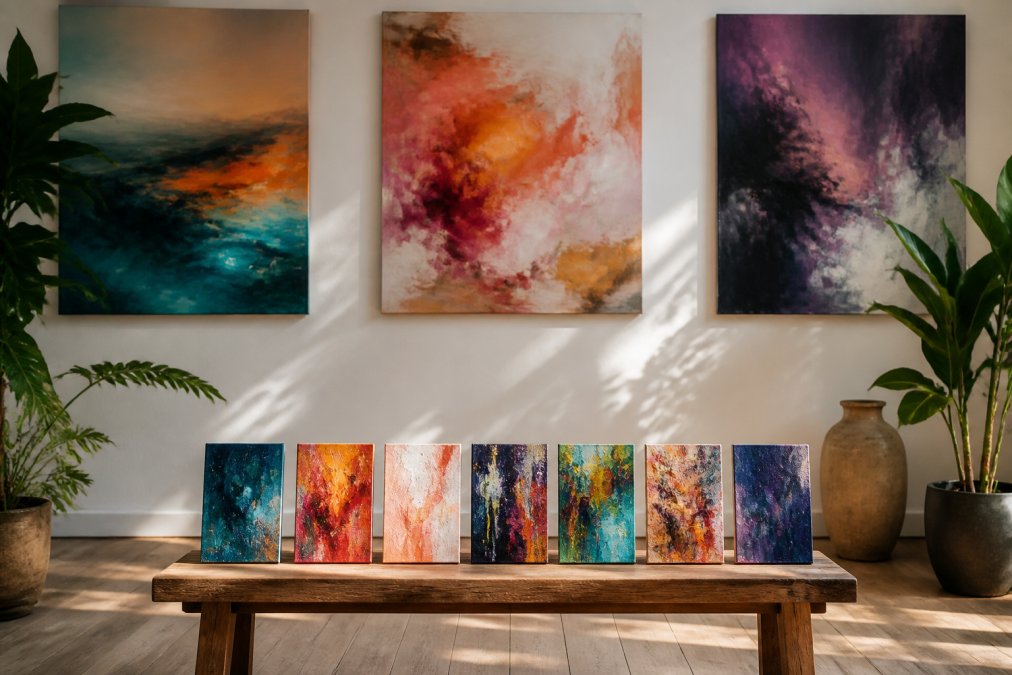
 listicle
10 Best Abstract Art Pieces for Emotional Connection
Table of Contents
- Why Abstract Art Creates Emotional Resonance
- The Emotional Impact of Abstract Art Through Color and Form
- 1. Rothko's Color Field Paintings: Transcendence Through Simplicity
- 2. Kandinsky's Compositions: Spiritual Expression in Pure Abstraction
- 3. Pollock's Action Paintings: Raw Energy and Subconscious Release
- 4. Agnes Martin's Grid Works: Meditative Minimalism and Inner Peace
- 5. Hilma af Klint's Abstractions: Healing and Spiritual Connection
- 6. Helen Frankenthaler's Stain Paintings: Lyrical Abstraction and Freedom
- Frequently Asked Questions
Last Updated: September 1, 2026
Why Abstract Art Creates Emotional Resonance
Abstract art bypasses the rational mind and speaks directly to something deeper. When you stand in front of a gestural mark or a field of color, you're not decoding a representation, you're experiencing a direct transmission of the artist's emotion and energy. This is why the 10 best abstract art pieces for emotional connection have the power to transform a room and, more importantly, transform how you feel in it.
The research is clear. According to Duke University's cognitive psychology study, people felt significantly more emotionally moved by abstract paintings when the images spontaneously triggered autobiographical memories from their lives. Without a clear scene or object to focus on, viewers rely on their own experiences and memories to make sense of what they're seeing. This is the magic of abstraction: it becomes a mirror for your inner world.
Consider the numbers. The global wall art market was valued at $66.89 billion in 2025 and is projected to reach $145.49 billion by 2034, with the abstract segment holding a commanding 30.49% market share in 2026 (Fortune Business Insights, 2026). That growth reflects a fundamental shift in how people think about their spaces. They're no longer decorating with what looks nice. They're decorating with what feels true.
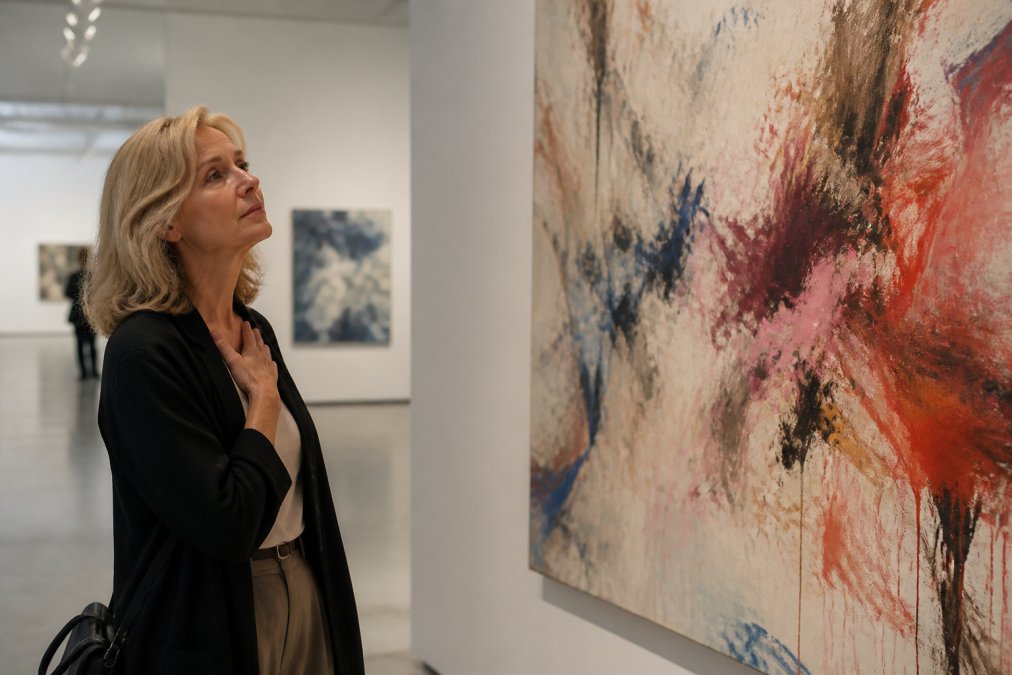
At Susan Fielder Art, we understand this distinction intimately. Our curated collection of emotionally charged abstract paintings is built on the premise that art should speak to something real inside you, not just fill wall space. Each piece in our collection reflects a narrative of healing and resilience, designed to resonate with viewers on a visceral level.
The emotional impact isn't random. According to research published in the Journal of Vision, specific color and contour features are used to convey different basic emotions in abstract visual art. Anger is generally conveyed through red tones and dense, aggressive marks. Sadness emerges through blue shades and vertical lines. This suggests that abstract artists, whether consciously or intuitively, are working with a visual language as precise as any spoken one.
The Emotional Impact of Abstract Art Through Color and Form
Color theory and compositional balance are not academic abstractions, they're the tools artists use to move you. When you feel a wave of calm wash over you in front of a Rothko, that's not coincidence. It's deliberate application of color relationships, saturation, and spatial proportion.
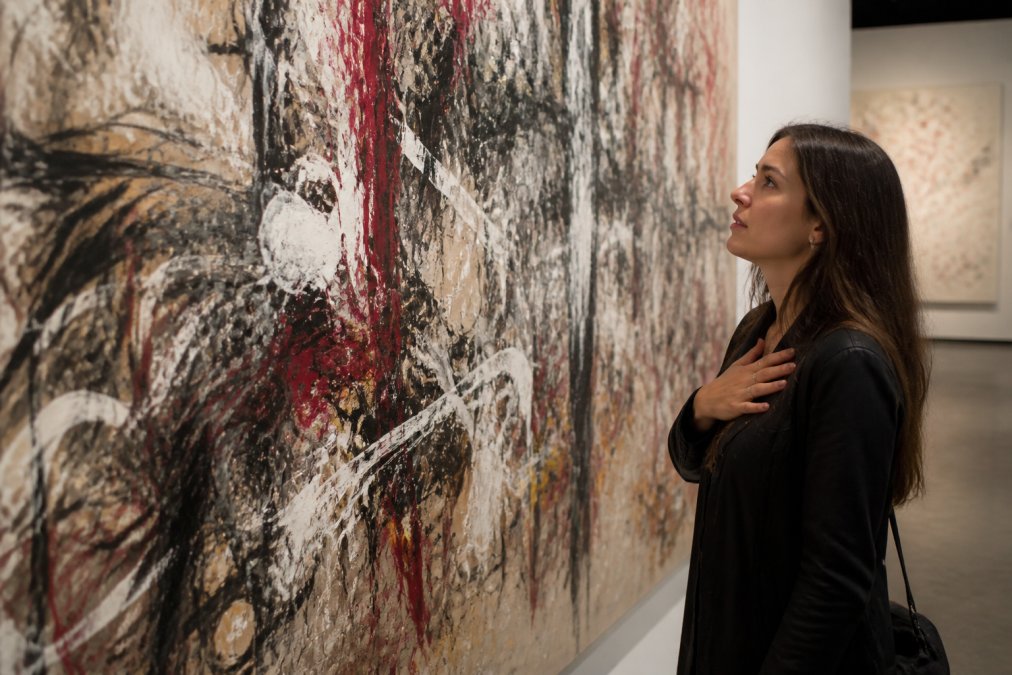
Viewing art for just 20 minutes can lower cortisol levels by 25%, according to research from University College London. That's not metaphorical wellness. That's measurable physiological change. Your nervous system responds to visual stimuli in ways your conscious mind doesn't fully control.
The emotional depth of abstract work comes from form and shape working in concert with color. A jagged, aggressive composition in warm tones conveys urgency and tension. Soft, flowing forms in cool tones suggest contemplation and peace. Artists working in non-representational modes are essentially conducting your emotional state through visual means.
Wassily Kandinsky, the pioneer of pure abstract art, understood this completely. As he stated, "Colour is a power which directly influences the soul." He wasn't being poetic, he was describing the mechanism by which visual stimuli bypass intellectual processing and access emotion directly.
The contrarian perspective matters here too. Not all abstract art creates positive emotional resonance. Some pieces can evoke stress or discomfort. An abstract painting dominated by harsh red spikes on a black background might convey anger or danger and raise physiological arousal rather than calm it (Aurum Altea, 2025). The emotional impact depends on the specific interplay of color, form, and your personal history with those visual elements.
1. Rothko's Color Field Paintings: Transcendence Through Simplicity
Mark Rothko's color field paintings represent abstraction at its most emotionally direct. His approach strips away all representational content and compositional complexity, leaving only expansive fields of color floating against one another. The result is deceptively simple and profoundly moving.
Rothko's method involved building up thin glazes of paint, allowing colors to vibrate and shift depending on viewing distance and light conditions. This creates an almost breathing quality, the painting changes subtly as you stand in front of it, drawing you deeper into contemplation. Viewers consistently report feeling enveloped by Rothko's work, as if the painting is a physical space they can inhabit.
The emotional resonance comes from chromatic intensity and the relationships between colors. A Rothko featuring deep reds and oranges against dark backgrounds can feel simultaneously warm and melancholic. The viewer's autobiographical memories attach themselves to these color relationships, which is why the same painting can feel different to different people, and even different to the same person on different days.
What makes Rothko's work essential for anyone exploring the 10 best abstract art pieces for emotional connection is its accessibility combined with its depth. You don't need art history knowledge to feel something. You walk in front of a Rothko and you feel it, whether that's peace, longing, or spiritual transcendence.
2. Kandinsky's Compositions: Spiritual Expression in Pure Abstraction
Wassily Kandinsky didn't arrive at abstraction by accident. He developed a systematic theory of how visual elements, color, form, line, and composition, correspond to emotional and spiritual states. His Compositions represent the culmination of this theory applied to canvas.
Kandinsky's approach combined geometric precision with gestural spontaneity. A Composition might feature sharp triangles and circles alongside flowing curves, creating dynamic tension between order and chaos. The result is visually complex but emotionally coherent, the viewer senses the artist's intentionality even if the specific meaning remains elusive.
The spiritual dimension of Kandinsky's work is not incidental. He believed abstract art could access dimensions of human experience that representational art could not. His Compositions function almost like visual music, they create emotional and spiritual resonance through the orchestration of visual elements rather than through narrative or recognizable subject matter.
For collectors and homeowners seeking abstract art that creates emotional connection, Kandinsky offers a bridge between intellectual engagement and visceral response. His work rewards sustained attention. The more time you spend with a Composition, the more you discover, new relationships between colors, unexpected harmonies between forms.
3. Pollock's Action Paintings: Raw Energy and Subconscious Release
Jackson Pollock's drip paintings represent a fundamentally different approach to abstraction. Rather than building carefully layered compositions, Pollock worked by pouring and flinging paint directly onto horizontal canvases. The result is gestural painting that captures the physical act of creation as much as any final image.
Pollock's method was new because it elevated the process itself to the level of subject matter. Viewers aren't looking at a representation of energy, they're looking at energy made visible. The tangled lines and layered splatters create a visual record of the artist's movement and decision-making in real time.
The emotional impact of Pollock's work comes from this raw directness. There's no mediation between impulse and execution. The painting is a direct transmission of the artist's subconscious expression. Viewers respond to this authenticity at a pre-rational level, which is why Pollock's work generates such visceral reactions, either profound connection or outright rejection.
Abstract art auctions rose more than 30% year-over-year in 2023-2024, with gestural and action paintings like Pollock's commanding significant price increases. This reflects growing recognition that the emotional intensity of these works justifies their investment value.
4. Agnes Martin's Grid Works: Meditative Minimalism and Inner Peace
Agnes Martin's grid paintings might appear austere at first glance, repetitive lines on monochromatic backgrounds. But this apparent simplicity conceals profound emotional and spiritual intention. Martin's grids are not mathematical constructs. They're meditative practices made visible.
Martin hand-drew every line in her grids, which means each one is slightly imperfect. This imperfection is essential. The subtle variations create a rhythm that engages the viewer's eye and draws them into a meditative state. Looking at a Martin grid, you're not analyzing form and composition, you're entering a contemplative space.
The emotional resonance of Martin's work comes from its restraint and precision. In a world of visual noise and constant stimulation, Martin's minimal aesthetic offers sanctuary. Her work creates the conditions for inner peace through visual means. This is why her paintings are increasingly popular in homes and offices where people seek refuge from overstimulation.
Martin's approach to abstraction prioritizes psychological and emotional impact over visual drama. She understood that less can generate more emotional resonance than abundance. The 10 best abstract art pieces for emotional connection include her work precisely because it operates at a frequency that contemporary life desperately needs.
5. Hilma af Klint's Abstractions: Healing and Spiritual Connection
Hilma af Klint was creating abstract paintings decades before Kandinsky and Mondrian, yet her work remained largely unknown until recently. Her abstractions emerged from spiritual practice and healing intention. She created her paintings as part of séances and spiritual exploration, which gives her work a unique dimension of purpose.
Af Klint's paintings combine geometric precision with organic forms, creating compositions that feel simultaneously structured and flowing. Her color choices often reflect spiritual symbolism, purples and golds suggesting transcendence, blues and greens suggesting healing and renewal.
The emotional and spiritual connection viewers experience with af Klint's work comes from her clear intention. These paintings weren't created to impress or provoke. They were created to heal and to access spiritual dimensions. That intention transmits across the century separating her practice from contemporary viewers.
For anyone seeking abstract art specifically for emotional healing and spiritual connection, af Klint's work is essential. Her paintings function almost like visual medicine, they create conditions for inner transformation through color, form, and the artist's embedded spiritual intention.
6. Helen Frankenthaler's Stain Paintings: Lyrical Abstraction and Freedom
Helen Frankenthaler developed the stain painting technique, pouring diluted paint onto raw canvas and allowing it to soak in naturally. This method created luminous, flowing compositions that feel spontaneous yet controlled. Her work represents a middle ground between Pollock's gestural intensity and Rothko's meditative color fields.
Frankenthaler's paintings evoke landscape and natural forms without representing them directly. Viewers often experience her work as depicting water, sky, or earth, not because those elements are literally depicted, but because the color relationships and compositional flow suggest them. This is abstraction functioning at its most poetic.
The emotional resonance comes from freedom and spontaneity combined with visual harmony. Frankenthaler's stain paintings feel liberated yet balanced. They suggest movement and change while maintaining compositional coherence. For viewers seeking abstract art that conveys both energy and peace, her work delivers both simultaneously.
Frankenthaler's influence on contemporary abstraction cannot be overstated. Her technical innovation opened new possibilities for how artists could work with color and form. More importantly, her work demonstrated that abstraction could be simultaneously intellectual and deeply felt.
The 10 best abstract art pieces for emotional connection share a common characteristic: they operate at the intersection of artistic intention and viewer experience. The artist creates the conditions for emotional resonance, but you complete the circuit by bringing your own memories, feelings, and experiences to the work.
When you're selecting abstract art for your space, look for pieces that create immediate emotional response. Pay attention to color relationships, compositional balance, and the overall feeling the work generates. Susan Fielder Art's curated collection of emotionally charged abstract paintings is specifically designed to create this kind of visceral connection. Each piece reflects a narrative of healing and resilience, ensuring that your art purchase supports both your emotional well-being and a greater cause, 10% of all proceeds are donated to pancreatic cancer research. Transform your space with abstract art that speaks to something true inside you.
| Artist | Primary Approach | Emotional Quality | Best For |
|---|---|---|---|
| Rothko | Color field painting | Meditative, transcendent | Seeking contemplation and spiritual resonance |
| Kandinsky | Geometric abstraction | Spiritual, dynamic | Intellectual engagement with emotional depth |
| Pollock | Action painting | Raw, energetic, intense | Visceral emotional impact and authenticity |
| Agnes Martin | Minimalist grids | Peaceful, meditative | Inner calm and visual sanctuary |
| Hilma af Klint | Spiritual abstraction | Healing, transformative | Spiritual connection and inner work |
| Helen Frankenthaler | Stain painting | Lyrical, free, balanced | Movement combined with harmony |
Frequently Asked Questions
How does abstract art create an emotional connection for the viewer?
Abstract art triggers emotion through color, form, and composition rather than recognizable objects. Research shows that people feel significantly more emotionally moved by abstract paintings when the images spontaneously trigger autobiographical memories from their lives. Color carries specific emotional weight, red and densely drawn marks convey anger, while blue shades and vertical lines express sadness. This allows your personal experiences and memories to shape how you interpret the work, creating a deeply individual emotional connection.
What is the emotional impact of abstract art on your mood and well-being?
Abstract art can positively influence mood and reduce stress. Viewing art for just 20 minutes can lower cortisol levels by 25%, according to research from University College London. Abstract wall art that resonates with you can enhance personal well-being and serve as a visual reminder of positive emotions or experiences. The emotional impact depends on how the piece's colors, forms, and composition align with your personal values and memories, making it a tool for emotional regulation and mindfulness.
How do I choose abstract art for my home that matches my emotional needs?
Start by identifying the emotional tone you want in your space. Do you seek calm and focus, or energy and passion? Consider the dominant colors, blues and greens promote relaxation, while reds and oranges energize. Look at the composition: geometric, orderly pieces feel structured; gestural, loose marks feel spontaneous. Test pieces in your space before committing, as lighting and wall color affect how the artwork feels. Trust your gut reaction, the strongest emotional connection comes from pieces that resonate without overthinking.
Are abstract art pieces good meaningful gifts for art lovers?
Yes, abstract art makes a powerful meaningful gift because it carries personal narrative and emotional depth. Original or curated abstract pieces show thoughtfulness, especially when you select work that aligns with the recipient's aesthetic or emotional journey. Abstract art gifts work well for those seeking healing, resilience, or transformation. Many contemporary abstract artists donate portions of proceeds to causes like pancreatic cancer research, adding a layer of social impact. The gift transcends decoration, it becomes a conversation piece and emotional anchor in their home.
Can abstract art help with healing and emotional processing?
Creating or viewing abstract art can support emotional healing. Expressive abstract art helps individuals express feelings when words fall short, fostering a sense of well-being and promoting positive brain changes. The abstract form removes the pressure of literal representation, allowing viewers to project their own experiences onto the work. For those processing grief, joy, or resilience, abstract pieces that resonate emotionally can serve as visual reminders of strength and transformation, making them valuable tools in healing journeys.