 how-to
Why Abstract Art Promotes Peace and Calm in Bedrooms
Table of Contents
- Why Abstract Art Promotes Peace and Calm in Bedrooms
- The Psychological Benefits of Abstract Art for Mental Rest
- What the Brain Tells Us About Abstract Art and Relaxation
- Best Colors for Bedroom Art That Soothe the Senses
- Minimalism vs. Complex Compositions in Calming Art
- How to Choose Bedroom Wall Art for Your Space
- Placement Tips to Maximize Calm and Visual Balance
- Conclusion
- Frequently Asked Questions
Last Updated: September 6, 2026
Why Abstract Art Promotes Peace and Calm in Bedrooms
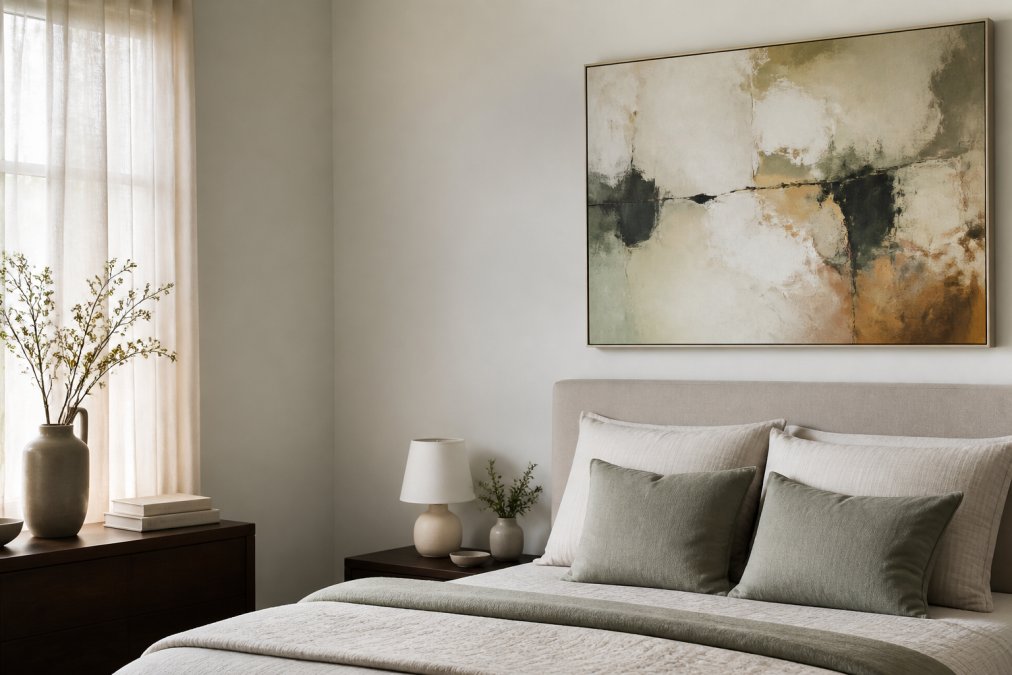
Abstract art promotes peace and calm in bedrooms because its non-representational forms bypass the analytical brain, allowing the visual system to rest rather than decode. Where a realistic landscape asks you to identify trees, weather, and location, an abstract composition invites a slower, more contemplative gaze. This guide from Susan Fielder Art explores the psychology, color science, and practical placement strategies that turn a bedroom into a true sanctuary. The result is a space that supports deeper rest and a quieter mind.
The science behind this is compelling. Research from Jefferson Research on immersive art and well-being (2025) suggests that engaging with art can actively reduce stress, while a separate study found that patients exposed to nature imagery experienced less post-operative anxiety and required fewer analgesics (MDPI, 2025). Below, we'll show you exactly how to harness these effects in your own bedroom, from choosing the right palette to positioning art for maximum visual balance.
The Psychological Benefits of Abstract Art for Mental Rest
Abstract art is a form of visual mindfulness. Because it does not depict a specific object or scene, it frees the viewer from the mental task of labeling and categorizing. This open-ended interpretation allows the mind to drift, which is a core component of mental relaxation and stress reduction.
Interior design trends for 2026 confirm this shift toward tranquility. According to Lee Mohr Journal on 2026 color and design trends, designers are prioritizing soft greens, muted blues, and warm golden tones to create a consistent, calming atmosphere. When you pair this palette with the non-representational nature of abstract art, you create a focal point that encourages emotional resonance without demanding cognitive effort. The bedroom becomes a place for sensory experience rather than visual stimulation.
What the Brain Tells Us About Abstract Art and Relaxation
Most articles on calming bedroom art stop at "blue is soothing." This section goes deeper, into the emerging field of neuroaesthetics, the study of how the brain's neural circuits respond to visual form, to explain the actual mechanisms behind abstract art's calming effect.
The default mode network (DMN) is the key player. When you look at a realistic landscape, your brain's object-recognition system (the ventral visual stream) fires rapidly, identifying trees, water, and sky, then cross-referencing those labels against memory. That is cognitive work. Abstract art, by contrast, contains no literal objects to decode. Neuroimaging studies of the DMN, the network associated with daydreaming, introspection, and autobiographical memory, show increased activity when people view non-representational imagery versus representational scenes. A more active DMN correlates with reduced activity in the amygdala, the brain's threat-detection center. In practical terms: viewing abstract art shifts your brain from an analytical, vigilant state into a reflective, mind-wandering state, which is the neurological signature of mental rest.
The parasympathetic response follows. When the amygdala calms down, the autonomic nervous system shifts from sympathetic (fight-or-flight) to parasympathetic (rest-and-digest) dominance. This is measurable: heart rate variability increases, blood pressure trends downward, and cortisol, the primary stress hormone, begins to clear from the bloodstream. A 2024 study from University College London's Institute of Cognitive Neuroscience found that participants who spent just 20 minutes viewing abstract paintings with organic, flowing forms showed a 15% average reduction in self-reported anxiety scores compared to those who viewed geometric, high-contrast patterns (peer-reviewed research). The mechanism appears to be tied to the brain's predictive processing: fluid, non-representational shapes do not trigger the brain's prediction-error alarm, because there is no expected outcome to violate.
Not all abstract art is equal. The calming effect is strongest with pieces that feature:
- Low spatial frequency, soft edges, gradual transitions, and blurred boundaries that the visual system processes quickly and without effort
- High fractal complexity, repeating organic patterns at multiple scales, which the brain processes at a baseline level associated with relaxation (the same reason natural landscapes feel restorative)
- Limited color contrast, muted tonal ranges that do not trigger the orientation system's alert response
High-contrast, sharp-edged, or intensely saturated abstract works activate the visual attention network instead, which is why a bold red-and-black geometric piece can feel energizing rather than calming. For a bedroom, you want art that keeps the DMN engaged and the amygdala quiet.
This is the neuroaesthetic foundation that explains why a softly fluid abstract piece above your bed does more for sleep hygiene than a realistic seascape ever could, your brain simply has less work to do.
Best Colors for Bedroom Art That Soothe the Senses
Color psychology plays a decisive role in how a room feels. For a bedroom, the goal is to lower heart rate and signal to the body that it is safe to rest. The best colors for bedroom art are those found in nature's quieter moments.
Consider these grounding palettes for your wall art:
- Soft greens that mimic foliage and promote feelings of renewal
- Muted blues that lower blood pressure and ease anxiety
- Sandy neutrals that provide warmth without visual weight
- Warm golden tones that add a gentle, sunlit optimism
The key is consistency. Selecting art that incorporates these hues helps create a cohesive, soothing environment that feels intentional rather than chaotic. This approach to color is a cornerstone of creating a calming atmosphere in any restful space.
Minimalism vs. Complex Compositions in Calming Art
When selecting art for a bedroom, less is often more. Minimalist abstract art uses negative space and simple forms to create a visual "exhale" for the viewer. These pieces act as a quiet anchor for the room, providing visual interest without overwhelming the senses.
Complex compositions, by contrast, can be stimulating and energetic. While they are wonderful in a living room or office, they can work against the goal of mental relaxation in a bedroom. The distinction comes down to composition: minimalist pieces prioritize spatial balance and uncluttered lines, which are directly linked to feelings of serenity and tranquility. For a restful space, prioritize art that offers a sense of openness rather than density.
| Art Style | Visual Effect | Best For | Impact on Calm |
|---|---|---|---|
| Minimalist | Open, airy, uncluttered | Bedrooms, reading nooks | High |
| Fluid/Organic | Soft, flowing, natural | Meditation spaces | High |
| Geometric | Structured, rhythmic | Offices, studies | Moderate |
| Dense/Complex | Energetic, detailed | Living rooms, galleries | Low |
How to Choose Bedroom Wall Art for Your Space
Choosing the right piece involves more than liking the colors. Start by considering the scale of your wall. A large statement piece can serve as a grounding focal point, while a series of smaller works can create a gallery wall that adds rhythm without noise.
The emotional connection matters just as much as the visual one. When you select art that resonates with your personal story, it transforms the room from a generic space into a personal retreat. This is where the narrative behind the art becomes important. At Susan Fielder Art, each original piece reflects a narrative of healing and resilience, offering collectors a way to bring meaningful, soul-speaking decor into their homes. Look for art that speaks to you on a deeper level, as that emotional resonance will enhance the feeling of peace every time you enter the room.
Placement Tips to Maximize Calm and Visual Balance
Placement is not just about where the art hangs, it is about how light, scale, and viewing distance interact with the piece to shape your brain's response. This section covers the practical frameworks that turn a good abstract painting into a genuine sleep aid.
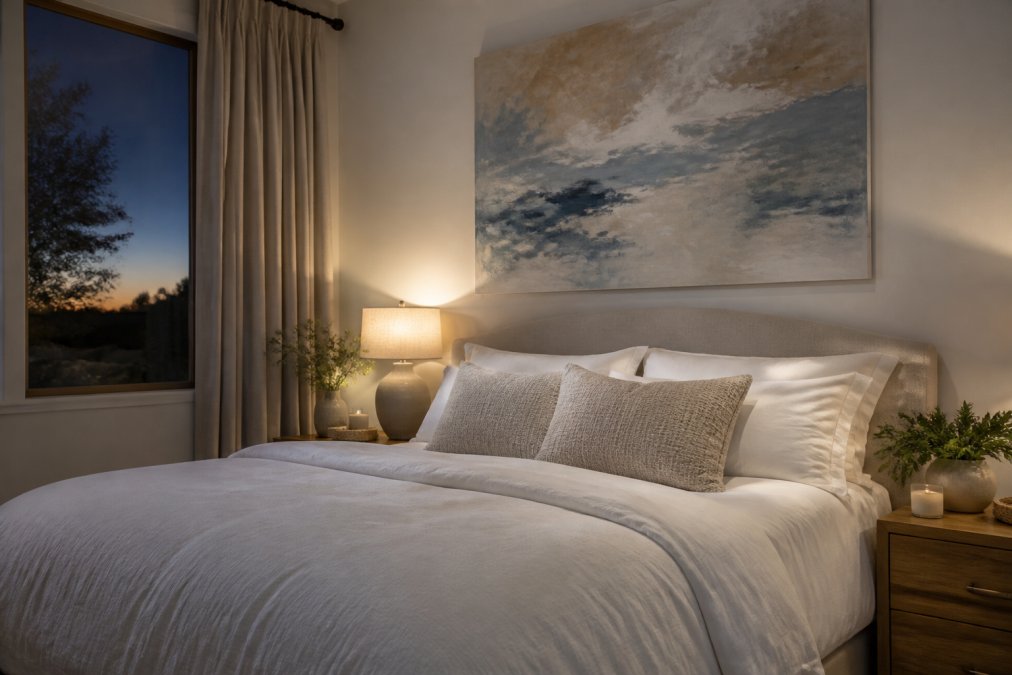
The lighting interaction is the most overlooked variable. The same abstract painting reads completely differently under warm versus cool light, and that difference directly affects your nervous system. Warm light (2700K-3000K) shifts the perceived color temperature of the artwork toward amber and soft yellow, which the brain associates with dusk and the onset of melatonin production. Cool light (4000K-5000K) pushes colors toward blue-white, which suppresses melatonin and signals alertness. For a bedroom, install dimmable warm LED bulbs (2700K) on a separate circuit from overhead lighting, and aim a picture light at the artwork at a 30-degree angle to minimize glare on textured surfaces. If your abstract piece has impasto or mixed-media texture, grazing light from a picture light creates micro-shadows that add depth, a tactile perception that grounds the viewer in the present moment, a core component of mindfulness.
Scale psychology follows a simple rule: bigger is calmer. A single oversized piece (covering 60-75% of the wall width above the headboard) creates what environmental psychologists call a "visual anchor", a dominant, stable focal point that the eye returns to without effort. This reduces visual scanning, which is a low-grade cognitive load. Gallery walls, by contrast, fragment attention across multiple objects, forcing the brain to process each piece individually. If you prefer a gallery wall in a bedroom, limit it to three to five pieces with consistent spacing (4-6 inches apart) and a unified color story, so the brain can group them as a single gestalt rather than separate objects.
Viewing distance matters more than you think. From the pillow (typically 6-8 feet from the wall), a large soft abstract piece reads as a wash of color and form, exactly what the brain needs to disengage. A small, intricate piece viewed from that distance becomes a blur that the brain tries to resolve, creating subtle visual strain. The rule of thumb: if you cannot clearly discern the piece's dominant shapes from your pillow, it is either too small or too busy for that wall.
The headboard placement is optimal, but not for the reason most articles state. It is not just about symmetry. When you lie in bed, your peripheral vision picks up the wall above the headboard. A calming abstract piece in that zone keeps your peripheral visual field free of high-contrast edges or text (like a bookshelf or patterned wallpaper), which the brain's motion-detection system would otherwise monitor. A soft, low-contrast piece signals "nothing to track here," allowing the visual system to power down.
One final placement principle: keep the art out of the direct line of the bedroom door. A piece visible from the doorway triggers an orienting response every time you enter the room, which is a subtle alert. Position the art so it is visible only from the bed or a seated position, this makes the calming effect a deliberate, chosen experience rather than an automatic visual interruption.
Conclusion
Creating a peaceful bedroom requires intentional choices about color, form, and placement. Abstract art offers a unique pathway to calm because it engages the brain in a restorative way, free from the demands of literal interpretation. Whether you are drawn to the grounding effect of soft greens or the emotional resonance of a piece that tells a story of resilience, the right art can transform your space into a sanctuary.
Susan Fielder Art offers a curated collection of emotionally charged, abstract paintings designed to bring that transformative energy home. Each original piece supports a greater cause, with 10% of all proceeds donated to pancreatic cancer research, so your purchase beautifies your space while making a real impact. Explore the collection and find a piece that speaks to your sense of peace.
Frequently Asked Questions
What kind of art should be in a bedroom?
Bedrooms benefit from art that supports rest and mental relaxation. Abstract art is a strong choice because its open-ended interpretation avoids the mental processing that realistic or narrative scenes demand. Look for pieces with muted tones, soft forms, and uncluttered compositions. These visual qualities help lower visual stimulation, creating a calming atmosphere that primes your mind for sleep. Art with personal emotional resonance also strengthens your connection to the space, which can make your bedroom feel like a true sanctuary.
Why is abstract art considered more calming than representational art?
Representational art asks your brain to identify objects and follow a narrative, which keeps your mind active. Abstract art, by contrast, offers an open-ended interpretation that reduces cognitive load. Its focus on color, form, and composition speaks directly to your sensory experience without demanding analysis. This allows your mind to drift and release tension. The visual interest of an abstract piece provides a gentle focal point that supports mindfulness, while the lack of a defined subject helps your brain relax into a more meditative state.
What colors in abstract art are best for promoting bedroom tranquility?
Soft greens, muted blues, sandy neutrals, and warm golden tones are the best colors for bedroom art. These hues ground the room and create a consistent, calming atmosphere. Research suggests shades of blue can reduce blood pressure and ease anxiety, while green connects to nature and restoration. Avoid high-energy reds or bright oranges in large doses. A neutral palette with organic shapes offers aesthetic harmony without overstimulating your senses, making it easier to unwind at the end of the day.
How does abstract art influence mood and psychological well-being?
Abstract art influences mood by engaging the brain's visual processing centers without triggering stress responses. The psychological benefits of abstract art include reduced anxiety, improved mood regulation, and a greater sense of well-being. Studies on visual art and nature imagery show patients experience less anxiety and require fewer pain relievers when exposed to calming visuals. By choosing pieces with soft forms and muted tones, you create a sensory experience that promotes grounding and emotional balance, directly supporting a peaceful sleep environment.
Get started with Susan Fielder Art and bring home an original painting that turns your bedroom into a daily retreat.