 how-to
How to Verify Original Art Authenticity: A Step-by-Step Guide
Table of Contents
- How to Verify Original Art Authenticity: Start With the Basics
- What Is a Certificate of Authenticity for Art and Why It Matters
- How to Research Provenance of Art: Tracing Ownership and History
- How to Spot a Fake Painting: Physical Inspection Techniques
- Scientific Authentication Methods for Original Art
- Art Authentication Services Cost and When to Hire a Professional
- Digital Authentication, Insurance, and Legal Documentation
- Conclusion: Building Confidence in Your Art Collection
- Frequently Asked Questions
Last Updated: August 9, 2026
How to Verify Original Art Authenticity: Start With the Basics
Verifying original art authenticity is critical for collectors. A single misidentified work can represent thousands of dollars in lost value and emotional disappointment. At Susan Fielder Art, we understand that collectors deserve clarity and confidence when acquiring original pieces, which is why we've compiled this comprehensive guide to help you navigate the authentication process with practical, actionable steps.
The difference between an authentic original and a well-executed forgery can be subtle, sometimes it comes down to pigment composition or brushwork patterns invisible to the naked eye. Other times, it's documented in plain sight through provenance records or catalogue raisonnés that few collectors consult. This guide walks you through the complete authentication journey: from initial research and physical inspection to professional evaluation and legal documentation. You'll learn which techniques you can apply yourself and when hiring an expert becomes essential.
What Is a Certificate of Authenticity for Art and Why It Matters
A certificate of authenticity (COA) is a formal document issued by the artist, artist's estate, gallery, or professional appraiser that verifies a work is a genuine original creation. It typically includes the artist's name, title, date of creation, medium, dimensions, and a statement confirming legitimacy.
A COA establishes a paper trail supporting the work's provenance and is essential if you ever need to resell, insure, or loan the piece. Insurance companies often require one before providing coverage. However, a certificate is only as credible as the entity issuing it. A COA from a reputable gallery, established appraiser, or the artist carries significant weight; one printed at home is worthless.
When purchasing from established sellers, COAs should include clear documentation of the issuer's credentials and contact information for verification. The best certificates reference the specific provenance research conducted and any scientific testing performed.
How to Research Provenance of Art: Tracing Ownership and History
Provenance is the documented ownership history of a work of art. It creates a chain of custody showing who owned the piece, when, and under what circumstances, one of the strongest indicators of authenticity.
Starting Your Provenance Search
Begin by gathering whatever documentation came with the piece: receipts, gallery labels, exhibition catalogs, insurance appraisals, or letters from previous owners. Contact the gallery or dealer if the work was purchased from one and ask for records about the piece's history before they acquired it.
Research the artist's exhibition history. Many established artists have catalogues raisonnés, comprehensive listings of every known work. These are the gold standard for authentication because they document where paintings have been exhibited and who owned them. If a catalogue raisonné exists for your artist, check whether your piece is listed. If it should be and isn't, that's a red flag.
Museum collections and major auction house records are public resources. Search databases maintained by institutions like the Smithsonian and major art museums. Even if your piece isn't in a collection, you might find exhibition records or references that connect to your work's history.
Documentation to Look For
Strong provenance typically includes:
- Original purchase receipts or gallery invoices with dates and seller information
- Exhibition catalogs showing the work displayed and dated
- Insurance appraisals from professional appraisers with credentials
- Correspondence from previous owners describing the work
- Photographs in publication or catalog entries
- References in the artist's catalogue raisonné
Gaps in provenance don't automatically indicate inauthenticity; older pieces often have incomplete records. However, significant gaps combined with other red flags warrant deeper investigation.
How to Spot a Fake Painting: Physical Inspection Techniques
Physical examination reveals enormous amounts of information if you know what to look for. This section covers techniques you can apply yourself before considering professional testing.
Examining the Canvas and Paint
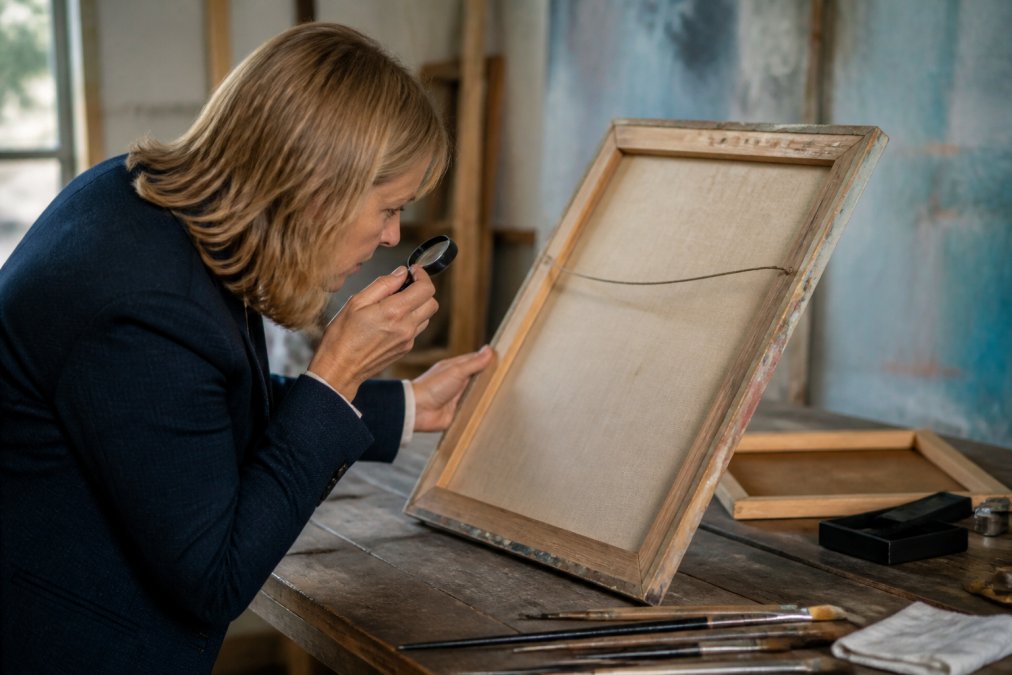
Original paintings created decades or centuries ago show specific aging patterns. Examine the back of the canvas for natural deterioration: slight discoloration, dust accumulation, evidence of previous repairs. New canvases are bright white or cream-colored; aged canvases develop a patina that's difficult to artificially replicate.
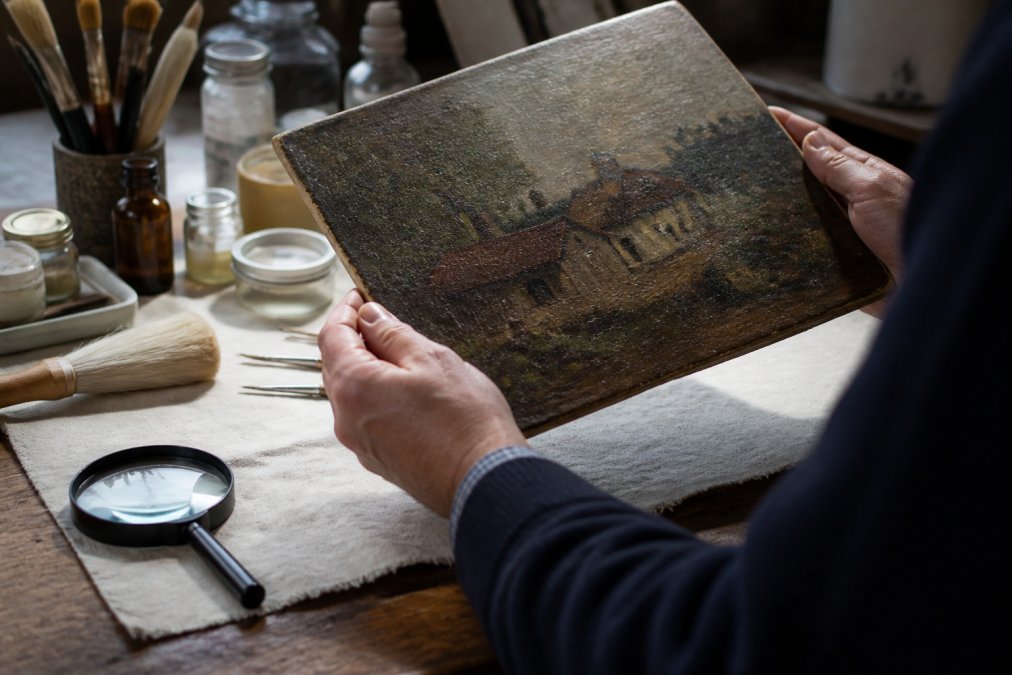
Look at the paint surface under strong, directional light. Original paint develops natural texture and finish over time. Brushstrokes should show variation in pressure and direction. Machine-made reproductions often have suspiciously uniform surfaces. Run your eye across the surface at a low angle; this reveals subtle topography that flat, mass-produced work typically lacks.
Check for foxing, small brown spots caused by oxidation and age. Foxing is common in older works and nearly impossible to fake convincingly because it occurs in unpredictable patterns. If a painting claims to be from the 1800s but shows zero foxing, that's worth noting.
The canvas edges tell a story too. Look at how paint meets the canvas edge. On original work, you'll often see paint extending slightly beyond where the canvas was stretched, or evidence of stretching bars. Forgers working from photographs often miss these details.
Checking for Common Signs of Forgery
Inconsistent brushwork is a red flag: if the painting shows masterful technique in some areas and amateur work in others, that suggests multiple hands or a forger copying from a photograph without understanding the artist's actual process.
Check the signature carefully against authenticated examples. Compare placement, size, style, and pressure. Forgers often struggle with signatures because they're matching a small detail rather than understanding how the artist naturally signed work.
Look for anachronistic materials. If a painting supposedly from 1920 contains synthetic pigments invented in 1960, that's conclusive evidence of forgery. Titanium white wasn't commercially available until the 1920s; certain synthetic reds and blues came even later.
The varnish or final protective layer reveals age and authenticity. Old varnish develops characteristic yellowing and cracking called "crazing." New varnish is clear and glossy. If a painting claims to be from 1950 but has pristine, modern-looking varnish, someone has recently refinished it.
Scientific Authentication Methods for Original Art
When physical inspection raises questions or when you need definitive proof, scientific testing provides answers that human observation cannot.
X-ray fluorescence (XRF) analysis is non-destructive and useful for collectors. It uses X-rays to identify the elemental composition of pigments without damaging the painting. A technician passes a handheld XRF device across the surface, revealing which elements are present in paint layers. This determines whether pigments match what was available during the claimed creation period. If a painting supposedly from 1890 contains zinc oxide as a primary pigment, something not widely used until the 1920s, that's a major authenticity concern.
Infrared reflectography reveals underdrawings and compositional changes beneath the paint surface. Many artists sketch before painting, and these underlying marks are invisible to the naked eye but show up under infrared light. Forgers working from photographs don't have access to these underdrawings, so their work shows no underlying sketch structure.
Radiocarbon dating establishes the age of organic materials like canvas or wood panels by measuring carbon-14 decay. It's particularly useful for older works where dating the substrate provides strong evidence of age. However, radiocarbon dating only confirms when the canvas was made, not when paint was applied.
Chemical analysis of paint samples provides the most definitive evidence. A tiny sample is removed and analyzed to determine pigment composition, binding medium, and age. However, this method is destructive and should only be used when non-invasive testing hasn't provided answers.
According to conservation standards established by the American Institute for Conservation, these scientific methods should always be performed by qualified professionals in laboratory settings.
Art Authentication Services Cost and When to Hire a Professional
Professional authentication exists on a spectrum, from informal evaluations to comprehensive forensic analysis.
A basic appraisal from a qualified professional typically costs between several hundred and a few thousand dollars, depending on the artwork's value and complexity. The appraiser examines the work, researches provenance, and provides written evaluation. This is often sufficient for insurance purposes.
Comprehensive authentication with scientific testing costs significantly more because it involves laboratory analysis. X-ray fluorescence and infrared reflectography can run into the thousands of dollars. For high-value works where authenticity is genuinely in question, these costs are justified.
What Professional Appraisers Evaluate
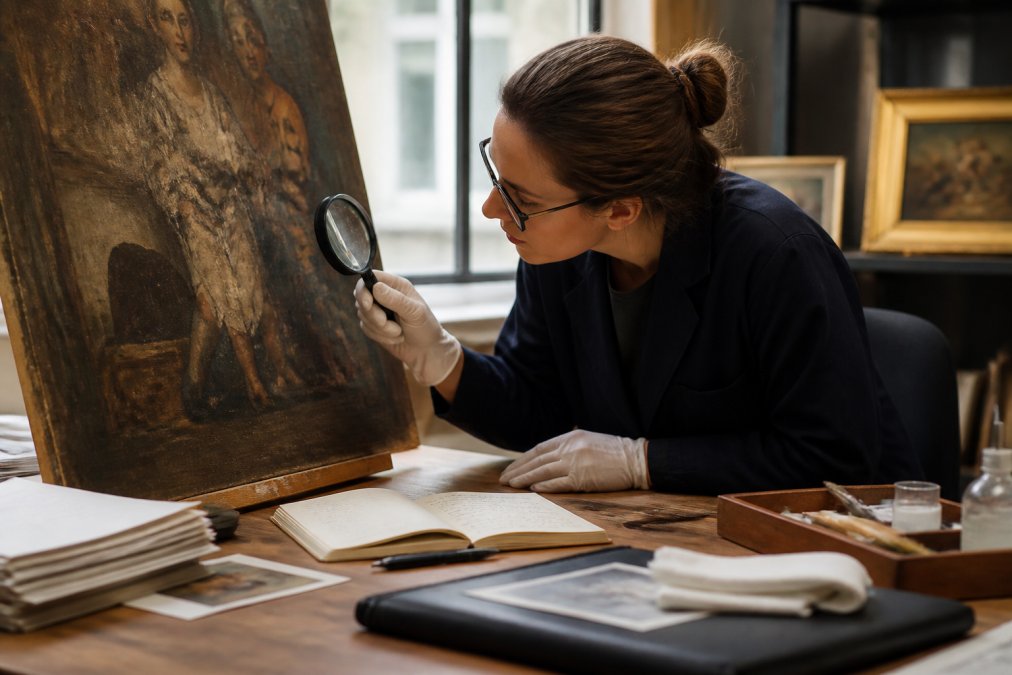
Qualified appraisers bring expertise far beyond visual inspection. They have access to databases of authenticated works, relationships with museum curators and conservation labs, and years of experience recognizing subtle signs of authenticity or forgery.
A professional evaluation typically includes:
- Detailed provenance research, including contact with previous owners and institutions
- Physical examination using magnification and specialized lighting
- Comparison with authenticated examples of the artist's work
- Research into the artist's known techniques, materials, and signature evolution
- Recommendations for scientific testing if needed
- Written documentation suitable for insurance, legal proceedings, or sale
When selecting an appraiser, verify their credentials. Look for membership in professional organizations like the Appraisers Association of America or the American Society of Appraisers. Ask about their specific experience with your artist or art period.
DIY vs. Professional Authentication
Start with DIY research and physical inspection. These steps cost nothing and often provide clarity. Research the artist's catalogue raisonné, examine the piece carefully under good light, and gather whatever provenance documentation exists. Many authenticity questions resolve at this stage.
However, professional help becomes necessary if you're purchasing a high-value work, provenance research reveals gaps or inconsistencies, or physical inspection raises red flags. For collectors building significant collections, establishing a relationship with a qualified appraiser is wise.
Digital Authentication, Insurance, and Legal Documentation
The art market is evolving, and new authentication methods are emerging. Some galleries and artists are experimenting with digital certificates and blockchain-based registries that create immutable records of ownership and authentication. However, blockchain authentication is only as reliable as the information entered initially; a forged work registered on a blockchain is still forged.
Digital documentation has become standard practice. Professional appraisers now photograph authenticated works from multiple angles and create detailed digital records. This documentation serves as evidence if authenticity is ever questioned. When you purchase from reputable sources, ensure you receive digital documentation alongside physical certificates.
Insurance documentation is critical. When you insure an artwork, the insurance company requires proof of value and authenticity. A professional appraisal becomes your proof. Keep this documentation in a secure location, separate from the artwork itself. Many collectors store copies digitally in cloud storage as backup.
Legal considerations matter, particularly if you're building a significant collection or plan to resell work. Your recourse if a work proves inauthentic depends on where you purchased it and what documentation was provided. This is why buying from established galleries with clear authenticity guarantees is important. Susan Fielder Art's registration with the Art Storefronts Organization and verified secure website provide documented accountability that protects your purchase.
According to guidance from the Smithsonian's authentication resources, maintaining detailed records of authentication, appraisals, and provenance research is essential for any serious collector. These records protect your investment and make future sales or donations significantly easier.
Conclusion: Building Confidence in Your Art Collection
Verifying original art authenticity doesn't require advanced degrees or expensive equipment. It requires patience, systematic research, and knowing when to bring in professionals. Start with provenance research and physical inspection. Progress to scientific testing if questions remain. Document everything: certificates, appraisals, photographs, and provenance records.
Building a collection of original artwork should be a source of joy, not anxiety. When you purchase from Susan Fielder Art, you're acquiring emotionally resonant, one-of-a-kind abstract paintings created with artistic integrity and backed by transparent authentication practices. Each piece reflects a narrative of healing and resilience, and your investment supports meaningful causes while transforming your space with vibrant energy. Shop now and discover original artwork you can own with complete confidence.
| Authentication Method | Best For | Cost Range | Destructive? |
|---|---|---|---|
| Physical inspection | Initial assessment, visual red flags | Free | No |
| Provenance research | Establishing ownership history, building documentation | $0-500 | No |
| Professional appraisal | Insurance, legal documentation, basic authentication | $500-3,000 | No |
| X-ray fluorescence | Pigment analysis, material verification | $1,000-3,000 | No |
| Infrared reflectography | Underdrawing analysis, compositional study | $1,500-4,000 | No |
| Chemical paint analysis | Definitive material composition | $2,000-5,000+ | Yes |
Frequently Asked Questions
What is a Certificate of Authenticity (COA) and is it legally binding?
A Certificate of Authenticity is a document issued by the artist, gallery, or appraiser that confirms a work is original and provides details about its creation, medium, and provenance. While it carries significant weight in the art market, it is not legally binding in the way a contract is. Its value depends entirely on the credibility of who issued it. A COA from the artist or a reputable auction house carries more weight than one from an unknown source. Always verify the issuer's credentials and look for their signature and contact information on the certificate.
How much does professional art authentication cost in the US?
Professional art authentication costs vary widely depending on the artwork's value, complexity, and the appraiser's credentials. Expect to pay anywhere from $300 to $2,000 or more for a formal appraisal. Certified appraisers through organizations like the American Society of Appraisers (ASA) or International Society of Appraisers (ISA) typically charge higher fees but provide legally defensible documentation. For insurance or legal purposes, professional authentication is often essential. Contact appraisers directly for quotes based on your specific piece and its estimated value.
What are the red flags of a fake or forged artwork?
Common signs of forgery include uneven or inconsistent brushwork, paint that appears too new or artificially aged, signatures that don't match authenticated examples, mismatched materials (modern paint on supposedly old canvas), and suspicious provenance gaps. Foxing or discoloration that looks artificial, overly perfect condition on old pieces, and lack of documentation are also warning signs. Forged works often show inconsistencies in the artist's known style, technique, or medium. Always compare the piece against multiple authenticated examples and request detailed provenance documentation before purchase.
Can I use Google Lens or image search to verify an original painting?
Google Lens and reverse image search are helpful starting points but not reliable authentication tools. They can help you identify the artwork's title, artist, and known editions, and show you where similar pieces have sold. However, they cannot verify originality or detect forgeries. These tools work best for research and comparison, not definitive proof. Combine image search with provenance research, physical inspection, and professional appraisal for genuine authentication. For original works, especially valuable ones, professional verification is always recommended over digital tools alone.