 how-to
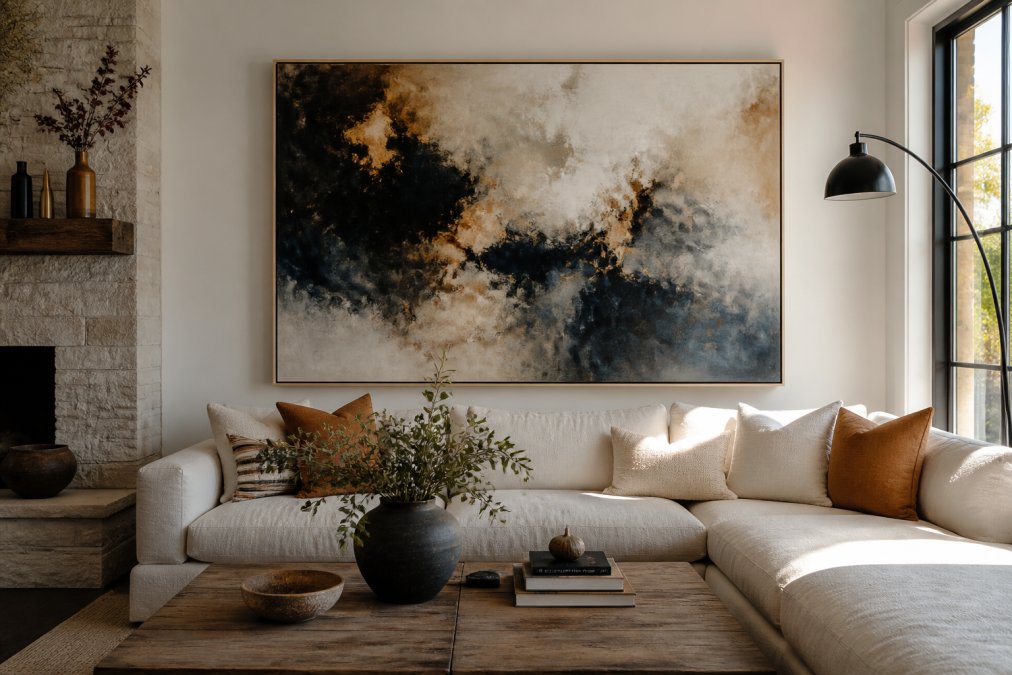
How to Style Large Abstract Canvas Art
Table of Contents
- Understanding Scale and Proportion for Large Canvas Art
- Best Height to Hang Large Canvas Art
- Styling Abstract Art Above a Couch
- Abstract Art Color Palette Coordination
- Lighting Techniques to Enhance Your Canvas
- Framing, Hardware, and Installation
- Maintenance and Care for Canvas Surfaces
- Frequently Asked Questions
Last Updated: August 11, 2026
Understanding Scale and Proportion for Large Canvas Art
Getting the scale right is where most people stumble when hanging large abstract canvas art. A piece that's too small disappears into the wall; one that's too large overwhelms the room. The trick isn't guessing, it's measuring your space first and understanding how your canvas should relate to the furniture beneath it.
Measuring Your Wall Space
Start by measuring the width and height of the wall section where you want to hang your piece. Use a measuring tape and write the dimensions down; eyeballing almost always leads to misjudgment.
Consider viewing distance too. If your living room is 12 feet deep, a 24-inch canvas reads as small, a 48-inch canvas reads as substantial, and a 60-inch canvas becomes a focal point. Large abstract canvas art works best when it occupies roughly 50-75% of your wall's visual area.
The Wall-to-Furniture Ratio
Your canvas should relate proportionally to the furniture below it. If you're hanging art above a 72-inch sofa, your canvas should be roughly 50-60 inches wide. Smaller, and it looks like an afterthought; larger than 80 inches, and it visually crushes the furniture.
For console tables, a canvas 24 inches wider than the console on each side creates visual balance. Measure your furniture width first, that measurement becomes your starting point for canvas selection. Susan Fielder Art's collection includes pieces across a range of dimensions, allowing you to match proportions to your specific space.
Best Height to Hang Large Canvas Art
The height at which you hang your canvas changes how it feels in the space. There's a science to this, and it's worth getting right.
Eye-Level Placement Standards
The standard rule is to hang the center of your artwork at 57-60 inches from the floor, roughly eye level for an average person standing in the room. In rooms with high ceilings (10 feet or more), shift it up by 6-12 inches to maintain visual balance with the architecture. In standard 8-foot ceilings, stick closer to the 57-60-inch standard.
Adjusting for Room Layout
If your canvas hangs above a sofa, the center should align roughly with the sofa's back height, typically 36-42 inches from the floor. This creates a visual connection between the furniture and the art.
If you're hanging your piece on a wall without furniture beneath it, the 57-60-inch eye-level rule works perfectly. In rooms with 9-10-foot ceilings, raise the center point to 62-66 inches. In vaulted or cathedral ceilings, raise it even higher to maintain proportion between the canvas, wall, and room architecture.
Styling Abstract Art Above a Couch
A sofa is the most common place to hang large abstract canvas art. Done well, it transforms the entire seating area.
Creating Visual Balance
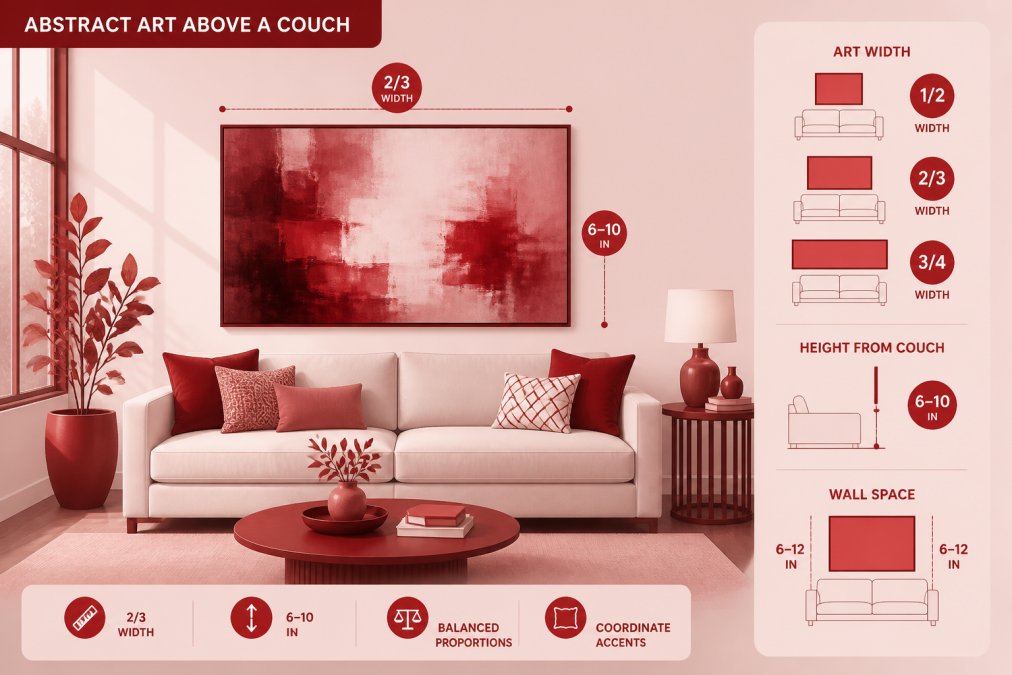
The canvas and sofa must work together visually. If your sofa is a bold color, deep gray, navy, or charcoal, your abstract art should either complement that darkness with equally bold tones or provide contrast with lighter, brighter colors.
Leave at least 12-18 inches of wall space between the top of the sofa and the bottom of the canvas. This breathing room prevents the piece from feeling like it's crushing the furniture. Throw pillows, blankets, and cushions should echo colors from your canvas without directly matching them. If your canvas features terracotta, rust, and cream, a terracotta throw pillow creates connection.
Negative Space and Breathing Room
Negative space is the empty area around and within your composition. A 12-18 inch gap between the sofa back and canvas bottom is the sweet spot for most standard sofas; for oversized or sectional sofas, extend this to 18-24 inches. The canvas should feel like it's hovering slightly above the furniture, not pressing down on it.
The interior composition of your abstract canvas also uses negative space. A piece with dense, busy composition needs more wall space around it, while a minimalist canvas with lots of white or neutral space can sit closer to other elements without feeling cramped.
Abstract Art Color Palette Coordination
Color is where styling large abstract canvas art becomes personal. Your canvas introduces color into the room, and everything else must either harmonize with it or provide intentional contrast.
Pulling Colors from Your Canvas
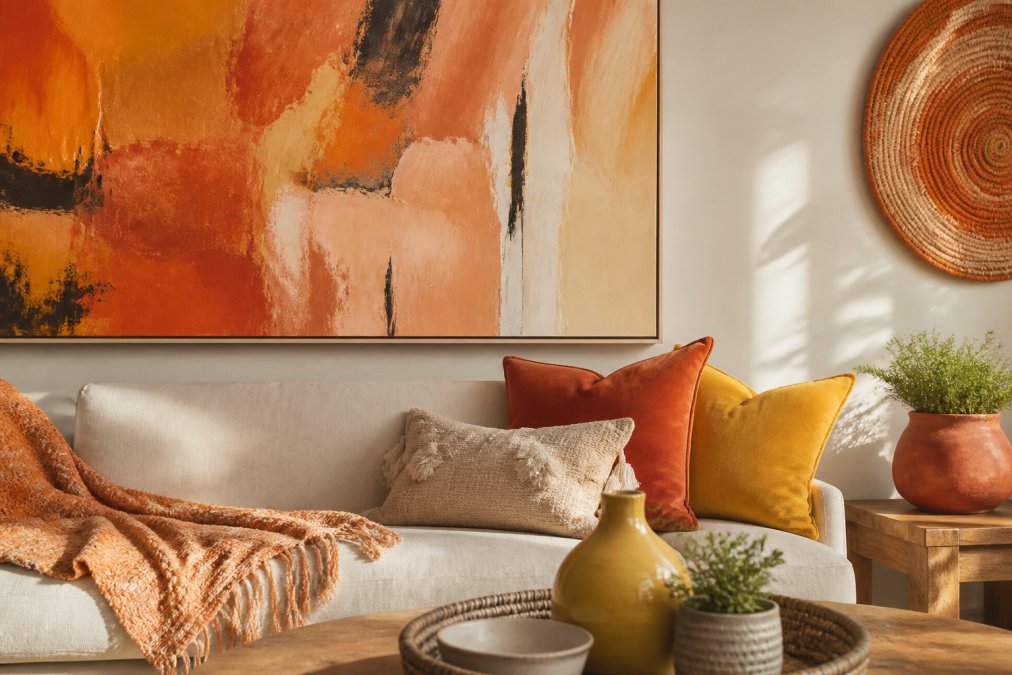
Identify the dominant colors in your canvas, most abstract pieces feature 3-5 primary colors plus neutrals. Determine which colors are warm (reds, oranges, yellows) and which are cool (blues, purples, greens). This distinction affects how the whole room feels: warm colors energize a space, while cool-dominated canvases create calm.
Pull one secondary color from your canvas, not the dominant one, but a supporting color. This becomes your accent color for the room. If your canvas features deep blue as the primary with rust as a secondary accent, use rust in your throw pillows, artwork accessories, or wall decor. Susan Fielder Art's abstract pieces are designed to work as focal points that inform the entire room's color story.
Bold vs. Minimalist Approaches
The bold approach embraces the canvas's colors fully, pulling multiple colors from the piece and repeating them throughout the room. This works when your canvas is the undisputed focal point.
The minimalist approach uses the canvas as a color accent against a neutral backdrop. Your walls, sofa, and major furniture stay neutral, whites, grays, beiges, blacks, while the canvas provides all the color drama.
Most successful rooms use a hybrid: a neutral foundation with 1-2 accent colors pulled from the canvas. A white or light gray wall, a neutral sofa, and terracotta accents pulled from your abstract canvas create balance.
Lighting Techniques to Enhance Your Canvas
Lighting transforms how your canvas reads in the space. Poor lighting makes even a striking piece look flat; good lighting brings out depth, texture, and color.
Accent Lighting for Impact
Dedicated accent lighting, typically a picture light mounted above the canvas or track lighting angled toward it, reveals details that ambient room light misses. The light should be warm (2700K-3000K color temperature) rather than cool white.
A picture light mounted 12-18 inches above the canvas frame works for most pieces, angled downward at roughly 30 degrees to illuminate the canvas without creating glare. Track lighting mounted 2-3 feet from the wall and angled toward the canvas offers more flexibility. A single track light works for canvases up to 48 inches wide; larger pieces benefit from two lights positioned to illuminate the entire surface evenly.
Your accent light should be brighter than ambient room lighting but not so bright that it's uncomfortable to look at. A dimmer switch gives you flexibility to adjust intensity based on time of day and mood.
Avoiding Glare and Shadows
Angle your light source so it hits the canvas at roughly 30-45 degrees rather than straight-on. If you see a bright reflection, adjust the angle. The light should illuminate the canvas without creating a mirror effect.
Shadows occur when light is positioned too close to one side of the canvas. Position a single light source directly above the center of the piece. For large canvases, position two lights equidistant from the center, angled inward slightly so their light overlaps in the middle.
Natural light can work beautifully but is unpredictable. If natural light is your primary source, consider supplementing with accent lighting for evening viewing.
Framing, Hardware, and Installation
How you frame and hang your canvas affects both its appearance and longevity.
Canvas Wrap vs. Framed Options
A canvas wrap, where the image extends around the sides of the stretcher bar, creates a modern, gallery-quality look. This works beautifully for abstract art because the composition often benefits from extending to the edges.
A framed canvas adds formality and protection. The frame draws attention to the edges of the composition and can ground an abstract piece within a specific aesthetic. A minimalist abstract piece with bold geometric forms often looks better in a canvas wrap, while a more expressive, gestural abstract canvas might benefit from a subtle frame.
Weight Distribution and Mounting Hardware
Large abstract canvas art is heavy. A 48-inch canvas can weigh 15-20 pounds; a 60-inch piece can exceed 30 pounds. Using picture hangers rated for 10 pounds will fail.
Locate the studs in your wall using a stud finder, they're typically 16 inches apart and are the strongest anchor points. If studs don't align with where you want to hang the piece, use heavy-duty wall anchors rated for at least 50 pounds per anchor.
For canvases under 25 pounds, a single heavy-duty anchor or stud-mounted hook works. For larger pieces, use two anchors or hooks positioned roughly 12-18 inches apart horizontally to distribute weight across multiple points.
The hanging wire or D-rings on your canvas should be rated for at least twice the canvas weight. Test your installation by hanging the canvas and checking it daily for the first week. Look for any signs of settling, tilting, or wall damage.
Maintenance and Care for Canvas Surfaces
Canvas is durable but requires basic care to maintain its appearance over time.
Dust your canvas monthly using a soft, dry brush or microfiber cloth, brushing gently in the direction of the canvas weave. Never use water or cleaning solutions on canvas, as they can damage the paint and fabric.
Keep your canvas away from direct sunlight. Over time, UV light fades colors, particularly in abstract pieces with bold hues. If your canvas hangs in a sunny room, consider using UV-protective glass or a sheer curtain to filter direct light.
Maintain consistent temperature (65-75 degrees) and humidity (30-50%). Extreme fluctuations can cause the canvas to expand and contract, potentially cracking the paint or warping the stretcher bars. If your canvas gets damaged, address it quickly by contacting the artist or gallery for repair advice.
Styling large abstract canvas art transforms more than just your wall, it redefines how you experience your entire space. The right scale, height, color coordination, and lighting turn a canvas into a conversation piece that anchors your room's aesthetic and emotional tone.
The process starts with measurement and proportion, moves through thoughtful color coordination, and finishes with proper lighting and installation. Susan Fielder Art's collection of emotionally charged abstract pieces is designed to become the centerpiece of your interior styling. When you style it intentionally, considering scale, placement, color, and lighting, you're creating an environment that reflects who you are and what moves you. Interior design principles for residential spaces emphasize the importance of focal points in creating cohesive rooms, and large abstract canvas art serves that role beautifully. Shop now and discover how the right piece can transform your home.
| Styling Element | Key Consideration | Typical Measurement |
|---|---|---|
| Canvas width | 50-75% of wall width | Sofa width + 12-24 inches |
| Canvas center height | Eye level or furniture-aligned | 57-60 inches from floor |
| Gap below canvas | Breathing room above furniture | 12-18 inches |
| Accent lighting angle | Prevents glare and shadows | 30-45 degrees from surface |
| Mounting hardware rating | Weight capacity safety margin | 2x canvas weight minimum |
Frequently Asked Questions
How do I know what size canvas will work in my space?
Measure your wall width and the furniture below it. Your canvas should be roughly 50-75% of the wall width, and 50-60 inches wide if hanging above a standard sofa. A 72-inch sofa pairs well with a 48-60-inch canvas.
What's the best height to hang a canvas above a sofa?
The bottom of the canvas should sit 12-18 inches above the sofa back. The canvas center should align roughly with the sofa's height, typically 36-42 inches from the floor.
Can I hang a large canvas on a rental wall?
Yes, using heavy-duty removable anchors designed for renters. These anchors support significant weight without requiring stud mounting. Test the anchor's weight rating, it should support at least twice your canvas weight.
How do I coordinate my canvas colors with the rest of my room?
Identify 3-5 dominant colors in your canvas. Choose one secondary color to repeat in throw pillows, blankets, or accessories. Keep walls and major furniture neutral.
Should I use a picture light or natural light?
Both work, but they serve different purposes. Natural light is unpredictable and changes throughout the day. A dedicated picture light with a dimmer gives you control and reveals details in the canvas that ambient light misses.
Frequently Asked Questions
How do I know what size large canvas art will work in my space?
Measure your wall width and multiply by 0.5 to 0.75 to find your ideal canvas width. For a focal point above furniture, the canvas should be 75-90% the width of that piece. Large abstract canvas art works best when it commands attention without overwhelming the room. Use painter's tape to outline dimensions on your wall before purchasing to visualize the final scale.
What is the best height to hang large canvas art above a sofa?
Center the canvas 8-12 inches above the back of the sofa. The center of the artwork should sit at eye level when standing, roughly 57-60 inches from the floor. This creates visual harmony and prevents the piece from feeling too high or too low. Adjust slightly if your ceilings are unusually tall or short, but maintain the 8-12 inch gap for proportion.
How do I coordinate abstract art color palette with my existing decor?
Pull 2-3 dominant colors from your canvas and echo them in pillows, throws, or accent walls. You don't need to match exactly; complementary or analogous colors create cohesiveness without feeling matchy. Bold abstract compositions work beautifully in minimalist rooms as statement pieces, while softer palettes suit eclectic spaces. Let the canvas guide your color story rather than fighting against it.
What lighting is best for displaying large abstract canvas art?
Use track lighting or picture lights positioned 30 degrees above the canvas to highlight texture and dynamic forms without creating glare. Avoid direct overhead lights that wash out color and reduce visual impact. Natural light is excellent if it doesn't cause fading; position your canvas away from direct sunlight. Layered lighting, ambient plus accent, allows you to adjust mood and emphasize the artwork's emotional presence.