 how-to
How to Style Abstract Art in a Rental: 7 Steps
Table of Contents
- Step 1: Assess Your Space and Create a Focal Point
- Step 2: Choose the Right Scale and Size for Your Abstract Art
- Step 3: Develop a Cohesive Color Palette
- Renter-Friendly Wall Art Ideas and Hanging Methods
- Step 4: How to Hang Heavy Art Without Nails
- Step 5: Layer with Texture and Accessories
- Step 6: Light Your Abstract Art Properly
- Step 7: Plan for Rotation and Damage-Free Removal
- Frequently Asked Questions
Last Updated: August 15, 2026
Step 1: Assess Your Space and Create a Focal Point
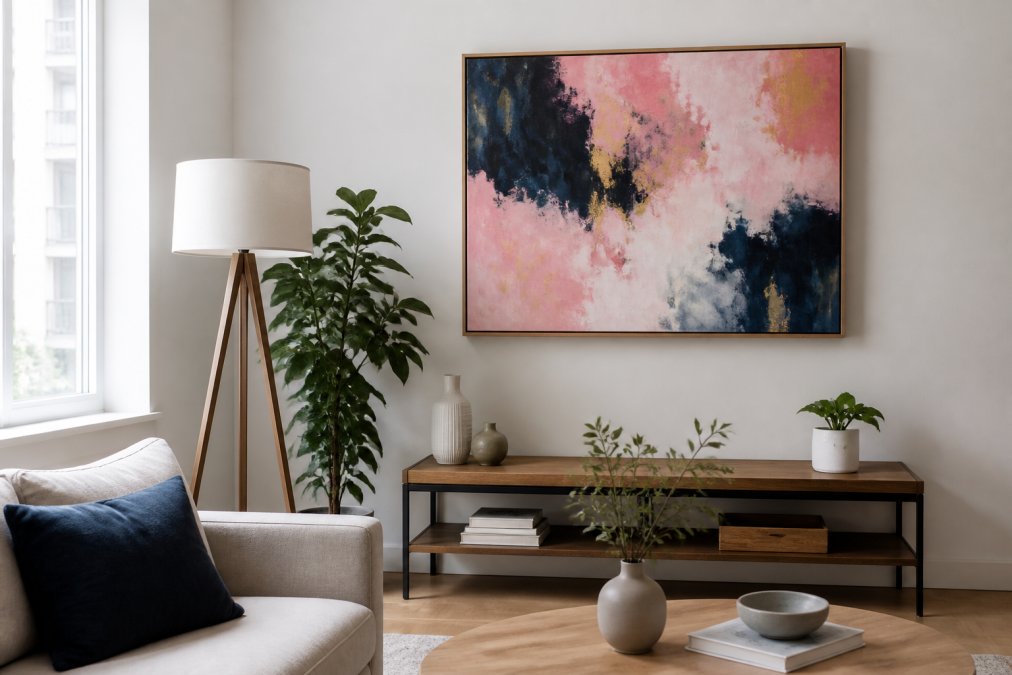
Walk through your room at different times of day and notice where light hits the walls, how furniture anchors the space, and which area naturally draws your eye when you enter. That's your focal point, the visual anchor that commands attention.
In rental spaces, positioning matters more than in owned spaces since you can't move built-in shelving or paint accent walls. Use your abstract art to create visual weight intentionally. A large, bold piece hung at eye level (roughly 57-60 inches from floor to center) becomes the focal point itself. Smaller pieces work better as supporting players in a gallery arrangement.
Choose a wall visible from your main living area. If your seating faces a blank wall, that's your obvious canvas. Consider scale in relation to your furniture: an oversized abstract piece above a minimalist sofa creates drama and balance, while the same piece above a heavily patterned sectional competes for attention and feels chaotic.
Step 2: Choose the Right Scale and Size for Your Abstract Art
Scale determines whether your abstract art feels intentional or accidental. A common rule is that artwork should cover 50-75% of the wall space above your furniture. For a 6-foot sofa, choose a piece roughly 4-5 feet wide.
Measure your wall space before shopping: note the distance from floor to ceiling, wall width, and furniture dimensions. Don't rely on photos alone, they distort scale dramatically.
Oversized abstract art works particularly well in rentals because it makes a statement without requiring permanent installation. A single 48x60-inch abstract painting commands far more attention than four 16x20-inch pieces scattered across a wall. In standard 8-foot ceilings, hang your piece so the center sits at eye level. In higher ceilings, you have more flexibility to create dramatic arrangements.
Consider negative space intentionally. A single large piece with breathing room around it often creates more impact than a gallery wall that dominates the entire surface, especially in smaller rental spaces where visual clutter can make rooms feel cramped.
Step 3: Develop a Cohesive Color Palette
Your abstract art's color palette sets the emotional tone for your entire space. Pull the dominant colors from your chosen piece and let those guide your accessory choices. A throw pillow, area rug, or single piece of furniture in one of those colors creates visual cohesion.
Consider whether you want a minimalist or maximalist approach. Minimalist spaces with neutral walls need bold, colorful abstract art to prevent sterility. Maximalist spaces rich with pattern and color benefit from more subdued or monochromatic abstract art. The balance between your art and surroundings matters most.
Test how your abstract art looks at different times of day. Natural light shifts color perception dramatically. If possible, view it in your space before committing. Many galleries and online retailers offer return policies for this reason.
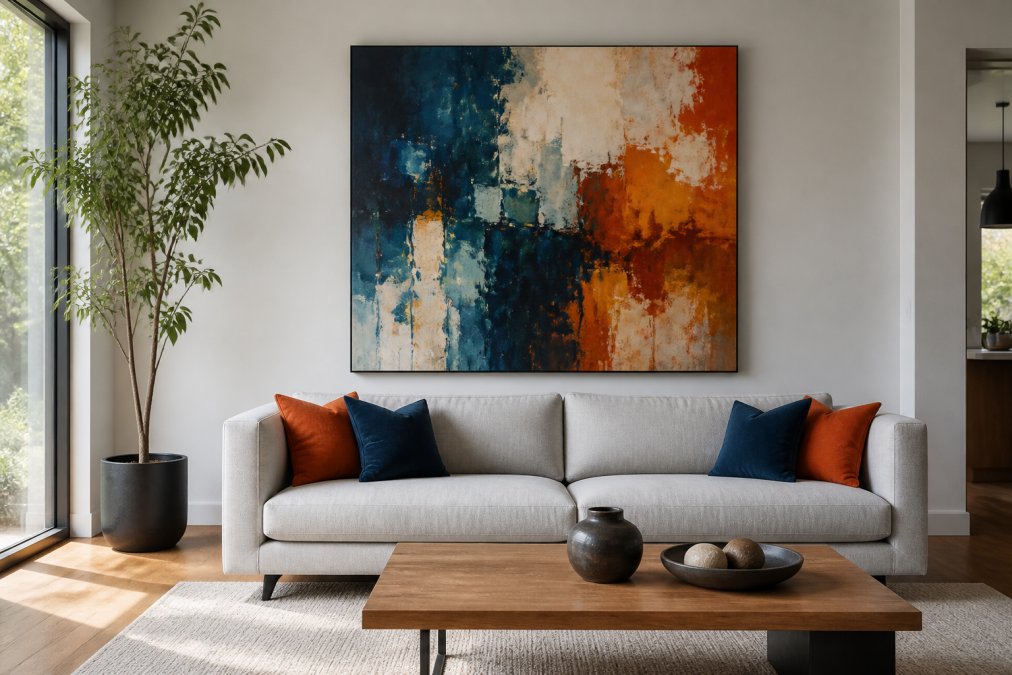
Think about texture alongside color. Abstract art with visible brushstrokes creates different visual weight than smooth, flat compositions. Pair textured pieces with simpler surroundings, and flat pieces with spaces that already have textural elements like woven rugs or upholstered furniture.
Renter-Friendly Wall Art Ideas and Hanging Methods
Renter-friendly wall art focuses on impact without permanence. The most practical strategy combines damage-free hanging hardware, proper wall preparation, and a removal plan.
Picture ledges hold your abstract art securely while remaining completely removable. Lean your piece against the ledge rather than hanging it, creating a display that works in any rental and allows seasonal rotation.
Easels offer another creative solution. A floor-standing or tabletop easel transforms your piece into a sculptural element, working particularly well for smaller paintings or creating a transitional aesthetic.
Leaning art against walls creates a casual, gallery-like aesthetic. Prop your piece on a shelf, console table, or directly against the wall. This requires zero installation and offers maximum flexibility for renters.
Step 4: How to Hang Heavy Art Without Nails
The most reliable damage-free method uses adhesive strips specifically designed for heavy items, combined with proper wall preparation and weight distribution.
Start by cleaning your wall thoroughly with a slightly damp cloth and let it dry completely. Dust and moisture prevent adhesive strips from adhering properly.
Choose adhesive products designed for your wall type. Removable strips for heavy frames work on drywall, plaster, and painted surfaces, typically holding 16-25 pounds per pair. Apply strips to the frame's back in the upper corners and at the midpoint of the top edge. For pieces over 15 pounds, add a fourth strip at the bottom center.
Press firmly for 30 seconds per strip. Most strips require 24 hours to cure fully before hanging. Plan your installation accordingly.
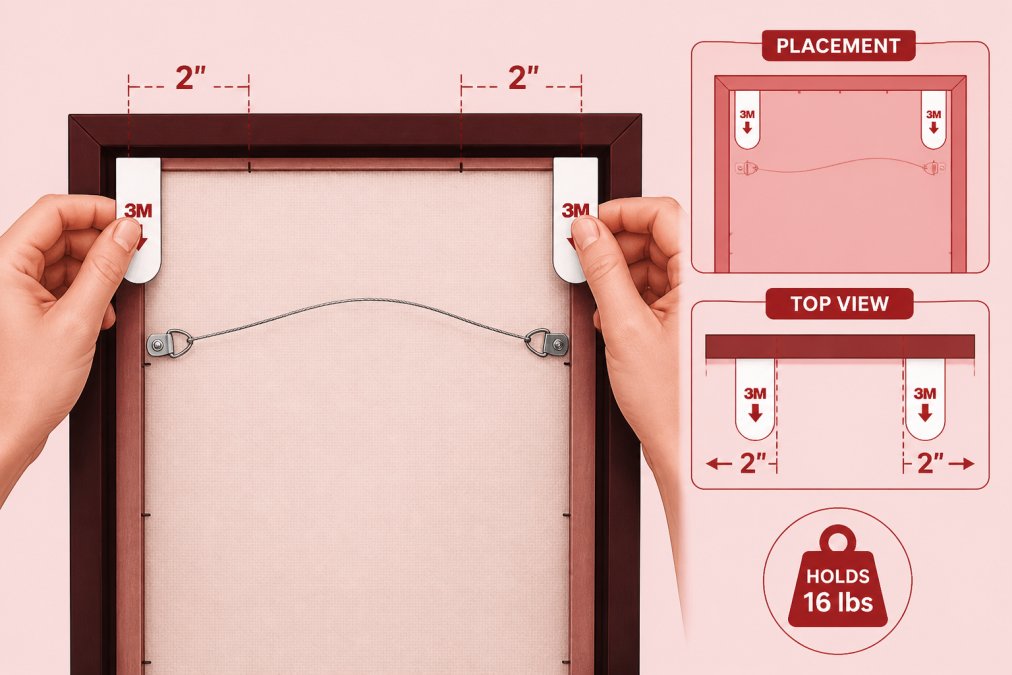
For temporary installations, command strips work well for pieces under 20 pounds. For anything heavier or longer-term display, invest in professional-grade adhesive rated for your piece's weight. Document your installation with photos before and after. Keep all adhesive strip packaging for removal instructions specific to that product.
Step 5: Layer with Texture and Accessories
Your abstract art shouldn't exist in isolation. Layer texture and accessories around the focal point to create visual interest and depth.
Start with a complementary accessory directly below your art. A console table, shelf, or credenza creates a visual foundation. Style it with items that echo your art's colors or mood.
Add texture through textiles: a throw blanket, patterned pillow, or woven rug all create tactile interest. Incorporate greenery strategically, a tall plant beside your art creates vertical balance, while trailing plants on shelves add movement.
Consider lighting as an accessory. A floor lamp positioned to illuminate your art changes how viewers perceive it. Warm light enhances reds and oranges; cool light emphasizes blues and purples.
Avoid over-styling. Choose 3-5 complementary pieces maximum. Less is almost always more in rental spaces.
Step 6: Light Your Abstract Art Properly
Poor lighting makes even stunning abstract art look flat. Strategic lighting transforms it into a visual anchor that commands attention.
Use adjustable floor lamps or clip lights positioned to illuminate your piece without creating glare. Angle light slightly to create dimension and shadow, highlighting texture and depth while preventing washed-out colors.
Clip-on picture lights offer the same effect as mounted picture lights without permanent fixtures. These battery-powered or plug-in options attach directly to your frame.
Consider color temperature. Warm white light (2700K) creates an intimate, gallery-like atmosphere ideal for warm-toned pieces. Cool white light (4000K) works better for blues and purples.
Avoid placing your art directly across from windows. Daytime glare washes out colors and creates reflections. Position it perpendicular to natural light sources instead. Test lighting at different times of day, your piece might look perfect in evening light but disappear in afternoon shadows.
Step 7: Plan for Rotation and Damage-Free Removal
Planning for rotation and damage-free removal transforms your abstract art from a permanent fixture into a flexible design element.
Rotate your art seasonally or when your mood shifts. Store rotated pieces in a climate-controlled closet, protected from dust and moisture.
Document your walls before hanging anything. Take photos of blank walls from multiple angles and in different lighting. This becomes your proof of original condition if disputes arise.
Develop a removal protocol before hanging. Know exactly how you'll take it down. Test your removal method on a less visible wall first if uncertain. Check your hanging hardware monthly, adhesive strips can weaken over time, especially in humid environments.
When ready to leave, remove your art and hardware at least 48 hours before your final walkthrough. Use magic erasers on scuffs and touch-up paint for visible marks. Most landlords won't withhold deposits for minor marks if you've made a good-faith effort to restore the space.
Styling abstract art in a rental space requires intentionality, but not permanent solutions. Susan Fielder Art offers a curated collection of emotionally charged abstract paintings specifically designed to transform spaces with vibrant energy. Each piece reflects a narrative of healing and resilience, artwork that speaks to renters seeking meaningful, one-of-a-kind pieces that enhance their surroundings without requiring permanent installation. When you choose abstract art that resonates emotionally and apply these styling principles, your rental becomes a genuine reflection of your aesthetic and values. Explore Susan Fielder Art's collection to find pieces that transform your space while supporting a greater cause through every purchase.
Frequently Asked Questions
What's the best way to hang heavy abstract art without damaging rental walls?
Adhesive strips designed for heavy frames are your safest option. These damage-free strips hold securely without nails or holes. Picture ledges and floating shelves offer another excellent renter-friendly solution, they display art beautifully while leaning pieces against walls. For temporary installations, lean your abstract art against the wall on a shelf or console table. Always test adhesive strips on a small, inconspicuous area first, and follow manufacturer guidelines for weight limits.
How do I know what size abstract art will work in my rental space?
Measure your wall space and apply the 3-5-7 rule: leave at least 3 inches of space from the wall edge, position art 5-7 feet from the floor at eye level, and ensure the artwork covers 50-75% of your wall without overwhelming the room. Oversized art can anchor a living room, while smaller pieces work better for bedrooms or hallways. Consider your furniture scale too, a large abstract painting pairs well with substantial seating, while minimalist spaces benefit from medium-sized pieces that don't compete for visual weight.
Can I really lean abstract art against walls in a rental, or does it need to be hung?
Leaning art against walls is a completely valid and increasingly popular display method, especially for rentals. It creates a temporary installation feel and works beautifully on picture ledges, shelves, or even the floor against a wall. This approach eliminates damage concerns entirely and gives you flexibility to rotate pieces seasonally or when you move. Lean pieces at a slight angle for stability, and use museum wax or felt pads underneath to protect both your floor and the artwork's frame.
How do I make sure abstract art I buy online will actually look good in my rental?
Request high-resolution images showing the artwork in different lighting conditions before purchasing. Ask sellers for photos of the piece in actual living spaces if available. Consider the 70/30 rule: 70% of your wall decor should be neutral or cohesive, with 30% being bold statement pieces like abstract art. Order a sample or smaller companion piece first if you're unsure. Read detailed product descriptions about dimensions, color accuracy, and material quality. Authentic galleries like Susan Fielder Art provide comprehensive details to help you visualize how pieces integrate into your space.