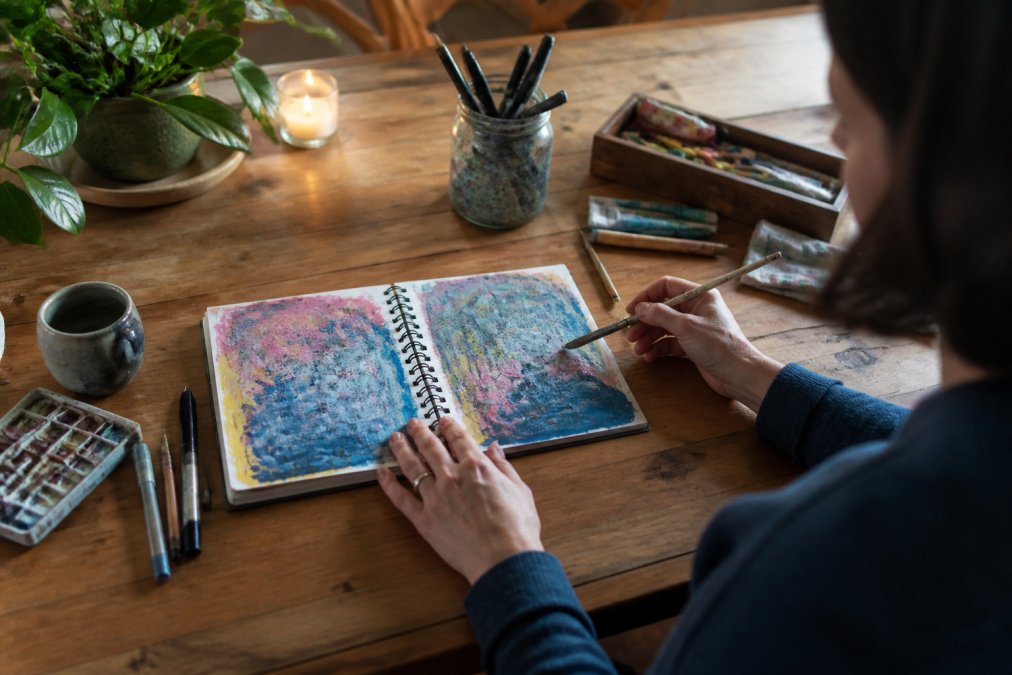
 how-to
How to Start an Art Journal for Mental Health
Table of Contents
- What Is an Art Journal and Why It Matters for Mental Health
- Best Art Supplies for Beginners
- Overcoming the Fear of the Blank Page
- Art Journal Prompts for Anxiety
- Therapeutic Art Journaling Techniques
- Building Your Art Journaling Practice
- Integrating Art Journaling with Professional Support
- Frequently Asked Questions
Last Updated: August 31, 2026
What Is an Art Journal and Why It Matters for Mental Health
An art journal is a personal creative space where you express emotions, thoughts, and experiences through visual art, writing, or both. Unlike traditional journaling, art journaling invites you to paint, draw, collage, or doodle toward emotional clarity and self-discovery. The practice removes pressure to create something "good" and focuses on the creative process itself.
The mental health benefits are substantial. According to The Arts in Psychotherapy research, 81% of patients reported improvement in their overall psychological health after art therapy sessions. Putting feelings into visual form bypasses the internal critic that often blocks written journaling. You can't overthink a brushstroke the way you might overthink a sentence.
What makes art journaling distinct is its accessibility. You don't need training, talent, or expensive materials to start. A pen and paper are enough. The practice creates what researchers call "non-judgmental space", a place where your work doesn't need to be beautiful, coherent, or make sense to anyone but you.
Best Art Supplies for Beginners
Essential Materials to Get Started
You don't need much to begin. A notebook, something to mark with, and permission to make "bad" art is genuinely enough.
A sketchbook or blank journal serves as your canvas. Look for paper thick enough to handle wet media if you plan to use watercolor or acrylic paint, 140 lb (gsm) is the minimum. Hardcover journals feel more intentional, but softcover works fine. Size matters less than whether you'll actually use it.
For marking tools, start with what you have: pencils, ballpoint pens, gel pens. Gel pens flow smoothly, come in endless colors, and cost almost nothing. Colored pencils offer precision and blend beautifully. Watercolors are forgiving for beginners; acrylics dry faster and cover larger areas.
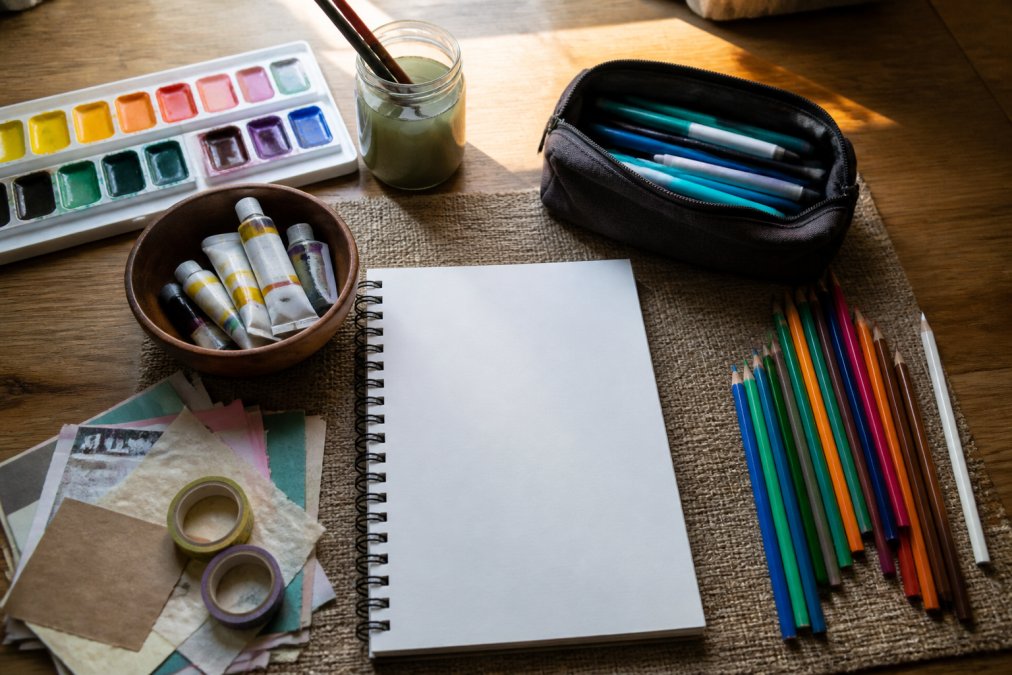
Mixed media materials transform a journal into something dynamic. Magazines for collage, scissors, glue stick, and tape are cheap and effective. Tissue paper, napkins, and found materials (old receipts, fabric scraps, dried flowers) add texture. The beauty of mixed media is repurposing materials you likely already have.
Paper quality matters more than quantity. Good paper invites you back; cheap paper discourages experimentation.
Budget-Friendly Alternatives
Art journaling doesn't require investment. A composition notebook costs $2 and works perfectly. Printer paper works fine for pen and colored pencil work, though it's not ideal for wet media.
For marking tools, use whatever you have: pencils, ballpoint pens, highlighters. Dollar stores stock colored pencils and markers that are surprisingly functional. Magazines are free if you ask friends, visit libraries, or check waiting rooms. Scissors and glue you likely own. Fabric scraps from old clothes, newspaper, napkins, and paper bags all become collage materials.
The research is clear: material cost doesn't correlate with therapeutic benefit. A person journaling with a $2 notebook and pencils experiences the same emotional processing as someone using premium supplies. The difference is in showing up consistently.
Overcoming the Fear of the Blank Page
The blank page triggers the belief that whatever you create needs to be worthy of the space. That voice is the enemy of art journaling.
Blank page anxiety isn't about artistic ability; it's about perfectionism meeting vulnerability. You're about to put something honest on the page, and that feels risky. Perfectionism is the guard that keeps you safe from judgment. The moment you accept that your journal is private, that guard becomes unnecessary.
Start small. Make a single mark. A line. A dot. Color one small section. Your brain needs proof that the page can handle imperfection. Once you've made that first mark, the pressure drops dramatically.
Some people find it helpful to "ruin" the page intentionally. Spill water on it. Scribble aggressively. Tear it slightly. Once the page is "ruined," it's no longer precious, and you can work freely. Others paint the entire page one color first, so there's no blank space to fear.
The process-over-product mindset is your antidote. You're not creating art for a gallery. You're moving emotions from your body onto paper. Whether it looks recognizable is irrelevant.
Art Journal Prompts for Anxiety
Prompts for Emotional Processing
Prompts guide you when your mind feels too scattered to know where to start.
"What does anxiety feel like in your body?" Draw or paint the physical sensations without trying to make it realistic. Use color, texture, and shape to represent tightness, heaviness, or restlessness.
"Create a color map of your emotions today." Assign colors to different feelings. Fill the page with these colors in whatever arrangement feels right. This bypasses the thinking mind and accesses emotional truth directly.
"Draw your worry, then transform it." On one side of the page, sketch what's worrying you. On the other side, reimagine it as something manageable or transformed. This gives your brain a sense of agency over anxiety.
"What would your anxiety look like as a character?" Illustrate it. Give it a shape, size, color, and expression. Sometimes naming and visualizing anxiety makes it less overwhelming.
Research from Journal of the National Cancer Institute found that 71% of participants reported less anxiety after creative arts therapies. Creative activity engages different brain regions than the ones that loop on worry, literally interrupting the anxiety cycle.
Grounding Prompts for Stress Relief
Grounding techniques anchor you to the present moment when stress feels overwhelming.
"Five senses map." Draw five sections, one for each sense. What do you see, hear, smell, taste, and feel right now? Fill each section with images, words, or abstract representations.
"Mandala or repetitive pattern." Draw circles, spirals, or geometric patterns. The rhythmic, meditative quality of repetitive mark-making calms the nervous system.
"Safe place visualization." Illustrate a place where you feel completely safe. Include sensory details: textures, colors, light, sounds. When stress rises later, you can return to this visual memory.
"Body scan in color." Start at the top of your head and move down, noticing where you hold tension. Color those areas. This builds awareness of your body's stress signals.
According to Arts & Health journal, 79% of participants reported higher self-esteem and a more positive view of themselves after art therapy. Grounding prompts work because they engage your senses and interrupt the stress response cycle.
Therapeutic Art Journaling Techniques
Process Over Product
This foundational principle separates therapeutic art journaling from art-making for aesthetic purposes. You're not creating something to hang on a wall or show anyone. You're creating something to move through an emotional experience.
Process-over-product means you focus on the act of creating, not the outcome. How does the brush feel in your hand? What colors are you drawn to? What happens when you layer them? These questions matter. Whether the final image is "pretty" doesn't.
This mindset shift is liberating because it removes judgment. There's no failure in process-focused work, only discovery. A chaotic painting might represent your emotional state perfectly. Angry scribbles might be exactly what your nervous system needed to release.
Mixed Media and Collage Methods
Mixed media and collage work particularly well for trauma processing because they're less about skill and more about intuition and layering.
Collage involves cutting images and text from magazines and arranging them on your page. You might glue down images that represent how you're feeling, words that resonate, textures that appeal to you. The power of collage is that you're selecting from existing images rather than creating from scratch, removing blank page anxiety for many people.
Mixed media combines collage with paint, drawing, writing, and found materials. You might paint over a collaged image, add handwritten text, glue down fabric or natural materials. Layers build meaning. Each layer represents a moment, a thought, an emotion. Texture matters, rough paper, smooth paint, crinkled magazine images, and soft fabric engage your hands and eyes differently, deepening the therapeutic effect.
Building Your Art Journaling Practice
Setting a Sustainable Routine
Consistency matters more than duration. Ten minutes daily beats an hour once a month. Your nervous system benefits from regular, predictable creative time.
Start with a specific trigger. After morning coffee. Before bed. During lunch break. Anchor your art journaling to an existing habit so it becomes automatic.
Set a realistic time commitment. Start with 10 or 15 minutes. You can always extend it if you're in flow. It's easier to build from a habit you're actually keeping than to restart repeatedly from an ambitious goal.
Create a dedicated space if possible. A corner of your desk, a shelf where you keep your supplies, a specific chair. Your brain recognizes this space as "creative time" and settles into that mode more easily.
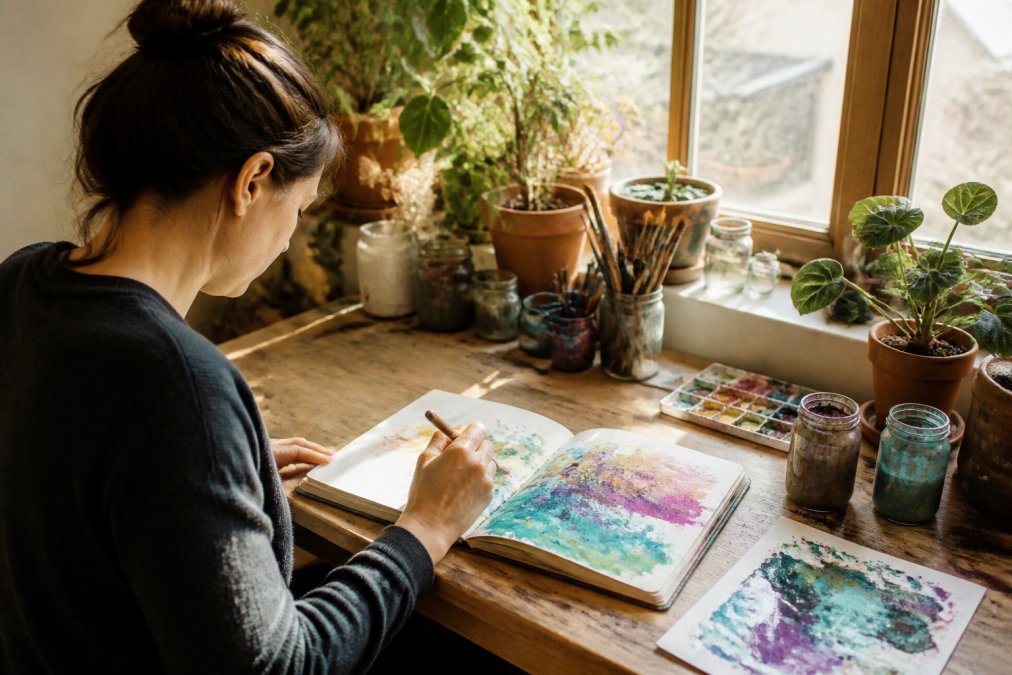
Remove barriers to starting. Keep your journal and supplies visible and accessible. Visibility drives action.
Track your practice without judgment. Some people mark a calendar when they journal. Others write the date on their page. This creates a record of consistency, which is motivating. If you miss days, you're not failing; you're just restarting.
Tracking Progress and Mood
Mood tracking through art journaling creates a visual record of your emotional landscape and helps you recognize patterns.
Simple mood tracking: Each day, choose a color that represents how you felt. Fill a small section with that color. Over time, you'll see patterns, maybe Mondays are consistently blue, or certain situations trigger specific emotional colors.
Emotion wheel journaling: Create a color wheel where different colors represent different emotions. Each time you journal, note which emotions were present. Over weeks and months, you'll see which emotions are dominant.
Progress markers: Note specific improvements you're noticing. Better sleep. Less intrusive thoughts. Moments of calm. More patience with yourself. Small shifts matter. Seeing them accumulate builds evidence that the practice is working.
Research from Journal of Traumatic Stress shows that 68% of trauma survivors saw a reduction in PTSD symptoms after art therapy interventions. Many improvements came from consistent practice and the ability to track how symptoms shifted over time.
Integrating Art Journaling with Professional Support
Art journaling is powerful, but it's not a substitute for professional mental health care when you need it. The integration works best when art journaling and therapy complement each other.
If you're working with a therapist, art journaling can deepen that work. You might bring pages to sessions and explore what emerged. The visual work can access emotions that words alone might miss, giving your therapist additional insight.
Some therapists actively incorporate art into sessions. Art therapy is a specialized field with specific training. If your current therapist isn't trained in art therapy, they can still support your personal art journaling practice.
For people managing anxiety, depression, or trauma, art journaling works best as part of a broader approach. Professional support addresses clinical aspects. Medication, if needed, supports your nervous system's regulation. Art journaling provides daily emotional processing and grounding. Together, they create a strong support system.
If you're experiencing a mental health crisis, art journaling is not adequate. Reach out to a mental health professional, crisis line, or emergency services.
Starting an art journal for mental health is one of the most accessible ways to process emotions and build emotional resilience. You don't need talent, money, or special training, just a willingness to show up and create. At Susan Fielder Art, we understand that creative expression transforms spaces and souls alike. Our collection of emotionally charged, abstract artwork is designed to inspire that same creative spirit in your own home. When you're ready to surround yourself with visual reminders of healing and resilience, explore how original art can deepen your personal wellness practice. Shop now and discover pieces that speak to your journey.
| Technique | Best For | Time Required | Difficulty |
|---|---|---|---|
| Simple mark-making | Overcoming blank page fear | 5-10 minutes | Beginner |
| Color mood tracking | Emotional awareness | 10 minutes | Beginner |
| Collage | Processing without skill pressure | 15-30 minutes | Beginner |
| Mixed media layering | Deep emotional processing | 20-45 minutes | Intermediate |
| Mandala/repetitive patterns | Grounding and stress relief | 15-30 minutes | Beginner |
| Guided prompts | Structured emotional exploration | 20-30 minutes | Beginner |
Frequently Asked Questions
Do I need to be an artist to start an art journal for mental health?
No. Art journaling for mental health focuses on emotional expression and creative processing, not artistic skill. The goal is to explore feelings through color, shape, and imagery without judgment. Many people find that releasing the expectation of creating 'good art' is actually liberating and therapeutic. Your journal is a private space where mistakes and imperfection are part of the healing process.
What are some good art journal prompts for anxiety?
Effective anxiety prompts include drawing your worry as a shape or color, creating a visual representation of what calm feels like, or mapping your emotions on a color wheel. Grounding prompts like sketching five things you can see, four you can touch, and three you can hear help redirect anxious thoughts. Research shows that 71% of participants reported less anxiety after creative arts therapies, making structured prompts a practical tool for managing stress in the moment.
How often should I art journal for mental health benefits?
Consistency matters more than frequency. Starting with 15-20 minutes three to four times per week is sustainable for most people and allows time for reflection between sessions. Some find daily practice helpful, while others benefit from weekly sessions. The key is building a routine you can maintain long-term. Research indicates that engaging in creative activities consistently lowers stress, so find a frequency that fits your schedule and stick with it.
Can art journaling replace professional therapy?
Art journaling is a valuable complementary tool for mental wellness but is not a substitute for professional therapy, especially for severe mental health conditions. It works best alongside therapy, helping you process emotions between sessions or deepen self-awareness. If you're dealing with trauma, depression, or anxiety, discuss art journaling with your therapist to integrate it into your treatment plan. Many therapists recommend it as part of a comprehensive approach to mental health.