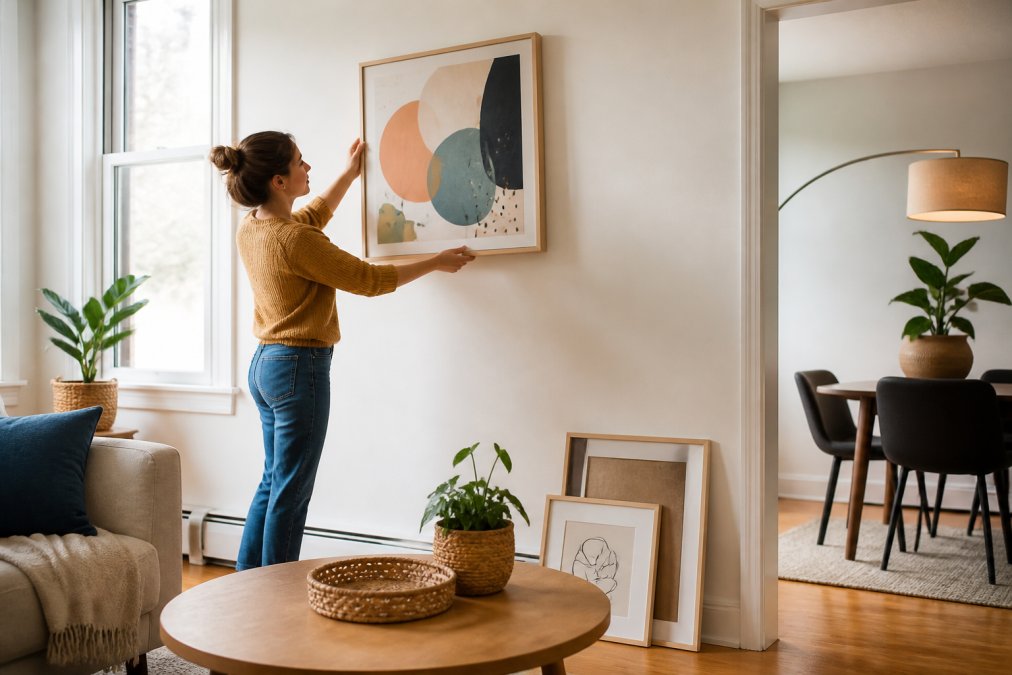
 how-to
How to Hang Art in Rentals Without Damage
Table of Contents
- Why Hanging Art in Rentals Requires a Different Approach
- Damage-Free Wall Hooks and Adhesive Strip Methods
- Alternative Hanging Solutions That Protect Wall Integrity
- How to Patch Nail Holes in Rental Walls Before Moving Out
- Renter-Friendly Gallery Wall Ideas
- Understanding Your Lease and Preventing Damage Disputes
- Common Mistakes to Avoid When Hanging Art in Rentals
- Conclusion
- Frequently Asked Questions
Last Updated: August 19, 2026
Why Hanging Art in Rentals Requires a Different Approach
Hanging art in rentals presents a unique challenge that homeowners never face. Over 104 million Americans now live in rental housing, representing 34.9% of U.S. households, and most want to personalize their spaces without sacrificing their security deposits. The tension is real: 70% of renters say it's important for their living space to reflect their personal style, yet 86% have damaged walls trying to hang décor. Modern damage-free solutions have evolved far beyond what was available five years ago, allowing you to hang art with confidence using methods that work on different wall surfaces and hold various frame weights.
Damage-Free Wall Hooks and Adhesive Strip Methods
The most popular approach to renter-friendly art hanging relies on adhesive solutions and removable hooks, avoiding permanent damage from nails and drilling.
Adhesive Strips and Picture Hanging Strips
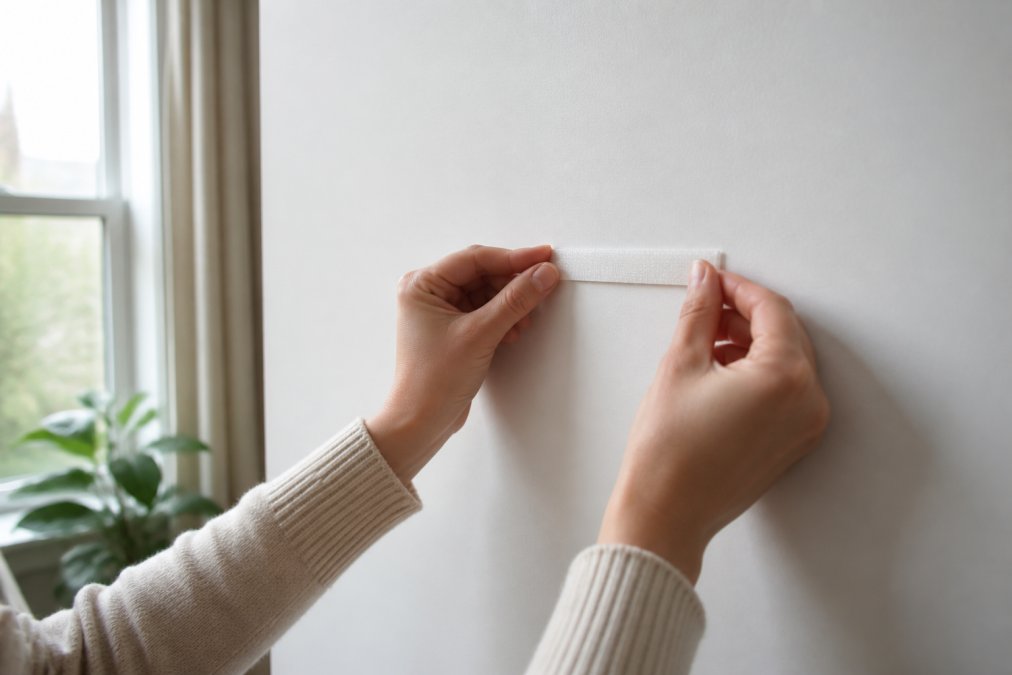
Adhesive strips designed for picture hanging are engineered to hold weight while remaining removable. They grip the wall surface through pressure-sensitive adhesive that creates mechanical hold rather than chemical bonding.
Success depends entirely on wall surface preparation. Clean the wall thoroughly with a dry cloth to remove dust, then wipe with isopropyl alcohol on a lint-free cloth. Wait for the wall to dry completely before applying strips, moisture is the primary reason they fail. Weight capacity varies by product and wall condition; most quality picture hanging strips support 5-15 pounds per strip. For heavier frames, use multiple strips distributed across the frame's width rather than stacking strips in one location.
When removing adhesive strips, pull slowly at a low angle (45 degrees or less) rather than peeling straight away from the wall. If the strip resists, use a hairdryer to warm the adhesive for 20-30 seconds.
Removable Hooks and Command Strips
Command Strips combine an adhesive strip with a hook, creating a complete hanging solution in various sizes and weight ratings, from small strips holding 1 pound to larger versions supporting up to 16 pounds. The advantage is simplicity, apply the strip, press the hook into place, and hang your frame. They work best on smooth, clean surfaces; textured walls and heavily painted surfaces reduce adhesive effectiveness significantly.
Removal requires the same low-angle approach as picture hanging strips. Command offers a removal tool specifically designed for their strips and provides a damage guarantee on their products.
Wall Putty and Sticky Tack
Wall putty and sticky tack represent the lightest-duty option for hanging art, holding frames through direct contact pressure and working best for lightweight frames under 2 pounds. The advantage is complete reversibility, it leaves no residue and no wall damage when removed. The disadvantage is obvious: wall putty holds light frames only and performs poorly in humid environments or on textured walls. It works best as a temporary solution while testing gallery wall layouts or hanging smaller accent pieces.
Alternative Hanging Solutions That Protect Wall Integrity
When adhesive solutions feel insufficient or unsuitable for your wall surface, alternative methods offer different advantages without wall damage.
Leaning Art Against Walls
Leaning art directly against walls represents the ultimate damage-free approach, requiring no adhesive, hooks, or wall contact beyond the frame's bottom edge. Place the frame on a shelf, console table, or the floor directly against the wall, ensuring the surface is level and stable. For frames leaning against the wall on the floor, use painter's tape or small rubber shims to prevent sliding. The visual effect is modern and intentional, leaning art has become a design trend precisely because it looks curated rather than temporary. The limitation is obvious: you can't lean art in the middle of a wall or on upper wall space.
Using Floating Shelves and Mantles
Floating shelves provide structural support independent of wall damage concerns. While installing floating shelves requires wall anchors or studs, the shelves themselves create a surface for displaying art without additional hanging hardware. They work well for rotating artwork displays, gallery wall arrangements, or leaning larger frames. Alternatively, freestanding shelving units provide the same display benefits without any wall installation.
Rail and Wire Hanging Systems
Picture rail systems and wire hanging methods use a rail mounted to the wall or a wire strung between two points, from which individual frames hang using hooks or clips. The advantage is flexibility, you can adjust frame positions, heights, and spacing without making new holes. Modern alternatives include tension wire systems that stretch between two points without requiring wall anchors, though these work best for lightweight frames. Wire hanging systems create a gallery wall effect with minimal wall contact and work particularly well for abstract art collections.
How to Patch Nail Holes in Rental Walls Before Moving Out
Despite your best efforts with damage-free methods, you may discover small holes before moving out. Patching these imperfections is straightforward and far cheaper than losing your security deposit.
Step 1: Assess the Hole Size and Wall Surface
Determine what you're working with. Small nail holes typically measure 1/16 to 1/8 inch in diameter and are easiest to repair. Medium holes from picture hangers or wall anchors range from 1/8 to 1/4 inch. Identify your wall surface type, drywall is most common in rental apartments. Run your hand over the wall to assess texture, as smooth drywall is easier to patch than heavily textured surfaces.
Step 2: Fill Small Holes With Spackling Paste
Spackling paste is the standard material for small drywall holes. Apply spackling paste by pressing it into the hole with your putty knife, overfilling slightly, then smooth the surface flush with the wall. Most spackling pastes dry within 1-2 hours. For larger holes (1/4 inch or bigger), use a spackling patch, a small self-adhesive patch that covers the hole and provides a base for spackling paste.
Step 3: Sand and Paint Over the Repair
Once spackling paste dries completely, sand the area smooth with fine-grit sandpaper (220-grit or higher). Wipe away dust with a damp cloth and allow to dry. Paint over the repair using matching wall paint. Bring a paint sample to the hardware store to match the exact shade. One coat usually suffices for small repairs.
Renter-Friendly Gallery Wall Ideas
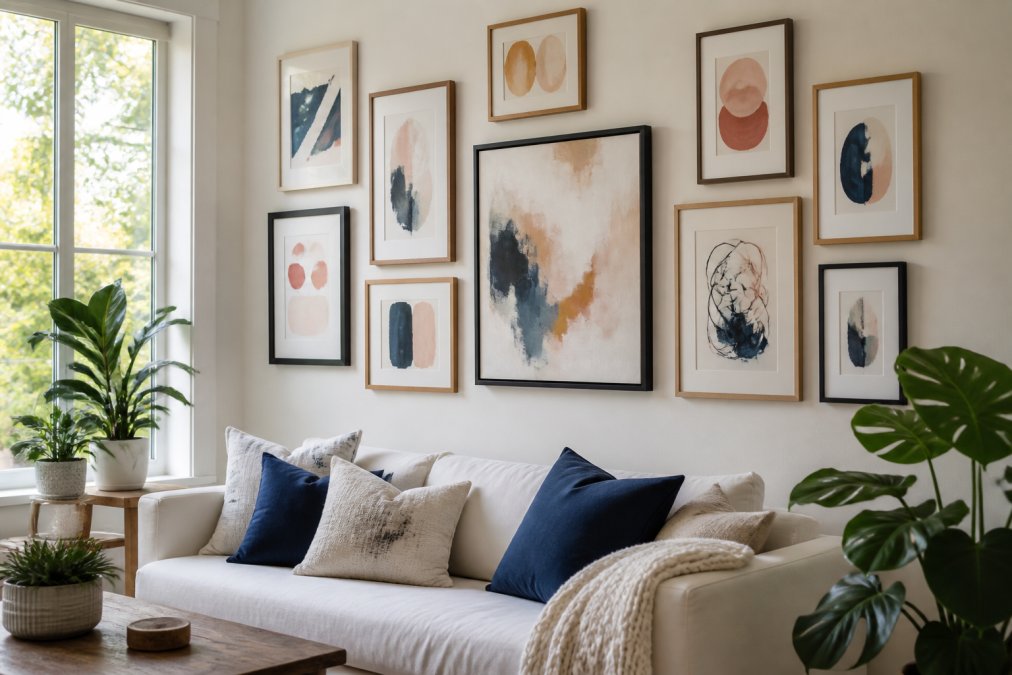
Gallery walls represent the most impactful way to display art in rentals, creating visual interest and making a space feel intentional.
Planning Your Layout Without Commitment
Visualize your gallery wall before making any wall contact. Use painter's tape to outline frame positions on your wall. Trace each frame on kraft paper, cut out the shapes, and tape them to the wall using painter's tape. Step back and assess the arrangement from different distances and angles. This no-damage approach lets you experiment with different layouts, spacing, and frame combinations without risk. Common gallery wall patterns include salon-style (asymmetrical, varied frame sizes), grid-style (uniform spacing and frame sizes), or linear (frames aligned horizontally or vertically).
Measure the distance from the top of each paper template to the wall's top edge, then mark corresponding points where you'll place adhesive strips or hooks.
Using Removable Elements for Gallery Walls
Once you've finalized your layout, execute it using adhesive strips or removable hooks. Apply strips to the back of each frame according to the weight rating and manufacturer instructions. Press frames firmly into position, holding each frame for 30 seconds to ensure the adhesive sets properly. For gallery walls with varied frame sizes and weights, use different strip types as needed. Consider incorporating non-frame elements in your gallery wall, such as floating shelves, woven wall hangings, or fabric tapestries.
Understanding Your Lease and Preventing Damage Disputes
Your lease agreement typically specifies what constitutes "normal wear and tear" versus damage that reduces your security deposit. Most leases require you to return the rental in its original condition, reasonable wear excepted. Small nail holes from picture hanging are often considered normal wear, but larger holes, paint damage, or adhesive residue may not be.
Document the wall condition before you move in by taking photographs of any existing damage, stains, or imperfections. Similarly, take photos of your gallery walls before moving out, showing the condition of walls after you remove all artwork and hardware. Communicate proactively with your landlord if you're concerned about specific hanging methods. Keep receipts for any materials you purchase for wall repairs, providing evidence of your good-faith effort to restore the space.
Common Mistakes to Avoid When Hanging Art in Rentals
Understanding what doesn't work saves you time, money, and wall damage.
Skipping surface preparation. Applying adhesive strips to dusty or dirty walls is the most common reason they fail. Always clean walls thoroughly before applying any adhesive product.
Overloading adhesive strips. Picture hanging strips have weight limits for a reason. If your frame is heavier than the strip rating, use multiple strips or choose a different hanging method.
Using old adhesive products. Adhesive strips lose strength over time. Purchase fresh products rather than using supplies from previous moves.
Hanging on textured or damaged walls. Textured walls and popcorn ceilings reduce adhesive effectiveness dramatically. Test adhesive products on inconspicuous areas before committing to visible walls.
Ignoring humidity and temperature. Adhesive products perform poorly in high-humidity environments. Bathrooms and kitchens are particularly challenging. Use hooks or alternative methods rather than adhesive strips in these areas.
Failing to document wall condition. Take detailed photos of all walls before hanging anything, then take photos again before moving out.
Removing adhesive strips incorrectly. Peeling strips straight away from the wall causes paint damage. Always pull at a low angle and use heat if strips resist.
Patching holes with mismatched paint. Paint color and sheen matter more than most renters realize. Bring a paint sample to the hardware store and ensure exact color matching before painting repairs.
Conclusion
Hanging art in your rental doesn't require choosing between personalization and financial security. Modern damage-free methods, adhesive strips, removable hooks, alternative systems, and creative display solutions, let you transform your space without risking your security deposit. The key is choosing the right method for your wall surface and frame weight, preparing surfaces properly, and removing everything carefully when you move.
At Susan Fielder Art, we know that meaningful artwork transforms how you experience your living space. Whether you're displaying abstract pieces that energize your rooms or building a gallery wall that reflects your personal style, the hanging methods you choose should support your vision without creating anxiety about wall damage. By following the techniques in this guide, you can confidently display art that matters to you, knowing you'll walk away from your lease with your deposit intact.
Frequently Asked Questions
Can you use Command Strips and adhesive strips safely in a rental?
Command Strips and adhesive strips are among the safest options for hanging art in rentals when applied correctly. They're designed to remove cleanly without leaving residue on most painted drywall. However, their effectiveness varies depending on wall texture, age, humidity, and paint condition. On older drywall, textured surfaces, or poorly maintained walls, adhesive strips may cause paint peeling. Always test on an inconspicuous area first, follow manufacturer instructions precisely, and avoid using them on wallpaper or damaged surfaces. If damage occurs, you may be responsible for repair costs.
What's the best way to remove adhesive residue without damaging rental walls?
Use isopropyl alcohol and a soft cloth to gently rub away adhesive residue. Roll the residue between your fingers to loosen it first, then apply alcohol sparingly and let it sit for 30 seconds before wiping. For stubborn residue, try a plastic scraper held at a 45-degree angle, moving slowly to avoid gouging the wall. Never use sharp tools or excessive force. If residue remains, leave it for the landlord rather than risk wall damage. Document the condition with photos before moving out to protect your security deposit.
How much weight can damage-free wall hooks and adhesive strips actually hold?
Most adhesive strips support between 5 and 25 pounds, depending on the brand and strip size. Smaller strips typically hold 5-10 pounds, while heavy-duty versions can support up to 25 pounds. Weight capacity depends on the frame weight, not just the artwork itself. Always check the manufacturer's specifications and match the strip type to your frame's weight. For heavier abstract art pieces, consider alternative methods like leaning art against walls, using floating shelves, or installing rail systems that distribute weight more evenly across the wall.
Is it okay to hang pictures in a rental if my lease agreement doesn't mention decorating?
Review your lease carefully before hanging any art. Many leases prohibit 'alterations' or 'modifications' without written permission, which can include nail holes. Even if your lease doesn't explicitly address decorating, landlords typically expect walls to be returned to their original condition. The safest approach is to use damage-free methods like adhesive strips, removable hooks, or leaning art. If you want to use nails or make any permanent changes, request written permission from your landlord first. Document all decorating decisions in writing to avoid disputes when you move out.