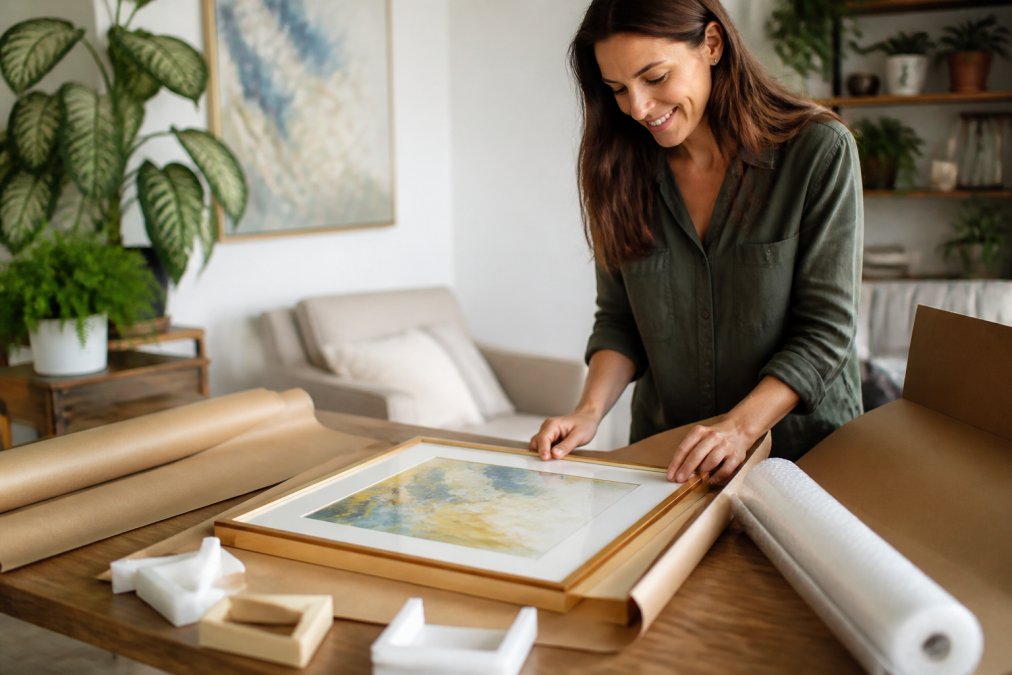
 how-to
How to Frame Original Artwork as a Gift: 2026 Guide
Table of Contents
- Why Framing Matters When Giving Original Art
- How to Choose a Frame for Abstract Art
- Archival Framing Techniques for Long-Lasting Art
- Step-by-Step DIY Framing for Gifting
- Custom Framing Cost: What to Expect and How to Save
- Gift-Wrapping and Shipping a Framed Piece
- Conclusion: Frame with Heart, Give with Confidence
- Frequently Asked Questions
Last Updated: September 26, 2026
Why Framing Matters When Giving Original Art
Giving original artwork is one of the most personal gifts you can offer, and how to frame original artwork as a gift is the step that turns a rolled canvas or loose print into something the recipient can hang the same day. At Susan Fielder Art, we've seen how the right frame changes a piece from "nice painting" to "I can't believe this is mine."
How to Choose a Frame for Abstract Art
The best frame for abstract art is one that supports the painting's colors and energy without competing with them. Abstract work carries its own visual weight, so the frame's job is to contain that energy, not add to it.
Consider the Recipient's Space and Style
Think about where the piece will actually live. A minimalist apartment calls for clean lines. A traditional home with heavy furniture can carry a thicker, warmer frame.
Ask yourself three questions:
- What wall will this hang on, and what color is it?
- What style is the furniture nearby: modern, traditional, or eclectic?
- Does the recipient prefer calm neutrals or bold statements?
Frame Styles That Work with Bold Compositions
Bold abstract pieces pair well with restraint. Here's a quick guide:
| Art Style | Best Frame | Mat Choice | Why It Works |
|---|---|---|---|
| Bold color fields | Thin black or white | None or wide white | Frame recedes, color leads |
| Soft, muted abstracts | Natural wood | Off-white, 2-3 inches | Warmth matches softness |
| Textured, heavy paint | Floater frame | None | Shows canvas edges |
| Small works on paper | Wide mat, slim frame | 3-4 inches | Gives small art presence |
Archival Framing Techniques for Long-Lasting Art
Archival framing uses acid-free, reversible materials so the artwork survives for decades without yellowing or sticking to the glass. This is the single most important upgrade you can make, and it costs far less than most people assume.
Materials That Protect Your Art
Every layer touching the art should be archival. That means:
- Acid-free mat board (look for "conservation" or "museum" grade)
- Archival mounting tape or hinging tissue for paper works
- Backing board made of acid-free foam or corrugated board
- Dust cover on the back to keep out insects and grit
- Spacers to keep the art from touching the glazing
Step-by-Step DIY Framing for Gifting
DIY framing is realistic for standard-size prints and small works on paper. It takes about an hour per piece and saves money, but it's not the right path for valuable or oversized originals.
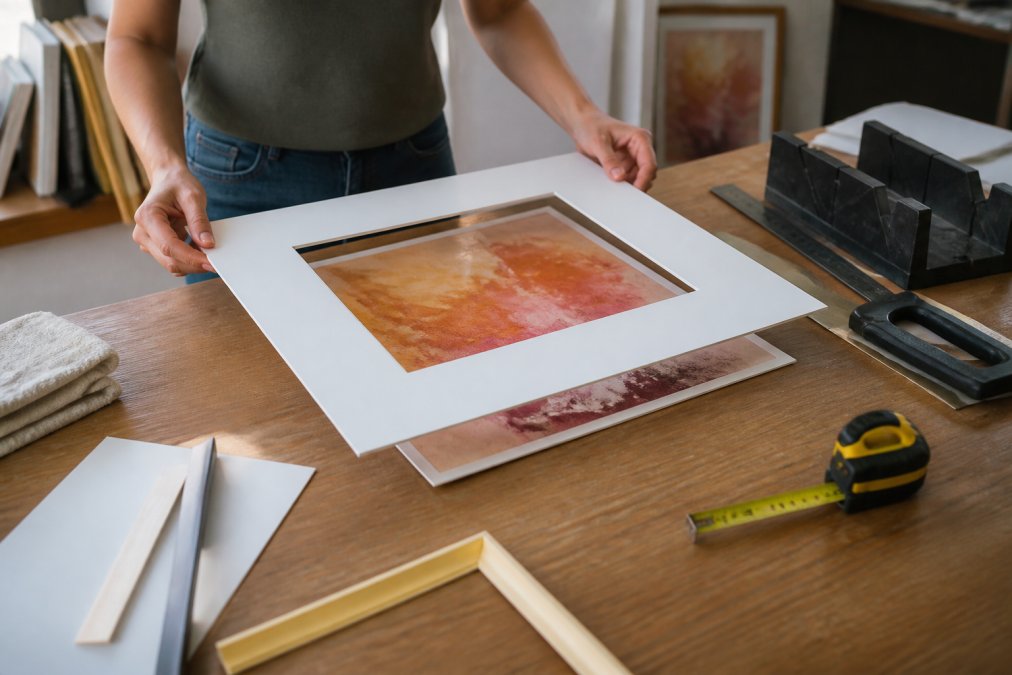
Here's the process:
- Measure the art at its widest and tallest points, in millimeters for accuracy.
- Pick a standard frame size that leaves at least 2-3 inches of mat around the art.
- Cut the mat with a beveled edge, or order a pre-cut mat in your size.
- Hinge the art to the backing with acid-free tape at the top edge only.
- Add spacers so the art doesn't touch the glazing.
- Insert glazing, then the art package, then the backing board.
- Secure the backing and attach a dust cover.
- Add hanging hardware: D-rings and wire, rated for the piece's weight.
Custom Framing Cost: What to Expect and How to Save
Custom framing cost depends on size, frame material, matting, and glazing choice, so there's no single number that fits every piece. But for a gift, the more useful question isn't "what does framing cost", it's "how much should I spend on this gift." That's a tier decision, and most guides skip it. Determining the appropriate investment level requires balancing the sentimental value of the work against the preservation needs of the medium, a consideration that becomes especially critical when framing antique photographs.
The Three Gifting Tiers
Think of framing spend in three tiers, matched to the art's value and the relationship.
| Tier | Best For | Frame Approach | Glazing | Mounting |
|---|---|---|---|---|
| Everyday gift | Prints, posters, small works under a few hundred dollars | Ready-made standard-size frame from a craft or home store | Standard glass or acrylic | Pre-cut mat, acid-free hinging tape |
| Milestone gift | Signed prints, small originals, wedding or graduation pieces | Custom frame in a neutral profile, single or double mat | UV-filtering glass or acrylic | Conservation mat board, reversible hinges |
| Heirloom gift | Valuable originals, commissioned works, inherited pieces | Custom frame, floater for canvas, museum-grade materials | Museum glass or UV acrylic with spacers | Full conservation mounting by a framer |
When Store-Bought Is Enough
A ready-made frame is the right call when:
- The art is a print or reproduction, not a one-of-a-kind original
- The piece fits a standard size (common ones include 8x10, 11x14, 16x20, and 18x24 inches)
- The recipient is likely to reframe it to match their own decor anyway
- The gift is one of several and the budget is spread across them
Ready-made frames are widely available and cost a fraction of custom work. The trade-off is limited size and material options, and the matting that ships with them is often not archival.
When Custom Is Worth It
Custom framing earns its cost when:
- The art is an original with resale or sentimental value
- The size is non-standard and no ready-made frame fits without cropping
- The piece is a canvas that needs a floater frame to show painted edges
- You're shipping it and want the framer to pack and ship it gift-ready
For current pricing on a specific piece, get a quote based on your exact size and materials. Prices shift with frame stock and glazing supply, so a quote is more reliable than any published range.
Ways to Save Without Cutting Corners
- Choose a standard frame size and mat the art to fit, rather than paying for a custom cut
- Skip the ornate profile and put the money into archival materials
- Ask for acrylic instead of glass for large pieces; it's lighter, safer to ship, and less expensive at size
- Reuse a frame you already own if the size and depth work
- Order the frame and mat separately from a supplier and assemble it yourself
Gift-Wrapping and Shipping a Framed Piece
Most framing guides stop at the finished piece. But a framed gift has two jobs the frame alone doesn't solve: it has to survive the trip, and it has to look like a gift when it arrives. This is the part competitors skip, and it's where gifts actually fail.
Wrapping a Framed Gift
A framed piece is heavy, rigid, and has sharp corners, so standard wrapping paper tears at the corners and tape can lift a frame's finish. A few practical approaches:
- Wrap the outer box, not the frame. If you're shipping, wrap the shipping box. Tape and ribbon directly on a frame can pull finish or leave residue.
- Use a gift bag sized for the frame. For smaller pieces, a sturdy bag with tissue is faster and safer than paper.
- For a hand-delivered gift, wrap the frame in tissue first, then paper, and finish with a ribbon around the box rather than taped to the frame.
- Skip the bow on the glass side. Anything pressed against glazing in transit can scratch acrylic.
Shipping a Framed Gift Safely
Shipping damage almost always happens because the frame slides inside the box and takes an impact on a corner. The fix is a box-in-a-box with no room to move.
Follow this sequence:
- Wrap the frame face in glassine or tissue, then bubble wrap.
- Add foam corner protectors on all four corners.
- Place the wrapped piece in a snug inner box.
- Float that box inside a larger outer box with 2 inches of padding on every side.
- Mark the box "Fragile" and "This Side Up."
Choosing a Carrier and Coverage
- Compare carriers on both speed and handling; a framed piece is more likely to be dropped than delayed.
- Buy shipping insurance for the declared value of the art, not just the frame.
- Keep the receipt and tracking number; claims usually require proof of value.
- For high-value originals, consider a carrier that specializes in art and offers white-glove delivery.
Hand-Delivering or Traveling with a Framed Gift
If you're carrying the gift yourself:
- Lay it flat if possible, face up, with nothing stacked on top.
- If you must stand it, pad the bottom edge and secure it so it can't slide.
- Avoid leaving it in a hot car; heat can soften adhesives and warp a frame.
- For air travel, a padded art box in checked baggage is safer than a soft bag, but carry-on is safest for small pieces.
Conclusion: Frame with Heart, Give with Confidence
Framing original art as a gift is a balance of protection and taste, and the pieces that land best are the ones where the frame supports the work instead of competing with it. The recipient remembers how it made them feel, not the frame profile.
Frequently Asked Questions
How much does it cost to professionally frame artwork?
Custom framing cost varies based on size, materials, and labor. A small piece with standard glass might start around $80, while larger works with museum glass and archival mats can exceed $300. For a gift, factor in whether you want UV protection or conservation-grade materials, which add to the price. Always request a quote from a local framer or online service to get an accurate estimate for your specific artwork.
Should I use glass or acrylic when framing original art?
Glass offers superior clarity and scratch resistance, making it ideal for valuable pieces that won't be shipped. Acrylic (plexiglass) is lighter and shatter-resistant, which is safer for shipping and homes with children. Both can include UV protection. For a gift that will be mailed, acrylic is often the better choice because it reduces weight and breakage risk. If the art is highly textured or a pastel, consider glazing with a spacer to prevent contact.
What is the difference between archival and standard framing?
Archival framing uses acid-free mat board, backing, and mounting techniques that won't damage the artwork over time. Standard framing may use acidic materials that can cause yellowing or brittleness. For original art, especially as a gift meant to last, archival techniques are worth the investment. They include hinging with Japanese paper and wheat starch paste, UV-filtering glazing, and a dust cover to seal out pests and dirt.
How do I choose a frame style that complements abstract art?
For abstract art, the frame should support the artwork without competing. A simple, thin black or white frame often works well, letting the colors and composition shine. If the piece has warm tones, a natural wood frame can enhance it. Consider the recipient's decor: a modern space might suit a sleek metal frame, while a traditional room could handle a wider profile. When in doubt, a neutral gallery-style frame is a safe, elegant choice.