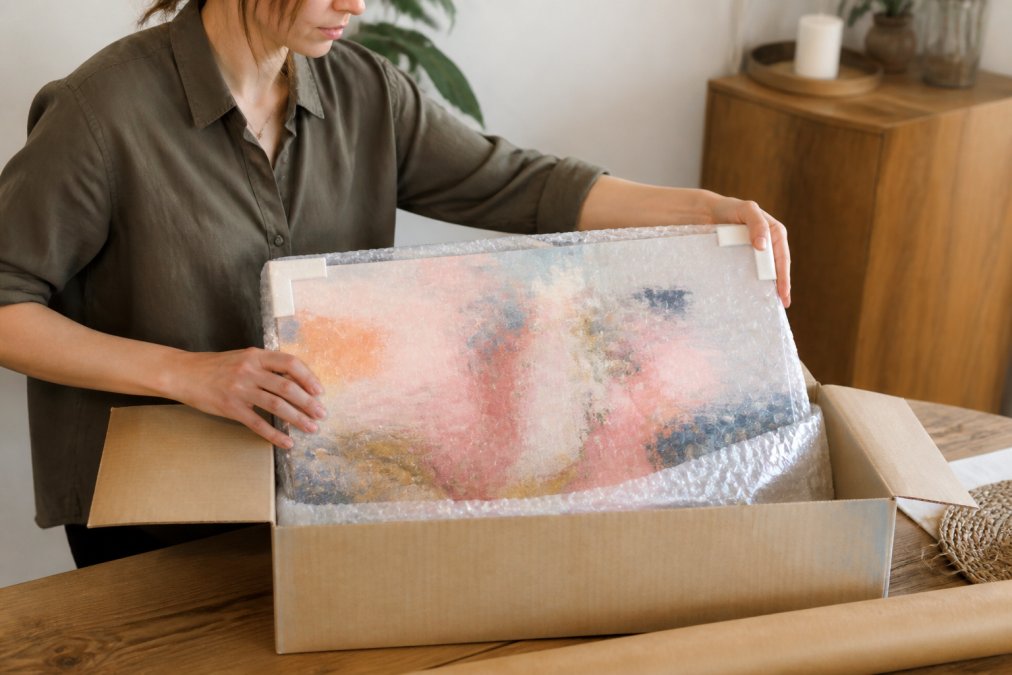
 how-to
Can You Return Art Bought Online? A Complete Guide
Table of Contents
- Can You Return Art Bought Online?
- Understanding Your Legal Rights as an Art Buyer
- Return Windows and Timeframes for Online Art
- Original Artwork vs. Prints: Different Return Rules
- How to Ship Art Back for a Return
- Damaged Art Shipment Protocol and Documentation
- Creating an Art Return Policy Template for Your Gallery
- Conclusion
- Frequently Asked Questions
Last Updated: August 13, 2026
Can You Return Art Bought Online?
Buying art online carries real risk. You can't touch the piece before it arrives, you can't see how colors shift under your home's lighting, and shipping fragile items opens the door to damage. Whether you can return art bought online depends on the seller's policy, the type of art, its condition upon arrival, and your location. Understanding your options before you purchase protects both your investment and your peace of mind.
At Susan Fielder Art, we recognize that purchasing original artwork online requires confidence in the seller's commitment to customer satisfaction. This guide walks you through your legal rights, typical return windows, the differences between original artwork and prints, and the practical logistics of shipping art back for a return.
Understanding Your Legal Rights as an Art Buyer
Your legal protections as an art buyer depend on where you're purchasing and what type of transaction you're making. In the United States, online art purchases fall under the Federal Trade Commission's Mail or Telephone Order Merchandise Rule, which requires sellers to ship merchandise within the timeframe stated in the offer, or within 30 days if no timeframe is specified.
Many states have enacted distance selling regulations that give consumers additional protections, often including a cooling-off period of 3 to 7 days during which you can cancel an order without penalty. However, art and collectibles may have different rules depending on your state. Some states exempt original artwork from certain consumer protection requirements, while others provide enhanced protections.
The key distinction is between original artwork and reproductions. Original paintings, sculptures, and limited edition prints created by the artist typically have different legal standing than mass-produced merchandise. When you purchase original artwork, you're buying a unique item that cannot be replaced, which affects both the seller's obligations and your remedies if something goes wrong.
Keep your proof of purchase, including the order confirmation email, payment receipt, and any communication with the seller about the artwork's condition or specifications. This documentation becomes essential evidence if a dispute arises.
Return Windows and Timeframes for Online Art
Most online art galleries establish a return window ranging from 14 to 30 days from the purchase date, though some extend this to 45 or 60 days for original artwork. The purchase date is typically when your payment was processed, not when the artwork arrived. If an artwork arrives on day 25 but your return window is 30 days, you have only 5 days to decide whether to return it. Inspecting artwork immediately upon arrival is critical.
Some galleries distinguish between different types of returns. A return due to damage in transit might have a shorter window of 3 to 5 days, because the damage must be documented while fresh and verifiable. A return due to buyer remorse might fall under a longer window. Original artwork often has more restrictive return policies than prints, since each original is unique and irreplaceable. However, if original artwork arrives damaged, misrepresented, or significantly different from the description, most galleries will accept a return. Always read the specific terms before purchasing.
Original Artwork vs. Prints: Different Return Rules
The type of art you're buying determines what return options are available.
Original artwork typically carries stricter return policies. Because each original is unique and cannot be recreated or resold in the same way, galleries often limit returns to cases where the piece arrived damaged, was misrepresented, or failed to meet promised specifications. Some galleries don't accept returns on originals due to buyer remorse. Once an original leaves the gallery and enters your home, it may be exposed to sunlight, humidity, smoke, or dust, factors that could affect its value and condition. However, if you're purchasing from a reputable gallery like Susan Fielder Art, the gallery should stand behind the quality and condition of what it ships. If original artwork arrives damaged during transit, that's the gallery's responsibility, and the seller should accept a return and either send a replacement or process a full refund.
Prints and reproductions have more flexible return policies. Because prints can be reprinted and restocked, galleries often accept returns due to buyer remorse within a standard window. Limited edition prints fall somewhere in between, the gallery may treat them more like original artwork, accepting returns only for damage or misrepresentation. Lifestyle merchandise like mugs, t-shirts, and home décor items typically follow standard e-commerce return policies, with most galleries accepting returns within 30 days for any reason, provided the item is unused and in original packaging.
How to Ship Art Back for a Return
Shipping art back requires more care than shipping most merchandise. When you initiate a return, follow these steps to protect yourself and ensure the artwork arrives safely.
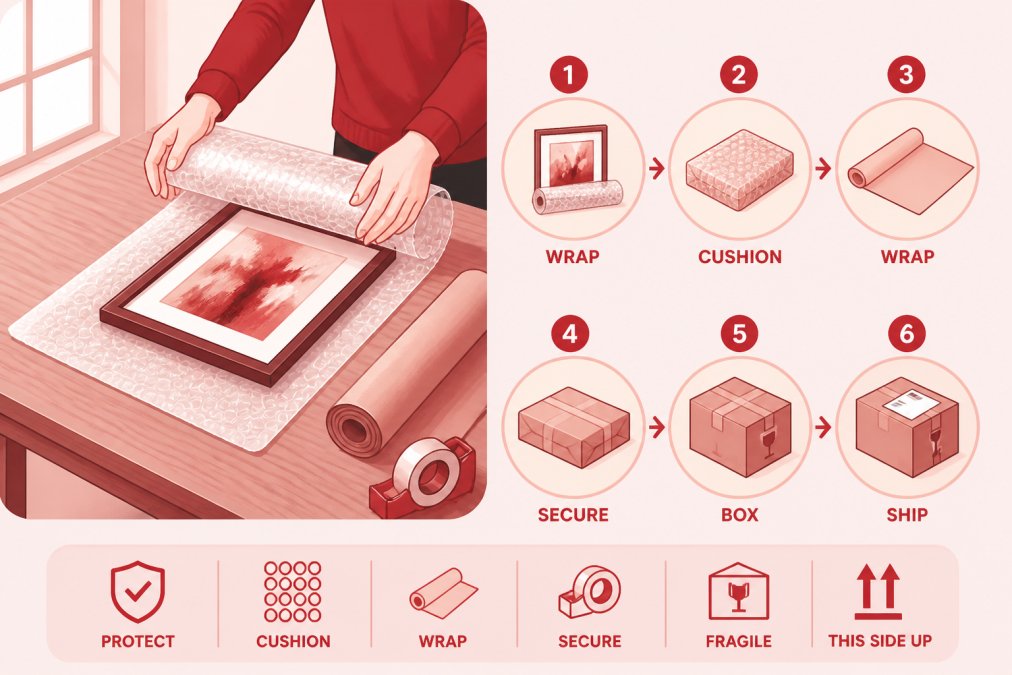
Step 1: Get return authorization and shipping instructions. Contact the gallery and confirm your return is approved. Ask for a return authorization number, the return shipping address, and any specific packaging requirements. Some galleries require that original artwork be returned in the exact packaging it arrived in. Follow these instructions precisely.
Step 2: Document the artwork's current condition. Take clear photos and videos from multiple angles before packing. If the artwork is being returned due to damage, ensure your documentation clearly shows it. If returning due to buyer remorse, document that it's in perfect condition. This creates a record and protects you if there's a dispute.
Step 3: Gather proper packaging materials. Use acid-free tissue paper, bubble wrap, and sturdy cardboard boxes. For framed artwork, wrap the frame in tissue paper, then bubble wrap, at least 2 inches on all sides. For unframed canvases, wrap in acid-free tissue and bubble wrap. Never use newspaper, regular plastic wrap, or packing peanuts.
Step 4: Pack strategically for a box within a box. Place the wrapped artwork in a smaller box with at least 3 inches of cushioning on all sides. Then place that box inside a larger shipping box with another 3 inches of cushioning between boxes. Label the box "FRAGILE" and "THIS SIDE UP" on multiple sides.
Step 5: Use insured, tracked shipping. Never use basic ground shipping for valuable artwork. Use UPS or FedEx with full insurance coverage and signature confirmation. Keep your shipping receipt and tracking number.
Step 6: Ship to the correct address. Double-check the return address provided by the gallery before shipping.
Damaged Art Shipment Protocol and Documentation
If your artwork arrives damaged, report it within 3 to 5 days of delivery. Most galleries require this timeframe; after that, they may assume the damage occurred after delivery.
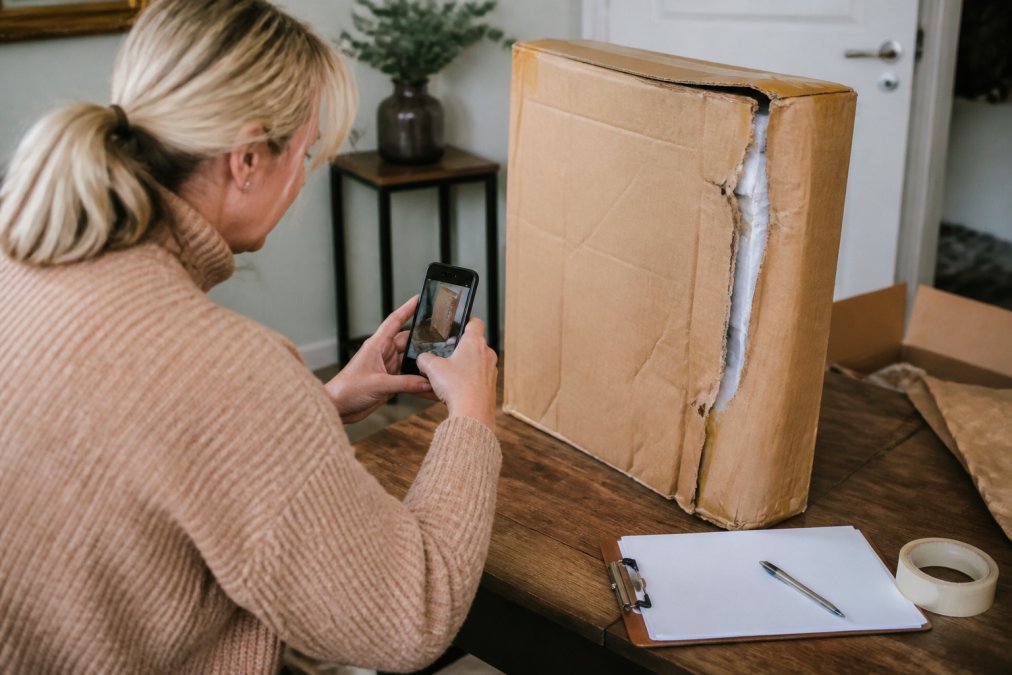
Document everything immediately. Open the package carefully and photograph the damage from multiple angles, the exterior box, packaging materials, and artwork itself. Be specific in your descriptions.
Report the damage to the gallery within the required timeframe. Provide your order number, describe the damage in detail, and attach your photos.
Preserve the packaging. Keep all packaging materials. The gallery may ask to see photos to determine whether damage was caused by inadequate packaging or handling during transit.
Don't attempt to repair the artwork. Any repairs could void your return claim or reduce the artwork's value.
Understand your remedies. Once you've reported damage, the gallery typically offers either a replacement or a refund. For original artwork, a replacement may not be possible; a full refund is standard. For prints and merchandise, the gallery may choose either option.
File a claim with the shipping carrier if necessary. If the gallery denies your damage claim, you can file a claim with the shipping carrier using your shipping receipt, proof of insurance, and damage documentation.
Creating an Art Return Policy Template for Your Gallery
If you're an artist or gallery owner, establishing a clear art return policy protects both you and your customers. Here's a template you can customize:
[Your Gallery Name] Art Return Policy
Return Window: We accept returns of artwork within 30 days of the purchase date. The purchase date is defined as the date your payment was processed, not the date the artwork was delivered.
Condition Requirements: Artwork must be in its original condition, unframed (if applicable), and free from damage caused by the buyer. We inspect all returned artwork to verify its condition. Artwork that shows signs of display, handling, or environmental exposure may not be eligible for return.
Original Artwork: Returns of original artwork are accepted only in cases of damage during transit, misrepresentation in the product listing, or failure to meet promised specifications. We do not accept returns due to buyer remorse or change of preference.
Prints and Merchandise: Returns of prints, reproductions, and lifestyle merchandise are accepted within 30 days for any reason, provided the item is unused and in original packaging.
Damage During Transit: If your artwork arrives damaged, contact us within 5 days of delivery with photos and a detailed description. We will assess the damage and either send a replacement or process a full refund.
Return Shipping: The buyer is responsible for return shipping costs, unless the return is due to our error or damage during our initial shipment. We recommend using insured, tracked shipping.
Refund Processing: Refunds are processed within 10 business days of receiving and inspecting the returned artwork. Refunds are issued to the original payment method.
Non-Returnable Items: Custom orders, commissioned artwork, and items marked as "final sale" are not returnable.
Customize this template to match your specific practices and post it clearly on your website before customers purchase.
Conclusion
Returning art bought online is possible, but it requires understanding your rights, acting quickly, and following proper procedures. Know the gallery's return policy before you purchase, inspect your artwork immediately upon arrival, and document everything if something goes wrong. Each category of art, original artwork, limited edition prints, and lifestyle merchandise, has different return rules and protections.
At Susan Fielder Art, we're committed to ensuring every customer feels confident in their purchase. Our emotionally charged abstract paintings and unique lifestyle products are backed by a commitment to quality and customer satisfaction. If you have questions about our return policy or need assistance with a return, contact us directly, we're here to help you find the perfect piece for your space while supporting a greater cause through our pancreatic cancer research donations.
Frequently Asked Questions
Can I return art bought online if I just changed my mind?
That depends on the gallery's return policy. Many online art retailers offer a return window of 14 to 30 days for buyer remorse, though some treat original artwork as final sale. Check the terms and conditions before purchase. If the policy allows returns for any reason, you typically must return the piece in its original condition with proof of purchase. Some galleries may charge a restocking fee or require you to cover return shipping costs.
What should I do if my art arrives damaged in transit?
Document the damage immediately with clear photos and video before opening the package fully. Contact the gallery within 48 hours with your proof of purchase and damage documentation. Most retailers will either send a replacement or issue a full refund. If the piece was damaged by the carrier, the gallery may file a transit insurance claim on your behalf. Keep all packaging materials and the original box as evidence.
Are original paintings treated differently than prints for returns?
Yes. Original artwork is often sold as final sale or with strict return conditions because of its one-of-a-kind nature and authentication concerns. Limited edition prints and merchandise typically have more flexible return policies. Always verify the return policy for the specific product type before buying. Original paintings may only be returnable if misrepresented, damaged, or if the gallery explicitly offers an inspection period.
Who pays for return shipping when I want to send art back?
This varies by reason and retailer. If you're returning for buyer remorse, you usually cover return shipping costs. If the piece arrived damaged or was misrepresented, the gallery typically provides a return shipping label at no cost. Some galleries offer free returns within a certain window as part of their customer satisfaction guarantee. Always clarify shipping responsibility in the return request before sending anything back.