 how-to
Abstract Art Inspiration for Creative Workspaces: 7 Steps
Table of Contents
- Start With the Space: A 5-Step Audit Before You Buy
- The Benefits of Abstract Art in the Workplace
- How to Find the Best Abstract Art for Office Productivity
- How to Style Abstract Art in an Office (By Zone)
- Hang It Right: Lighting, Hardware, and Ergonomics
- Care, Durability, and the ROI of Office Art
- Mistakes to Avoid (and What to Ignore)
- Frequently Asked Questions
Last Updated: September 16, 2026
Start With the Space: A 5-Step Audit Before You Buy
Abstract art inspiration for creative workspaces starts with measurement, not mood boards, and the same abstract art inspiration holds for any office. A 2024 study from University of Exeter's research on visual stimuli and creativity found that abstract art generates a measurable neurological impact on creativity in shared work environments. At Susan Fielder Art, we've watched that play out in real projects: the pieces that transform a room are almost never the ones bought on impulse. They're the ones chosen after someone mapped the wall, tracked the light, and matched scale to sightline.
Here's the audit that helps prevent a costly mistake.
Step 1: Map Zones and Sightlines
Walk your workspace and label every zone by function, not furniture. Reception, collaboration tables, focus nooks, and the executive office each demand different visual energy. Note where eyes land when someone enters, sits, or looks up from a screen, those are your candidate walls.
Step 2: Measure Wall Space and Light
Record width and height for each candidate wall, then track sunlight across a full day. North-facing walls hold consistent, cool light; west-facing walls flood with warm glare by late afternoon. A canvas that looks rich in morning shade can turn washed-out by 4 p.m. Photograph each wall at three times of day before you commit.
Step 3: Set a Budget Range
Decide your ceiling before browsing. Original work varies widely by artist and size, so set a range and hold it. Susan Fielder Art lists current pricing on each piece, and every purchase sends 10% of proceeds to pancreatic cancer research.
Step 4: Define the Emotional Brief
Write one sentence describing how the room should feel: calm, energized, focused, welcoming. Without that filter, every colorful canvas looks like a contender.
Step 5: Identify Your Constraints
List what you cannot change: lease rules on wall anchors, existing color schemes, furniture you're keeping. Constraints shrink thousands of options to a shortlist.
The Benefits of Abstract Art in the Workplace
The benefits of abstract art in the workplace extend well beyond decoration. According to Walensky Shop's 2024 report on interior aesthetics and professional output, abstract art in coworking spaces is linked to a 21% boost in creativity. The International Journal of Design's 2021 study on work environments found a causal relationship between visual stimuli and employee creativity and innovation.
A sterile office signals that ideas don't matter; a considered one signals the opposite.
How to Find the Best Abstract Art for Office Productivity
The best abstract art for office productivity balances stimulation with calm, measurable properties you can screen for before you buy. Know which visual variables drive focus, which drive fatigue, and how to test a candidate piece against both. Applying these same principles of visual equilibrium extends beyond the desk, as the process of creating calm spaces relies on the deliberate arrangement of color and form to sustain long-term mental clarity.
Start with these criteria:
- Open-ended narrative: work that suggests rather than states, so it rewards repeat viewing instead of resolving in one glance
- Texture and depth: surfaces that change as light moves across them, giving the eye a reason to return without demanding it
- Dynamic composition: movement that guides the eye along a path and then releases it, rather than trapping it in a tight cluster
- Restrained complexity: enough detail to hold attention, not so much that it competes with the work on the desk
The Mechanism: Why Contrast Beats Intensity
The productivity benefit is not "art equals creativity." It is contrast. A knowledge worker spends most of the day locked to a flat, backlit, high-frequency screen, and abstract work gives the eye somewhere to rest that is not a screen or a spreadsheet, restoring the capacity to focus again.
Overly complex or visually aggressive abstract work backfires: dense, high-contrast, edge-to-edge pattern forces the same visual processing the screen already demands, producing fatigue rather than recovery. Designers treat a piece as a "visual off-ramp", one dominant gesture, generous negative space, a limited palette, so the eye lands, rests, and moves on.
Screen for These Variables Before You Buy
- Edge density: count how many distinct shapes touch the canvas border.
Color Palettes That Keep Focus Sharp
Color psychology drives the practical choice.
Scale, Texture, and Open-Ended Narrative
Scale is where most buyers err.
A Quick Test Before You Commit
Before purchase, view the piece from the distance you will actually see it, seated at your desk, standing at the doorway, walking past the wall.
How to Style Abstract Art in an Office (By Zone)
Styling abstract art in an office means matching energy to function, zone by zone.
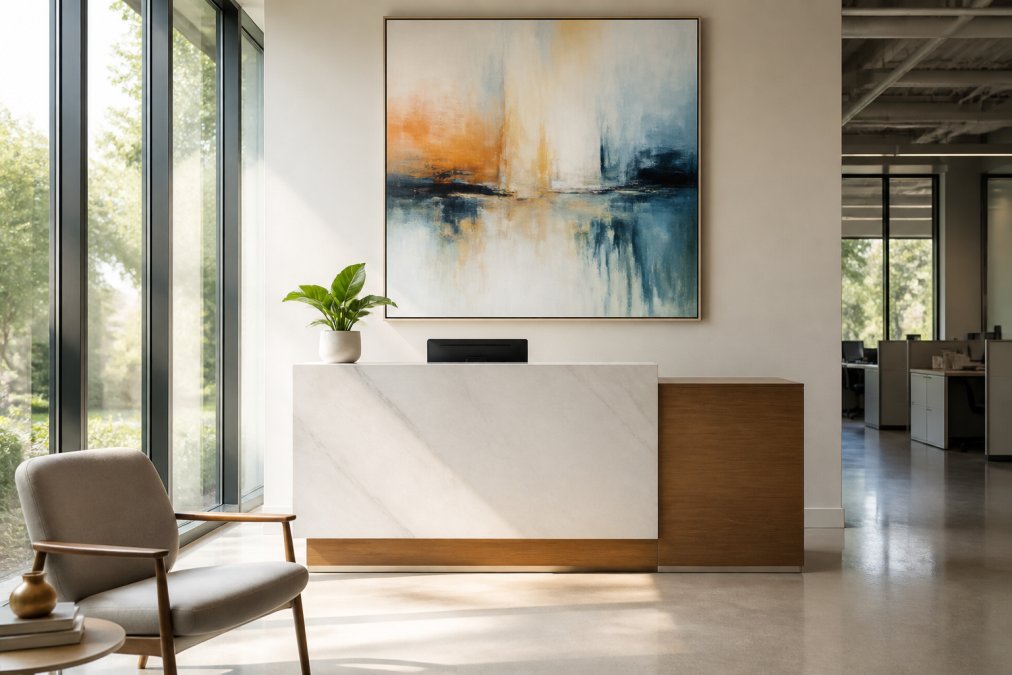
Reception and Collaborative Areas
Reception sets expectations in three seconds: choose a large, confident piece at seated eye level behind the desk.
Executive Office and Focus Nooks
Executive offices and boardrooms increasingly favor Bauhaus and constructivism-inspired work, which projects a modern, professional atmosphere.
| Zone | Piece Size | Palette | Energy |
|---|---|---|---|
| Reception | Large, 60-75% of wall | Confident, warm neutrals | Welcoming |
| Collaboration | Medium to large | Bold, saturated | Energizing |
| Focus nook | Small to medium | Cool, muted | Calming |
| Executive office | Large, statement | Bauhaus, constructivist | Professional |
Hang It Right: Lighting, Hardware, and Ergonomics
Hanging height and lighting decide whether a piece reads as art or as an afterthought.
Care, Durability, and the ROI of Office Art
Office art earns its keep when it lasts.
Material Choice Determines Longevity
The biggest durability decision happens before purchase: what the piece is made of and how it is finished.
Maintenance That Actually Matters
Two maintenance habits prevent most damage:
- Rotate pieces seasonally on walls with strong seasonal light. Rotating spreads UV exposure so no single piece fades faster than the rest.
- Check hardware annually. Anchors loosen, wires stretch, and a piece level at installation can drift. A two-minute yearly check prevents the far costlier repair of a fallen canvas.
The ROI Case: Retention, Culture, and Brand
- Recruiting and tours. A considered space signals that the company invests in its people, and candidates and clients read that signal in the first thirty seconds.
- Retention. Employees who describe their workspace as somewhere they want to be are less likely to leave over environment complaints. Art is one of the cheapest levers on that perception.
- Brand identity. A consistent visual program, same artist, same palette family, same scale logic across zones, makes a space recognizable without a single logo.
Budget Tiers and What They Buy
The mistake is spreading a small budget thinly across every wall.
Mistakes to Avoid (and What to Ignore)
Skip these common errors:
- Buying for the wall you wish you had, not the one you have
- Matching art to furniture instead of to the room's function
- Hanging too high, which disconnects the piece from the space
- Ignoring light direction until after installation
- Treating one bold piece as a license to fill every wall
Frequently Asked Questions
How does abstract art influence creative thinking in the workplace?
Research from the University of Exeter (2024) found that abstract art generates a measurable neurological impact on creativity in shared work environments. A separate report from Walensky Shop (2024) links abstract art in coworking spaces to a 21% boost in creativity. The International Journal of Design (2021) also confirmed that visual stimuli like art have a causal relationship with employee creativity and innovation, so the effect is not just anecdotal.
What color palettes in abstract art work best for office productivity?
Cool, muted tones such as soft blues, greens, and warm neutrals tend to support sustained focus, while one high-energy accent color can add visual stimulation without overwhelming the eye. Abstract art inspiration often comes from Bauhaus and constructivism palettes, which use clean geometric blocks of color.
Should abstract art in a workspace be framed or unframed?
Both work, but the choice depends on the piece and the room. Framed canvas paintings give a more finished, professional atmosphere, which suits executive offices and corporate reception areas. Unframed stretched canvases feel lighter and more casual, making them a good fit for creative studios and collaborative zones. If you plan to move the art between rooms or offices, a frame adds protection and makes rehanging easier.
How do I choose the right size abstract painting for a home office?
Measure the wall first, then aim for a piece that covers roughly two-thirds to three-quarters of the width of the furniture below it, such as a desk or console. For a small home office, a single statement canvas between 24 and 36 inches wide usually works well. In a larger creative workspace, a diptych or triptych can fill the wall without feeling crowded. Hang the center of the artwork at eye level, about 57 to 60 inches from the floor.
Choosing art for a creative workspace is a design decision and a values decision at the same time. Susan Fielder Art offers emotionally charged original abstract paintings, a commitment to donating 10% of proceeds to pancreatic cancer research, and a verified secure checkout backed by registration with the Art Storefronts Organization. Get started with Susan Fielder Art and give your workspace a piece that carries a story worth telling.