 ultimate-guide
Is Buying Expensive Art Worth It? A Guide to Investment
Table of Contents
- Art as an Asset Class: What You're Actually Buying
- Art Investment for Beginners: Key Considerations
- Benefits of Collecting Fine Art Beyond Financial Returns
- Risks of Investing in Art and Hidden Costs
- Tax Implications and Estate Planning Considerations
- Art as a Hedge Against Inflation and Portfolio Diversification
- Exit Strategies: Selling, Donating, or Fractional Ownership
- The Emotional Value vs. Financial Return Trade-Off
- Frequently Asked Questions
Last Updated: August 17, 2026
Art as an Asset Class: What You're Actually Buying
When you buy expensive art, you're acquiring something fundamentally different from most investments. Unlike stocks or bonds, art is a tangible asset with its own market dynamics, storage requirements, and emotional weight. Art operates on principles that don't always align with traditional wealth management strategies. Value depends on provenance (documented ownership history), artist demand, condition, size, and cultural significance, creating an illiquid market where buying and selling takes time and money.
Most individual collectors operate in the secondary market, where pieces change hands between private buyers, galleries, and auction houses. Unlike the primary market where artists first sell new work, secondary sales involve commission fees of 10-25% plus buyer's premiums. What distinguishes art from other tangible assets is that its value isn't tied to utility or production costs. A painting generates no cash flow. Its worth exists entirely in what someone else will pay for it, making market trends and collector sentiment extraordinarily important.
Art Investment for Beginners: Key Considerations
Entering the art market requires evaluating artistic merit, market positioning, and whether a piece will hold or appreciate in value over time.
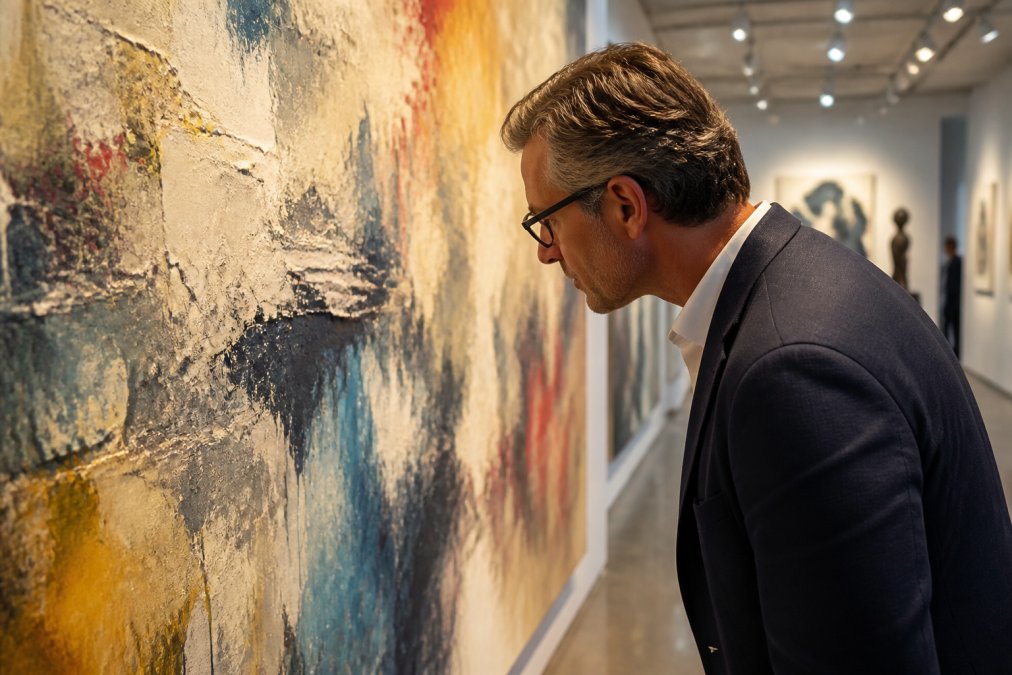
The first consideration is understanding your motivation. Are you buying primarily as an investment, or because you genuinely love the work? This distinction matters more than most guides acknowledge. The best art investments align emotional value with financial potential.
Evaluating Provenance and Authentication
Provenance, the documented chain of ownership, answers where a piece has been and who owned it. Strong provenance increases value and marketability; weak or missing provenance significantly reduces resale potential. Authentication is equally critical. Forgeries and misattributions exist in the art world. Before committing significant money, you need professional verification that the work is genuine. This typically involves expert examination, sometimes scientific analysis, and consultation with art historians or the artist's estate. The cost can be thousands of dollars, but skipping this step is far more expensive. Discovering after purchase that a piece is inauthentic can make it nearly impossible to resell.
Understanding Market Volatility and Trends
The art market doesn't move in lockstep with broader economic trends. A recession might increase demand for fine art as wealthy individuals diversify portfolios. Market trends are driven by gallery exhibitions, museum acquisitions, auction results, and collector sentiment. An artist featured in major museum shows typically sees their market value increase. This volatility means buying expensive art based purely on financial projections is risky. Many collectors who bought heavily in certain movements during the 1980s and 1990s found their pieces worth significantly less two decades later.
Benefits of Collecting Fine Art Beyond Financial Returns
Collecting fine art enriches your living space with meaning and visual impact. A well-chosen piece transforms how you experience a room every day. Unlike mass-produced decor, original artwork carries narrative, the artist's vision, and your personal connection to it. This emotional value is real and substantial.
At Susan Fielder Art, the mission extends beyond aesthetics. Each purchase supports meaningful causes while beautifying your surroundings. When buying expensive art from galleries that donate proceeds to charitable work, you're making a statement about your values. Art also functions as cultural participation, connecting you to art history, contemporary movements, and communities of people who share your aesthetic interests. Living with fine art can be educational, over time, your eye becomes more discerning and you develop deeper understanding of artistic techniques and movements.
Risks of Investing in Art and Hidden Costs
Before committing significant capital to buying expensive art, understand the real risks and ongoing expenses. Many first-time investors are surprised by unanticipated costs.
The most obvious risk is financial loss. Art values are opaque and subjective. You might buy expecting appreciation, only to find years later that the artist's market value has declined. Market volatility can be extreme, a single artist's work might appreciate 300% in five years, then lose 60% in the next three years.
Liquidity Challenges and Resale Difficulties
The biggest practical risk is illiquidity. If you need to sell quickly, you'll likely take a significant loss. Art lacks an efficient market like stocks. Selling typically requires months of effort through galleries, consignment, or auction houses, each taking 10-25% commissions plus buyer's premiums. If forced to sell during a market downturn, you might struggle to find any buyer at all.
Storage, Insurance, and Ongoing Expenses
Owning fine art creates ongoing costs that reduce net returns. Insurance is non-negotiable and typically runs 0.3% to 0.5% of appraised value annually. For a $50,000 piece, that's $150-250 per year. Climate-controlled storage requires monthly fees. Professional framing costs hundreds to thousands of dollars. Periodic appraisals cost several hundred dollars. Restoration and conservation work, if needed, can cost thousands.
Tax Implications and Estate Planning Considerations
When you sell art at a profit, you owe capital gains tax on appreciation. Art held less than one year is taxed as ordinary income; art held more than one year qualifies for long-term capital gains treatment. Large art sales can push you into higher tax brackets. Working with a tax professional before selling expensive art is advisable.
Donating art to qualified charitable organizations offers tax benefits, you can deduct fair market value subject to certain limitations. Estate planning becomes important if you own significant collections. Art is part of your taxable estate. Heirs inherit at stepped-up basis, affecting their potential tax liability if they sell. Planning how your collection passes to heirs should be part of your overall estate strategy.
Art as a Hedge Against Inflation and Portfolio Diversification
One legitimate reason investors buy expensive art is portfolio diversification. Art can serve as a hedge against inflation because its value often increases when the dollar weakens. A painting worth $100,000 twenty years ago might be worth $300,000 today, partly due to inflation, partly due to increased collector demand.
This diversification benefit only works if art represents a small portion of your overall portfolio. Financial advisors typically recommend art investments comprise no more than 5-10% of a diversified portfolio. Art's low correlation with stocks and bonds provides genuine diversification benefits for large portfolios. However, buying art specifically as an inflation hedge is risky. Some art categories have significantly underperformed inflation over decades, while others have vastly outpaced it.
Exit Strategies: Selling, Donating, or Fractional Ownership
Understanding your exit options before buying expensive art is crucial. Traditional resale through galleries or auction houses is most common for established artists with strong market demand. Plan on 3-12 months to sell a significant piece.
Fractional art ownership has emerged as an alternative addressing liquidity challenges. Companies allow multiple investors to own shares of a single artwork, increasing liquidity since you can sell your fractional share more easily. However, fractional ownership comes with management fees and potential valuation disputes.
Donation to museums or charitable organizations is another exit strategy, particularly for tax benefits. Passing art to heirs through your estate is viable if your family wants to keep the collection. Some collectors use art as a long-term hold with no intention to sell, viewing it as a legacy or cultural contribution.
The Emotional Value vs. Financial Return Trade-Off
Here's what most guides avoid saying directly: for most people, financial returns from art are disappointing relative to risk and costs involved.
Data on art market returns is mixed. Some studies suggest fine art has appreciated at rates comparable to stocks over very long periods; other research shows significant underperformance. The variance is enormous. Unlike stocks, you can't simply buy a diversified index of art and expect market-rate returns.
What you can reliably expect: if you love the piece and want to live with it, the purchase makes sense. The emotional value from living with art you genuinely appreciate justifies the purchase on its own merits. If you're buying primarily as a financial investment, be honest about expectations. Treat it as a long-term, illiquid, high-risk investment. Don't expect consistent returns or easy sales. Do expect substantial ongoing costs.
The sweet spot for most collectors is buying pieces they genuinely love, from artists they believe in, understanding that financial appreciation is a bonus rather than the primary goal. Susan Fielder Art embodies this philosophy by combining original, emotionally charged artwork with meaningful charitable impact, positioning art as something that enriches your life and supports causes you care about, regardless of financial value.
The decision to buy expensive art depends on your financial situation, aesthetic preferences, and honest assessment of your motivations. If you're wealthy enough that costs don't strain finances, if you genuinely love the work, and if you can hold it long-term without needing to liquidate quickly, then buying expensive art can be worthwhile. The key is going in with clear eyes about risks, costs, and realistic financial expectations. When you approach art collecting as a blend of personal passion and thoughtful financial stewardship, you're far more likely to make purchases you'll be satisfied with for decades to come.
Frequently Asked Questions
Is buying expensive art a good financial investment for beginners?
Buying expensive art can be part of a diversified portfolio, but it carries unique risks that beginners should understand. Fine art is an illiquid asset, meaning it takes time and effort to sell. Unlike stocks or bonds, there's no guaranteed market for your piece. Success depends on factors like the artist's reputation, provenance documentation, market trends, and your ability to hold the investment long-term. Many art advisors recommend starting with pieces you genuinely love, since emotional satisfaction matters as much as potential financial appreciation.
What are the hidden costs of owning expensive art?
Beyond the purchase price, art ownership involves significant ongoing expenses. Insurance premiums protect against damage or theft and typically cost 0.5-1% of the artwork's appraised value annually. Professional storage and climate-controlled display can add hundreds to thousands of dollars yearly. You'll also pay for periodic appraisals to establish value for insurance and estate planning. If you eventually sell, expect to pay commission fees to auction houses or galleries, often 10-25% of the sale price. Authentication and restoration costs can be substantial if the piece requires professional care.
How does the resale market for fine art actually work?
Selling art is slower and more complex than selling other assets. You can sell through auction houses, private sales, galleries, or online platforms. Auction houses typically charge buyer's premiums (10-25% added to the hammer price) and seller commissions. Private sales may offer better terms but require finding qualified buyers. The secondary market for fine art is volatile and depends heavily on the artist's continued relevance, market trends, and documentation of provenance. Even highly regarded pieces may take months to sell, and some artwork depreciates significantly. Having a clear exit strategy before purchasing is essential.
Is buying art considered a tax-deductible expense?
Art purchases are generally not tax-deductible as personal expenses. However, if you donate artwork to a qualified charitable organization, you may claim a tax deduction for the appraised fair market value. The deduction is limited to 30% of your adjusted gross income for most donations. You'll need a qualified appraisal and documentation from the charity. If you sell art at a profit, the gain is subject to capital gains tax, potentially at higher rates if you've held it less than one year. Consult a tax professional about your specific situation, as rules vary based on how the art is classified and used.